Happy Declaration Signing Day
Nobody signed America’s birth certificate on July 4, 1776—John Hancock kicked things off on August 2.

A FUNNY THING YOU MIGHT HAVE NOTICED about the semiquincentennial: Most Americans don’t know what happened 250 years ago that’s being celebrated this year. And even among those who have a general sense, there’s a lot of fuzziness about the details. Some people think Independence Day commemorates the day representatives from the thirteen colonies voted to separate from the United Kingdom—but that happened on July 2, 1776. The date we honor, July 4, is instead the day the Continental Congress settled on the wording of the Declaration of Independence.
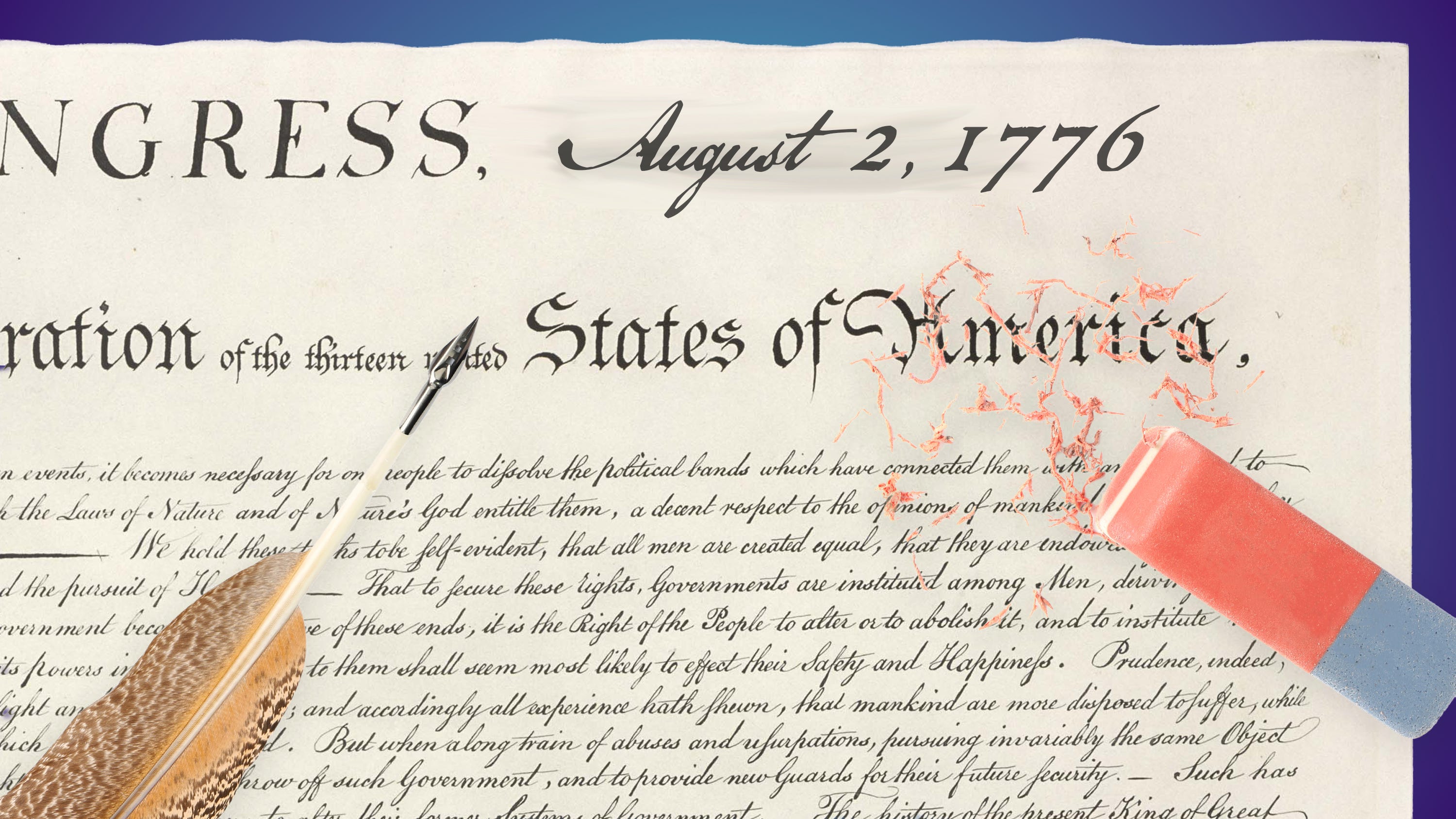
The signing of the Declaration is an iconic moment, of course—but that wasn’t July 4. The Declaration wasn’t yet ready to be signed on that day. In fact, this weekend marks the 250th anniversary of the start of the signing of the Declaration, on August 2, 1776—with a few stragglers adding their names months later.
And speaking of iconic moments, maybe when you think about the Declaration being signed, you envision this famous 1817 painting by John Trumbull, which was adapted for the back of the two-dollar bill:
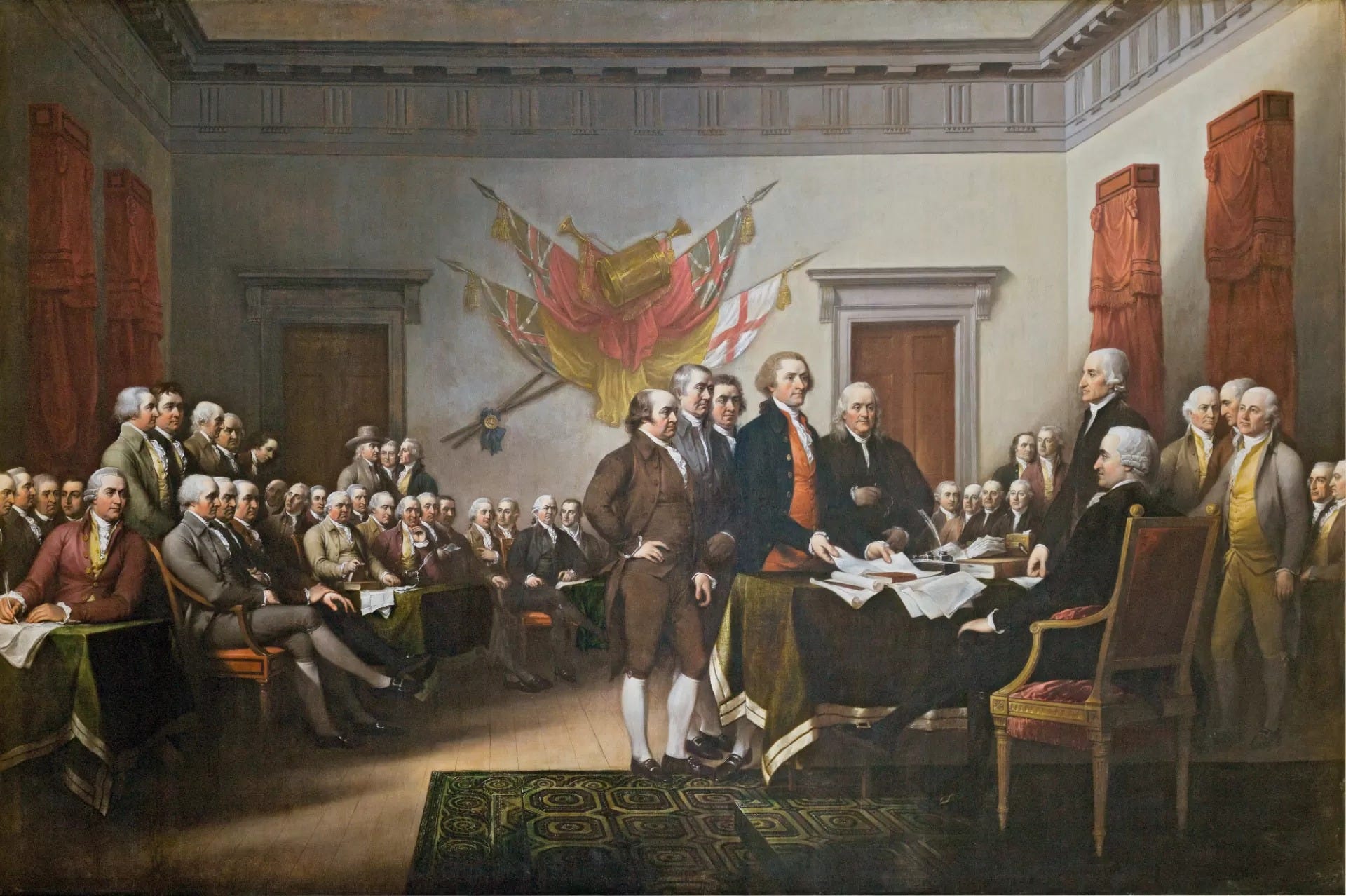
Except the scene Trumbull painted isn’t the signing of the Declaration. It depicts the events of June 28, 1776, when the five-member committee tasked with composing a declaration presented its draft to the other members of the Continental Congress.
All this confusion over the timeline should serve as a reminder for us that independence was not a single moment but a process that took sustained effort to achieve.
Join Bulwark+ today with a two-week free trial:
SO HOW DID THE SIGNING of the Declaration of Independence actually happen?
After the Continental Congress on July 4 agreed on the wording of the Declaration as the announcement of the new country’s birth and the official explanation for separating from Britain, a copy of the text was given to Philadelphia printer John Dunlap, who began producing broadsides of the document. George Washington had the Declaration read to the troops stationed in New York on July 9 “as a fresh incentive to every officer, and soldier, to act with Fidelity and Courage, as knowing that now the peace and safety of his Country depends (under God) solely on the success of our arms.”
But Congress did not authorize a formal parchment copy to be created, or “engrossed,” until July 19. The delay most likely resulted from Congress’s desire to make the Declaration speak with one voice. New York’s delegation, bound by old instructions from their state, abstained from the vote on July 4.
Once New York’s approval arrived, Congress ordered that an official copy “with the title and stile of ‘The unanimous declaration of the thirteen United States of America’” be produced, “and that the same, when engrossed, be signed by every member of Congress.” Timothy Matlack, a Philadelphia merchant with a reputation for beautiful handwriting (he’d engrossed other documents), most likely got the job. On August 2, his parchment was ready for the delegates’ ink.
John Hancock, the president of the Continental Congress, signed first: in the center, big and bold—but, contrary to legend, not to make it easy for the king to read. About another forty men followed suit, affixing their names by states. The precise number of signers on August 2, 1776 is not certain, however. The congressional records only say that “The declaration of independence being engrossed and compared at the table was signed.”
Some delegates were verifiably absent from Philadelphia in early August and couldn’t have signed with the rest. Richard Henry Lee, for example, arrived at the end of the month from Virginia; Oliver Wolcott of Connecticut came in October. Thomas McKean of Delaware was the last to put quill to parchment, most likely in December 1776 or January 1777—though it’s possible he didn’t sign until as late as 1781. We just don’t know.
Meanwhile, other delegates who had been present on July 4 did not sign the Declaration. Pennsylvanian John Dickinson, for one, opposed independence and so did not sign. Robert Livingston, who had been one of the five members of the committee that drafted the Declaration, was simply absent—he had returned to New York after independence was declared—and never got around to signing. Other permutations occurred, too. George Read of Delaware did not support independence on July 4 but ended up signing the Declaration anyway on August 2. Eight men, including Benjamin Rush of Pennsylvania and Marylander Charles Carroll of Carrollton, signed the Declaration even though they had joined Congress after July 4.
THE SIGNING OF THE DECLARATION was not an empty symbolic act. It was important to manifesting the Declaration’s authority to create a new nation. As the document’s final paragraph notes, the delegates were “the Representatives of the United States” acting “by Authority of the good People of these Colonies.” Numerous states, towns, and counties across the land had already drafted their own statements calling for independence, and now, by a messy but distinctively democratic process devised on the fly, the country had come together in this new expression of nationhood. As Pauline Maier argued in American Scripture: Making the Declaration of Independence, declaring independence was the work of the people as much as it was the work of a small group of Founders. It was not abstract or anonymous but the real sentiments of real people, flowing through the signers to the larger world.
Similarly, the Declaration’s inspirational closing—“we mutually pledge to each other our Lives, our Fortunes and our sacred Honor”—was no mere rhetorical flourish. For men who prized their honor as their most valuable possession, risking all for each other and for the Declaration validated the cause.
Looking back at how the Declaration was signed reminds us that independence was not the work of a single day but a process that unfolded as the United States asserted its right to be respected as a nation. Securing that independence was a dangerous ordeal involving five more years of fighting. Almost till the very end, an American defeat was the most likely outcome. Indeed, even as Washington’s men assembled to hear the ringing words of the Declaration for the first time, they were under attack by the British, who landed en masse on Staten Island in July. They nearly trapped Washington’s army on Manhattan. The revolution might have ended even before the Declaration was finished being signed. (What’s more, nine of the signers died before independence was achieved.)
The Declaration rightfully holds a special place in our culture, and it’s a fitting centerpiece of the America 250 celebrations. But as the story of the Declaration’s signing reminds us, the founding of the United States was the work not of a day but of months and years. Our commemorations should reflect that by continuing not just through this year but through the entirety of the anniversary of the war that made our independence a reality.
That’s good news for anyone who still has the semiquincentennial spirit: You still have years left to celebrate the Revolution. Start today: Give a huzzah for August 2, the day the Declaration began to be signed.
 | A guest post by
|
Discussion about this post