
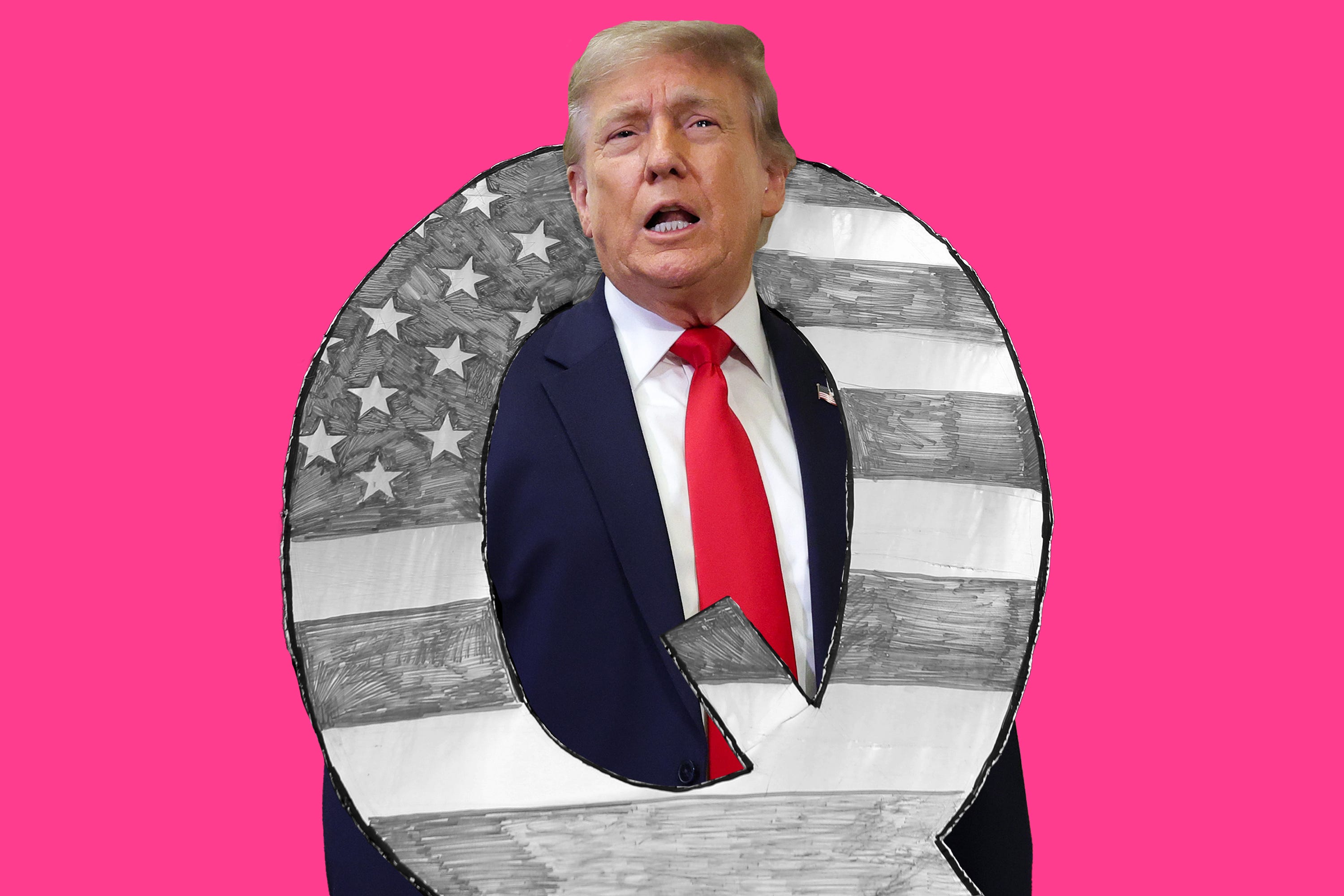
Aggrieved QAnoners Accuse Trump of Q-Baiting
The Trump administration launched a bizarre QAnon-themed social media campaign this week, using QAnon slogans like “trust the plan” and even a fake Q post to promote Trump executive orders on “quantum computing.”
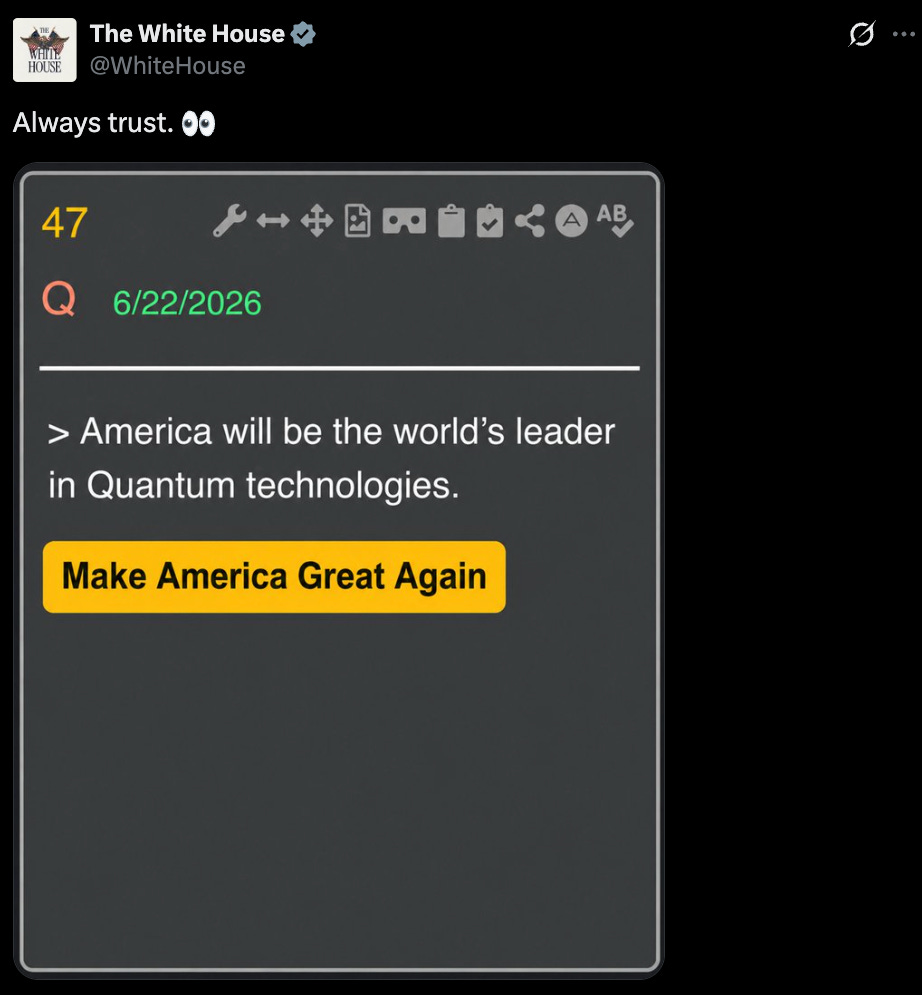
“Where we go one, we go quantum,” one Department of Defense account posted on X, a clear play on the QAnon motto: “Where we go one, we go all.”
Why would the administration play footsy with QAnon? Perhaps they’re just stirring the pot? Maybe they feel like the QAnon brand is a little less toxic, since it’s been a while since Q believers murdered their family members, kidnapped a child, or stormed Congress? Maybe they’re true believers? After all, Trump has frequently posted QAnon memes in the past, albeit not this explicitly.
The most likely reason is that it’s a troll job—more about that later—but that’s not exactly why, the posts went over so poorly with the QAnon believers (in addition, it almost goes without saying, to normies). The movement, once convinced that Trump was a messianic figure who would literally bring about heaven on earth, apparently has gotten sick of him.
“We’re done being treated like shit!” wrote QAnon promoter Liz Crokin, saying Q believers’ lives had been destroyed while Trump did nothing.
There are several reasons why QAnon believers are turning on Trump. But the main thrust boils down to this: After trying to block the release of the Jeffrey Epstein files and failing to deliver deep-state arrests, some of the movement’s dissatisfied stars think it’s a bit gauche, if not insulting, that the president and his team are appropriating QAnon culture.
No one has been more vocal about this than former Rep. Marjorie Taylor Greene, once the nation’s most prominent QAnon believer. After falling out with Trump in part because of his attempts to stop the release of the Epstein files—a key part of the QAnon mythos—Greene tore into the president in a video this week.
“Well, now they’re trying to throw out the Q-slop and propaganda to get you guys sucked back in!” Greene said.
Greene remains well versed in this world and its history. And as she lambasted Trump, she raised one of the most challenging pieces of cognitive dissonance for his devoted QAnon followers: the Trump campaign’s attempts ahead of the 2020 election to ban QAnon clothes or signs from rallies, which they did after clusters of Q believers caught on camera began spooking non-crazy voters.
“The Trump team did not want to be associated with the QAnon crowd, and they were embarrassed of the Q people,” Greene complained.
Greene’s video set off a new round of complaints from QAnon believers and other Trump-aggrieved personalities on the right. January 6th activist Trisha Hope confirmed that she saw the campaign seizing QAnon merchandise, while a QAnon personality once known as “QAnon John” seconded Greene’s remarks. He argued that the administration’s recent Q-flirty social media posts were a sign of the president’s political desperations.
“Now, [sic] that Trump’s approval is in the toilet after endless broken promises to the American people and blatantly Israel first policies, they are using Q propaganda in a last ditch desperate attempt to reel the deceived loyalists back in,” he wrote, saying his own QAnon gear had been banned at rallies. “IT’S SO FREAKING CRINGE,” he added.
The White House hasn’t addressed these complaints about the recent posts—at least not in public. But it would be hard for officials to claim ignorance or that this was all a misunderstanding. The idea of “quantum computing” is already part of QAnon lore, suggesting that the new social media effort isn’t just a random reference to two things that start with “Q.”
In fact, the “quantum” faction of QAnon is among its craziest—embraced by a man who went by the name “Baby Q,” the leader of an off-shoot QAnon sect that once set up a romance-filled compound in Arizona. Baby Q, who claimed to be a time traveler, later pleaded guilty to a federal extortion charge and served time in jail.
No one better typifies the strange push-and-pull in Trump’s approach to QAnon than Bobby Levy, a rapid response director at the White House. Levy has been gleefully participating in the recent social media effort, posting “Activation Word: Ronald McDonald”—a QAnon catchphrase. On Wednesday, Levy wrote that “patriots are still in control,” yet another QAnon reference.
Yet Levy was not always such a fan of QAnon! Experts at online sleuthing, Q believers dug up a tweet he had sent in 2021 calling for QAnon fans to be institutionalized.
“Q people are never to be taken serious,” Levy wrote at the time. “REOPEN THE ASYLUMS!”
Strange Coincidences in FBI Case on SPLC
The Justice Department’s prosecution of the Southern Poverty Law Center has already hit multiple roadblocks. First, Attorney General Todd Blanche was forced to correct a false statement he made about the case on Fox News. Then prosecutors admitted that a Justice Department staffer erred by emailing a then-confidential superseding indictment to reporters before it was unsealed in the court docket.
Now there’s another interesting wrinkle in the case: the revelation that an FBI memo that launched the investigation contains identical passages to a letter Turning Point USA founder Charlie Kirk and other conservative groups wrote to Trump adviser Stephen Miller containing complaints about the SPLC. That letter to Miller came in September, a month before the FBI memo, raising more questions about how much conservative groups are directing the Trump administration.
On Monday, the SPLC filed a motion arguing that the case should be dropped as a vindictive prosecution. In it, they cite several similarities between the letter and the FBI memo, arguing that it’s proof the Justice Department was taking its cues from conservative activists.
For example, the letter—signed by Kirk and the founder of conservative activist group Moms for Liberty, and others—reads in part: “The SPLC places many groups on its ‘Hate Map’ as a smear tactic solely because they disagree with its radical leftwing ideology.”
The FBI memo on the case uses nearly identical language in a similar passage: “Many of the entities on the hate map are placed there as a smear tactic solely because they disagree with the ideology of the SPLC.
The FBI memo and the Turning Point letter draw on many of the same articles and specific quotes—some of which are rather unusual sources for the FBI, like lefty Current Affairs writer Nathan J. Robinson. Elsewhere, the language is copied word for word.
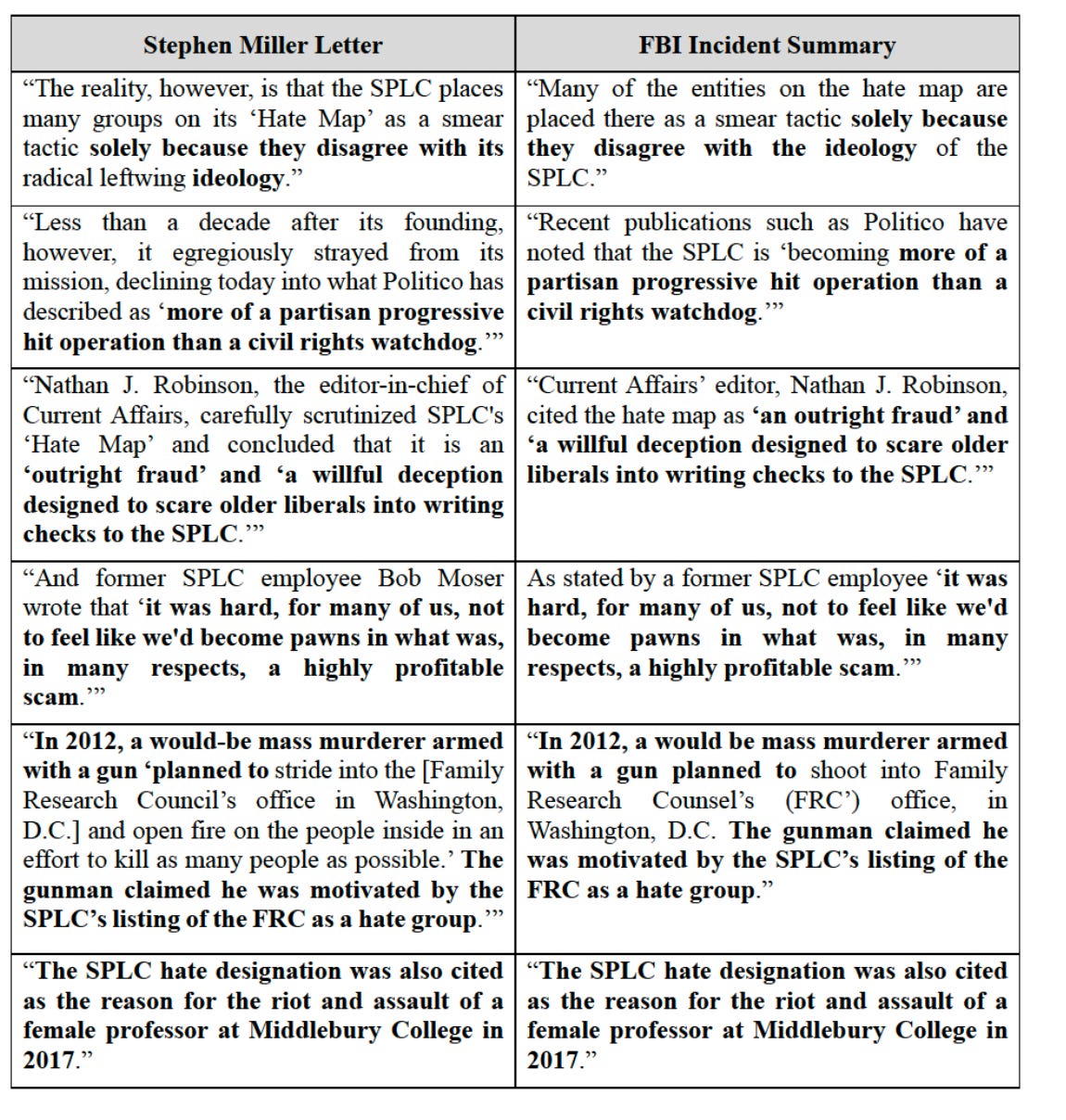
“The SPLC hate designation was also cited as the reason for the riot and assault of a female professor at Middlebury College in 2017,” the letter reads.
That same sentence appears verbatim in the FBI memo.
The SPLC’s lawyers argue that the letter was used as an initial basis for the investigation, with the FBI investigating whether the SPLC had somehow “defrauded” conservative groups by describing them as hateful. That argument was later abandoned, and replaced with the theory that the SPLC broke the law by paying informants in white supremacist groups.
The similarities between the letter and the FBI memo also raise questions about how the letter might make its way from a top White House adviser to the Justice Department—an institution that is, at least theoretically, supposed to be immune from political interference.
When your as nutty and conspiratorial as Trump and you lose Q’anon support you know it hasn’t been your summer.
In the Trump administration's defense, the Q Anon belief that a reality TV show star was somehow a Messianic figure with intimate knowledge of the dark workings of the U.S. government kind of marked Q people as gullible and stupid.