Five Years Since the Fall of Kabul, the Betrayal Continues
When we forget Afghanistan, and the Americans and Afghans who fought there, we turn our backs on our own.

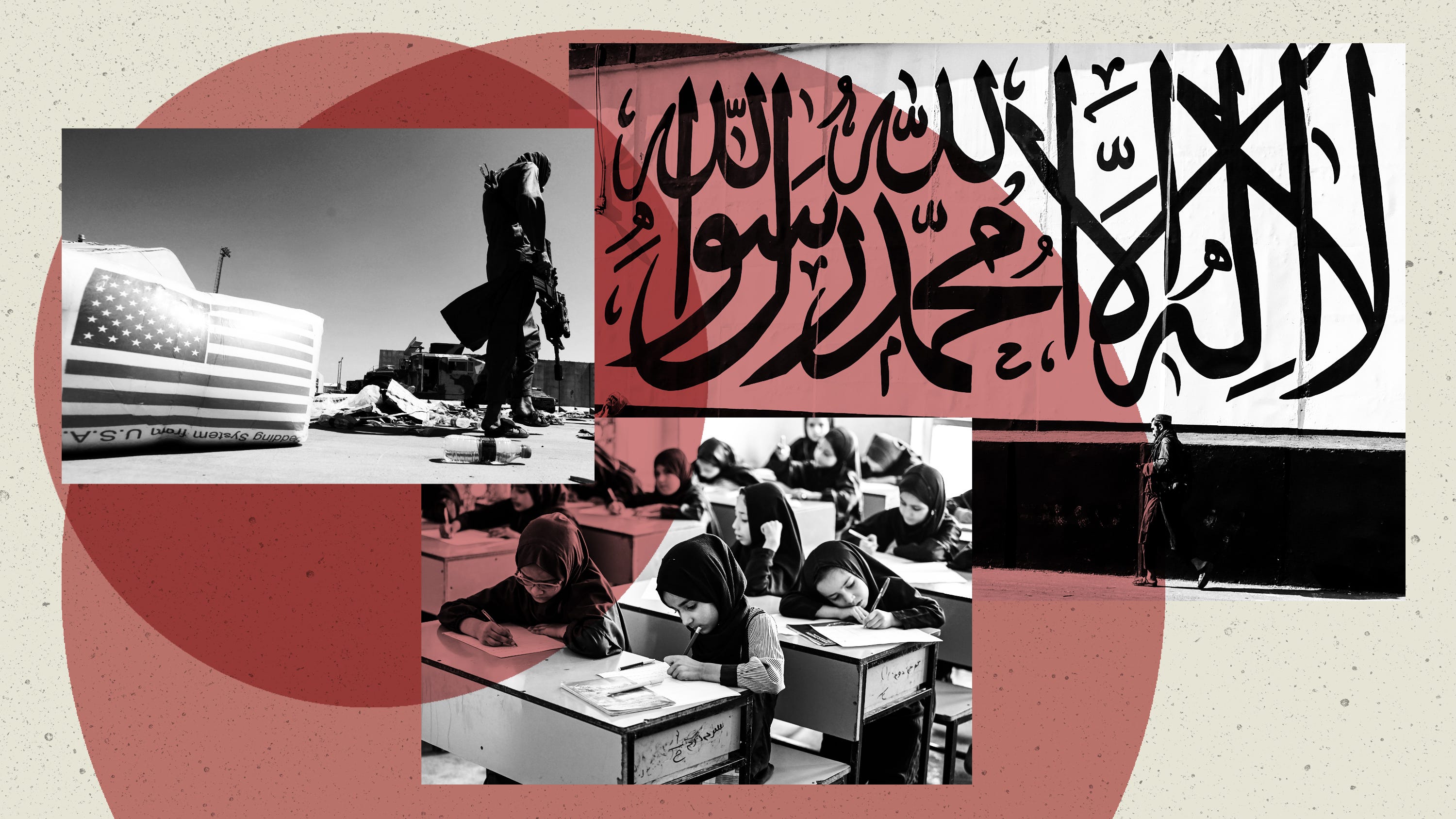
FOR MOST AMERICANS, August 15 is not a particularly memorable date. But it was on that day, five years ago Saturday, that the Taliban, al-Qaeda, and their Pakistani allies defeated the United States, NATO, and their Afghan allies by capturing Kabul. In scenes eerily reminiscent of the fall of Saigon, the United States conducted a chaotic, two-week evacuation and abandoned a twenty-year war. The dreams of millions of Afghans vanished, especially those we left behind.
Since then, Afghanistan has almost completely receded from America’s collective memory. When we remember it at all, it’s often invoked as a pejorative, an example of the folly of “forever wars” and the limits of American power. The war has largely been erased from our national consciousness, and with it, any serious reckoning or accountability for what went wrong.
Yet for many of the 832,000 Americans who served in Afghanistan, August 15 remains a bitter day filled with sorrow, betrayal, and anger. There is sorrow in watching twenty years of repeated deployments, sacrifice, and hardship discarded in the blink of an eye. There is betrayal in how we abandoned our Afghan allies, leaving them to navigate a byzantine immigration system that Americans have repeatedly neglected to fix. And there is anger, sharpened by humiliation, in watching the Taliban conduct military parades with captured American equipment.
For some Afghanistan combat veterans, these emotions amount to something worse than disappointment. They constitute a deep and enduring moral injury. While post-traumatic stress disorder has become synonymous with the Global War on Terrorism, moral injury is an older concept made newly relevant by the withdrawal. It occurs when someone witnesses or participates in actions that violate that person’s ethical code. For many who served in Afghanistan, the anniversary of August 15 reopens wounds that have never fully healed.
When that sense of betrayal, guilt, and grief goes unaddressed, it can deepen isolation and despair. Moral injury is not synonymous with suicidal ideation, but when combined with PTSD, traumatic brain injuries, depression, and other conditions, it can have a devastating effect on veterans trying to make sense of a disastrous war.
The statistics are sobering. According to the Department of Veterans Affairs, although the total number of veteran suicides decreased slightly in 2023, the suicide rate per 100,000 veterans increased. Although the VA has reduced its backlog of disability claims, it continues to struggle to connect veterans with timely mental-health treatment.
According to a CNN investigation, nearly two-thirds of the 541 VA facilities studied had wait times exceeding the agency’s target of twenty days for an initial mental-health appointment. At some facilities, veterans waited more than five months. Rates of suicidal ideation have reportedly risen by nearly 50 percent over the past five years.
A shortage of mental-health professionals is exacerbating the problem. Over the past two years, the VA has lost nearly 500 psychologists and psychiatrists and another 500 social workers, while eliminating more than 14,000 health care positions. These alarming losses prompted sixty House Democrats to send a letter demanding that the VA provide detailed data about staffing, vacancies, and access to care.
WHILE AMERICAN COMBAT VETERANS continue to feel the reverberations of Kabul’s fall, the Afghan people have borne the brunt of our retreat, especially Afghan women.
Over the past five years, nearly all the progress made before the fall has been erased. Girls are not allowed to attend school beyond the sixth grade. Women have been pushed out of much of the workforce and face severe restrictions on traveling without a male chaperone. Taliban morality laws have sought to silence women in public spaces. Women detained by the Taliban’s Ministry for the Propagation of Virtue and the Prevention of Vice have also reported being subjected to sexual assault.
The humanitarian situation is equally grim. According to the United Nations, 14 million Afghans face acute hunger. An estimated 3.7 million Afghan children and 1.2 million pregnant and breastfeeding women are likely to suffer from malnutrition. Approximately 28 million Afghans live in poverty, while unemployment remains widespread.
Our Afghan allies face an even more immediate threat. Many of those who fought beside us remain underground. Despite the Taliban’s assurances that it would not seek retribution, former Afghan officials and members of the security forces have been hunted, killed, and disappeared. Many fled to neighboring countries, particularly Pakistan and Iran. Both countries are now forcibly repatriating Afghans to the Taliban.
For Afghans living in America, the situation is much improved, although it has been complicated by the Trump administration’s stringent immigration policies. Most Afghan refugees are thriving in the United States. They are pilots, professors, and homeowners.
However, the future remains uncertain for those who relied on Temporary Protected Status, which the administration rescinded in 2025. Nearly 12,000 Afghans formerly protected by TPS are now vulnerable to deportation, sparking fears that they could be repatriated to Afghanistan or, as in the case of Nazeer Paktiawal, end up dying in ICE custody.
Trump’s decision to freeze all immigration processing from Afghanistan following the November shooting of two National Guard members in Washington, D.C., by an Afghan refugee has had disastrous effects. Thousands of Afghan refugees remain stranded in a refugee camp in Qatar. Nearly 175,000 Special Immigrant Visa applicants remain in Afghanistan because of Trump’s decision. These men and women, who risked everything by supporting our efforts for twenty years, have earned their place among us.
FIVE YEARS AFTER KABUL FELL, remembrance is not enough. There are concrete steps the United States and the American people should take.
The federal government should devote substantially more resources to the study and treatment of moral injury. Moral injury deserves the same level of national attention and investment as PTSD. Congress should fund research into effective treatments, expand training for VA mental-health providers, and support programs designed specifically for veterans struggling with the consequences of America’s wars.
More importantly, Americans need to connect with these veterans and listen to their stories about Afghanistan. They need to remind veterans that, despite the traumatic way the war ended, their service mattered to the Afghans they served alongside and still matters to their fellow Americans and their families. No federal program can erase the fall of Kabul, but recognition, validation, and genuine human connection can help veterans begin the difficult process of moral recovery.
We must also protect the Afghans who escaped and now live among us. Rep. Jason Crow and Sens. Chris Coons and Lisa Murkowski recently introduced the Afghanistan TPS Act, which would protect Afghan nationals living in the United States from being forcibly returned to Afghanistan. The bill would extend Temporary Protected Status for eligible Afghans through July 1, 2029. Congress should pass it.
Lastly, the United States should take concrete steps to support the Afghan people. We should support efforts to recognize gender apartheid as a crime under international law and hold Taliban leaders responsible for their crimes. We should resist any formal recognition of the Taliban regime and explore aiding vetted anti-Taliban resistance groups seeking to overthrow it. Many of these groups are led by former Afghan officials who worked closely with the United States. They do not seek American boots on the ground, but international support in their struggle against a regime that remains allied with al-Qaeda.
Whether one believes withdrawing from Afghanistan was right or wrong is now largely immaterial. Remembering Afghanistan is not an argument for restarting the war or returning American troops to the country. It is an acknowledgment that the war did not simply end when the last American aircraft left Kabul. Its consequences continue for our veterans, our Afghan allies, and millions of Afghans living under Taliban rule.
We must care for the veterans who fought, protect the Afghans who stood beside them, and refuse to legitimize the enemy that defeated us. We are responsible for the wars fought in our name—especially those we lose.
 | A guest post by
|
Discussion about this post