How Iran Blew Up Trump’s Gulf AI Deals
Literally.


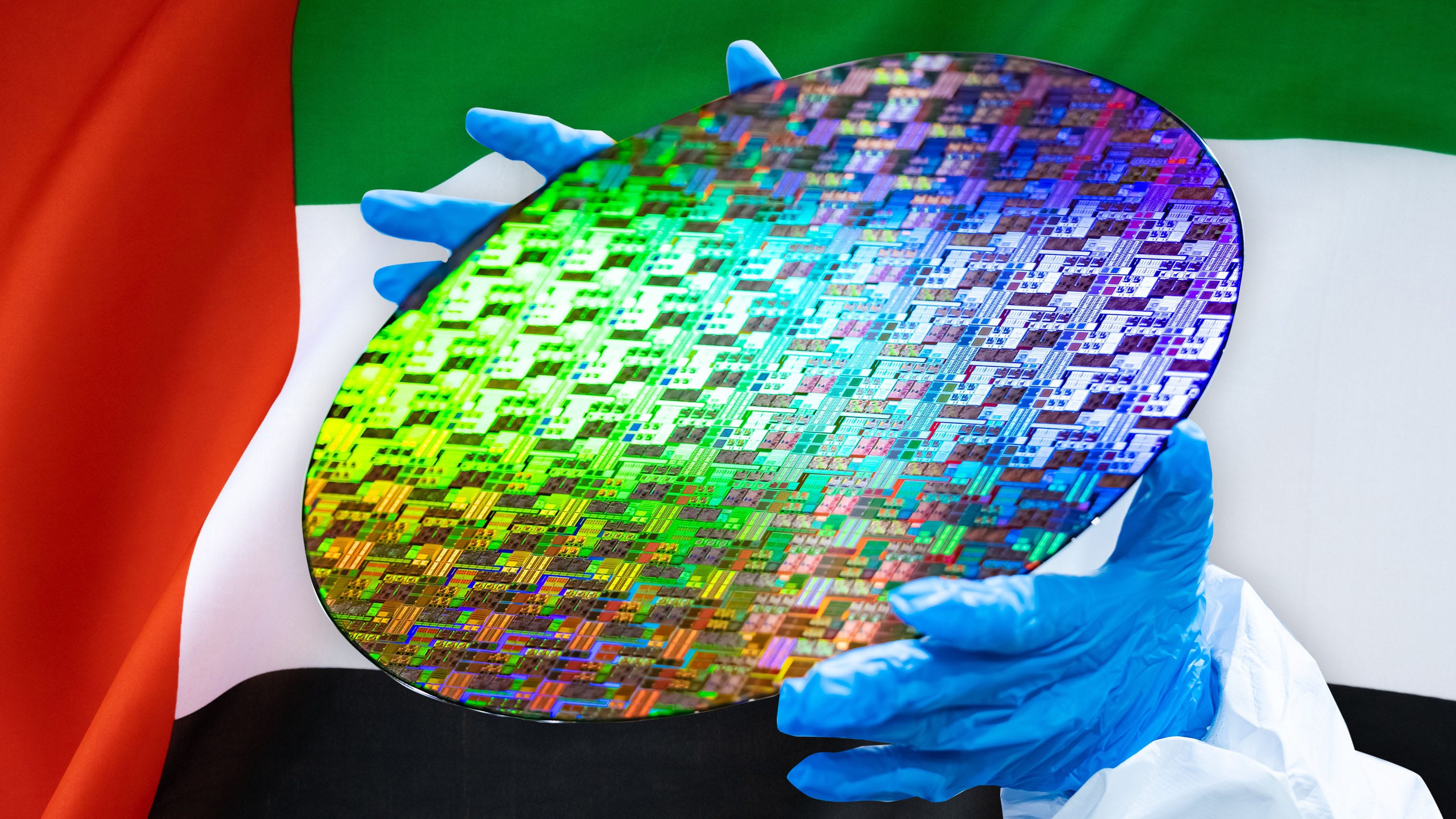
WAR TENDS TO BE BAD FOR BUSINESS. Investment dries up and talented workers flee. So it has proved in the Persian Gulf, where the war with Iran has driven out foreigners, snarled supply chains, and destroyed local infrastructure. This might seem an odd time, then, for the United States to start exporting millions of expensive and sophisticated AI computing chips to the United Arab Emirates. Data centers in the UAE were, after all, some of the first targets of Iranian drones.
The Trump administration apparently sees things differently. Last month, it removed all restrictions on the sale of advanced AI chips—along with a host of other sensitive technology and military equipment—to the Emirati government and its national AI champion, G42. For years, the UAE has been begging Washington to let it buy more chips. The country is eager to turn itself into a global provider of AI services; it wants to be the AI version of an oil state, able to use its control of computing power for economic and political leverage.
The Trump administration seems determined to make that happen. This most recent favor to the UAE is just the latest in a sequence of self-defeating decisions. To recap: In May 2025, Trump announced deals with the Gulf states to boost their AI ambitions, approving the construction of some of the largest AI data centers in the world in the UAE and Saudi Arabia. These deals were always risky: The Gulf states have close ties to China and a track record of technology leakage and mass surveillance. And the administration never had a good plan for how to protect these enormous data centers filled with fragile electronics from drone strikes. But it at least promised that exports would be conditioned on “robust” security measures.
As it turned out, the administration couldn’t deliver on its pledges. It struggled to implement the deals, failing to process chip export licenses on time. Negotiations stalled over security requirements and investment commitments. Chip companies and Gulf governments alike grew frustrated.
Then came the war. In February, Trump’s military campaign against Iran put the entire business model behind the Gulf AI deals in jeopardy. It’s hard to build and operate cloud infrastructure in a war zone. Foreign workers left, regional ports were disrupted, and insurance costs soared. Iran, looking for economic targets, bombed Amazon’s data centers in the UAE and Bahrain, and threatened additional strikes on OpenAI’s Stargate UAE, the centerpiece of the administration’s Gulf ambitions. Months after the outbreak of the fighting, Amazon’s Middle East servers are still offline.
Get Bulwark+ for two free weeks.
BY THIS POINT, ANOTHER ADMINISTRATION might have rethought the strategy of offshoring America’s AI infrastructure to the Gulf. The Trump administration doubled down. On July 10, it removed all restrictions on the sale of advanced chips and other sensitive technology to the Emirati government, lifting controls that had been in place since before the recent AI boom. State-backed Emirati companies can now buy millions of AI chips, build massive data centers at home and abroad, and host leading AI models within their territory—all without the security restrictions the Trump administration once touted. If powerful models sit on Emirati soil, the U.S. government will lose influence over how they are used, and it will be far harder for U.S. companies and security agencies to prevent the model weights—the model’s core intellectual property—from being stolen.
The giveaway goes beyond AI. The end of restrictions on the sale of other military technology may allow the UAE to buy American arms more easily than Saudi Arabia and, in some cases, even Israel—a likely unsustainable situation. Washington may well find itself forced into further concessions to keep the region onside.
What the United States got in return is hard to see. The Trump administration’s announcement identified no new security commitments from the UAE, no new restrictions on technology transfers, and no concessions on the UAE’s relationship with China. Key figures in President Trump’s circle, however, appear to have benefited handsomely from the UAE. Shortly before the United States initially approved the sale of more chips to the Gulf, for example, the UAE’s national security advisor Sheikh Tahnoon bin Zayed al-Nahyan purchased a 49 percent stake worth half a billion dollars in World Liberty Financial, a cryptocurrency venture founded by relatives of Trump and his Middle East envoy, Steve Witkoff.
It’s hard to know what exactly is driving the Trump team’s decision-making, but opening the taps on one of America’s most advanced technologies makes neither strategic nor economic sense. There are many more reliable allied countries where U.S. companies can build major data centers. And giving away the store on AI is a high price to pay to keep the UAE onside during a war the United States had no pressing need to start in the first place. For all its claims to put America first, the Trump administration has given the Emiratis the deal of the century.
In the space of a year, the Trump administration has managed to make promises it couldn’t keep, start a war that destroyed the economic case for the original bargain, and then give away all of its leverage to compensate for the damage. For a president who talks endlessly about deal-making, giving away one of the crown jewels of American technology and getting nothing in return is a remarkable achievement.
Alasdair Phillips-Robins is a fellow at the Carnegie Endowment for International Peace.
Sam Winter-Levy is a senior fellow at the Carnegie Endowment for International Peace.
 | A guest post by
|
 | A guest post by
|