How to Resist Trump’s Weaponized DOJ
The latest in the crosshairs, Gavin Newsom, shows ways we can stand up to intimidation and defend the rule of law.

DONALD TRUMP’S UNPRECEDENTED USE of the powerful Department of Justice to bully his political rivals and intimidate anyone else who dares say or do something that irks him continued apace this week. The public is not without recourse. But if there’s any fighting chance of turning things around one day, it’s high time that the American people face the steely reality of how bad things have gotten.
Some of the stories of DOJ’s targeting of Trump critics are already famous—like the cases of former FBI Director James Comey and New York Attorney General Letitia James. Others you might have missed amid the torrent of other headlines, such as the news last month that DOJ launched a criminal investigation of Trump’s sex abuse and defamation victim E. Jean Carroll. The Wall Street Journal recently tallied over “four dozen enemies” Trump personally identified for a “spate of prosecutions” thus far.
Here are three of the latest abuses of power—and three ways to fight back.
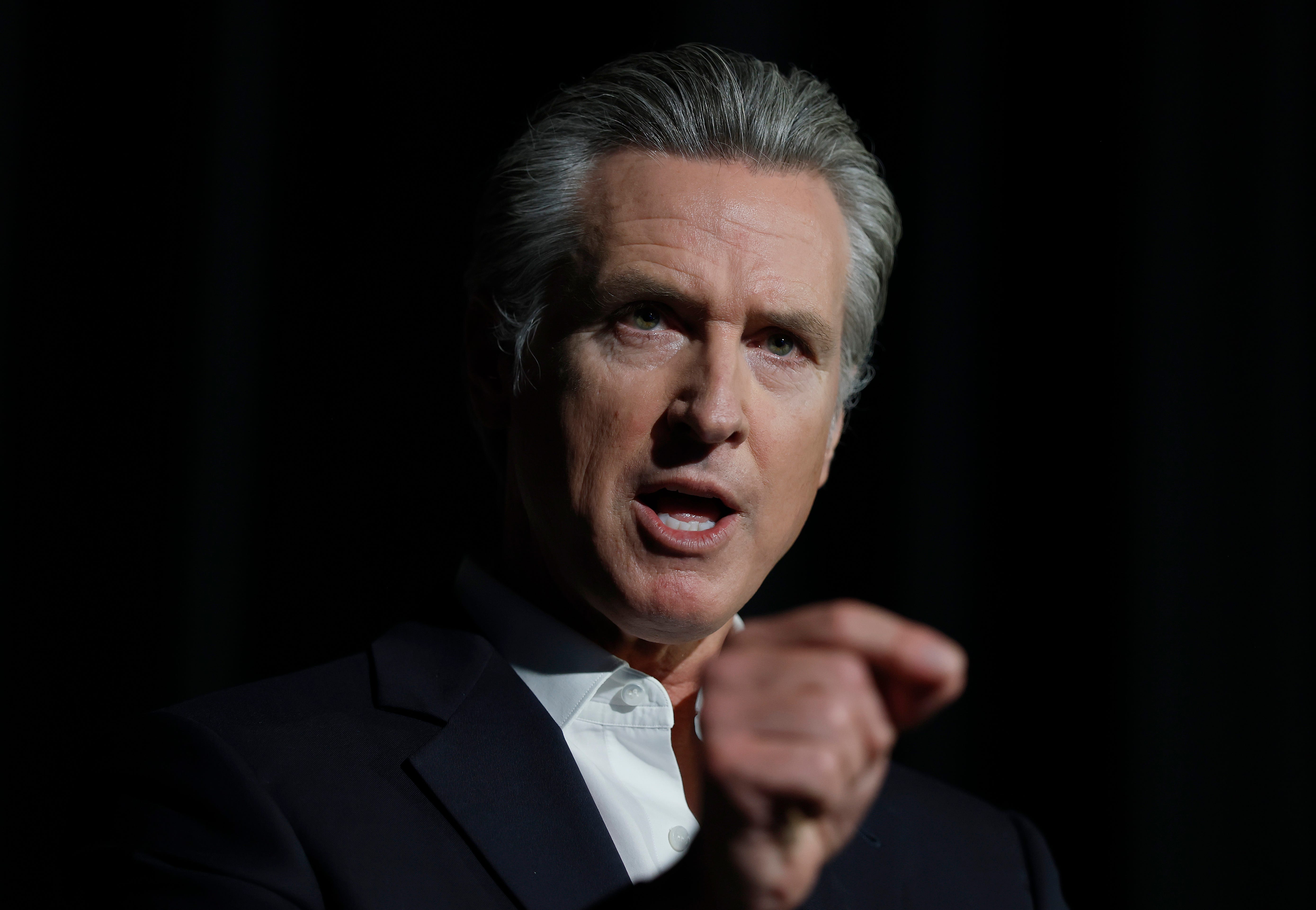
First, on Monday, one of Trump’s most formidable critics—and potential 2028 presidential contender—California Gov. Gavin Newsom announced on X that the DOJ has opened an investigation into him and his wife. “In recent days,” he said during a press conference, “federal agents have knocked on the doors of family friends and former employees.”
Second, on Tuesday, Daniel Rosen, the U.S. attorney for Minnesota, unveiled the arrests of twelve individuals and charges against three additional alleged members of “Antifa” who supposedly engaged in a criminal conspiracy, solicitation to commit a crime of violence, interstate stalking, assaulting a federal officer, and destruction of government property in connection with the anti-ICE protests in Minneapolis last year. Rosen said the indictment derived from Trump’s draconian “NSPM-7” memo signed in September, which loosely directed the massive federal law enforcement apparatus to go after individuals and groups, including nonprofit organizations, that fall “under the umbrella of self-described ‘anti-fascism,’” which Trump broadly defined to include “anti-Americanism, anti-capitalism, and anti-Christianity; support for the overthrow of the United States Government; extremism on migration, race, and gender; and hostility towards those who hold traditional American views on family, religion, and morality.” DOJ has since reportedly put “coordinators” in U.S. attorneys’ offices to advance the NSPM-7 directive, which has severe implications for core First Amendment rights.
Third are the allegations that FBI Director Kash Patel has given over $1 million in taxpayer-funded “bonuses” to select federal agents who are “willing to brazenly ignore the law in favor of pursuing political targets and members of Patel’s personal security detail who are privy to his many abuses of FBI resources.” That description comes from Rep. Jamie Raskin (D-Md.), who on Tuesday announced an investigation into Patel’s actions. “In some cases,” Raskin said, the “bonuses” exceed statutory pay limits, and “at such an extreme rate that some payments could not be made from depleted accounts.”
Of course, Raskin is in the minority in Congress, so his investigation will go nowhere. But that could change after November’s election—which brings us to the first of the three things that can be done right now to counteract Trump’s epic weaponization of DOJ.
First, the opposition must vociferously pledge to prosecute Trump’s enablers if and when the power dynamic shifts. Timothy Snyder, the expert on authoritarianism, put it this way: “We do know that these democratic (small-d) . . . comebacks are possible. In the recent cases where they have succeeded, Poland in ’23, Hungary in ’26, the person running the campaign said ‘I’m gonna prosecute the people who have broken the law.’” Snyder underscored two reasons why this strategy of announcing plans for accountability is important: For starters, “it communicates to people that you’re not in La-La Land. That you actually are gonna dig into stuff.” Also, “it deters people from committing more crimes. . . . Whether or not we have a decent election in November depends partly on whether people think it’s gonna be safe for them to do criminal things on Trump’s behalf.”
Democrats have already pledged a flurry of investigations if they win the House in November. Said Rep. Robert Garcia (D-Cal.): “We’ve got a team on Epstein, we have a team on [Trump] family corruption, we have a team on DHS and ICE.” That message should resonate through the ranks of Trump’s goons. His nominee for attorney general, his former personal attorney Todd Blanche, brazenly told reporters in April that it’s “appropriate” for the president to direct investigations. Dozens of junior prosecutors and FBI agents are going along with this misguidedness. They need to understand that they continue at serious risk to themselves.
Second, Newsom immediately filed a Freedom of Information Act (FOIA) request demanding all documents that “use the terms: ‘Gavin Newsom’ or ‘Jennifer Siebel Newsom’ or ‘Newsom’ between January 20, 2025 and the present.” This is a clever move because it puts Trump on the defensive and zeroes in on the issue of vindictive prosecutions by this DOJ. FOIA has an exemption for law enforcement materials, meaning Trump could simply stonewall. Under the law, however, courts need not give “blind acceptance” to that designation. The exemption hinges on a showing that the investigation itself is legitimate. If a “stratagem of harassment motivated the investigation,” which a court might determine by looking at the documents confidentially, Newsom could get them. Either way, it puts the question of Trump’s vindictive use of DOJ before the courts—and ultimately, the public, and likely before the November election.
Third, Newsom and the other defendants can seek to get their cases dismissed for lack of evidence or by showing that the investigations and prosecutions were vindictively motivated. This is exactly what happened to the bogus criminal case brought against Kilmar Abrego Garcia, which a judge found to be in retaliation for challenging his deportation to the CECOT prison in El Salvador.
Before Trump, vindictive prosecutions were very difficult to show because the law has historically deferred to the assumed good faith of prosecutors. Direct evidence of retaliatory intent was hard to come by. Those days are over. Trump put his vindictive intent on the record many times during the 2024 campaign and since taking office. He specifically threatened to arrest Newsom amid their feud over the handling of immigration protests in Los Angeles in 2025. When asked about it, Trump gave a blunt response: “I would.”
Unlike Trump, moreover, his enablers are not protected by the Supreme Court’s gift of presidential immunity; not only could they find themselves criminally liable for their current misconduct under a future administration, but they are susceptible to civil lawsuits for money damages under a vindictive prosecution theory, as well.
In the meantime, as Trump’s DOJ looks for crimes to attach to people (rather than following evidence of crimes to potential perpetrators), the individuals and organizations slapped with lawsuits or indictments—as well as the witnesses and bystanders on the other side of the intimidating federal door-knocking—are left to suffer financially and emotionally while the rest of the country stands back and watches Trump destroy the Justice Department. The defendants in these abusive prosecutions must look for every way to stymie Trump’s efforts, and the rest of us must take every opportunity to resist. The survival of the rule of law requires no less.
 | A guest post by
|