Iran Showed Us the Future of Asymmetric Warfare
America’s enemies will attack our political cohesion, our alliances, and our will.

“ASYMMETRIC WARFARE” IS ONE OF THOSE PHRASES that appears in national security discussions but is rarely explained. Politicians, military officers, and even television commentators use it, yet often without a clear explanation of what it means.
The Department of Defense’s Dictionary of Military and Associated Terms—the foundational reference that informs joint doctrine throughout the U.S. military, and which is available online for any civilian (or, for that matter, any service member) confused about a military acronym—defines asymmetry as “the application of dissimilar strategies, tactics, capabilities, and methods to circumvent or negate an opponent’s strengths while exploiting his weaknesses.” In simpler terms, asymmetric warfare is what occurs when a weaker actor recognizes it cannot win a direct military contest and instead searches for advantages elsewhere.
Most Americans associate asymmetric warfare with terrorism or insurgencies. The attacks of September 11th represented a classic asymmetric strike, using civilian aircraft against symbols of American power. The improvised explosive devices that wounded and killed thousands of coalition troops in Iraq and Afghanistan provided another example, allowing inexpensive weapons to impose disproportionate costs on the world’s most advanced military. But modern asymmetric warfare extends far beyond terrorism.
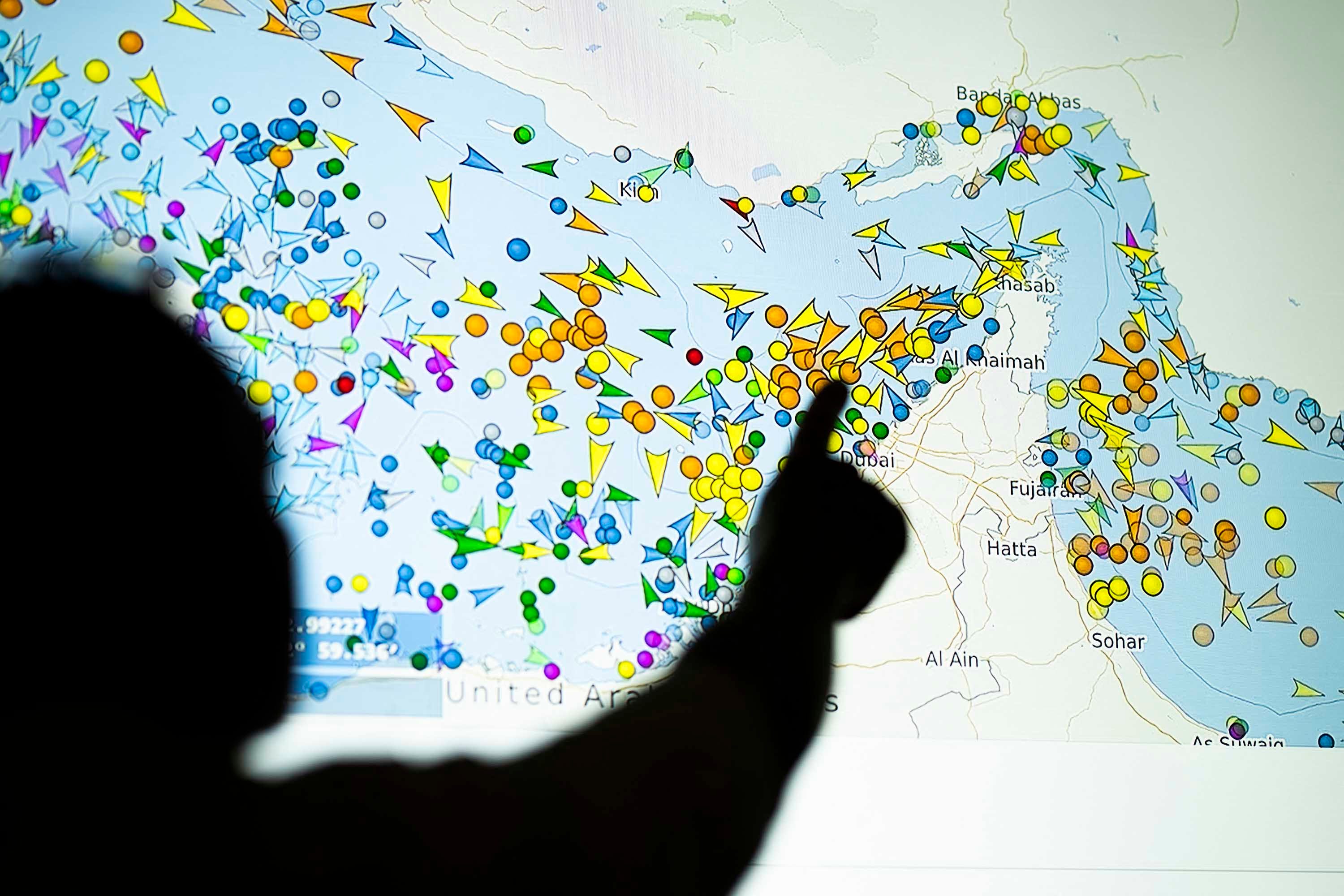
When Iran threatens to close the Strait of Hormuz, it is practicing asymmetry. Tehran understands it cannot defeat the United States Navy in a conventional naval engagement, so it threatens a narrow maritime chokepoint with rockets and drones. The objective is not military victory but economic disruption, political pressure, and uncertainty. Similarly, when Ukrainian forces launch long-range drone attacks against Russian fuel depots, oil facilities, and logistics hubs far from the front lines, they are practicing asymmetry. Unable to match Russia’s manpower, deep reserve of Soviet-era weapons, and strategic depth, Ukraine seeks vulnerabilities elsewhere, imposing costs far greater than the price of the drones being employed. When China uses economic coercion against neighboring countries, exploits critical supply chains, conducts cyber espionage, or pressures nations through trade dependencies, it is employing asymmetric tools designed to gain strategic leverage without firing a shot.
Information has also become a valuable asymmetric weapon. Disinformation campaigns, election interference, cyber-attacks, hackers-for-hire, and influence operations all represent attempts to exploit vulnerabilities while avoiding direct confrontation with a stronger opponent.
The strongest military does not always determine the outcome of a strategic competition, as we have seen most recently with Iran. Often, the side that best understands the nature of the competition gains the advantage.
ONE OF THE FIRST LESSONS MILITARY officers learn is that understanding an enemy’s actions requires understanding their strategic objectives. Tactical movements and operational plans matter, but before assessing what an opponent is doing, it is necessary to understand what he hopes to achieve.
That habit became particularly important to me in February 2022 as Russian forces crossed into Ukraine. Like many military analysts preparing for television appearances in the hours after the invasion began, I put my immediate focus on the maps portrayed on the “magic wall” on interactive TV screens: troop movements, axes of advance, and military capabilities. But years spent in uniform studying the military art suggested that those details, while important, were secondary to a larger question. What is the enemy’s strategy, and what is ours to counter it? In a hotel room before going on the air, I began listing the likely Russian strategic objectives, linked to what I saw as their potential operational use of military force.
Several seemed obvious. Russia sought to overthrow the Ukrainian government and remove Volodymyr Zelensky from power. It intended to seize Kyiv and decapitate the Ukrainian government. Russia also hoped to destroy Ukraine’s military capability in the Donbas, and they sought control of southern Ukraine and a corridor along the Black Sea that would give Moscow significant influence over Ukraine’s economy and maritime access.
Then two additional objectives found their way onto the page. Could Russia be using its military operations to cause debate in Brussels that would eventually divide NATO? Knowing the recent wars in the Middle East had already caused political divisions in the United States, could political frictions with NATO cause more American political turmoil? At the time, those Russian goals seemed less visible than armored columns racing toward Kyiv. Four years later, they would prove to have been among the most significant objectives of the entire campaign.
Russia’s leaders understood they could not defeat NATO conventionally. They knew the combined economic power of North America and Europe vastly exceeded Russia’s own resources. They recognized that NATO, as a unified alliance, possessed greater military strength, deeper reserves, and broader international support. But they also understood something equally important.
The true strength of NATO does not reside solely in tanks, aircraft, ships, or missile systems. Those capabilities matter, but their effectiveness derives from something less tangible. The real strength of NATO was the trust among allies and the shared understanding that democratic nations would stand together in moments of crisis. Seen through that lens, the invasion of Ukraine was not simply an attack on Ukraine. It was also an asymmetric attack on the cohesion of the alliance supporting Ukraine.
Putin understood that every NATO government would likely debate sanctions, military assistance, and escalation risks. He knew political parties throughout Europe and North America would also disagree about the appropriate response. He knew (and ensured) that social media would amplify divisions and that domestic political disputes would inevitably become entangled with foreign policy decisions, and he knew that every disagreement would become an opportunity and a wedge that he could continue to hammer in. The strategic objective was not necessarily to persuade Western citizens to support either Ukraine or Russia; the objective was to sow disagreement that would convince them to distrust one another.
Russia has spent years refining this approach through cyber operations, information campaigns, social media manipulation, covert influence efforts, and support for extremist narratives on both ends of the political spectrum. They didn’t challenge the United States with tanks and planes and ships, because they knew they couldn’t. But they did attack our open, raucous politics and our divided society.
That is what modern asymmetric warfare increasingly looks like.
IRAN HAS ADOPTED A REMARKABLY similar model. Unable to challenge the United States directly, Tehran has spent decades developing alternative methods of competition. Proxy militias throughout the Middle East, cyberattacks against infrastructure, maritime disruption in the Persian Gulf, missile attacks conducted through surrogate organizations, and influence operations all reflect the same strategic logic: If direct military confrontation is unwinnable, they would create instability elsewhere.
China appears to be studying these lessons carefully while adapting them to a much broader strategy. Unlike Russia and Iran, China possesses formidable conventional military capabilities. Yet Chinese strategists also understand that America’s greatest strength does not reside solely in aircraft carriers, fighter squadrons, or overseas bases. America’s greatest strength is its network of relationships. From Tokyo to Warsaw, Canberra to Ottawa, Seoul to the Baltic states, since World War II American influence has been magnified by allies and partners who trust American commitments. Those relationships have been built over decades through shared sacrifice, economic cooperation, diplomatic and military engagement, and demonstrated reliability.
Recently, much of that has been lost.
DURING HIS FIRST TERM and since assuming the presidency in his second term, President Trump has repeatedly criticized NATO, questioned alliance commitments, and characterized long-standing security relationships in largely transactional terms, in both words and security documents. Supporters argue that such pressure forces allies to contribute more to collective defense. Critics contend it weakens confidence in American leadership.
Regardless of where one stands in that debate, America’s adversaries undoubtedly benefit when trust between the United States and its allies erodes. And make no mistake, that has happened. Russian, Chinese, and Iranian strategists—and strategists from other foes and many friends—understand this and are taking advantage of it.
The question is whether Americans understand it, and are prepared to adapt.
The recent conflict with Iran provides an illustration of the challenge. Much of the discussion during the conflict focused on military effectiveness. Analysts—and even members of the Trump administration—continuously described the number of targets struck, the damage inflicted, and the capabilities demonstrated by American armed forces. Those conversations largely missed a more important point.
The United States military remains extraordinarily powerful. Few nations can challenge it directly. American forces demonstrated precision, reach, and operational excellence in Iran. Yet strategy has never been solely about military capability.
Effective strategy integrates diplomatic, informational, military, and economic instruments toward a coherent political objective. Military force can destroy, deter, and sometimes compel. But by itself, it rarely resolves the underlying political conditions that produced a conflict.
Even today, after the announcement of a dubious (and seemingly already abandoned) memorandum of understanding, debate following the Iran campaign still focuses on what was destroyed rather than what was achieved. Military achievements appeared tactically successful, but the broader strategic outcomes remain in doubt. How were military actions connected to diplomatic initiatives? Are our regional relationships strengthened? What economic measures will follow? What political end state was being pursued?
Our enemies understand that information, economics, cyber capabilities, diplomacy, public perception, and military force should all operate together. Most importantly, they understand that allies and partner relationships can also be targets.
Many Americans still imagine asymmetric warfare as something that happens overseas and is confined to military operations. They picture insurgents planting roadside bombs or terrorists operating from distant safe havens. Increasingly, however, the battlefield looks very different.
The target is confidence in alliances, in governmental institutions, in who is elected to lead a nation, in expertise regarding the affairs of state at home and abroad. As the former commander of U.S. Army forces in Europe, I know those were what we measured to determine the strength and weakness of our allies on the continent. We even kept a ranked “order of merit” list from one to forty-nine of our allies and partners in these areas. I’ll never reveal who was at the top and who was at the bottom. But I do know that America’s allies and foes rank us the same way, and I would suggest that we have slipped.
One thing is clear: Most of America’s adversaries have largely concluded that defeating the United States militarily is unlikely. Because of that, decades ago they began shifting the competition toward the very things that make American power effective. The defining lesson of modern asymmetric warfare may be that America’s adversaries have stopped trying to defeat us where we are strongest. Instead, they seek to weaken the relationships, confidence, cohesion, institutions, and even the government that amplify American power.
If this assessment is correct, then the most important battlefield of the twenty-first century may not be found in Ukraine, the Middle East, cyberspace, or the South China Sea. It may be found in whether democratic societies can reestablish and then build upon what has long been their greatest strategic advantage.