‘Motor City’ Review
A silent film for the modern age.

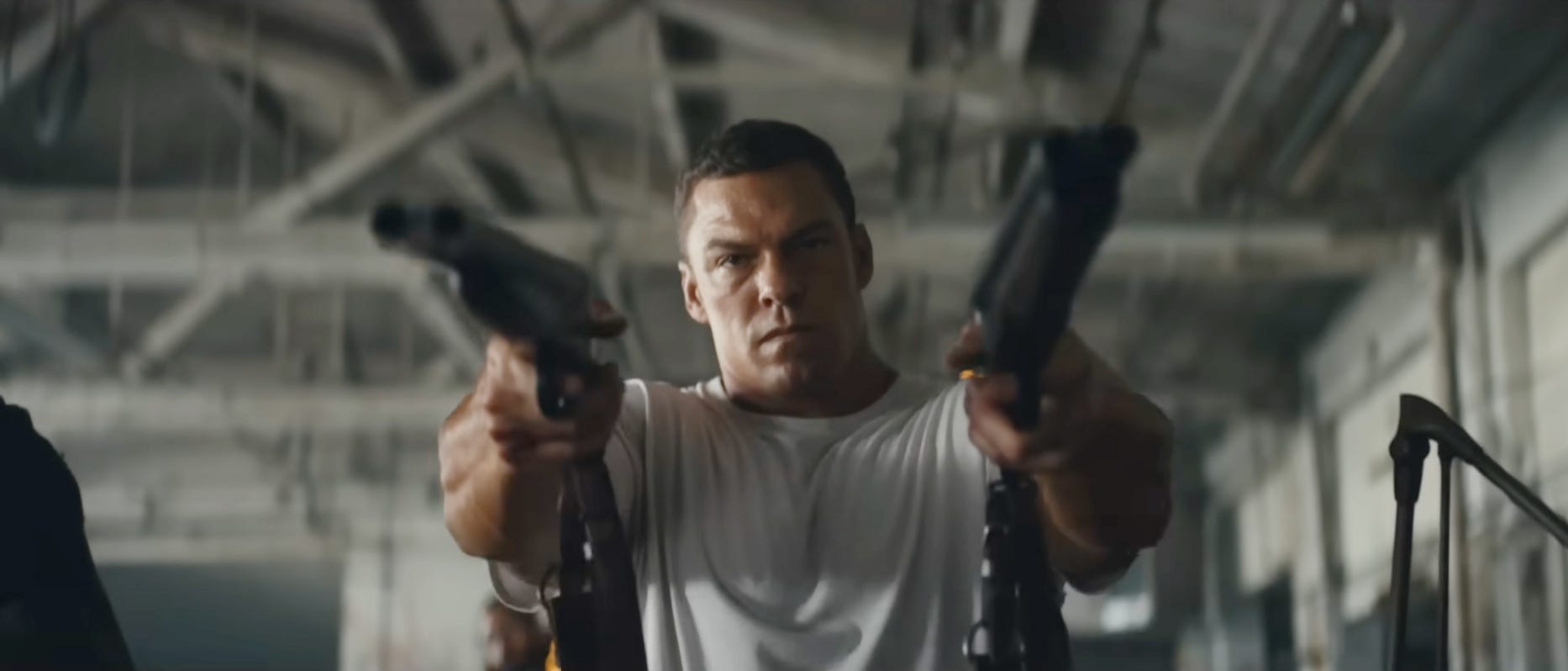
MOTOR CITY DERIVES FROM A SCRIPT that earned a spot on the Black List—a competition highlighting unique and unproduced screenplays—in the late ’00s. Virtually dialogue-free and entirely dependent upon the staging and the action to get its point across, the film bounced around Hollywood for the last decade and a half, garnering interest and helping the writer earn gigs like London Has Fallen and Peppermint (an entirely underrated revenge thriller), but never attracting a studio brave enough to execute on the vision of the delightfully named Chad St. John.
Eventually the stars aligned and the script found its way to also delightfully named Potsy Ponciroli (who directed the grimly intense Old Henry) and a bucket of cash from, among others, the free-spending indie distributor Black Bear. It’s obvious, though, that the unconventional nature of the screenplay—the very thing that made it so compelling to so many script readers looking for something new and interesting in a sea of boring sameness—made it a hard sell to audiences.
Indeed, I remember seeing the trailer for this in theaters with a paying audience and thinking, “Oh, cool choice, no dialogue in the trailer.” I did not realize that it was less a choice than a necessity, given the dialogue-bereft nature of the film. I can imagine regular filmgoers finding it off-putting, given that CinemaScore audiences gave John Woo’s Silent Night, which has a similar conceit—minimal dialogue, action-driven plot, lots of killing—a disastrous C.
Me? I kinda dug Motor City.
The setup is pretty straightforward: It’s Detroit in the 1970s, and after an in medias res opening in which the hulking John Miller (Alan Ritchson) is seen tossing guys off roofs and firing a shotgun shell that seems to have been topped with an engagement ring—I imagine this will reappear—we flash back to the before times. Miller is wrapping up parole and about to get engaged (well, that was fast) to waitress Sophia (Shailene Woodley). Miller is set up to take the fall for a drug stash he had no knowledge of by corrupt cop Lieutenant Savick (Pablo Schreiber), leading Sophia right back into the arms of local drug kingpin Reynolds (Ben Foster). Can Miller win her back? More to the point: How many people will he have to kill on the way to winning her back?
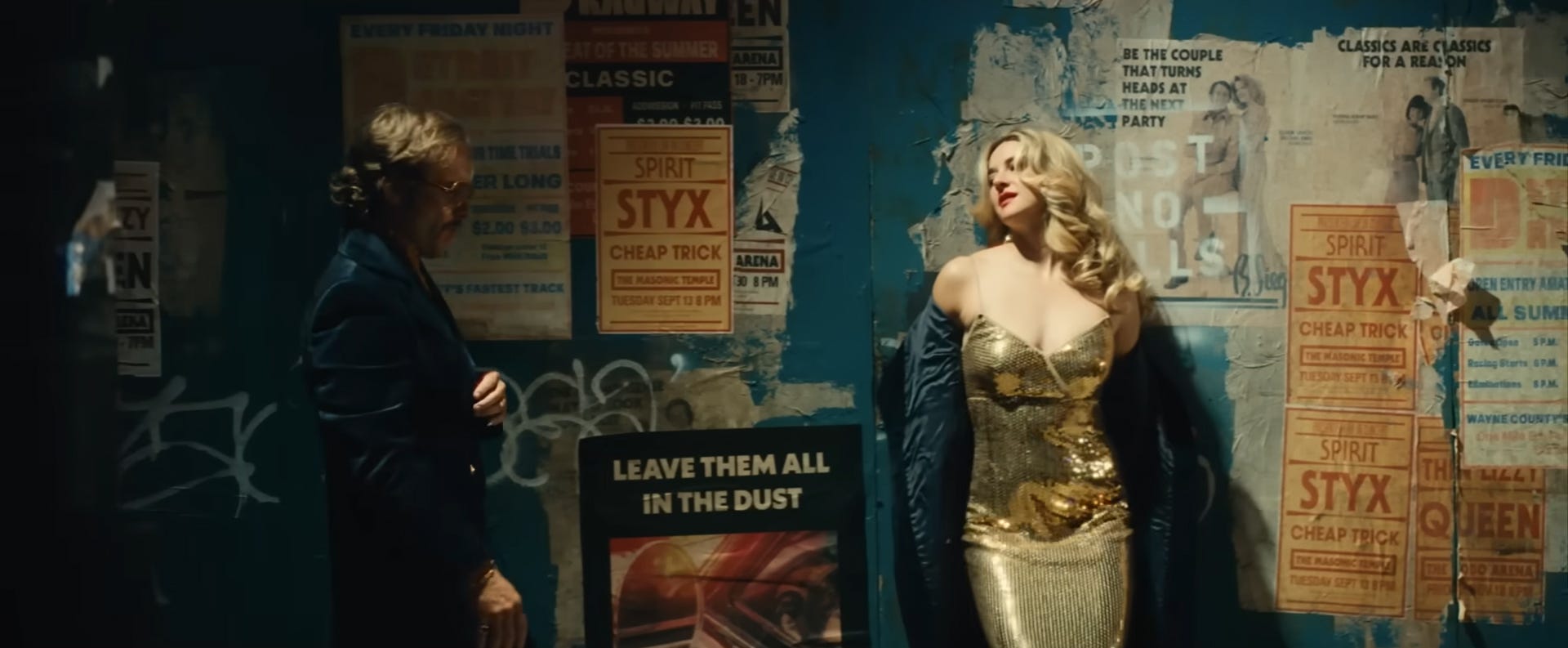
What’s fascinating about Motor City is that it works almost entirely because we understand the language of cinematic tropes that St. John and Ponciroli are playing with. The wronged ex-con, the crooked cops, the loyal friends, the misled ex-girlfriend, etc. One could argue that this renders the film little more than a collection of clichés, nothing more than formulae designed to move things along. One could also invert this argument, arguing that St. John and Ponciroli are exposing these tropes, and commenting upon them with the silent structure.
Personally, I prefer to take the story simply as it’s presented: Motor City hits its emotional beats and revels in its “every shot a painting” aesthetic, luxuriating both in the slow-motion movement and in soaking in the faces on the screen. And there are some great faces in this movie. Ritchson, best known for his three seasons as Jack Reacher, looks as though he’s carved from granite, while Woodley embodies a sort of fierce, soft sadness. Ben McKenzie has aged into his post-O.C. roles with real grace: he looks weary and righteous as a cop who takes it upon himself to free Miller from his unjust imprisonment. And Miller’s buddies—Lionel Boyce (of The Bear fame) and Amar Chadha-Patel play two pals who fought with him in Vietnam and help spring him from prison—are perfectly expressive and emotive. Patel in particular embodies a sort of wild joy that accompanies the pursuit of justice.
I am sure there will be people who are annoyed by the lack of dialogue in this film, though not for a lack of understanding: You really have to give Ponciroli and St. John credit for making this thing perfectly legible despite being able to count the lines of dialogue on one hand. That very simplicity may spark a backlash. But I quite enjoyed it. It’s a nice little spin on a familiar genre. I hope you give it a shot in theaters this weekend.
Discussion about this post