‘Negotiations’ Aren’t the Answer in Iran or Ukraine
“Gentlemen may cry, ‘Peace, peace!’ But there is no peace.”

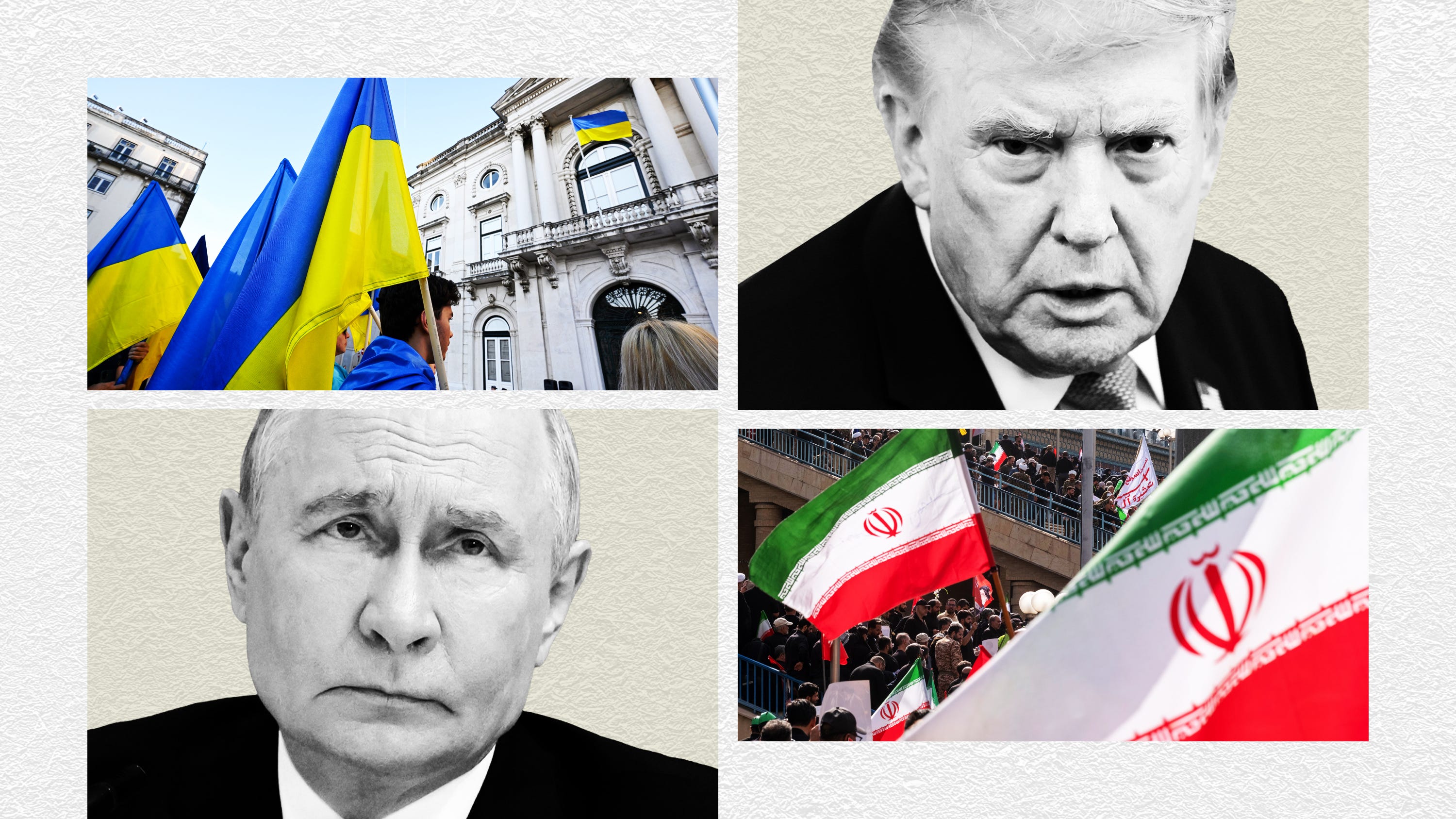
IT’S EASY TO START WARS, and far harder to end them. This is a lesson that both Donald Trump and Vladimir Putin are discovering, for a lot of the same reasons. Both began wars of choice on the assumption that they could conduct decapitation strikes, achieve favorable leadership changes, and end up in control of a puppet state. Trump clearly had Venezuela in mind; Putin probably had a situation more like Chechnya or Belarus. Instead, both ended up trapped in quagmires that they cannot negotiate their way out of.
Nonetheless, the instinct of many Western analysts is to call for negotiations in both cases. That’s a foolish mistake. It assumes that an outcome favorable to everyone is possible, and the logic runs backward from that flawed assumption. In the Iran war and the Russia–Ukraine war, conditions on the battlefield will decide when and how the war ends, and if and when there are negotiations at all—not the other way around.
To understand why, it helps to consider why wars end. There are generally five reasons, any one of which can be sufficient: One side is no longer capable of resistance; one side achieves its objectives; one side decides that the cost of conceding is less than the cost of continuing to fight; one side simply loses the will to fight; or both sides conclude there is no path to victory.
As long as both sides maintain the ability and will to fight, the war will continue. If either side believes it has a plausible theory of victory, it won’t want to make any significant concessions at the bargaining table. The stronger and more plausible the theory of victory, the more comprehensive and inflexible the demands will be.
In modern times, the losing side is rarely completely overwhelmed and no longer able to fight. In the case of the United States and democracies in general, wars either end when a limited but well-defined set of objectives is achieved (e.g., retaking Kuwait, seizing Maduro or Noriega) or when public opinion turns against the war and politicians decide it’s time to stop fighting—for strategic reasons, political reasons, or often both.
Whether and when a country chooses to stop fighting depends on whether the war is one of survival or one of choice. It also depends on who is making that determination: Often a war of survival for an authoritarian ruler or clique can be a war of choice for the nation, so whether the country in question is democratic or autocratic also influences how it makes peace. When democracies fight a war of choice, public support tends to erode quickly. When a democracy is fighting a war for national survival, on the other hand, its people will hang on to any thread of hope and keep fighting.
Autocracies are a bit different: When they fight a war of choice, they can press on regardless of whether the war is popular or not. Such is the case in Russia’s continuing conflict with Ukraine. If an autocrat perceives that losing the war will cost him his position, he can continue to throw old men and boys at the front until victory or collapse. In an autocracy, the fate of the ruler or ruling elite is treated as tantamount to the fate of the country, so even a war of choice can be fought as if it’s a war of national survival, as in Saddam Hussein’s long, bloody, devastating war against Iran.
THIS IS A LOT OF THEORY, but it’s necessary to explain where Russia and Ukraine, and the United States and Iran, are today. The two situations are similar, but with some crucial differences.
Fundamentally, the United States and Russia have both launched wars of choice from which they cannot easily extricate themselves. In Russia there is a history of very bad things happening to rulers who lose wars, and Putin is reportedly considering another mass mobilization, despite the disruption and discontent it will cause. Trump is facing the loss of both the House and the Senate, and is open to declaring a national emergency to rule by fiat and rewrite election rules to rig the elections.
In other words, both Russian and American leaders are enmeshed in a war they can’t seem to win, and to stave off the consequences of losing, both are willing to take steps that will produce massive unrest. The key difference between the countries is that Russia still has a semi-plausible path to victory. It could deploy a massive number of glide bombs and ballistic missiles to pummel cities, infrastructure, and fortifications along with an extra 300,000 to 500,000 mobilized troops. This would overwhelm Ukrainian defenses, albeit with a horrific number of Russian casualties. It might allow them to achieve their territorial goals of capturing Donetsk and Zaporizhzhia oblasts. This slim possibility is the basis for Russia’s intransigent negotiating position.
The United States doesn’t have as clear a path to victory. Trump is operating not as an autocrat nor as a democratic leader, but as something in the middle: He started a war of choice without identifying clear aims or winning political support for it, but his options are limited as long as he still has to care about support for the war among members of his party (and Americans in general). The American arsenal of some critical weapons is depleted, and the American economy and military aren’t set up to launch a ground invasion of Iran—seemingly one of the only solutions that would secure the Strait of Hormuz outside of using WMDs, albeit at enormous cost. Aside from the use of nuclear weapons, there’s no level of aerial campaign pressure that can persuade the Iranians to open the strait. This is why the United States has been indicating that it might accept demands from Iran that would have been unthinkable before the war started, like letting Iran control the flow of ships into the Persian Gulf and charge a toll for passage.
On the other sides of the conflicts, both Ukraine and Iran are in wars of survival. Ukraine’s is one of national, cultural, and political survival, not merely the survival of the ruling regime. Both countries are fighting on their home turf (so to speak) and are willing to endure extreme privation to win a victory, and both have their own theories of how that victory can be achieved.
The Ukrainian plan involves killing Russian troops and causing horrific casualties for every meter of ground captured. It also involves disrupting the Russian economy and forcing the Russian government to resort to mass mobilization. These strategic goals will force Putin to break the social contract he had with the Russian people, in which they traded liberty for a higher standard of living and international prestige. There may be a limit to how much war Russian society will tolerate; that’s the reason why Putin has been so hesitant to order another mobilization, to send draftees to Ukraine, or even to call the war a war.
Both Russia and Ukraine think they can win, and there is no real overlap between their demands. Thus, a negotiated settlement is impossible at this time. The best thing the West can do to achieve peace is to ensure Ukraine makes as much progress as possible toward victory over the next year.
For Iran’s part, its plan for victory is simple: keep the strait closed for the rest of President Trump’s term (at least) and watch him twist in the wind. Trump can’t do anything about it militarily, and is unwilling to meet their maximalist demands. Heads, Iran wins; tails, Trump loses.
Iran has a theory of victory and will pursue it as long as it seems viable, insisting on its extravagant demands as long as Trump is in office. But the United States has no good way out of the mess it made; dramatic escalation or humiliating concessions are the only options left.
 | A guest post by
|
Discussion about this post