

Sam Neill, 1947–2026
An unlikely superstar.

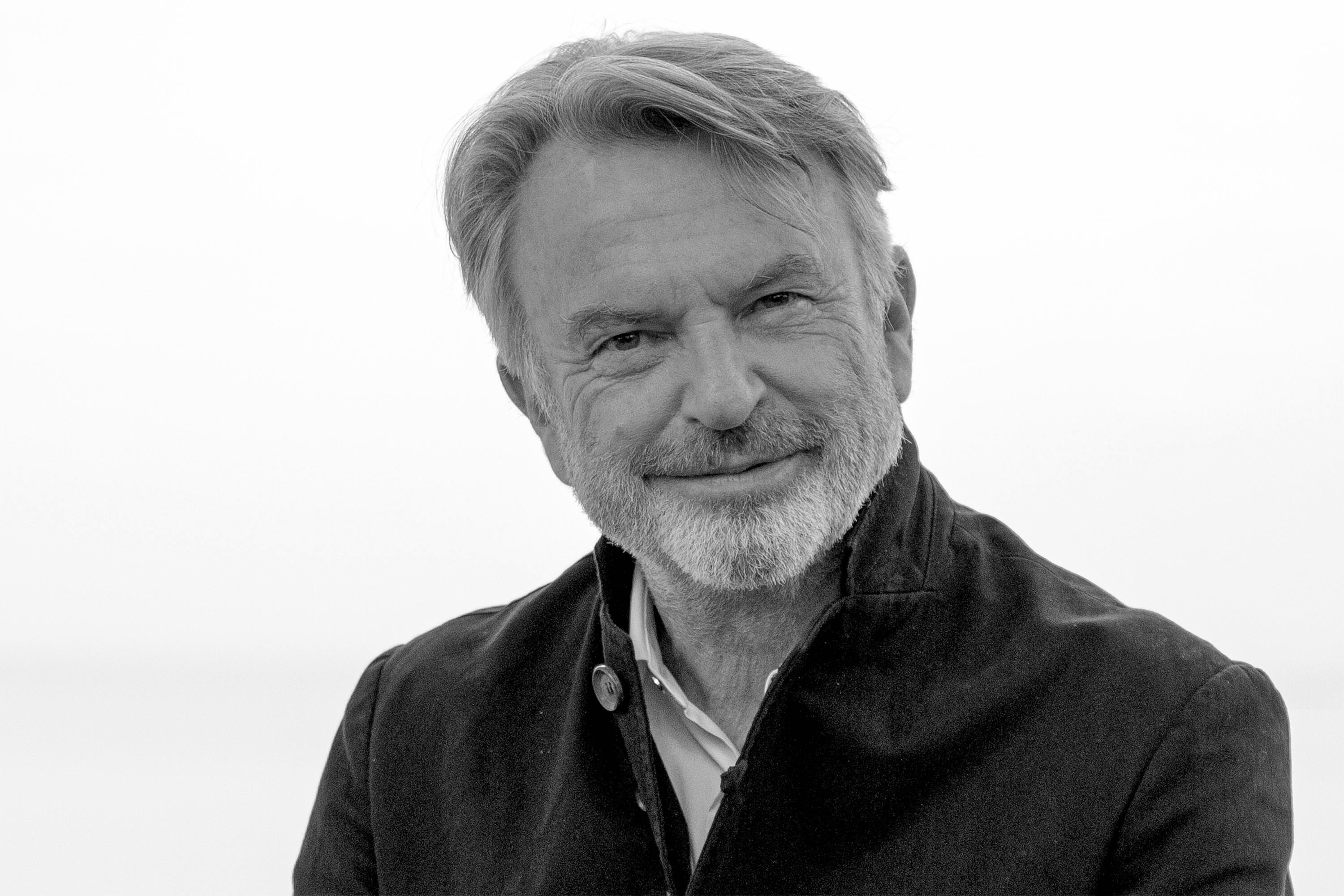
SAM NEILL, WHO DIED AT AGE 78 this morning following a years-long battle with cancer, was an unlikely A-lister. Hailing from New Zealand and possessing the very British quality of appearing in just about anything that would keep him working, Neill had a sort of receding everyman quality that allowed him to play both the hunter and the hunted. It’s this very quality—the ability to veer from tracking to panicked flight—that helped him explode into superstardom on the back of the Jurassic Park franchise as Dr. Alan Grant, a role that required equal parts wonder and skepticism.
For those of us who came of age in the 1990s—reared on roaring T. rexes at the multiplex and endless replays of the modern classics on cable—Neill was something of a constant, and never quite the same. There he was, a Russian submarine captain in The Hunt for Red October (1990), loyal both to his commander Marko Ramius (Sean Connery) and also an idea, and ideal: that of freedom and a chance at a new life in the freedom of the American West, a land where you don’t need papers to traverse state lines. “I would like to have seen Montana,” he whispers, looking with surprise at the blood spreading across his shirt during the film’s climax.
You’d flip the channel and then there he was in The Piano (1993), an altogether different sort of movie in which he played an altogether different sort of character for writer-director Jane Campion. Jealous and deranged—almost feral in his cruelty, a counterpoint to the supposed civilization of his settler, Alisdair—Neill’s antagonism toward Holly Hunter and Harvey Keitel in this film would help turn The Piano into an unlikely global smash at the box office the same year that Jurassic Park became a very likely global smash at the box office.
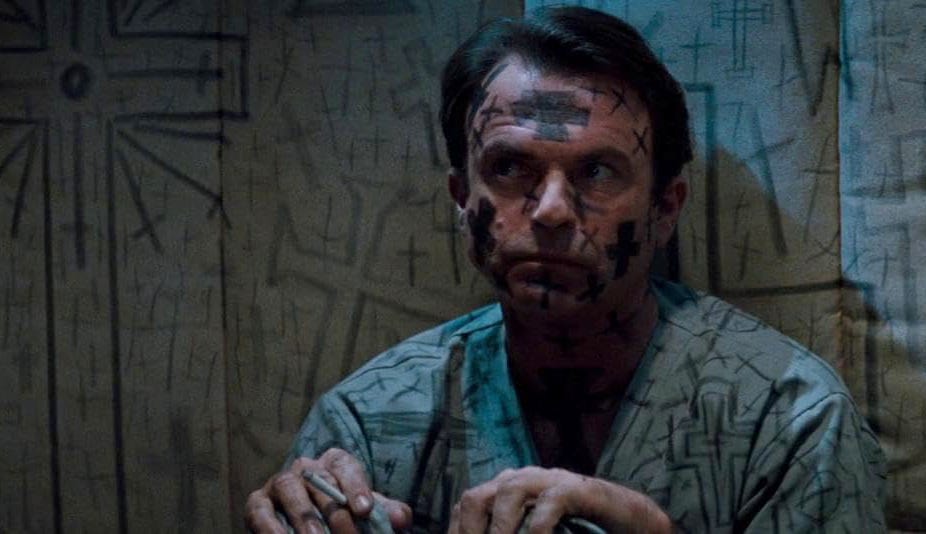
And then if you were lucky you could flip the channel to one of the panoply of HBO offerings and find the movie he followed those movies with, In the Mouth of Madness (1994). I have a tremendous soft spot for this, in part because it’s John Carpenter’s last great film, one in which the longtime master of horror is playing with all the tropes and tics of American horror—from King to Lynch to Craven to, yes, Carpenter—and rejiggering them into something wholly original. It’s a metatextual examination of what terrifies us and one that might only work with an actor like Neill at the center of it, that off-kilter everyman whose blustery self-confidence is a sort of trap, one that blinds him to a world that doesn’t, perhaps cannot, make sense.
Neill had a face made for horror movies, one that looked preternaturally weary yet could twist into these enormous, rictus grins at a moment’s notice. Event Horizon (1997) really shouldn’t work on any level; it’s like Solaris for idiots, a film that haphazardly trades carefully earned dread through the first eighty minutes or so for one of the lamest final acts in movie history. But even we idiots need our haunted spaceship movies, and Neill’s Dr. Weir, serving as the physical embodiment of the spaceship’s evil soul, is memorably terrifying. There’s a sort of casualness to his wickedness; we never see him choose to join the forces of darkness, he just kind of slides into it, drawn by the whispers of his dead wife.
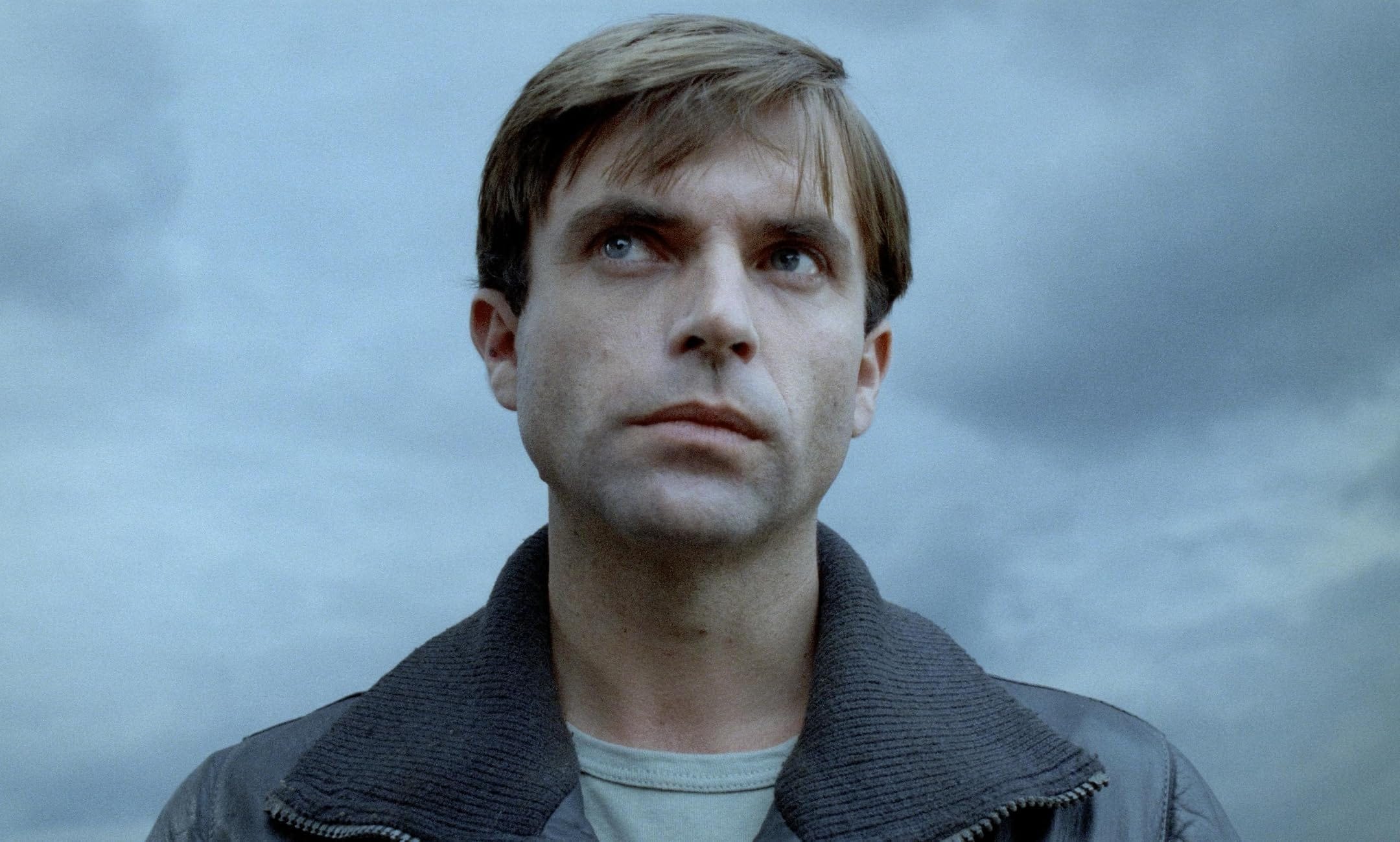
It is that terrified everyman quality that has helped turn Possession (1981) into an unlikely touchstone for Generation Letterboxd. Watching Neill transform from spy to spurned lover to literal monster, one can see a searing metaphor for the loneliness of depression in his performance. It was a troubled and intense production, but it features some shots you’ll never forget and Neill’s work here is the stuff of legends for a reason.
I could go on listing roles—and I’m sure y’all will remind me in the comments of the many classic parts I’ve failed to discuss. (Please: Share your love below!) But it’s Dr. Alan Grant that Neill will likely be best remembered for, the paleontologist in Jurassic Park who sees his life’s work made flesh and whose awe, and the skepticism, at the achievement reflects the audience’s own.1 Steven Spielberg does a brilliant thing in that movie, letting us first “see” the dinosaurs not through direct visual contact but by witnessing Grant’s reaction to them, and Neill’s effort here was instantly iconic.
Grant glances to his left and is taken by something. What we don’t know—well, we probably know, or at least think we know—but whatever it is has him spooked. Or maybe rapturous. Mesmerized. He stands straight up in the topless jeep, sweeping his hat off his head as he goes, and then—and this is the best part, the key to the whole thing—fumbles his aviator sunglasses off in a most naturally excited way, letting us see the wide eyes hidden behind them. And then, without looking away, he reaches down and grabs Dr. Ellie Sattler’s (Laura Dern) head and silently turns it so she can see what he’s gawping at.
The two of them have to do some great green-screen acting, reacting to a (for them, at shooting) invisible Brachiosaurus, before Grant hears from John Hammond (Richard Attenborough) that they have a T. rex. And then another great little moment, a combination of childlike wonder (“Say again?”) and middle-aged wooziness (“Put your head between your knees”) as his blood pressure spikes. Jurassic Park is a near-perfect movie, and Neill’s work is a big reason why: He just sells the overwhelming wonder of it all so precisely here that you can’t help but believe what you’re seeing even as you know it’s all Hollywood hokum.
RIP, Sam Neill. We’ll see you again in Montana.
Correction (July 13 2026, 3:40 p.m. EDT): As originally published, this remembrance misstated the character Alan Grant’s profession in Jurassic Park: He is a paleontologist, not an archeologist.
I come from NZ originally, and Sam Neill will be so missed by Kiwis everywhere. Amazing actor. A New Zealander who made it, but didn't stay away. Had a farm in Otago where he made wine. Great bloke. I loved The Dish and Dead Calm. One was a delight of a gentle comedy and the other is just a great thriller.
This one is pretty obscure but it’s my favorite and was the first show in which I ever saw Neill: “Reilly: Ace of Spies” (shown as a miniseries on PBS in the U.S.) Great historical fiction.