

Tell Me How the Iran War Ends
What are we fighting for?

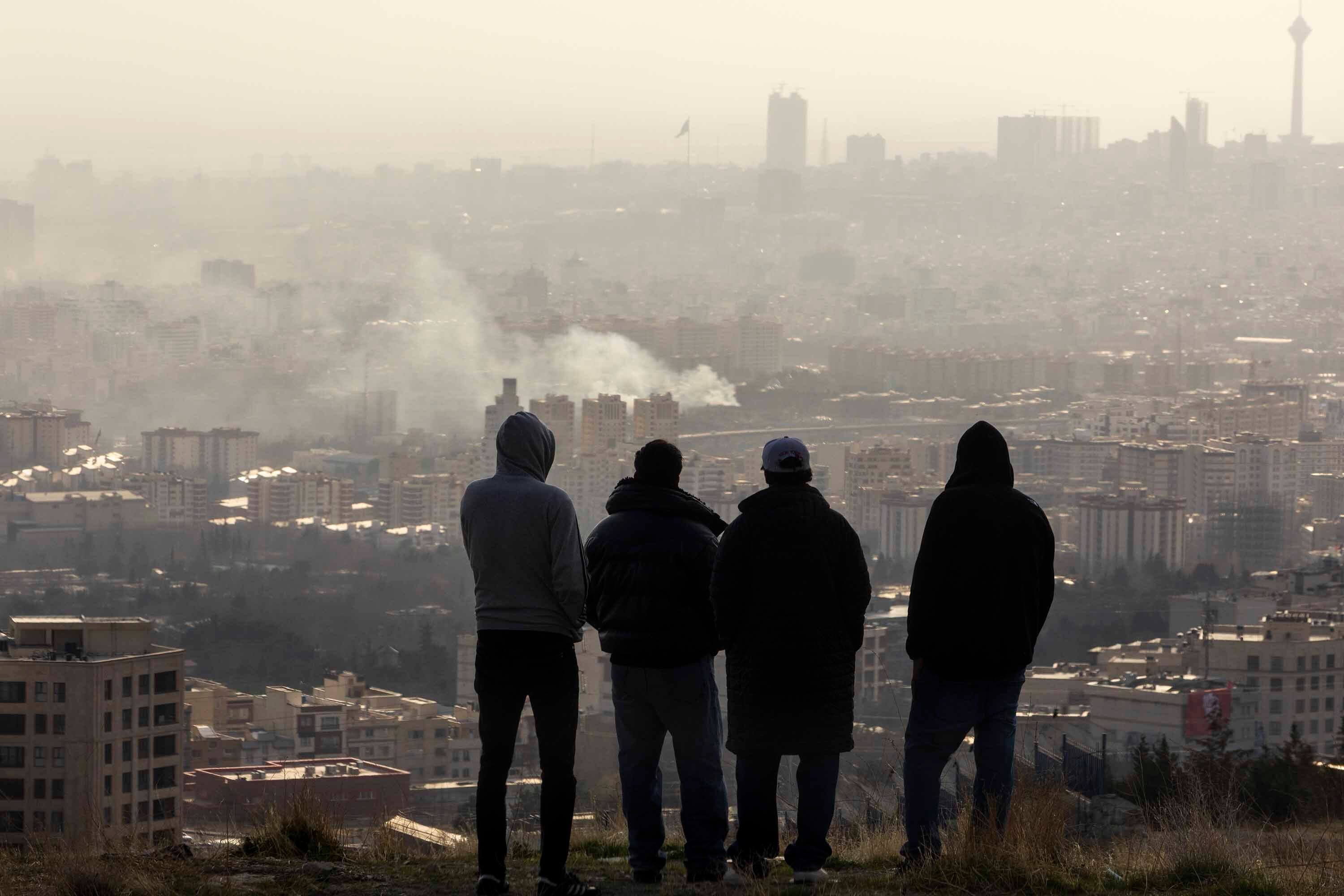
THE TRUMP ADMINISTRATION HAS SPENT a great deal of the last three months highlighting how much of Iran’s military and nuclear infrastructure has been destroyed—in particular, its missile launch sites, command centers, nuclear facilities, air defenses, and navy. The discussion has largely centered on battle damage assessments and the visible effects of military power. But focusing solely on destruction misunderstands the purpose of military operations.
Military organizations are designed to destroy enemy capabilities. Soldiers, sailors, airmen, marines, guardians, and special operators do that when called upon. They destroy equipment, infrastructure, formations, and sometimes even the enemy’s will to continue fighting. Those actions can be necessary and decisive.
But military force is never employed simply for the sake of destruction.
The purpose of military operations is to achieve a political objective. Military action creates conditions that allow governments to secure something they could not otherwise obtain: security, deterrence, stability, freedom of action, leverage in negotiations, a change in another state’s behavior, or a more favorable peace. Destruction may be one means of achieving those outcomes, but destruction alone is never the objective. A military can destroy every assigned target and still fail to achieve its political objectives. Conversely, a military force is only truly successful when the destruction makes room to build something better than what came before.
I was reminded of this lesson recently when my wife and I moved into a new home. As often happens during a move, we found ourselves opening boxes we had not touched in years, rediscovering things we had forgotten we owned. One of those discoveries was a keepsake photo book produced by the 1st Armored Division following our deployment to Iraq during the Surge of 2007 and 2008. Titled United and Strong, it was printed in both English and Arabic and distributed to Iraqi military counterparts, local officials, community leaders, and citizens with whom we worked during that difficult period. It was intended as a farewell gift and a reminder of what we had accomplished together.
As I thumbed through its pages, I was reminded of something we had deliberately tried to capture.
The book contained just a few photographs of soldiers, armored vehicles, helicopters, and combat operations; we didn’t have many pictures of the intense fighting all of us had experienced or the detritus of combat. Most of the pages showed something else: Iraqi soldiers training alongside Americans, police recruits learning their profession, provincial councils experiencing representative government after decades of dictatorship, markets reopening, infrastructure projects underway, farmers returning to their fields, and local leaders energetic but struggling through the difficult realities of governing communities scarred by war, terrorism, and sectarian violence.
The final section was devoted entirely to Iraqi children. Boys and girls playing soccer, attending school, smiling at the camera, interacting with Iraqi security forces and American soldiers, and growing up in communities beginning to imagine a future beyond violence. We titled that section simply, “For Them.” We deliberately chose not to focus on the toughest combat operations, the raids, the firefights, the explosions, or the destruction our soldiers and Iraqi partners wreaked every day. Those actions mattered. They were extraordinarily difficult and costly. But they were not the outcome we sought.
The photographs we chose instead captured what military force was intended to make possible: functioning institutions, capable security forces, representative government, economic activity, communities reclaiming normalcy, and children growing up with opportunities they might not have imagined only a few years earlier.
In military terms, those images reflected the desired end state. That phrase may sound clinical, but it sits at the heart of strategy. Before discussing targets, logistics, resources, force structure, or timelines, military planners are taught to understand the political conditions they are trying to create. What should exist when military operations conclude? What outcome is the use of force intended to achieve? How will leaders know when success has been accomplished? Only after answering those questions do professional planners determine what must be destroyed, what must be protected, and what must be built.
THE DESCRIPTION OF THE DESIRED end state is notably absent from much of the discussion surrounding Operation Epic Fury.
As the campaign has unfolded, its objectives have often seemed to evolve. Depending on the speaker and the day, the purpose has been described as destroying nuclear infrastructure, degrading missile capabilities, deterring future aggression, encouraging regime capitulation, causing regime change, weakening proxy networks, promoting internal unrest, or sending strategic messages to adversaries. These objectives are so poorly aligned and prioritized that some of them are even mutually exclusive.
Experienced military commanders understand that when the desired end state remains unclear or continually evolves, tactical successes become difficult to evaluate. Targets can be destroyed. Operations can be executed flawlessly. Military units can accomplish every assigned mission. Yet a nation can simultaneously find itself moving further away from strategic success.
Over four decades in uniform, I learned that war is more than combat. Yet that lesson is in many ways harder to understand now than it was when I joined the Army in in the 1970s.
Technology has transformed how modern societies see war. We’ve become accustomed to seeing precision-guided munitions strike targets from multiple camera angles, yet rarely does the viewer understand what is being struck. Drones capture spectacular explosions and night-vision footage turns military operations into cinematic experiences. Social media distributes these battlefield videos to millions of viewers within minutes.
The public sees the strike, but what they rarely see are the uncertainties that preceded the decisions, the intelligence gaps that complicated planning, the adversary’s inevitable response, the diplomatic consequences that follow, or the civilian populations that continue living amid the aftermath. The vision of war we see usually resembles entertainment more than strategy.
This phenomenon is sometimes called “war porn.” People experience the adrenaline without the understanding. They witness destruction without confronting its consequences. They see explosions but not memorial ceremonies. They watch missiles launches but rarely see the painstaking work required to rebuild after they land.
Those who have experienced true combat understand something battlefield footage rarely captures. Destroying enemy forces and capabilities are means, not ends. The real purpose of military power is to create conditions that advance political objectives and allow something better, more durable, to emerge.


EXPERIENCE ALSO TEACHES another lesson: humility.
Most young lieutenants arrive on the battlefield believing that there is an answer to every problem—and that usually the answer is more firepower. Good senior commanders have a different perspective. They have worked alongside allies, negotiated with local officials, advised political leaders, and watched carefully crafted plans collide with reality. Experience teaches them that intelligence is rarely complete, assumptions are often wrong, and the enemy always gets a vote.
The best senior commanders I served with were often the humblest people I knew. Their confidence came from competence and experience rather than swagger. They challenged assumptions, listened carefully, reworked plans, and searched constantly for what they might have missed. Combat taught them that certainty is often a luxury unavailable to those responsible for consequential decisions.
Unfortunately, humility is not one of the principal virtues in our culture. Swagger attracts more attention than expertise and unearned certainty is rewarded more frequently than thoughtful analysis. Those who acknowledge complexity are often criticized as weak, while those who promise simple solutions are praised as decisive.
That dynamic contributes to a civilian–military divide that many experts have written about, and that may contribute to further misunderstanding.
Scholars such as Peter Feaver, Richard Kohn, and Eliot Cohen have written extensively about the widening gap between the military and the society it serves. These researchers have commented on how fewer Americans have direct connections to military service, therefore fewer understand the military profession firsthand.
Yet in some ways I think the civilian–military divide is not the most important societal rift threatening our national security. I increasingly believe the larger divide is between those who understand the complexity of combat and those who reject it; between those who understand the consequences of war and those who focus only on the spectacle; between those who recognize national security as a long-term endeavor requiring patience, alliances, preparation, sacrifice, trust, and humility, and those who see it as a series of dramatic events measured by headlines and social media engagement. And there are civilians and service members on both sides of this divide.
Military professionals learn that power involves far more than weapons. Diplomacy, economics, information, alliances, and military capability must work together. Resources matter, but so does will: public support, political determination, national resilience, alliance cohesion, and the willingness to sustain effort over time. History repeatedly demonstrates that success requires the synchronization of all these elements.
We saw that during the 2007 surge in Iraq. Progress depended on intelligence-sharing, relationships, allied support, growing competence in the Iraqi security force, local governance, economic development, and the application of all elements of national power. Those advantages were not created through ad hoc actions or transactional relationships. They required patience, trust, consistency, and shared purpose.
That was what also struck me as I looked at the photographs in United and Strong. Military force can eliminate threats, buy time, and create opportunities. But it cannot establish legitimacy, build institutions, foster trust, create economic opportunity, educate children, or sustain political stability. Those tasks belong to governments, communities, and citizens. They are often harder than combat and almost always take longer. Those are usually the true objectives.
WHICH BRINGS ME BACK to Epic Fury. Three months into the campaign, Americans can reasonably conclude that military operations have achieved significant tactical and operational success. Targets have been struck. Infrastructure has been damaged. Capabilities have been degraded. Destruction has been wreaked.
But the larger strategic question remains: What political conditions are we trying to create, and how will we know when we have achieved them?
That is the essence of civil–military relations. Civilian leaders have every right to establish policy, and military leaders have every obligation to provide honest advice while faithfully executing lawful orders. But both sides must understand that national security is not measured by the next battle damage assessment report, the next Pentagon briefing, or the next news cycle. It is measured by whether today’s actions create conditions for a safer and more prosperous future.
If we continue to reduce national security to strikes, slogans, battle damage assessments, and spectacle, we risk confusing activity with achievement and tactics with strategy. Those who spend their lives studying war understand the difference. Victory is not measured by what we destroy but by whether that destruction served a purpose—and what remains standing, and what can be built, when the fighting ends.
As I returned that old photo book to the shelf, I paused on one final image. A group of Iraqi children smiling at the camera while American and Iraqi soldiers stood in the background.