The Americans Trump Would Rather Not See
There are some uncomfortably eugenicist vibes in Trump’s latest disability policy, which authorizes states to institutionalize more Americans.

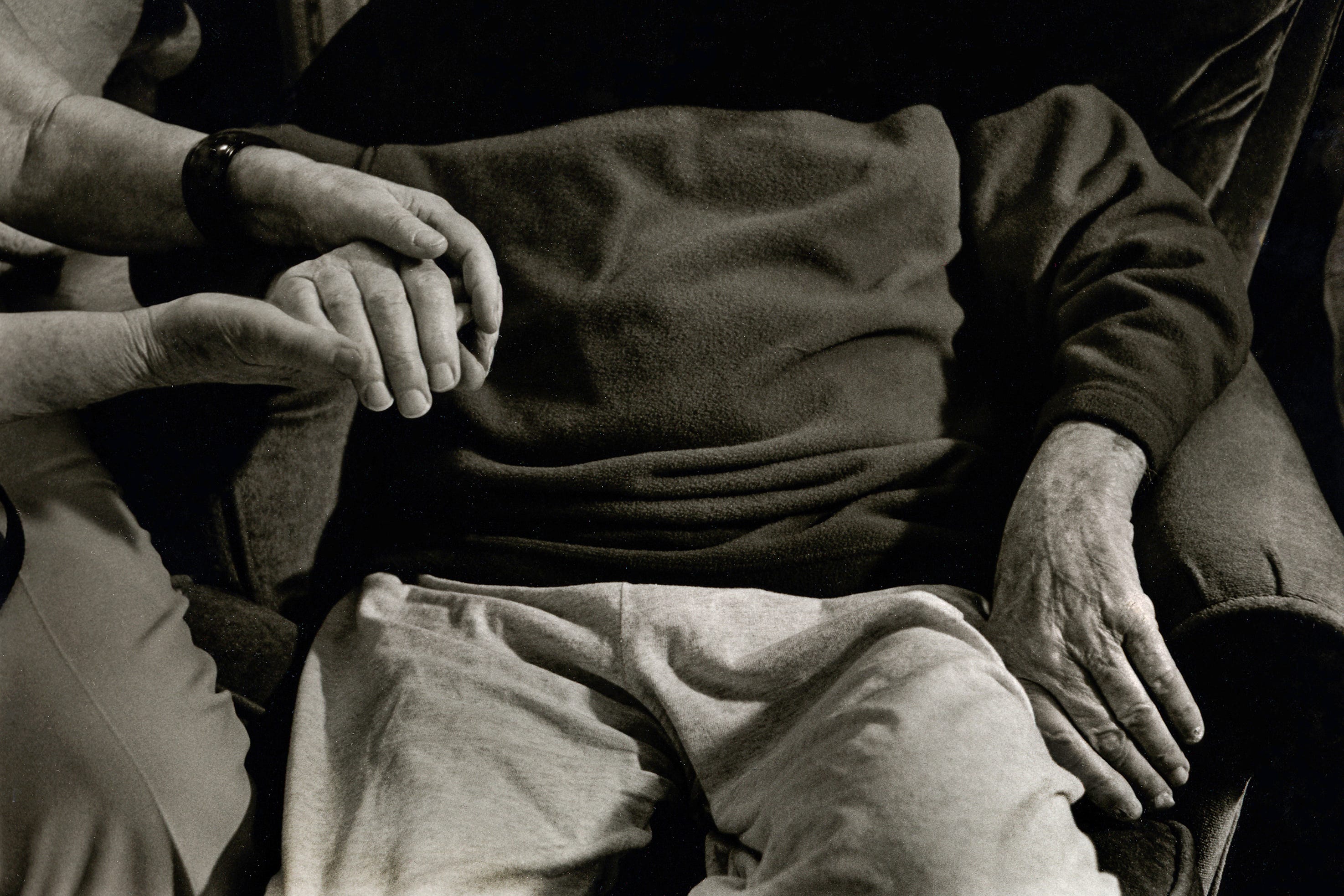
THE TRUMP ADMINISTRATION HAS MADE clear that it wishes to purge America of some of its undesirables. That includes, for instance, deporting 100 million people (a third of the population). But for those he can’t expel, he hopes to simply hide away.
Last week the Department of Justice published a memo authorizing states to institutionalize more people with disabilities. This basically means plucking more people out of society and shutting them into nursing homes, psychiatric hospitals, segregated schools, and sheltered workshops, rather than funding community- or home-based care where they have more autonomy.
“This is at its core about the belonging and inclusion of people with disabilities in our communities,” says Alison Barkoff, a health law professor at George Washington University who worked on disability policy under Presidents Barack Obama and Joe Biden. “This is about moving forward from a very shameful part of our history when we locked people with disabilities away from society.”
The DOJ policy would turn back the clock on decades of law and Supreme Court precedent. Since Olmstead v. L.C.,1 in 1999, states have been required to support disabled people in the most integrated setting possible that is appropriate to their needs. Institutionalization is supposed to be the last resort.
The consequences of this change could be enormous. Community- and home-based care services involve having a home health aide visit a person for, say, a few hours a week at home, rather than sealing them off in a closed facility. They help disabled people achieve both personal and financial independence. This kind of support empowers people to care for themselves, maintain relationships with friends and family, and hold jobs. And there has generally been bipartisan political backing for policies that, for example, enable children with disabilities to live with their parents whenever possible.
The actual legal enforceability of this memo is still unclear. Perhaps because it may not have originated with actual lawyers. Stephen Miller was reportedly behind it, Bloomberg reported, though the White House has officially denied his involvement.2
Even before this memo, states have been slashing disability services for some time as a result of the Medicaid cuts in Trump’s One Big Beautiful Bill. The law’s advocates professed that the cuts would safeguard safety-net programs for the “most vulnerable Americans,” but so far children and people with disabilities are among the biggest victims. More than half of states have already cut home- and community-based services that support elderly people with disabilities living in their homes.
The irony is that, in the long run, these changes may be more costly, since institutionalization tends to be much more expensive than letting people stay in their homes with supportive care.
“The states are a little bit playing Russian roulette,” says Barkoff. “They’re saying: ‘Is this a person who is going to find some way to navigate these cuts, and find family or friends to fill in? Or is it someone who’s going to end up costing me three times as much because they end up in a nursing home or in the emergency room?’”
The DOJ memo is part of a sweeping series of changes from this administration that affect how disabled people learn, live, work, and otherwise interact with society.
The administration also announced last week that it was reassigning the Education Department’s responsibilities for special education and civil rights to the Department of Health and Human Services, raising concerns about whether children will continue to have access to free, appropriate public education.
HHS, after all, is run by Secretary Robert F. Kennedy Jr., who has spoken in degrading and even vaguely eliminationist terms about people with intellectual disabilities and neurodevelopmental conditions. Last summer, for instance, Kennedy lamented that autistic people would never lead productive lives: “And these are kids who will never pay taxes, they’ll never hold a job, they’ll never play baseball, they’ll never write a poem, they’ll never go out on a date. Many of them will never use a toilet unassisted.”3
Shortly after those remarks, another HHS official, NIH Director Dr. Jay Bhattacharya, announced plans to create a compulsory “registry” of people with autism, using confidential private and government health records without consent—purportedly for the purpose of better studying the condition. These kinds of government lists, when compiled in authoritarian regimes, have not always worked out well for those appearing on them. After public outcry from the disability rights community, the agency eventually walked back the plans.
Elsewhere the administration has ended or suppressed programs intended to help people with disabilities. For example, the government canceled surveys tracking factors that can help disabled people find employment. It has tried to prevent Head Start providers from using the word “disability” when describing their programs, which forced at least one provider to cancel staff training on working with kids with autism spectrum disorder.4 And it withdrew guidance for businesses about their obligations under the Americans with Disabilities Act.
Not all of this can be laid at the feet of Miller, odious though he may be. After all, his boss launched his political career by appearing to mock a New York Times reporter with a physical disability; and both Trump and his top civil rights appointee regularly use a slur for people with mental disabilities.
Long ago Trump promised Americans a new “Golden Age.” And he’s been clear from the get-go who he believes belongs in it, and who does not.
Ramparts
–The fraction of total economic output that goes to workers—in the form of wages and salaries—is at its lowest level since World War II.
–Trump joined the long tradition of presidents yelling at energy companies for high gasoline prices. There’s a well-documented history of “rockets and feathers” in gasoline markets (i.e., prices tend to rise more quickly than they fall) that presidents refuse to learn, and instead they end up siccing antitrust authorities on oil companies. Good luck with that.
–Last fall I wrote about how the Department of Homeland Security had hijacked the legacy of Norman Rockwell, using the iconic painter’s works to promote Gestapo tactics and a nativist agenda that he never would have supported. Now the White House has stolen another one of Rockwell’s masterpieces, titled “Saying Grace,” which shows a woman and a boy saying grace at a crowded diner while others look on. Rockwell’s granddaughter, Daisy Rockwell, wrote me the following response: “It goes without saying that they have completely misunderstood the meaning of the painting, which is tolerance for others and peaceful coexistence.”


–This is a useful dashboard. It tracks the ongoing consumer burden of the Iran War, as measured by additional aggregate spending on fuel (gasoline/diesel). Current tally: About $62.5 billion.
–Since the start of this year, all of the growth in the S&P 500 has come from just two sectors of the stock market: AI and energy. Everything else is actually trading below where it was in January. (Hat tip to Torsten Slok at Apollo.)
The 27th anniversary of Olmstead was this past Monday.
The number-two official at the Office of Legal Counsel, which wrote the memo, previously served as principal deputy solicitor general in Texas. Texas is leading a group of red states suing to make it easier to forcibly institutionalize disabled people. Bloomberg reported that Miller’s involvement may be related to efforts to force more homeless people into institutionalized settings.
These comments are particularly upsetting if you know the Kennedy family’s history. RFK Jr.’s aunt, Rosemary Kennedy, had behavioral problems as a child, and she was later given a lobotomy that left her seriously intellectually and physically impaired. The experience motivated President John F. Kennedy to prioritize support for disability rights. And it was RFK Sr. who toured Willowbrook State School, an infamously overcrowded and inhumane public institution for kids with intellectual disabilities, in 1965. He called it a “snake pit,” a place where children lived “in filth and dirt, their clothing in rags, in rooms less comfortable and cheerful than the cages in which we put animals in a zoo.”
The Trump administration produced a six-page list of banned words that Head Start providers are forbidden from using when describing their programs when applying for funds. “Disability” was just one of the words; others included “race,” “women,” “trauma,” and “Gulf of Mexico.” This document came out of an ACLU court filing.
I want to suggest a darker take. Institutionalizing disabled people would be more expensive than current policies, but what if that’s not the end goal? If the current president and Stephen Miller are behind this, think euthanasia, not just eugenics. It’s time, again, for me to ask everyone to google “useless eaters.”
These are truly evil people, and I would not put it past them to try to eliminate the disabled population.
This is an absolutely terrifying time for parents of kids with disabilities. Of course, we all saw it coming. First it was immigrants and trans people…now Stephen Miller wants those with disabilities to disappear as well. Thanks so much for focusing on this topic.