

The Endangered Big Screen Comedy
‘The Invite’ and ‘Gail Daughtry and the Celebrity Sex Pass’ reviewed.

COMEDIES, PARTICULAR THOSE AIMED at adults, remain somewhat troubled on the big screen. And by troubled, I mean virtually nonexistent. Scanning the year’s highest-grossing films (so far), there’s no genre rarer. In the top 50, I see Scary Movie at number 13, we might count The Drama at 26, Solo Mio at 32, and You, Me & Tuscany at 44. That’s about it.
Comedies, by and large, have been subsumed into other genres. Action-comedies, horror-comedies, comedies as the spice that make comic book blockbusters more palatable, etc. But the relationship comedy, the adult comedy, the gross-out comedy, the coming-of-age comedy . . . pretty rare these days. The genre has largely migrated to Netflix and the other streamers.
That said, for those looking to have their funny bones tickled, there are two options hitting theaters this weekend: The Invite and Gail Daughtry and the Celebrity Sex Pass.
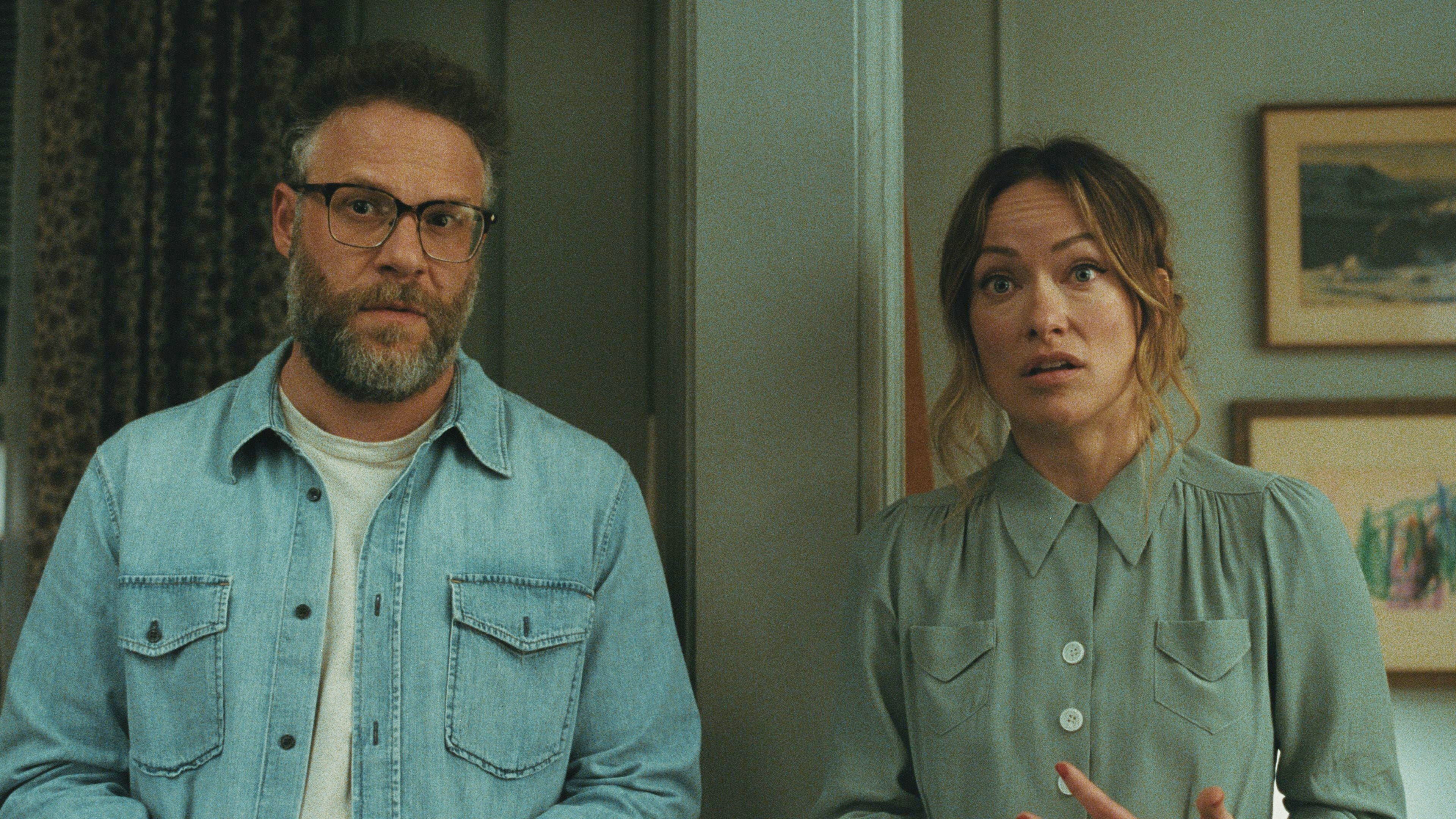
The Invite is directed by and stars Olivia Wilde; she plays Angela, one half of a miserable couple in San Francisco. She’s married to Joe (Seth Rogen), who has a bad back and broken dreams; most representative of his life is the crappy fold-up bike his wife has foisted upon him. It’s supposed to help his back and make him healthier; in reality, it’s an imposition, a little resentment building up on top of every other resentment he holds. The house they live in, which he received from his parents; his failed career as a musician; his wife’s endless renovations. He’s unhappy, and his unhappiness is only compounded when he learns that Angela has invited neighbors Pína (Penélope Cruz) and Hawk (Edward Norton) over for a dinner party.
This is not the titular Invite.
Joe threatens to complain to Pína and Hawk about the loudness of their sex upstairs: It wakes them up at night, their daughter, who has been sent out for a sleepover, can hear it in her room. It is, frankly, rude. Maybe not as rude as ambushing them with questions about it, but you kind of hope he brings it up when Hawk enters the apartment and immediately starts pushing everyone’s buttons. He exudes the sort of radical honesty that is often wielded smugly, like a social weapon. This variety of honesty is an aggressive behavior, a violation of general social norms designed to provoke but to do so hidden behind a veil of “truth.” Who can be opposed to the truth? Pína, meanwhile, smolders, not-quite silently.
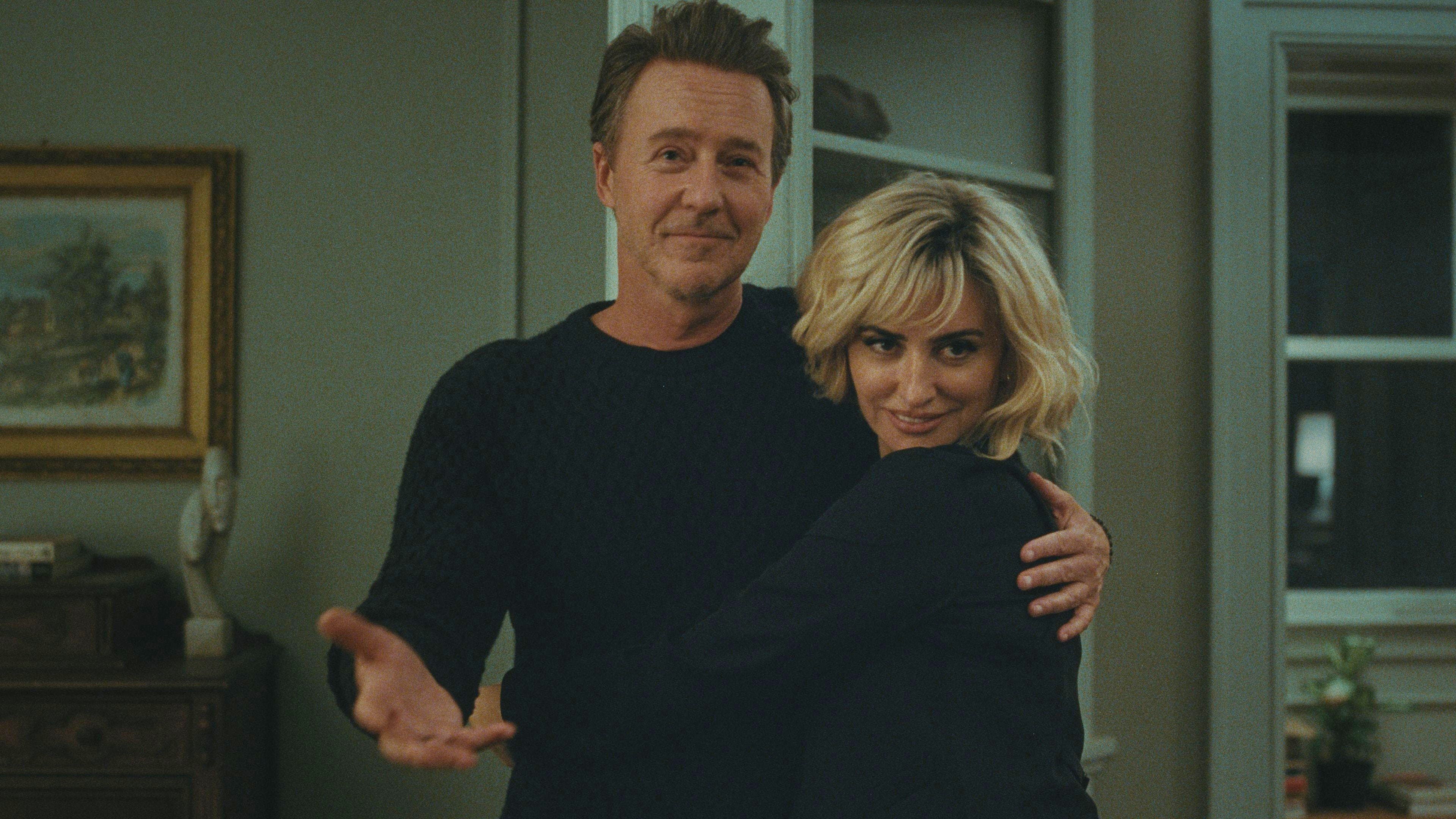
The Invite’s great strength is Norton and Cruz. Norton in particular: There is not another actor on the planet who can do convivial smarm like Edward Norton. He oozes smarm; smarm wafts off him like a musk. He has a sort of winking half-smile throughout the movie, a look that suggests he’s getting off on Joe’s barely concealed hostility. He’s like an internet troll conjured into the real world, the kid who holds his finger near your face and sing-songs “I’m not touching you” while he invades your personal space. And you can’t get mad at him! Because honesty! You can’t be mad about honesty, can you? And you can’t be too surprised when he reveals that he and Pína are swingers, that they partake in group sex, and wondered if, you know, the unhappy couple might be interested in partaking too.
That is the Invite.
The Invite is a four-hander; we spend the whole movie with this quartet, almost entirely within the confines of Joe and Angela’s spacious, though increasingly claustrophobic, apartment. Wilde does a wonderful job of expanding and contracting the size of the space to correspond with the film’s emotional movements. The script by Rashida Jones and Will McCormack is alternately spicy (this is a sex comedy involving swingers, after all; the phrase “porn tropes” is uttered at one point, but I’ll let you see the film to learn the specific context) and sad. It is, ultimately, a movie about unhappiness and attempting, with differing levels of success, to overcome it. Not quite a cringe comedy, The Invite is never entirely comforting, either; it is, like Hawk, a provocation, one that may make you squirm in your seat, particularly if you’ve come with a date.
I’ll just add that I’ve not been that impressed by Wilde’s previous films: Booksmart was one of the least-funny comedies I’ve ever seen in a theater, while Don’t Worry Darling was just a bit too enamored of its own cleverness to actually be clever. But this is a much more effective picture, one that truly probes depths not often poked at in feature films.
Support our coverage of movies, books, and culture by joining Bulwark+.
IF THE INVITE REPRESENTS THE SERIOUS, more prestigious side of comedy—an oxymoron in terms, perhaps, but we all intuitively understand what that sort of phrasing means—then Gail Daughtry and the Celebrity Sex Pass represents the sillier side of things. This is the branch of big screen comedy that descends from the ZAZ flicks and Mel Brooks’s expanded universe, a kissing cousin of the Pythons and Second City and National Lampoon.
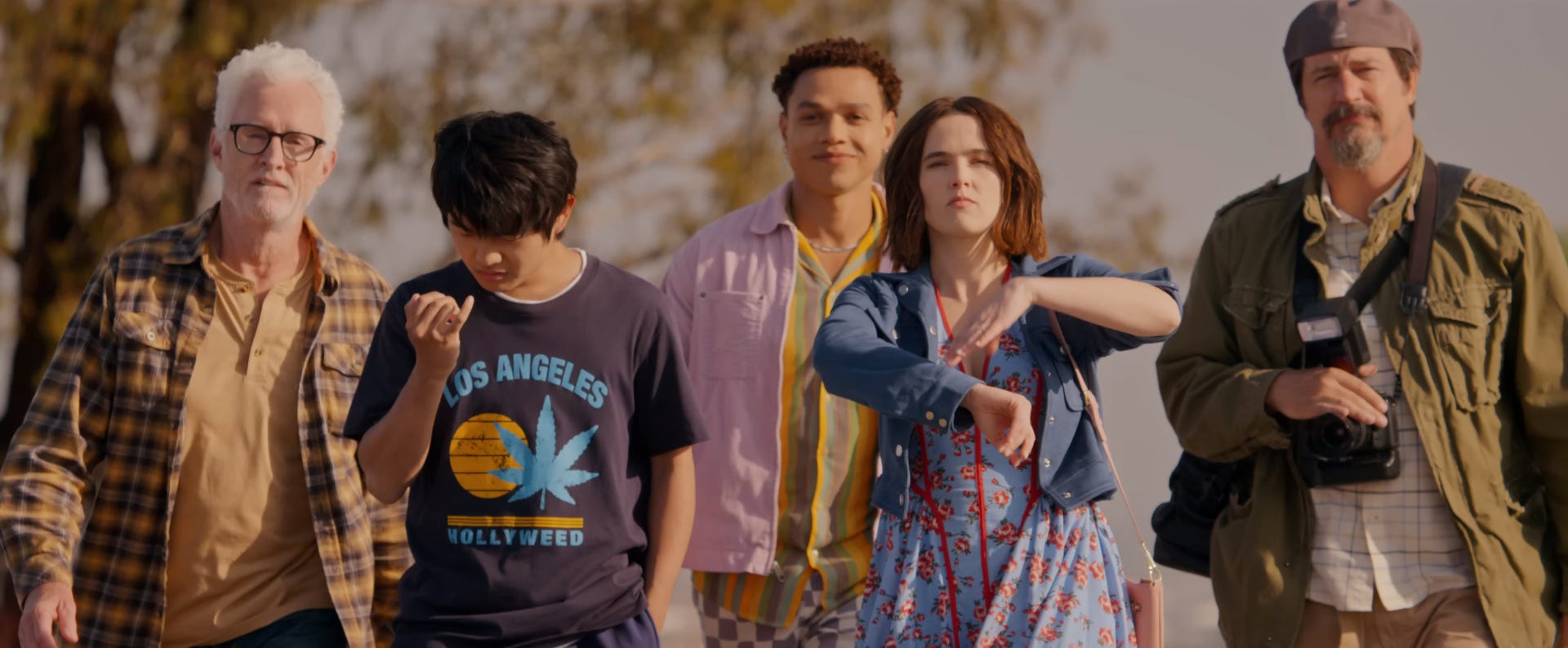
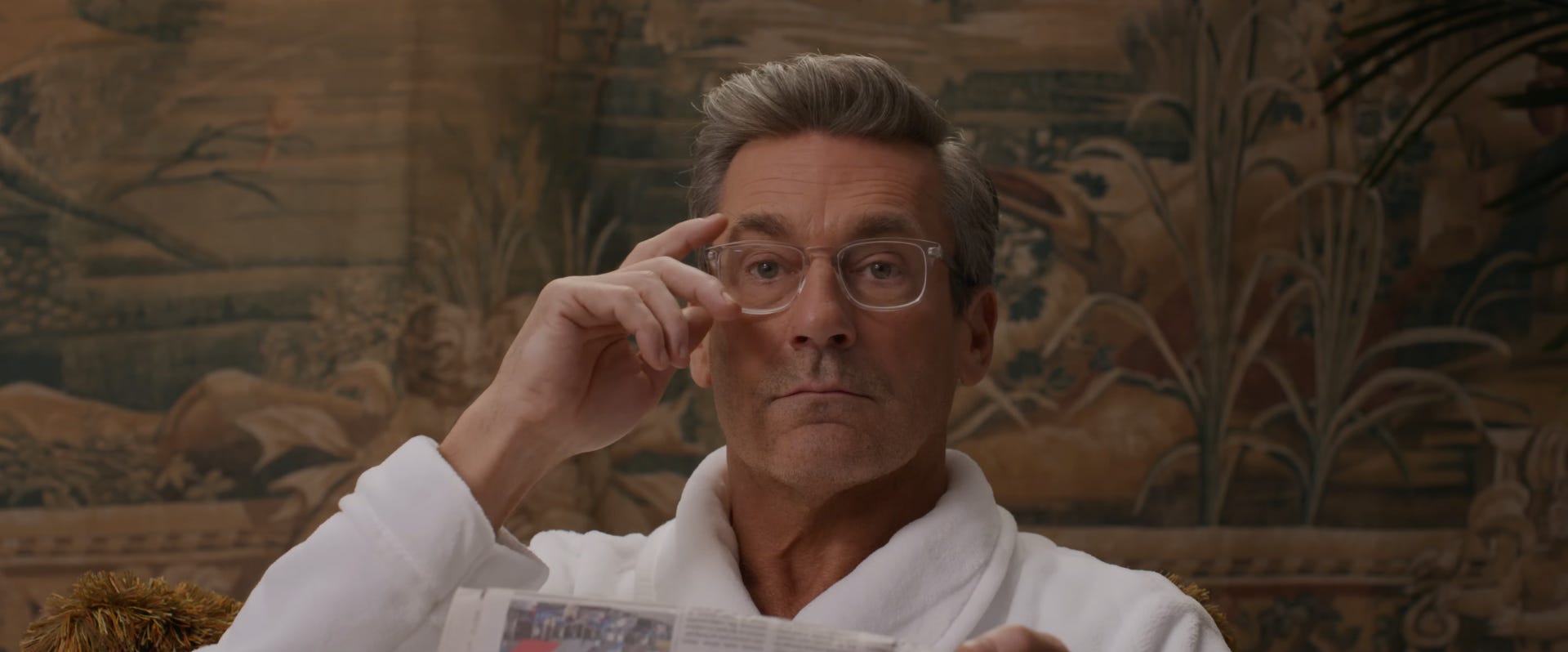
Gail Daughtry is directed by David Wain, who co-wrote the script with Ken Marino (who also stars), and the particular variety of silliness that runs through the film will be recognizable to fans of Wain’s previous efforts like Wet Hot American Summer or his sketch comedy shows The State and Stella. Imagine a retelling of The Wizard of Oz but with the action transferred to Los Angeles and with Dorothy angling to sleep with Jon Hamm to pay back her fiancé for sleeping with Jennifer Aniston (his “celebrity sex pass”) when they weren’t on a break: That’s Gail Daughtry and the Celebrity Sex Pass.
But describing the plot doesn’t really get at how any of the humor in this film works, which is predicated on a sort of deadpan incongruousness. How you will respond to Gail Daughtry and the Celebrity Sex Pass will probably depend on your tolerance for, e.g., a hotel concierge highlighting “attractions” in Los Angeles like the local 7-Eleven (make sure to check out their selection of gum!) followed quickly by directions on how to get a back-alley blowjob behind the Foot Locker (don’t worry: the puddle you stand in is just filtered water). Or a mailman narrator (the always-amazing Fred Melamed) who gets increasingly agitated while narrating the film because no one cares about his life. Or a doorman (Tobie Windham) for Jon Hamm (himself) who threatens to get Gail and her friends sick if they don’t leave his room at the Chateau Marmont. The illness is never specified; the comedy comes from the way Windham repeatedly intones “get you sick.”1
I dug it, but your mileage may vary: I grew up watching The State; Wet Hot American Summer was a staple of my college years, the DVD passed between dorm rooms and frat apartments with stoned glee. Reviewing comedy films in general is difficult, because the stuff on the screen either makes you laugh or it doesn’t. Comedy is very personal. But I’ve found it particularly hard with this variety of super-silly absurdism, a movie where Weird Al shows up as himself for a few minutes and hunts our heroes with a rifle. I’m a child of Monty Python and Adult Swim, so I revel in the farcicality here. I don’t think it will be for everyone.
And a movie like this often takes time to find an audience. For all the concern about the decline in comedies in theaters—and it’s a concern I share—no one saw Wet Hot American Summer in theaters; the film grossed less than half a million dollars. But it came to be regarded as a classic on the strength of repeated viewings, either on cable or via those aforementioned DVDs, a sort of cultural codeword that helped make it the lingua franca for a certain sort of teenager or twentysomething. You saw this happen over and over again in this time period: Modern comedy classics like Zoolander and Super Troopers were completely ignored on initial release only to find second life in cable reruns and on DVD racks in Blockbuster and Best Buy.
I do wonder if the endless, gaping maw of streaming will wind up blunting the ability of Gail Daughtry and the Celebrity Sex Pass to find that cult audience. Ironically, increased and instant access does not always translate into increased awareness or cultural cachet. Indeed, quite the opposite: There’s just too much stuff now for much of anything to break through.
Make sure to stick around for a mid-credits scene with Toby Huss that kicked the whole endeavor up half a star. The Toby Huss Rule once again applies!