The Comey Prosecution Is Dead
But it’s no time to rejoice.

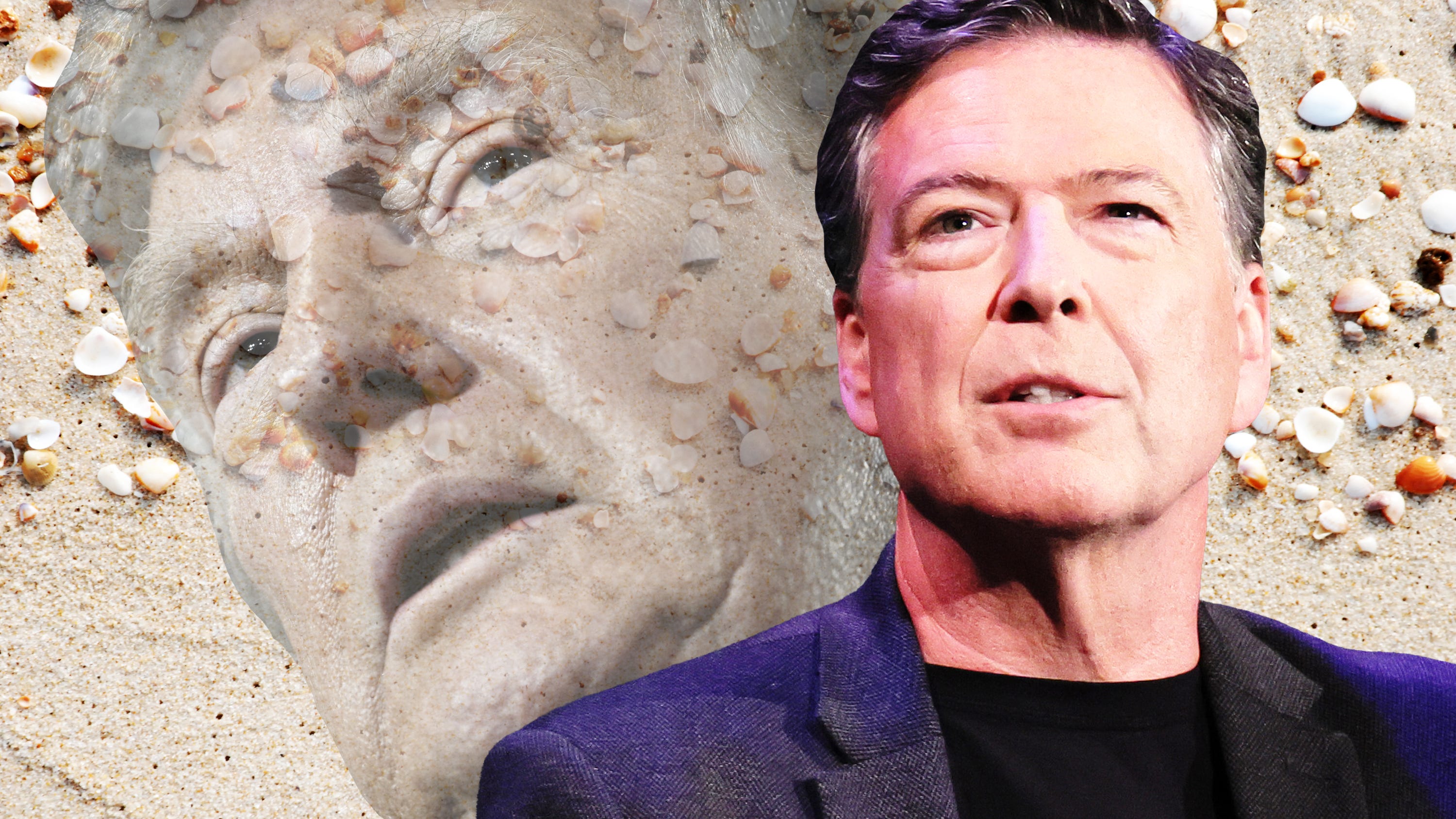
THE PROSECUTION OF JAMES COMEY is dead, to begin with. There is no doubt whatever about that. It is as dead as a doornail.
The manner of its death has yet to be determined, to be sure. But there is no doubt that it is dead. This must be distinctly understood, or nothing terrifying can come of the story I am going to relate.
To be sure, its death is, in some ways, disappointing. Who does not yearn for a full-blown public trial where the government’s proof is exposed for the bag of vacuous nonsense that it is? The spectacle would sell popcorn by the bucketful—and with good reason. Consider just a couple of the showstoppers that we are going to miss (summarized from Comey’s motion to dismiss and motion to suppress):
Comey was, infamously, indicted for posting a picture of some seashells that formed the phrase “86 47.” The government’s charge claims that the use of the number “86” was a true threat against President Trump—an incitement to violence and a reference to assassination or murder.
Leaving aside First Amendment issues, the government’s prosecution of Comey faces an extremely difficult factual problem: proving that to “86” someone or something actually means to kill or destroy it, and that this destructive meaning is what Comey intended to convey. The question is fraught because the origin of the phrase, in the 1930s, refers to the much more benign idea of asking someone to leave, or reporting that an item is out of stock.
To bolster the argument, the prosecutors went to the trouble of contacting well-known mafioso Salvatore “Sammy the Bull” Gravano. But he said that the mob would never use “86” to mean to kill someone because it was “too obvious.”
True facts.
Sharp analysis.
Honest opinions.
Make sure you miss none of The Bulwark—join Bulwark+ today.
The Bull went on to suggest that DOJ contact John Gleeson, one of the most famous, longtime mafia prosecutors in recent history. DOJ didn’t do so, but Comey’s team did— and Gleeson told them that “the claim that ‘86’ is mafia jargon for ‘kill’ is preposterous.”
Or consider the problem known today as “Person-1.” Person-1 (who knew Comey’s wife, Patrice) has said that he is convinced that Comey knew the meaning of the “86” and intended it in its more violent meaning. But Person-1’s initial reaction was that “86” had the food-service meaning of being out of stock. Only after listening to an episode of Rudy Giuliani’s podcast did he come to believe that Comey (who worked on mafia prosecutions) must have known that “86” was code for murder.
Imagine how amusing, entertaining, and painful a live cross-examination of Person-1 would be:
Defense counsel: Did you talk with Mr. Comey?
Person-1: No I did not.
Defense counsel: Then how do you know he meant the malicious meaning of “86”?
Person-1: He must have known it from his mafia prosecution days.
Defense counsel: Well, then would it change your mind if you knew that the foremost mafia prosecutor in America said that the mafia would never use “86” to mean “kill”?
Person-1: [Blank stare; stuttering; cold sweats.]
It is a shame that we will be deprived of this sort of magical public moment. But whether on this basis or because the indictment is deemed a vindictive prosecution, we are never going to see this show. The Comey prosecution is dead—its death sentence just hasn’t been written yet.
ALL OF WHICH MAKES THIS EPISODE both pathetic and still, in some ways, frightening. The case against Comey is shockingly weak, and it comes as the Senate considers the nomination of Todd Blanche, the Trump-appointed lawyer who approved the prosecution and pushed it forward at his master’s behest, to be attorney general. The terror comes not from the prosecution itself but from the almost casual way in which such vacuous prosecutions have become commonplace—so much so that Blanche may yet be confirmed, and if he is not confirmed, it will not be because of his politically biased use of the law but only because of Trump’s rapacious graft.
The Comey prosecution joins a long line of baseless politicized prosecutions and investigations: Comey the first time, Letitia James, Adam Schiff, sandwich guy, the Olympic canoer at the Reflecting Pool, “immigration crimes” in Minnesota, the list goes on and on and on.
For an attorney general to bring even one of these cases would have been an impeachable transgression in any other administration (arguably including even Trump 1.0). Today, such abuses have become normalized—so much so that they have gotten nary a mention in the ongoing Blanche confirmation fight.
Virtually all of these benighted assaults on neutrality and the rule of law occurred on Todd Blanche’s watch as deputy attorney general and now acting attorney general. He has lied, almost casually, about their provenance. We now know, for example, that emails from the day of Comey’s Secret Service interview show that the agents were sending real-time updates to Trump on Air Force One. And now we find out that the Secret Service initially declined the matter, and that Blanche’s aides directed the renewed investigation.
Nevertheless, Blanche has had the chutzpah to deny that Comey was prosecuted for political reasons. Earlier this year he told CBS News that the case was being brought by “local prosecutors” in North Carolina (it was a Trump-appointed prosecutor and his hand-picked assistant originally from New Jersey, but I suppose everyone is local to somewhere). When asked in another CBS interview whether Trump directed the indictment, Blanche said: “Of course not, absolutely, positively not.”
All of this used to matter. The rule of law and the neutral application of prosecutorial authority used to be bedrock principles of American jurisprudence. Yet, today, Blanche is running the Department of Justice. He may yet be denied Senate confirmation—but it will not, sadly, be because Republican senators have finally had enough of political prosecutions.
In considering Blanche’s nomination, senators see the ghosts of political prosecutions past and present. But they do not reject the ghosts of prosecution future. By not rejecting Blanche on this basis alone, the senators are, in effect, allowing their silence to speak volumes of acquiescence in aberrant behavior.
The prosecution of Comey is dead. Of that there can be no doubt. But the fact that a majority of Republican senators do not care that it is dead on arrival and are willing to countenance the confirmation of its architect means something far more terrifying, for them and for the country: The rule of law is now also almost dead.
 | A guest post by
|