‘Toy Story 5’ Review
The franchise of a lifetime.

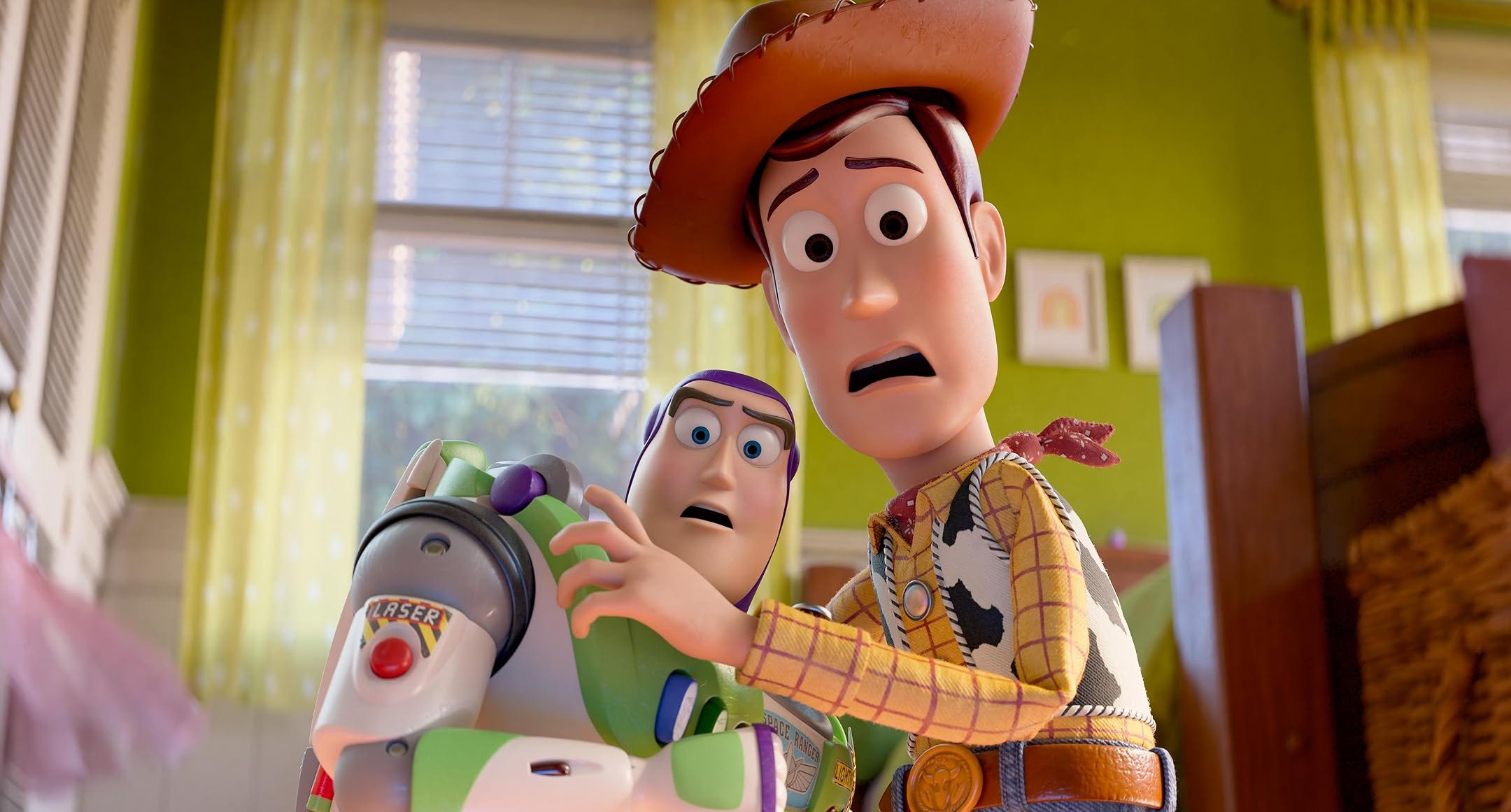
THIS HAS NOTHING TO DO WITH the quality of the film under review, but it has been striking to, essentially, grow up alongside the Toy Story franchise. I was 12 or so when the original film came out, not too far removed from the age of toys myself; I now have a daughter just a few years older than Bonnie (Scarlett Spears), who spends much of this film wrestling with the weird in-between age of toys and friends and screens and social media.
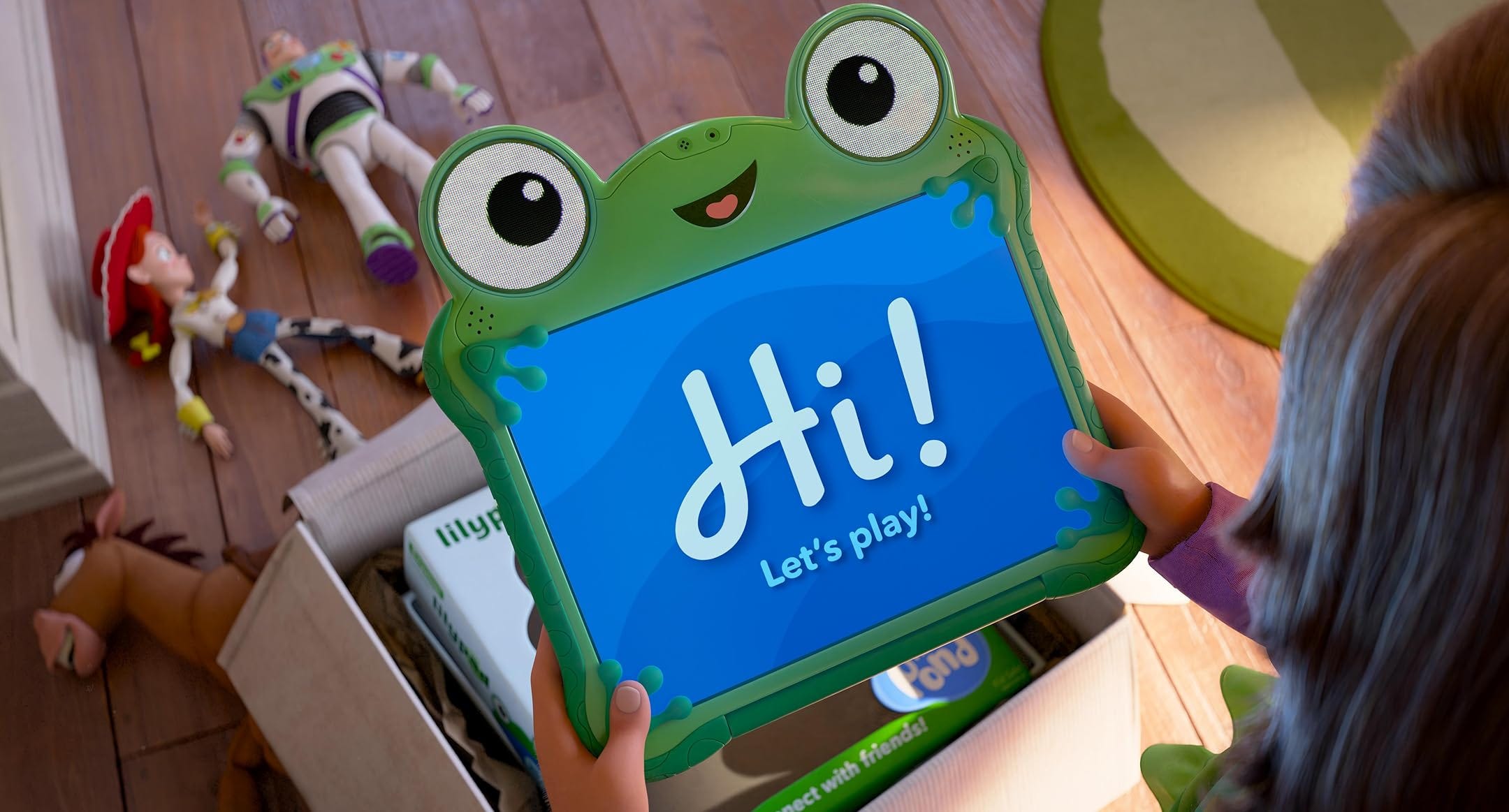
That the franchise is, generally speaking, a metaphor for parenthood and all its troubles is neither a new nor profound insight: Cowboy Woody (Tom Hanks) and Space Ranger Buzz Lightyear (Tim Allen) have spent the franchise fretting about the fates of their kids, Andy and Bonnie. Yes, yes: They also worry about their own obsolescence—this is, naturally, the key theme of Toy Story 5, what with the arrival of the tablet known as Lilypad (Greta Lee)—as well as the general fear of being forgotten by those they raised.
But the worries of the toys are wrapped up in their self-imposed burden to prepare their kids for life outside the home. This is the key insight of Toy Story 5, a lesser version of which would have made technology more purely evil. And while there is a malignancy at the heart of Lilypad, it does not originate in the tablet’s e-guts: She is just as interested in helping Bonnie prepare for teenage existence as Buzz and Woody and the rest of the gang. Rather, it’s what the tablet allows, the doors it opens to human behavior. Man is the most dangerous animal because he is the smartest animal, and no animal is smarter in its cruelty than the tween girl.
Lilypad, like all technology, is just a tool, one that can be used by humans however they see fit. And when Bonnie feels isolated because none of her peers play with toys like Rex (Wallace Shawn) or Jessie (Joan Cusack), instead preferring to play social games on their Lilypads, her parents give in and get her the screen. (It is perhaps worth noting that every adult is as addicted to their devices as the kids in question: Guilty, your honor.) Efforts to limit access fail as soon as Bonnie makes e-friends with some girls she knows, e-friends who quickly turn the group chat into a torture chamber when it is revealed that Bonnie still plays with dolls. (“Still”! She’s just 8! What is happening to our kids?!)
The broader question the series asks—has been asking; may continue to ask until I’m buying virtual-reality dolls for my grandkids, given how much money these movies keep making—is this: What is the point of play? What is the goal? To develop a fully realized inner life, one driven by imagination? To learn the proper way to socialize with strangers, to make friends? To cultivate empathy for those around us? All of the above? The big question for the tablet generation, then, is this: Does absorption within screens wind up short-circuiting some—perhaps all?—of these efforts?
All that aside: Toy Story 5 is a great deal of fun because it is, like its predecessors, very funny. Buzz and Woody continue to have a nice rapport; there are countless little asides and gags; the visual comedy is all gold. It’s always amusing when the toys are working out their own rules for existence, as when a fleet of drone-like next-gen Buzz Lightyear dolls tries to figure out why they go limp when humans approach.
There are new playthings beyond Lilypad, including several items of outdated toy tech that I cannot imagine actually exist—an electronic aid to help potty-train children and two devices I can only think of as baby’s first camera and baby’s first GPS—but keep the plot moving. (Seriously: Why would a 6-year-old girl need a mini GPS device? What purpose would that serve?) And all of the non-Lilypad tech toys in this movie are borderline magical, but that’s fine. We are, as a society, a long way from the days of Slinky Dog and Mr. Potato Head, I guess.
For what it’s worth, my kids (attending their first press screening) had a blast. The jokes all landed except for the ones meant to go over their heads, and most of those landed just fine with the parents in the crowd. I don’t know that this entry is, strictly speaking, necessary—the franchise has already had two pretty definitive endpoints, after the third and fourth movies—but it’s amusing and entertaining and quietly profound.
Which is to say: It’s a Toy Story movie. And whatever dry spell Pixar’s had over the last few years, they know they can go back to this well just about any time they need to.
"What is the point of play? What is the goal? To develop a fully realized inner life, one driven by imagination? To learn the proper way to socialize with strangers, to make friends? To cultivate empathy for those around us? All of the above? The big question for the tablet generation, then, is this: Does absorption within screens wind up short-circuiting some—perhaps all?—of these efforts?"
The answer here is, "Yes."
I don't want to seem like more of a luddite than I am, but I've come to appreciate the advantage of having kids develop on a human centric scale (both in terms of time and space). As an Xer (so, please stop calling me a Boomer, that's my parents!), I had the good fortune of bridging between the old and new. I'm far more resistant to the pull of the algorithm(s) than my kid, who--despite my best efforts--is rapidly being co-opted by it.
This tech is great and has great potential, but if we're not asking "What is the point? What is the goal?" constantly, then we will surely be turning ourselves over willingly to the matrix.
Thoughtful review Sonny! I was 18 when the first one came out, and at the time it struck all the feels as I realized I was leaving childhood behind, along with some beloved toys and all the imaginary adventures I’d had, for a grown up world with real responsibility. I think the whole series (maybe 2 to a lesser extent) is also about dealing with the unstoppable forces of change and how not completely losing the joys and magic of childhood is critical for a healthy adult life.
I’ve got a 5th grader who is days away from finishing up elementary school. He asked for a gaming headset for “graduation” gift. But I’ve been catching him playing with his beat up broken toy lightsaber so he’s getting a new one. It’s probably the last time I can get away with a toy as a gift and have him be happy about it. Whether he or I or his mom like it, he’s entering a tweenage digital world.
But I know if he can hang onto a few of those moments of play from his childhood, there will be something deeply human in his memories of growing up. Until he’s maybe got his own kids. Playing with him and his toys was one of the joys of him being little and me being a parent.
I’m glad Disney & Pixar return to that old well every so often to tackle the place of toys and play in life. But the digital world is already changing even that. His mom and I are going to a theater to see 5, he’s going to a birthday party instead and thinks that Toy Story is for little kids and he’ll just stream it on Disney+. For now though, we still have theaters and he still gets a beloved toy as a gift one last time.