

Trump Keeps Trying to Pressure Ukraine. Zelensky Doesn’t Care.
The American president is trying to use leverage he doesn’t have.

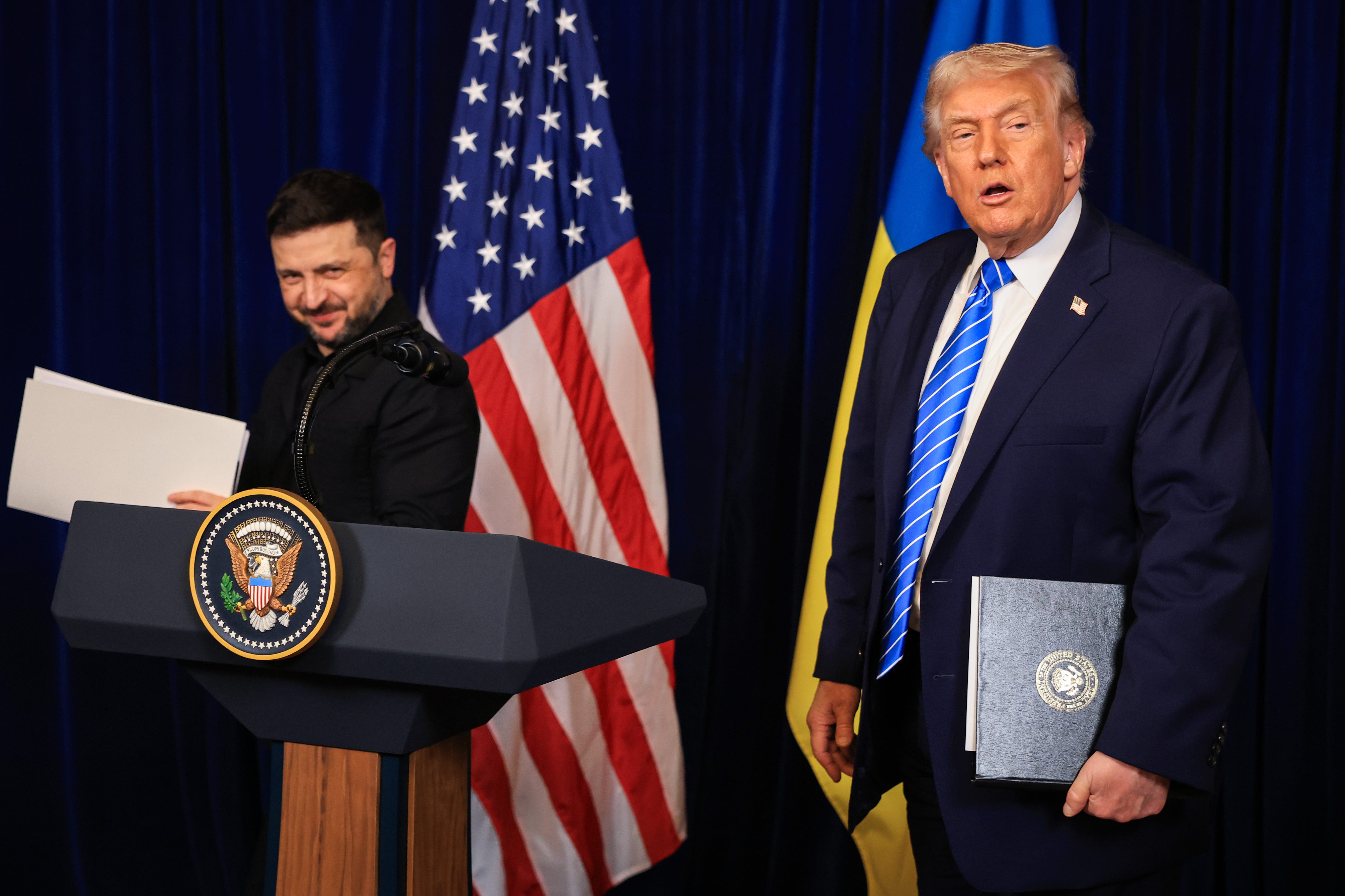
“YOU DON’T HAVE THE CARDS,” Donald Trump famously told Volodymyr Zelensky during their acrimonious February 2025 meeting in the Oval Office. As Trump continues his stumbling bid to broker peace between Russia and Ukraine, perhaps it is time for him to reexamine the cards in his own hand. He now holds a weaker hand with Zelensky than a year ago, but he has not played the very substantial cards he has with Vladimir Putin. And unless he chooses to play those cards, his mediation effort will continue to fail.
For more than one year now, Trump has been trying to find a way to fulfill his campaign pledge of ending the bitter war between Russia and Ukraine. The short August 2025 Trump–Putin meeting in Anchorage focused on finding a settlement, and subsequent exchanges spawned a series of twenty-eight-point and twenty-point plans, none of which has produced success.
Kyiv has shown flexibility, including on the painful issue of territory occupied by the Russian military, but Moscow has made no significant change in its long-standing demands that amount to Ukraine’s capitulation. Yet, as Zelensky noted, Trump “still chooses a strategy of putting more pressure on the Ukrainian side.”
Does that pressure have much effect? Fifteen months ago, Zelensky could hope that the Trump administration might continue the critical assistance the Biden administration had given Ukraine. True, after a brief suspension in March 2025, the Trump administration still shares intelligence with Ukraine (as do other NATO members). However, Trump has given Ukraine no new military or financial assistance.
In 2022, 2023, and 2024, the United States provided the Ukrainians some $30–40 billion per year in military, humanitarian, and financial assistance. In contrast, the only American assistance that has reached Ukraine the past fifteen months was weapons purchased with funds approved during the Biden administration or bought by NATO members for transfer to the Ukrainian military. Europe is taking on the financial burden of supporting Ukraine, and is reaping the benefits by more closely integrating its defense industry with Ukraine’s.
Trump’s assistance halt reduces his leverage with Kyiv. Last month, concerned about rising prices at American gas pumps as U.S. air strikes pummeled Iran, the administration suspended its sanctions on Russian oil exports, easing limits on how much oil Russia could sell internationally. The Ukrainians imposed their own limits. They carried out long-range drone strikes against oil export terminals, including at Primorsk and Ust-Liga near St. Petersburg, through which about 40 percent of Russia’s crude exports are loaded.
American officials reportedly asked the Ukrainians to stop the attacks on Russian energy facilities. Nothing suggests that Zelensky paid that any heed. He instead tied a halt to those attacks to Russian agreement to a broader ceasefire on strikes on energy infrastructure.
Kyiv has little reason to be happy with how the Trump administration has managed negotiations among Ukraine, Russia, and the United States. Trump’s lead negotiator, Steve Witkoff, has visited Moscow seven times yet never traveled to Kyiv (though a possible visit has been teased for weeks), and he seems to take what Russian officials say at face value. Trump regularly asserts that Zelensky is the obstacle to peace and that Putin wants a deal—despite mountains of obvious evidence to the contrary.
The Ukrainian president does not want to trash his relationship with Trump and Washington; he seeks to preserve it. However, he risks considerably less now by ignoring U.S. requests, especially since Trump has ended U.S. military and financial assistance. Trump has dealt himself weak cards to play with Zelensky.
While Trump has reduced his leverage with Kyiv, he continues to hold with a strong hand against the Kremlin. But he has largely chosen not to back his mediation effort with pressure on Moscow to negotiate more seriously. First, he could press to close loopholes in the U.S. ban on the export of hi-tech goods to Russia. American-made goods continue to seep through, largely via third countries, and the Russians incorporate them into weapons they use against Ukraine.
Instead of suspending sanctions on Russian oil exports, Trump could maintain and tighten them. At the beginning of 2026, the revenues that Moscow derived from oil exports had fallen to a notable low. That increased the possibility of budget pressures that would force Putin to face difficult choices between funding his war or funding popular social programs at home. Tightening that pressure could make Putin’s choice even bleaker.
Trump could also take steps to make clear to Moscow that the Ukrainian military will have the resources it needs to buy arms and ammunition for years to come. He could work with the European Union and key EU members to overcome Belgium’s objection to using frozen Russian Central Bank assets to back loans for Ukraine for purchasing weapons and addressing other needs. And if Trump wanted to send Putin a particularly stark message, he could announce that he will ask Congress to fund $20–25 billion in assistance—the bulk of which would go to U.S. arms makers—to support Ukraine’s military. (That would amount to about 1.67 percent of Trump’s $1.5 trillion defense budget request.)
Such actions could go far to disabusing Putin of the notion that he can still achieve his goals on the battlefield. Making clear that Russia cannot secure its objectives on the battlefield and will only incur escalating military, economic, and political costs if it continues to try is key to prompting a more serious Kremlin negotiating effort.
So far, Trump has chosen not to play the potentially winning cards he holds in his hand. As a result, his mediation effort will continue down the path to failure—a failure that Trump and Trump alone will own.
 | A guest post by
|