Trump to Supreme Court: Make Me
His new assault on birthright citizenship will test whether Supreme Court rulings mean anything when a president decides they don’t.

IN HIS QUEST TO BECOME THE KING OF AMERICA, Donald Trump made it clearer than ever last week that he doesn’t really care what the Supreme Court has to say.
First, he has decided to renew his effort to fire Lisa Cook, the Federal Reserve Board governor he first tried to fire a year ago. The Supreme Court, in a 5–4 decision this June, smacked down that previous attempt to fire her and have her immediately removed from the board, concluding that the president could fire her “for cause” but that he had failed to follow the legally required termination process. The Court left in place a lower court’s injunction that said a mere allegation of mortgage fraud against Cook did not suffice to remove her. So now he’s decided to make it look like he’s following the legal process—with one of his hatchetmen writing to Cook last week to inform her she’s on the chopping block. But this new attempt is based on the same allegation, with no new information.
Second, and even more troublingly, Trump finally did what he’s been gunning for since his first term: He defied the Court’s authority to issue binding rulings against him. Rejecting another 5–4 ruling from June, Trump last week issued two executive orders purporting to deny birthright citizenship to several categories of individuals who are squarely covered by his sweeping loss before the Court.
In Trump v. Barbara, the majority held that babies born in the United States are automatic citizens under “the ordinary meaning of the text” of the relevant part of the Fourteenth Amendment, which states: “All persons born or naturalized in the United States, and subject to the jurisdiction thereof, are citizens of the United States and of the State wherein they reside.” The Court rejected Trump’s argument that birthright citizenship applied only to former slaves, and that parents must somehow show “allegiance” to the United States before children born on U.S. soil can be citizens. “All,” in other words, actually means “all.”
Trump has decided to go ahead anyway.
This has been a long time coming. In response to the 2019 ruling in Department of Commerce v. New York blocking his plan to add a citizenship question on the 2020 census, Trump tweeted that he was “absolutely moving forward” anyway. An administration official later indicated that he would take action by executive order. Trump ultimately backed down.
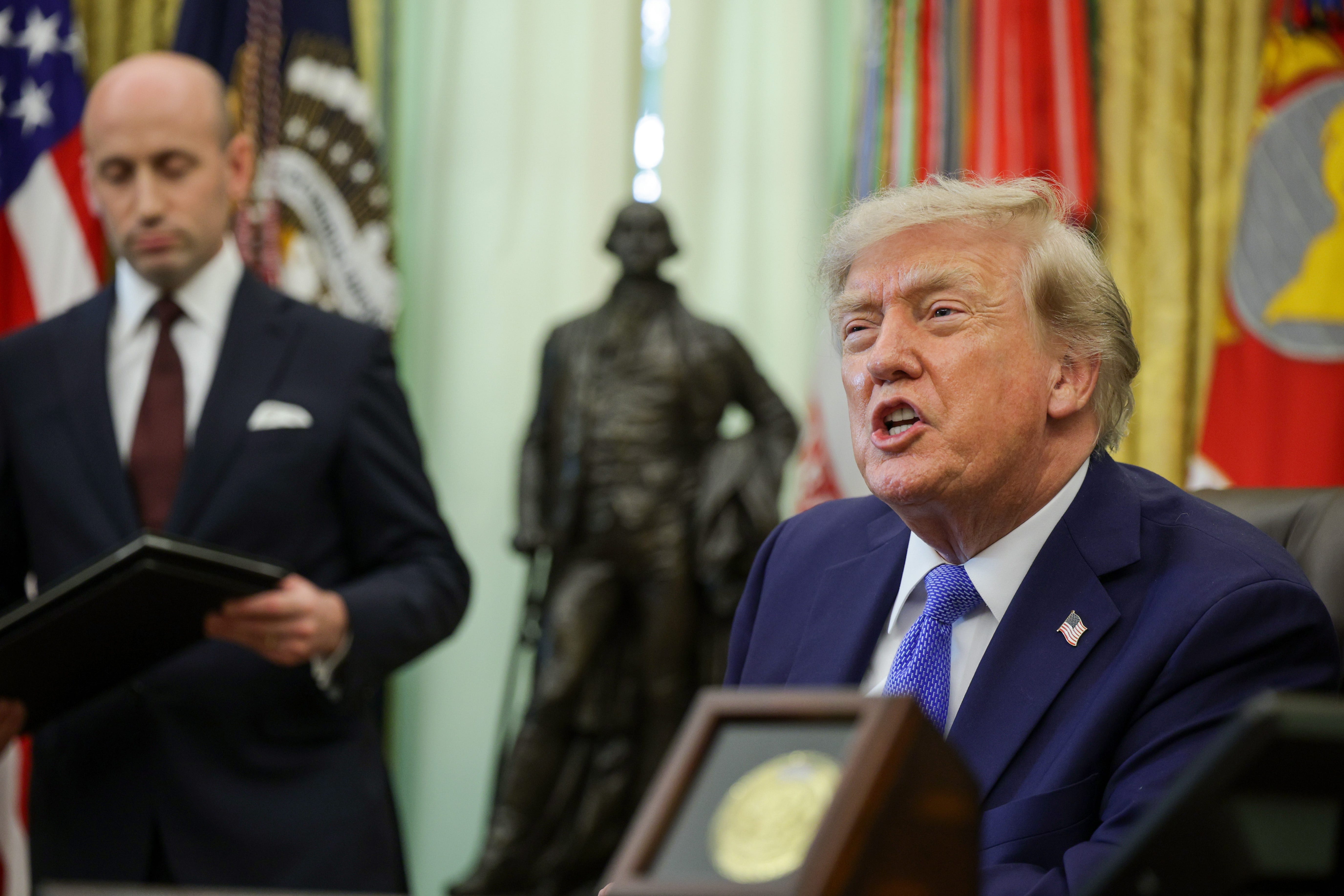
This time, announcing his executive orders from the Oval Office, Trump said that the Supreme Court had made “a bad decision, very unfair decision . . . and we’re ending in a different way.” An August 6 executive order accordingly “identifies, non-exhaustively, and prescribes action concerning certain categories of children of aliens who do not fall within the rule of birthright citizenship as announced by the Supreme Court.” The problem is that his categories do fall within that ruling. Trump has taken steps to do what the Supreme Court held the Constitution does not permit.
Defending the maneuver, Stephen Miller claimed that the Fourteenth Amendment “was passed exclusively in the aftermath of the Civil War, so as to ensure that the children of slaves would be citizens.” But Chief Justice Roberts rejected that historical reading in his majority opinion in Trump v. Barbara, explaining that the amendment constitutionalized birthright citizenship “without any reference to race or color.”
Trump’s order claims to expand the narrow exceptions to birthright citizenship the Court carved out back in 1898. In that year’s United States v. Wong Kim Ark, it ruled that three categories of individuals are not “subject to the jurisdiction” of the United States under the text of the Fourteenth Amendment even if born on U.S. soil: individuals born to foreign diplomats (who have diplomatic immunity from liability under U.S. law), born to members of sovereign Indian tribes (later superseded by statute), or born to enemy forces occupying a U.S. territory. None of these are overtly in play under Trump’s new executive orders.
Trump claims to expand these exceptions to include (a) children of foreign embassy employees, (b) children of employees for foreign governments “in an official capacity,” (c) children whose parents work for organizations “that possess international-organization immunity,” and (d) children of parents who “engage[d] in a commercial transaction to ensure that the person’s mother is present in the United States, or a territory of the United States, to give birth.” Trump and Miller pejoratively refer to the latter practice as “birth tourism.” (A second executive order from the same day directs the secretaries of state and homeland security to deny or revoke visas to anyone attempting “birth tourism,” or to deport anyone “who previously engaged or plans to engage” in it.)
All of these categories involve babies born on U.S. soil. Except for the children of accredited diplomats, all of them are citizens by birth under Trump v. Barbara. Trump’s executive order is thus blatantly unconstitutional. If given the opportunity, federal judges will once again readily declare it so. But the fact remains that Trump and Miller apparently believe that they are the bosses of the Supreme Court.
The practical impact of their maneuver is basically null. In 2020, the State Department issued regulations restricting tourist visas for people suspected of entering the U.S. for purposes of giving birth. In June 2026, the Trump administration used those regulations to revoke over a hundred visas allegedly tied to “birth tourism.” And the federal government has no authority to issue birth certificates, which are handled by the states. So what is Trump seeking to accomplish with his latest round of birthright citizenship orders?
The answer is obvious: propaganda. Trump is bleeding support in the polls due to his disastrous war in Iran and Americans’ surging cost of living. He desperately needs a distraction. Flouting a Supreme Court ruling gets him there.
But more disturbingly, by taking this step Trump has quietly declared yet another “new normal” for the vanishing rule of law. Thanks in part to the Supreme Court’s grant of immunity for presidential criminal acts, he knows he can do whatever he wants and get away with it. Already, he has defied lower federal court orders dozens of times. The U.S. Supreme Court was next up. One has to wonder whether crossing this red line will finally convince holdout optimists to give up the pretense that America is still a functioning constitutional democracy.
 | A guest post by
|
Discussion about this post