

Arrested for Following the Rules
The danger of ICE’s strategy of targeting immigrants fulfilling their legal responsibilities.

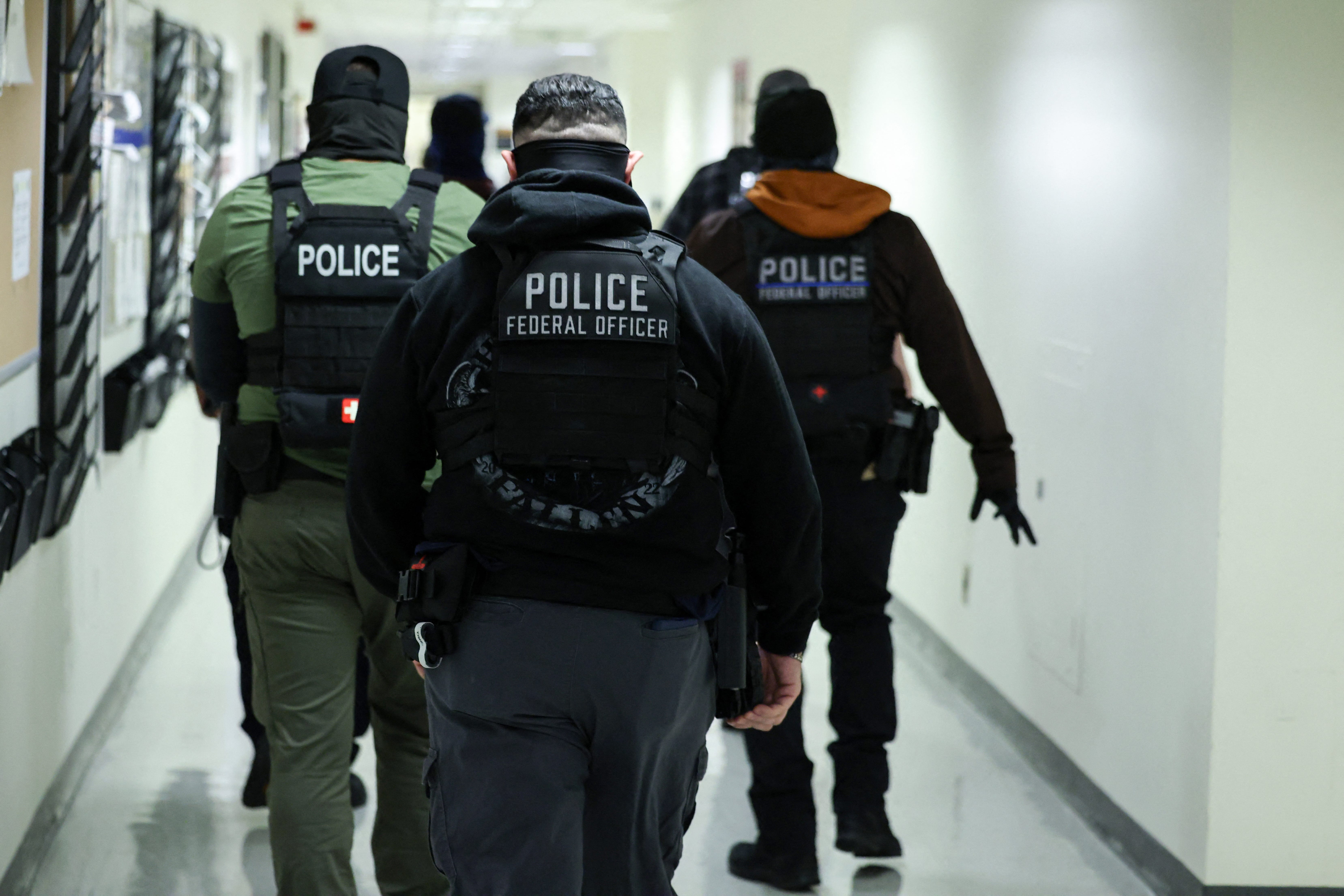
ON SEPTEMBER 16, Barbara Gomes Marques May and her American citizen husband went to a federal immigration office in downtown Los Angeles for what they thought would be the final interview for her green card.
Instead, Immigration and Customs Enforcement (ICE) detained her.
Barbara’s story is one example of a disturbing trend that you’ve probably read about or seen in many shaky phone videos: Immigrants are being detained just before or after attending meetings with officials as part of the legal immigration process. In another example, Sharareh Moghadam—a Los Angeles small business owner who entered the United States legally, has a green card, and has passed her citizenship exam—was detained when she attended an in-person immigration meeting. Then there’s Mohsen Mahdawi, a student at Columbia University who is in the United States lawfully as a current visa holder; he was arrested and detained when he went to a courthouse in Vermont for what he thought was his naturalization interview, one of the last steps in the process to becoming an American citizen.
“I was legal from day one,” Ayman Soliman, an Egyptian journalist with asylum status who was arrested at a check-in meeting with authorities, told the New York Times. “I never expect this in America.”
For decades, most Americans—Republicans and Democrats alike—professed to support an immigration system that encouraged and rewarded people who followed the rules. There’s a basic instinct toward fairness that underlies this policy preference. Get in line, do things the right way, wait your turn, and you’ll get ahead. The message our system sent to immigrants was that it was safer, easier, and quicker to follow the legal process than circumvent it. There was an incentive to follow the law.
Now the reverse is true. Whether this is a conscious strategy on the part of the Trump administration or not, the signal is being sent that following the law will put you in harm’s way.
Immigration attorneys are increasingly warning their clients that they could be arrested at routine meetings with immigration authorities. The people being targeted are complying with the law and pursuing immigration benefits consistent with the established process.
As Jasmine Mooney, a Canadian citizen and U.S. work visa holder, told the Times, “I had all my paperwork. I was in the immigration office. I was never in the country illegally. . . . They are just grabbing anyone that they can.”
THIS MOBILIZATION AGAINST immigrants who are following the rules is not only the source of wrenching, disturbing videos, and not only morally unjust toward the people who have been so treated, but also detrimental to public safety and to the social order writ large—the very concerns that have driven public opinion over immigration policy.
Polls show that concerns about public safety and social order are why many Americans sided with Republicans on immigration. Despite dysfunction in Washington and the grumbling of hardliners on both sides, the immigration reform plans of the Reagan and both Bush administrations basically met the majority of the American people where they were—and still are. Stop illegal immigration. Make it easier for people to come here legally. And give people who are in the country illegally a way to come out of the shadows and get on the right side of the law.
You could trace this view, rooted in law and tradition, back to the father of modern conservatism, Edmund Burke. It’s the foundational concept of ordered liberty. At the most fundamental level, we have laws and traditions—established right ways of doing things—because we all have to live together peacefully. Our liberty isn’t a license to lawless behavior that injures others or wreaks havoc on the social order.
This is also why the rule of law is so fundamental to a free society. Equal rights are secured by equally enforced laws. Laws are a promise from the government to us: If we follow the law, the coercive power of the state won’t be used against us.
Ordered liberty isn’t just a question of morality and justice. Following the rules matters in a free society because disorder hurts all of us.
Which brings us back to the Trump administration’s arrests of people participating in the legal processes related to immigration. Think about it: If you have temporary legal status that requires you attend regular check-in meetings with immigration officials and you see stories of people like you who have been detained or deported after showing up at these meetings, will you keep going?
Are you safe interacting with law enforcement at all? Are you afraid to call an ambulance when you witness a drug overdose? Do you answer questions from local police when you witness a shoplifting incident? Do you stick around to sort out an accidental fender bender you were involved in?
Contrary to public opinion, immigrants with and without permanent legal status pay taxes and contribute to entitlement programs like Medicare and Social Security. If you believe contact with the system puts you at risk, might you find a way to work for cash and stop paying taxes?
Arresting immigrants during child wellness checks and at courthouses and immigration interviews pushes people further into the shadows
And we’re already beginning to see the effects of this climate of fear. According to reporting by NPR, immigrants who are either defendants in low-level criminal proceedings or who are victims of or witnesses to crimes have already stopped showing up for court out of fear of being detained. In cities like Chicago, where the immigration crackdown has been sweeping and aggressive, school attendance is down, and local businesses are struggling as immigrants of all statuses stay at home out of fear.
The American Public Health Association even found that immigrants are increasingly less likely to show up for medical appointments and go to the pharmacy to pick up their prescriptions.
“I still love the American people, but I’m doubting if I’ll ever feel safe and call the United States my home,” said Soliman, the Egyptian journalist who was detained despite his asylum status.
These people—here lawfully, carefully navigating the immigration system and doing their level best to follow the rules—are withdrawing from society out of fear. That’s exactly what the rules-based legal immigration process was designed to prevent.
IMMIGRATION LAW is extremely complicated. And it’s all the more confusing when the people enforcing the law seem to be targeting immigrants who have every reason to think they are doing everything right.
Obviously, we don’t know all of the facts of each individual case. There likely is some small number of cases in which there are legitimate reasons to detain or deport someone with legal status. But that’s not what we’ve been seeing. Perceptions matter here. It matters if people living in this country think that they won’t be safe from the government if they follow the law. Because if people instead believe there’s a real chance they will be grabbed by masked men, torn away from their families, and tossed into unmarked vehicles? And then will be forced to slog through a nightmare of bureaucracy before possibly being deported? And even then fearing you might die while in captivity? In that case, many will decide to just stop following the law.
In his presidential farewell address, Ronald Reagan illustrated what an immigration system based on ordered liberty would look like, resorting to his favorite metaphor for America: The “shining city upon a hill” has city walls, he said, but “the walls [have] doors and the doors [are] open to anyone with the will and the heart to get here.”
Right now, the doors are being boarded up. Lawlessness and disorder are sure to follow.
 | A guest post by
|