Agnes Callard’s Insistent Answers to Life’s Deepest Questions
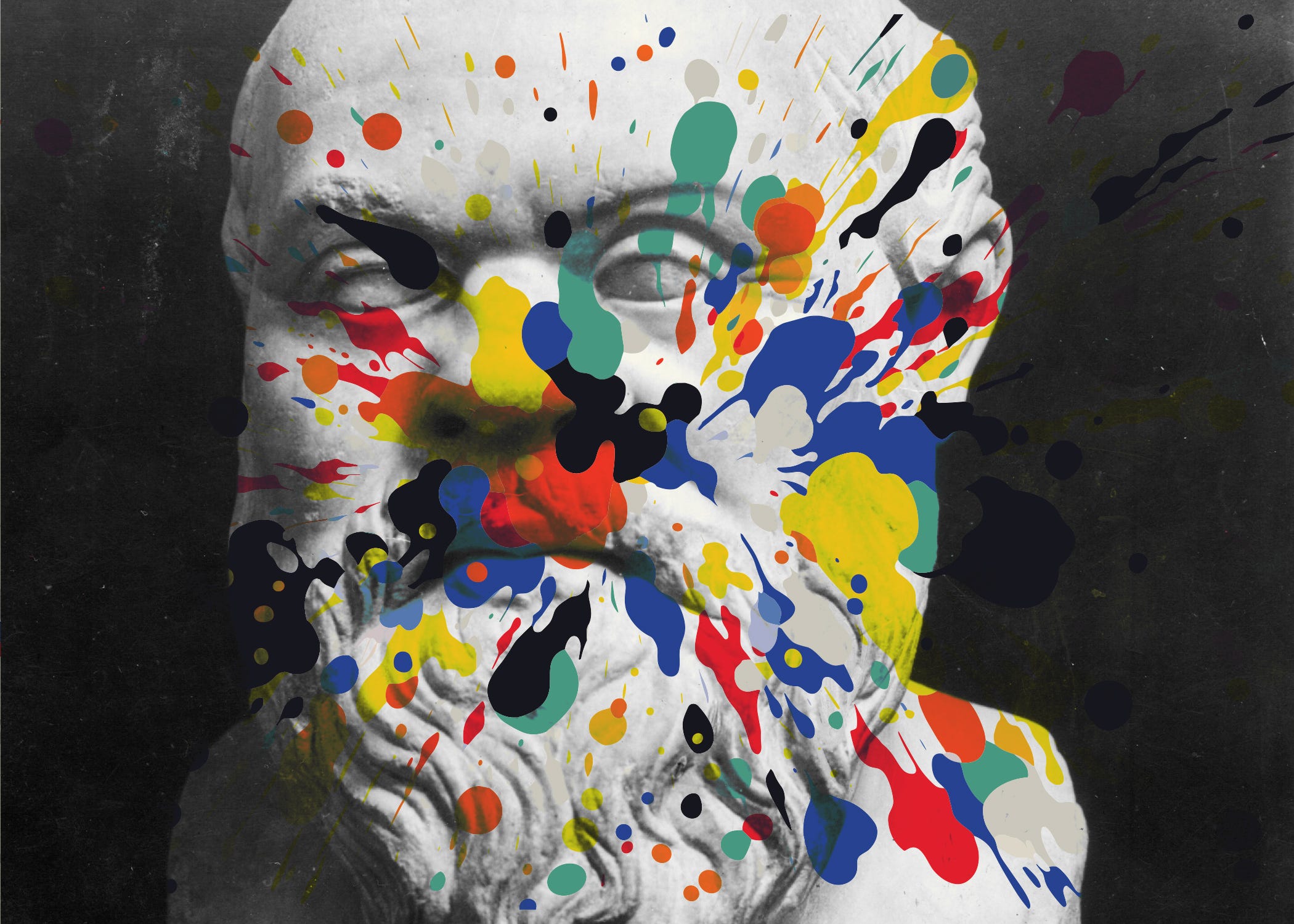
The University of Chicago philosophy professor invites readers to join her on the higher path, but she loses the spirit of her ancient Greek avatar along the way.

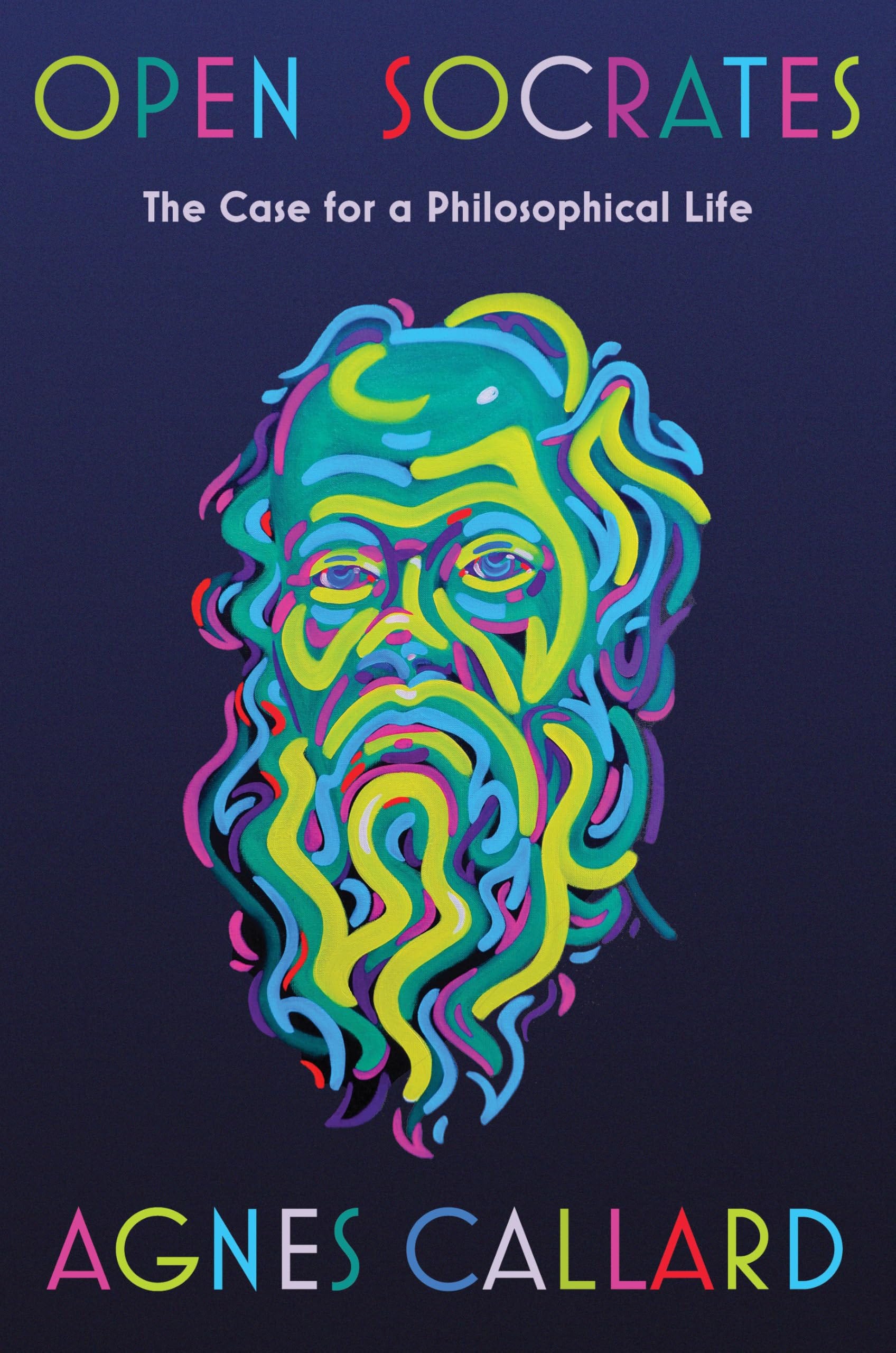
Open Socrates
The Case for a Philosophical Life
by Agnes Callard
Norton, 416 pp., $35
IN MOLIÈRE’S PLAY Le Bourgeois gentilhomme, the hapless M. Jourdain, at last afforded the leisure to enjoy his new wealth, finds himself caught between warring domestic forces. On the one side, there’s the phalanx of tutors he commissioned to teach him every genteel thing he’s begun to imagine: fencing, music, dance, grammar, even philosophy. But on the other side are arrayed his wife, daughter, and a very invested maid, who press him to explain: What are these lessons actually good for? Exasperated by their practicality, Jourdain avers he’d even put up with being caned, if only his philosophy tutor could help him converse a little better with civilized people.
Jourdain’s plight is endearing, despite his considerable foibles, and despite his tutors’ concern that each new subject he takes up might remain a bit less meaningful to him than the goods and services of his personal tailor. There is plenty that’s real in his earnest longing for civilization. The desire to learn, at any age, can be more than window dressing.
But learning philosophy will require something more than fencing does. If Jourdain continues far enough in his lessons, will his conclusions require him to change his life? Are excellent clothes sufficient to live well? How about a nice watch, or the right husband for the daughter, or yet another desirable mistress? Will one of his tutors ask him whence and whither the good of bourgeois life in seventeenth-century France, or will they rest content to explain that Jourdain already lives in the best of all possible chateaus?
Agnes Callard’s new book, Open Socrates, opens with a provocation. Minute to minute, Callard claims, we live in ways that represent answers of various kinds to all these questions. But since we have never inquired into the questions directly, our life is a game of drawn-out avoidance:
Whether we see life, pessimistically, as an ongoing crisis punctuated by periods of relief, or, more optimistically, as an ongoing source of pleasure punctuated by periods of crisis, we will find it replete with reasons for postponing philosophical inquiry. If we postpone for long enough, death will rescue us from ever having to come to terms with the meaninglessness of life. . . . The difference between Socrates and those around him is that he wants to do something about this problem.
A Socratic path, somewhat in the classical style, therefore, is the route Callard proposes to resolve our discontent and indeed, our bourgeois-gentilhomme aspirations. “Should [you] take a vacation, move, have a(nother) child?” she writes. “Suppose you seek investment advice.” This is the book for probing the questions that lie beneath these, the name for that probing is philosophy, and the tutor you shall hire will be this tome. At nearly four hundred pages, Open Socrates will require a certain heroism, at least from the vacationer. But so far, so (mildly) Socratic.
What follows this opening, however, quickly becomes peculiar. The book is structured as a series of cascading and encyclopedic answers, argued strenuously and at a clip. While the introduction promises a novel Socratic ethic built upon questions and questioning, by the end, what we have are results: resolutions to a series of discomforts in psychology, politics, liberty, equality, love, death—in short, a theory of everything. Yet the “avatar or mascot” of these theories remains Socrates, who has “fashioned his very person” into a type intended to be “replicated,” should we venture to take up for ourselves his proper style.
But just what style is that? In Callard’s version, it’s not the know-nothing Socrates you remember from undergrad—the infuriating one, pulling out his pockets to show that they are empty, again. Rather, he’s a sort of buddy: Helpfully, he has clear answers to life’s fundamental questions, but he demands you adopt them if you can’t meet his objections in real time, flickering from cheery to menacing at moment’s notice. This sweet, knife-wielding Socrates speaks to us through narration on nearly every page: “Socrates believed that,” “are Socrates and I being fair,” “Socrates thought knowledge was there for the taking,” “just like the rest of us, Socrates needs to believe he is a good person,” “Socrates is complaining, ‘the truth is my property!,’” “Socrates is complaining . . . about not being treated the way he deserves,” “this only works because Socrates himself has an answer.”
Sometimes Callard brings this mascot of positivity on stage to articulate one of the more familiar Socratic propositions: virtue is knowledge, say, or inquiring is best done in company, or those who write stories (particularly Tolstoy, in her view) are not philosophers in the truest sense of the word.
But when Callard’s avatar starts turning to human psychology to justify his approach, the truisms get darker, even Nietzschean, at least in the common-garden sense. Callard’s Socrates regards both religious and secular attitudes toward death as merely superstition; loyalty, “as it is commonly understood . . . includes the willingness to harm the person one loves, so long as they harm you first.” Neither body nor kin seem to possess desires or invite your respect; rather they issue demands and orders. In fact, friendship, philia, self-respect, desire, and presumably thumos or spiritedness, as well—all these represent “savage” wills and drives of body and of the vast incoherent herd of other people, too. In Callard’s dark Socratic universe, “revenge makes the world go round,” but the experience of being wronged does not offer you the chance to learn something about the world. Indeed, “sticking it to one’s oppressor is as close as the oppressed can get to the concept of equality.”
But if this is so, what does this Socrates—who still wants to be a “good person” and to get his deserts for it—offer us instead? Not ecology or the natural world, which are almost wholly absent from Callard’s descriptions. Fundamental ontology remains far, as well; platonic forms here are the essence of whatever we happened to be talking about—human concepts given defensible definitions. The one thing that remains relentlessly present is, somewhat surprisingly, private property. Here it appears to exist beyond being, free from reproach; it is your own if and only if you can “dispose of it as [you] see fit.” This absolute property is taken to be safely beyond Socratic investigation, for, as with Molière’s tutors, the one thing this Socrates will never ask you is whether your eager acquisition of things is good for your soul.
And so, as the book draws us further in, we start to lose our sense of any deeper reality outside this strange and revenge-obsessed human world, its dinner parties where you and whoever “angle for importance,” seemingly floating in midair. Unmoored by anything except property and human argument, Callard’s idea for philosophical life is that two of these anglers should remain apart, wrested away from the herd, and that everyone else and their demands should drop away—a solipsism built for two. Together, they seek only the knowledge that arises when one of them fails to out-argue the other, today. And the truth is that in such a world—without nature, being, gods, or very many other non-herd-like people—you may well be able to argue with someone. But you could never break from the argument and say, look at that, and pause to share the view. For there is nothing to see, no existing thing to point to, only discontent in self, in one’s interlocutor, and in one’s vacations, fully unto death.
Plato readers almost inevitably create their own versions of Socrates. This is to be expected, and at times is even laudatory, even when it’s also a bit revealing. But this Greek-less Socrates—bright and shiny in his blameless and constant companionship in a land without daimon or nature, his eagerness to crowd upon the smallest of your problems, his lack of Platonic poverty, or any of his famous counsels to avoid money and the body—has wandered very far afield.
Callard’s Socrates is not merely depressing. He represents a new achievement in tragic literature.
ONE OF THE THINGS I LOVE MOST ABOUT PLATO is the way his dialogues invite the reader in. You aren’t locked into considering only the options presented directly within the text, but rather they entice you to suggest some third thing, as the Socratic phrase goes, that’s otherwise left out. Plato is a fundamentally generous writer, and he offers his work as the beginning of something for you, rather than your end—something that the contrast with Callard’s adamantine and dogmatic Socrates makes even painful to recall. Unlike Callard’s, Plato’s version of this mysterious figure is someone who asks you things, who hears you out, and who shows you, painfully, your own soul. He himself does not know, but he hopes that you might, and he means it. Should the conversation come up short, the refutation that follows was not the point, but a kind of disappointment—one that is risked, each time, in hope: perhaps truth may be met with sometime again, soon, in some new soul, around the next corner.
Such a Socrates, however, cannot safely be imitated. Plato’s Socrates has given up his life—and, as he points out, his livelihood—to be a medium and a catalyst for others. His ambition is the inverse of “worldly”; he is everyone’s possession and no one’s; and importantly, he is not your friend. Getting to know him as a character involves not vindication, not justifying his every move, but learning how to forgive the absence and chaos of his wisdom. Real philosophy can’t be tamed into the image of a “pushy friend”; it will always be otherworldly because it will question exactly the part of your world you most wanted to protect. It won’t explain away the world with brilliantly cynical bons mots, and neither will it show the world to be exactly what you already think it is. If you can forgive all this, you’ll find yourself on a path, but not exactly an enviable one. People probably won’t want to hear too much about it at parties.
Over the years, Callard has proven herself to be an excellent essayist. The most engaging parts of Open Socrates come toward the end when she lets herself speak directly as herself, without the Socratic mask. But those moments also reveal, uncomfortably, more tragedy left to come.
In her discussions of the death of a friend and her childhood, she confesses that her real desire is not to imitate Socrates but to be him—with a twist. As she puts it, “whether you are a king or a little sister, you are worth something only if you can direct the mind of others.” A few pages later, to clarify: “The ultimate form of respect is being seen in terms of one’s power to help others figure out how to live.” Indeed, these passages make clear that it’s precisely this kind of mind-direction and acknowledgment of power that the book is meant to inculcate in readers. But the question remains: Will directing the minds of others truly satisfy the deepest part of our discontented desire?
Callard illustrates her point of view with a surprising anecdote about the time she and a friend let a younger tagalong girl help them make brownies. Callard and her friend realize that they don’t have enough sugar for the recipe, but the third girl points out they can make up the deficit with what’s in the sugar bowl on the counter. Callard praises her as a genius, and the girl subsequently radiates a “look of pure, complete joy.” The direction the girl temporarily gives the other two is supposed to be the source of her joy, along with the compliment Callard pays her, which offers the acknowledgment of her essential being as mind. This moment of flattering acknowledgment of a helpful practical suggestion for someone else’s project, like the sense of “shared superiority” Callard hopes for at parties, is supposed to stand as the peak of what one human can do for another.
But “letting” someone help you make brownies is not real recognition. And one reason compliments are often awkward to give and receive is because they never can be mutual, quite. Absent in this tale of cookery is any moment of mutual noticing, any sign of mutual, lasting respect, because these are things that mind-direction, flattery, and being treated as “an intellectual thing” cannot give. Ultimately, Callard’s Socrates remains Callard herself, both king and sister, and what lies beneath the avatar, the most real thing of all, is just this ambition and, as she identifies, a longing that is “perpetually dissatisfied”—contentless, hungry, with a heartbreakingly contradictory desire to rule the world and yet remain somehow lovable, both a tyrant and a good little girl, a kind of ravenous little mermaid of the soul, where Socrates is the animated crab. Yet fortunately for the rest of us, attaining mastery over someone else’s will is not the only thing that gives human beings worth; and, gods be praised, we remain much more than minds.
In Phenomenology of Spirit, Hegel notes that the most terrifying thing about the human being is not that they are “other” or different from us, but that they are the same. It is fundamentally unnerving when another human being stares at us just in the moment we thought we possessed humanity by ourselves alone. Yet the acknowledgment of our individual selves that we desire is dependent on this more fundamental situation of mutual regard. Callard’s unwillingness or willful inability to put this primary moment of shared recognition at the center of a discussion of recognition spoils not just the anecdote but the book, and with it, the credibility of her image of Socrates.
This is what makes the world of Open Socrates so empty, so devoid of satisfying pursuit, of real love—and most of all, devoid of other people. Without the ability to see beyond aspiration, virtue, position, power, or cash, the fully human present in another person will remain invisible, and the world will always be empty of people, the heart of love, the soul of insight. As Jane Austen puts it, this is a failing indeed, but not one that can be laughed at; it is a moment rather for regret, for pity, and for fear.
One of the real sadnesses that Plato records in his tales of Socrates is that despite Socrates’ lifelong attempts, he seeks but never finds a real partner in conversation—that is to say, an equal. It’s one reason why to satisfy our desire for philosophy, it’s necessary for us to read more than Plato, and to keep looking around the next corner with a sanguine hope for our next encounter with the real.
The Socrates story as it stands is incomplete. But the attempt to create a perfect self-sustaining twin-Socrates world is not any kind of completion, but a sort of obscene bastardy, even a fratricide. While Molière’s Jourdain may have picked up Callard’s book in search of a little civilization, I hope his hunger for the world would have quickly pushed him toward another book, one that might have offered him more than the dressed-up image of his pedestrian self. It’s only when the philosophical story continues—with Socrates, yes, but also past him, and past the desire simply to remake him as one’s own intellectual offspring—that the real world can begin to be peopled.
 | A guest post by
|