The All-Star Game and the Lost Romance of Baseball
America’s pastime has become the dream of a quant.

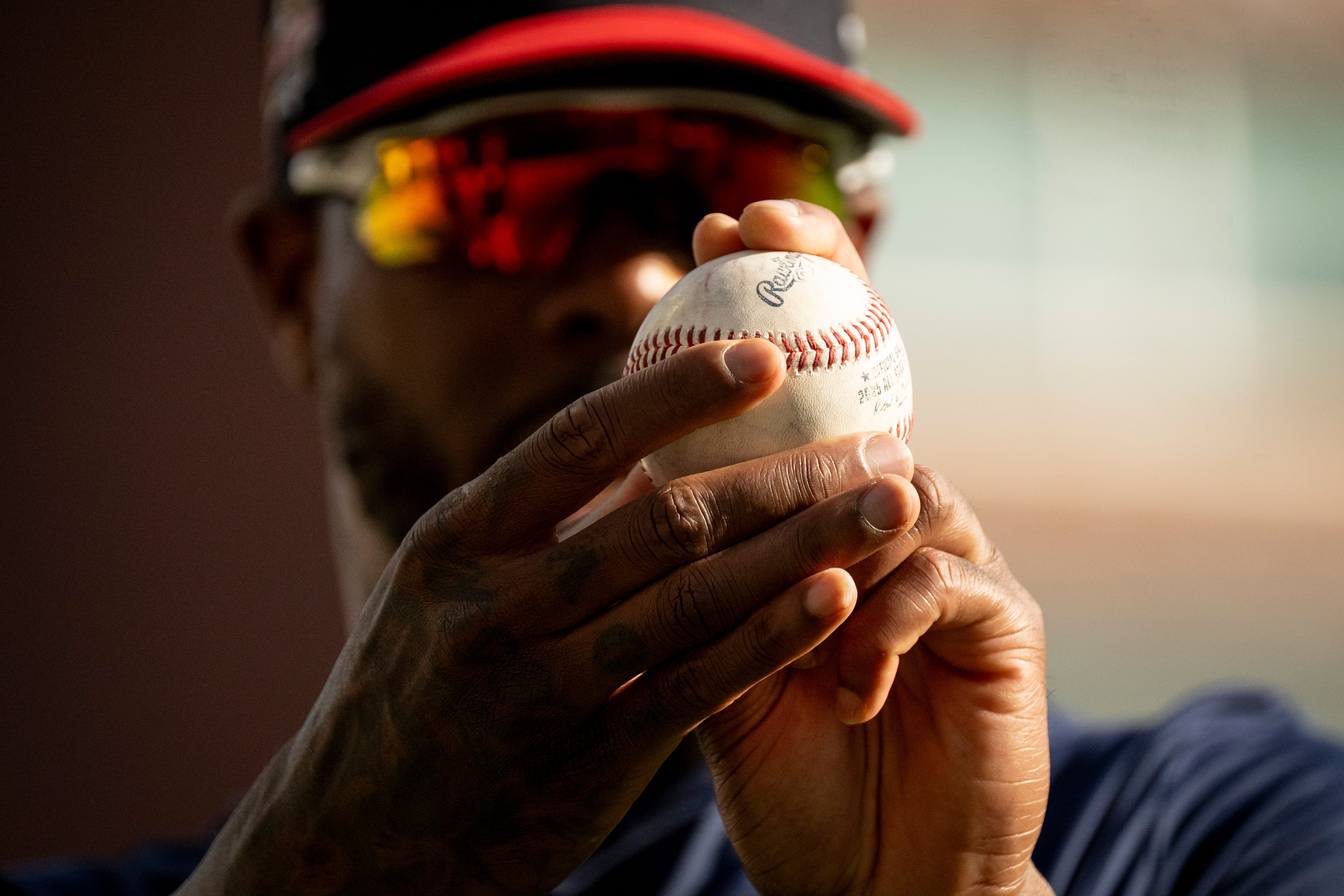
THE ALL-STAR BREAK used to mean something: a glimpse at pennant races forming, a chance to step away from the daily grind of games and assess the grueling postseason chase to come.
It was a ritual. A reckoning. The rhythm of the season was sacred: spring to fall, series by series, with familiar foes waiting like checkpoints on a long pilgrimage. You knew the shape. You could feel it.
But that rhythm has been disrupted. The break is now held well past the season’s statistical midpoint, which now comes and goes before anyone notices. With March openers, we hit our annual pause after nearly a hundred games—driving past the halfway point before anyone bothers to look up. The calendar and the math don’t align. It unspools.
Baseball is a game of structure. Three strikes. Nine innings. Four division rivals. But somewhere along the way, the arithmetic started lying. The lines are still chalked. The records still kept. But the season’s structure has become unbalanced. Its arc has slipped.
There was an era of the game when you played the teams in your division nineteen times. Nineteen chances to escalate, to adjust, to retaliate. To feel something when an opposing pitcher throws at your teammate, or to pick up on the subtle cues of that same pitcher’s delivery and demeanor. A season was written in those games—familiarity breeding contempt, then maybe grudging reverence, then contempt again. If you made it to October, it meant you’d survived the teams that knew you best.
Now it’s thirteen games per division opponent. You might see your closest rival once in September—if the schedule even remembers. It’s enough to settle a race, but not enough to stoke one. What used to be the crucible has become a formality.
We’ve traded rivalries for evenness. Familiarity for fairness. We’re told it’s better this way—that the new schedule is more modern, more just. But justice is a strange word for a game built on grudges, ghosts, and geography.
I’M NOT A PURIST. I don’t mind interleague play. I’m not wedded to the old divisions. I understand why the game needed to evolve—why it needed a faster pace, more appeal, and greater accessibility. Yet somewhere in the past few seasons, something slipped away. Not the rules themselves, but a mystique they used to protect. What we’ve gained in clarity, we’ve lost in drama. What we’ve gained in fairness, we’ve lost in feel.
Everyone plays everyone, no matter the distance or history. Braves–Mariners. Mets–A’s. Rays–Diamondbacks. These used to be World Series hypotheticals. Now they’re just a week in May. Or September. The schedule is a catalogue now. Optimized. Sterilized. Unfelt.
The old structure may not have been fair. But that was the point. It was regional, uneven, gritty. You made it by surviving your particular gauntlet—the teams that had your signs, your scouting reports, your tells. You didn’t win by being the best in theory. You won by withstanding the ones who knew how to beat you.
Now, you can be eliminated by a team you played once, in April, on the other coast. You might lose a playoff spot on a run differential against a team you barely remember. Baseball used to be about wear and recognition. Now it’s parity by fiat. League-wide balance.
Maybe it’s good, as some say, for the brand to have more stars visit more cities. Maybe baseball’s generational decline will be reversed by Shohei Ohtani touching down in Tampa Bay every two years. That’s the bet, anyway: that a kid in Milwaukee will fall in love with the game because the Yankees play the Brewers once a summer.
But there is a cost to this bet. There’s no texture in baseball anymore. It’s become stale, down to the composition of the teams themselves. Gone are the days when squads had identities, like the pitching-heavy Braves of the ’90s, or the slugging Oakland A’s of the ’80s. Now, they are built on mathematical formulas, with the batters trained to draw walks or swing for the fences and the pitchers tasked with striking them out.
And so the games stretch on—important, but indistinct. You glance at the standings, but they don’t clarify anything. You could win 95 and get bounced in a best-of-three by a team you saw twice, months ago.
The game is turning into a fantasy simulation—team names as inputs, matchups as content, not story. You don’t build rivalries when everyone is an equal-opportunity opponent. You don’t build stakes, either.
There are six divisions. But you don’t need to win one. Not anymore. You just need to out-survive the spreadsheet.
Three wild cards per league. More than a third of all teams in the playoffs. The postseason isn’t earned so much as accessed. The pennant chase—once the high-wire act of September—is now a math problem with too many acceptable answers.
You’re chasing glory. But you’re also gaming the bracket.
AND THEN THERE’S the All-Star Game itself. Long before it was pushed further back on the schedule, it began its shift from celebration to fashion show. The red carpet walks are pure vanity: outlandish designer fits for men who once wore eye black and pine tar. The draft, tucked into the weekend like an afterthought, introduces another class of baby-faced kids into a sport that treats them like content managed by Ivy League quant teams and brand advisers.
I’m glad we get instant measurements and statistics on things you once could only feel—exit velocity, pitch placement, home run distance. I like the numbers. But sometimes I wonder what kind of game these young men are entering. Not a national pastime. Not a proving ground. Something flatter. Something faster. Something that forgets.
This isn’t nostalgia. It’s aesthetics. The old structure had moral weight. It rewarded domination. Now you aim to end up a few games over .500 and call it a plan.
The wild card isn’t a mistake—it’s just shapeless.
What does urgency mean when everyone gets a second chance? It used to feel like you had to be heroic to reach October. Now you just have to stay upright.
Baseball once organized the summer. Now it just fills it.
There used to be weight to certain games. You could feel it when the Braves played the Mets, or the Red Sox faced the Yankees, ten times from early-August onward. Now you watch the one late-season series that used to mean everything and pretend it still does.
Baseball used to move like a novel: a long arc with vindication or redemption at the end. Now it’s more like an algorithm—busy, contingent, oddly empty.
And maybe that’s all it needs to be now.
 | A guest post by
|