

America Just Shrugged at the Largest Mass Shooting in Years
A horrifying massacre in Louisiana can teach us a few things, but first we need to pay attention.

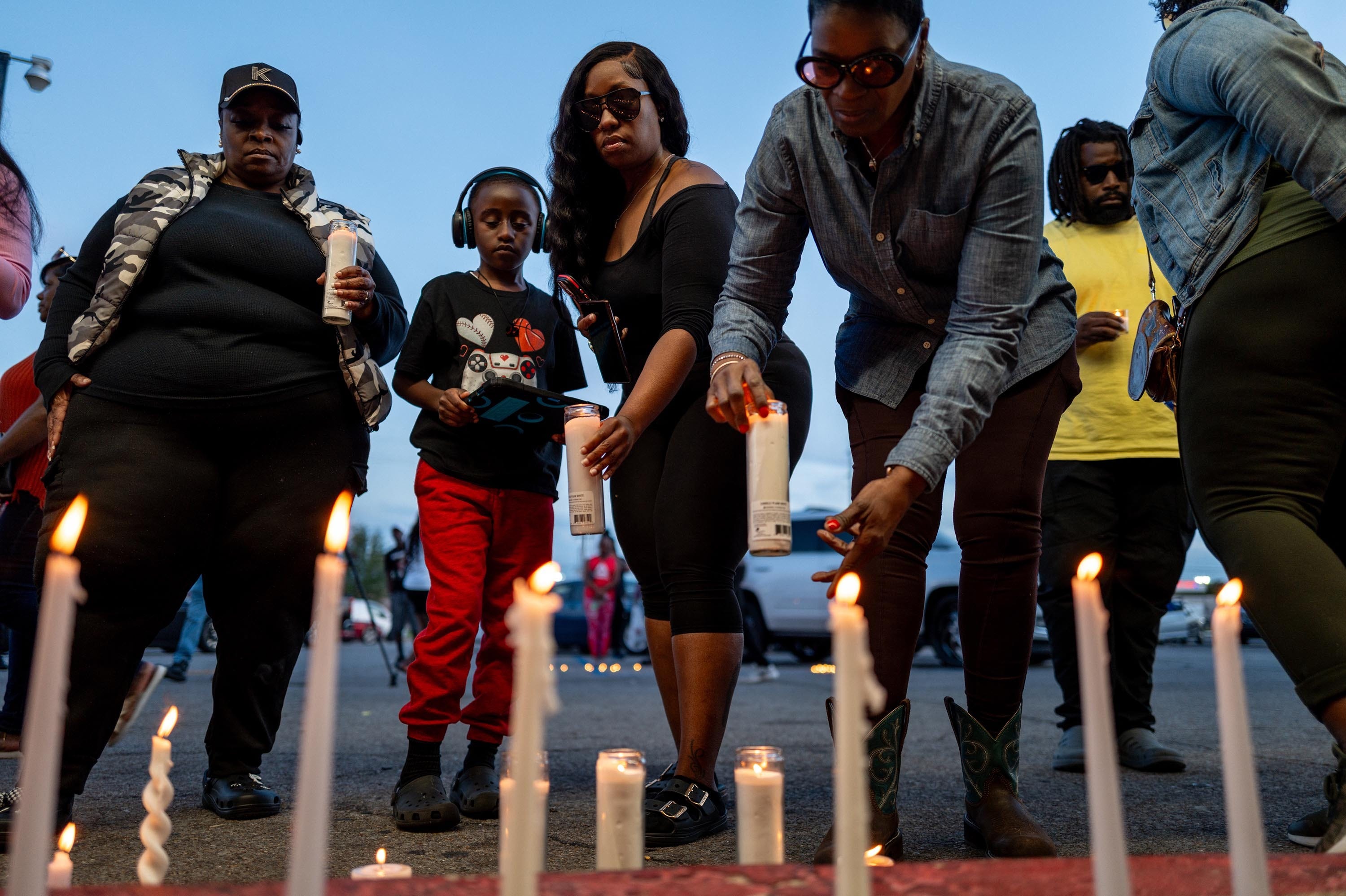
EIGHT CHILDREN DIED in a mass shooting in Shreveport, Louisiana this weekend.
Eight children.
The oldest was 11. The youngest was 3. One had just celebrated bringing up his literacy scores, the schools superintendent recalled at a press conference Monday. Another loved to run outside and play with Nerf guns, as a grieving family member told the Washington Post.1
Investigators are still piecing together exactly what happened early Sunday morning. But it appears the children were victims of domestic violence, killed by an Army National Guard veteran who was father to seven of the eight.
Neighbors and friends have said the man was angry at the two women who were the children’s mothers, and who lived in the two homes where the shootings seem to have taken place over the span of about an hour. One of the women, to whom he was married, was in the process of seeking a divorce.
The two women survived their wounds. A third, the killer’s sister-in-law, escaped with a 12-year-old when they jumped off the roof during the rampage. As for the alleged killer, he is dead—shot either by himself or by police at a house where he tried to hide after the murders. Friends and family say that he had a history of mental illness, and that he had talked about “dark thoughts,” as one relative put it.
Still, they said, he seemed to love his children. Two days before the killings, he had posted a photo to his Facebook page showing his 11-year-old daughter sitting in the passenger’s seat of a car, a drink and ketchup packets in her lap while she bites into a burger.
“Lol!!!! Took my oldest on a lil 1 on 1 date had to catch her down bad ugh ugh…” the post says, followed by several cheery emojis.
THE SHREVEPORT MASSACRE is the deadliest mass shooting in the United States since the January 2024 killings of eight people in Joliet, Illinois. The most lethal from previous years were the October 2023 killings at a Maine bowling alley and restaurant, the May 2023 killings at a Dallas-area outlet mall, and the January 2023 killings at a dance studio in Southern California. And before that? There were the Uvalde school massacre and the Buffalo mall shootings, both in May 2022.
Just to list all of these is to remember how routine mass shootings have become in the United States. But this one was different in one disturbing way. All the other incidents commanded national attention, sometimes for days. Sunday’s killing made far less of an impression, getting second- or third-tier treatment on both television and online.
You had to scroll six or seven times on a smartphone just to find the story on the New York Times homepage. And that was on the day it happened. More than forty-eight hours have passed as I type these words, and—although outlets like the Post, Times, and Associated Press have reporters on the ground in Shreveport—the story has mostly vanished from the news.
Unless you live there.
Local media have provided nearly nonstop coverage—of the incident itself as well as the official followup and community reaction, which started organically on Sunday night when the owner of a nearby restaurant decided to close for the evening and host a vigil that attracted about fifty people.
“I just felt moved to do it—I have kids,” Leon Bell told me by phone. His restaurant, Tha Thing, is just minutes from Cedar Grove, the lower-income, predominantly black neighborhood where the killings took place and where he grew up. “We need to come together as a community . . . and to let people know that if somebody needs help, don’t be afraid to reach out and call.”
That was also the message of James Green, a pastor and city council member. He got a call about the shootings at around 8 a.m., while teaching Sunday School, and then announced the news while leading services two hours later to an audience he described as stunned. “All I can describe it as is a bust in the gut, that takes the air out,” Green told me.
During public appearances and in interviews, local officials have mentioned that gun violence is a familiar experience in Shreveport, breeding its own kind of indifference. That is part of why leaders like Alan Jackson, a pastor and city council member, say the tributes and investigations are so important.
“It’s gut wrenching,” Jackson told me in a phone interview. “This senseless violence has to stop, and I’m hoping this can be a wakeup call.”
And it might be, at least in the Shreveport community, where the tragedy will linger in all kinds of ways—and in all kinds of places. Quanerick Milton, lead pastor at the Tabernacle Baptist Church-MLK in Shreveport, told me that he spoke to a teacher who had one of the murdered children in their class—and who described a day of open weeping from children and instructors alike.
“It was a very emotional day for that particular classroom,” Milton said, “because now that seat will be empty, because of that child that once sat there.”
MAYBE IT’S THE SHEER REGULARITY of mass shootings in America that explains the national indifference to the Shreveport massacre. People have just become numb to the whole phenomenon.
Or maybe it was the specific circumstances of what happened in Shreveport. The killings took place in private homes, rather than a mall or a school where anybody could imagine their children being present. The victims were low-income and black.
These sorts of killings happen all the time, all over the United States, just not usually at this scale. Even before Shreveport, 58 children under the age of 12 had died from shootings already this year, according to a tally at the Gun Violence Archive. That’s right in line with the usual trend, with roughly 200 to 300 children across America dying from gun violence every year. Children who are black or Latino, or come from lower-income communities, have a higher probability of being victims.
Their deaths stopped being “news” a long time ago. This is a uniquely American phenomenon but one we’ve come to accept. The gun homicide rate in the United States is larger than in any other economically advanced country, and it’s not even close. In fact, if you limit the comparison to Europe and East Asia, the difference is literally an order of magnitude: Guns kill more than ten times as many people in the United States as they do in Greece or Norway, Slovakia or Japan.
The simplest explanation for the difference is also the one most researchers think is the best: We have way more guns in circulation, statistically more than one for every single person living here. Or to put it another way, more than 40 percent of all the world’s civilian-owned firearms are in the United States.
The seeming futility of addressing that problem may also contribute to our collective ambivalence about gun deaths. Significantly reducing that gun stock would require enacting dramatic new restrictions on gun ownership, and then some kind of gun buyback program—the kind that Australia conducted in the 1990s, after the massacre of thirty-five people in Tasmania prompted a national demand for action.
That kind of action seems not even remotely possible in the United States. The political obstacles to any kind of action on guns are formidable, as advocates for restrictions learned after a presidential-led effort to pass relatively new limits in the wake of the 2012 Sandy Hook killings failed.
And now there are massive legal obstacles too, thanks to a 2022 Supreme Court ruling written by Justice Clarence Thomas that renders even modest gun regulations constitutionally suspect.
BUT IT’S A MISTAKE TO ASSUME those obstacles render action futile, or that anything short of a total ban is not worth pursuing. “Real and important changes take time,” as my Bulwark colleague Jim Swift wrote about guns two years ago. And the Shreveport killings, precisely because they were so typical of what happens in America, show why.
Start with domestic violence, which is so frequently when guns are used to injure and murder.2 Local efforts to identify and then monitor likely abusers have been shown to reduce the incidence of violence. Funding shelters, providing rental vouchers and other forms of housing assistance can also have an impact, according to research, simply by allowing them—and their children—to get out of harm’s way.
Initiatives that integrate mental health workers into police responses or seek to intervene before violence happens—through local, credible messengers who can act as conflict mediators—have also shown promise.
And then there are the guns.
Nobody is getting rid of them anytime soon, or maybe ever. But there’s evidence that requiring a license to own a gun (in the same way states require a license to drive a car) reduces gun violence. The same goes for Extreme Risk Protection Orders, more commonly known as “red flag” laws, that allow police to take guns away from people who pose a threat—like, for example, expressing the sort of “dark thoughts” the Shreveport killer did.
To be clear, the evidence on these interventions is not as solid as it is for other policy interventions, as a thorough, ongoing review of studies by the Rand Corporation has demonstrated. And, generally speaking, the evidence on the effectiveness of Red Flag laws in reducing homicide is weaker than evidence around their effectiveness in reducing suicide.
Partly that’s because restrictions on research into gun violence—enacted following pressure from the gun industry, eventually eased following pushback led by congressional Democrats—made studying the effects of restrictions difficult. Partly that’s because the gun trade is interstate, making it difficult to isolate the effects of restrictions states act on their own.
And partly that’s because some of these initiatives are relatively new or have proliferated only recently. There just hasn’t been a lot of time to study them.
But the cost of trying these policies is relatively small, in both the figurative and literal sense. The targeted interventions are not hugely expensive—hundreds of millions of dollars at the national level, where budget allocations are measured in tens or hundreds of billions. Plus they have real potential to generate savings, given the many expenses of dealing with gun violence after the fact.
As for the gun restrictions that are part of the current debate, they also don’t meaningfully impinge on the rights of gun owners, except maybe to make the process of acquiring firearms a little more arduous.

The gang returns to California for two live shows in May. Join Sarah, Tim, and Sam in San Diego on May 20 or in L.A. on May 21 for a night of politics and laughs, and a community built on good faith. Bulwark Live: California is sure to sell out—don’t delay.
EVEN THAT ADDED DIFFICULTY is likely more than some opponents of gun restrictions are willing to accept. But the majority of Americans are willing, according to the best available polling.
That is probably why, now and then, outbursts of gun violence here do lead to change. The 2018 school shooting in Parkland, Florida led that state to enact a red flag law, which twenty-two states plus the District of Columbia now have. The Uvalde massacre led to a bipartisan federal law that made significant, if underappreciated, investments in mental health care.
Even the Supreme Court has shown some flexibility. Two years after issuing the decision striking down whole categories of firearm restrictions, it issued an opinion clarifying that authorities can still take guns away from people who represent “credible” threats of domestic violence.3
But simply protecting recent gains will prove a challenge in the coming years. Community initiatives may help explain the recent nationwide decline in gun violence, as a lengthy analysis in the Trace showed last fall. But the federal funding for those efforts was part of pandemic relief efforts that are expiring.
Meanwhile, the Trump administration has cut resources that go to mental health for veterans and rescinded funds for domestic violence programs. It has also proposed a rule that would make it easier for convicted criminals, including those who had been found guilty of domestic abuse, to get back their rights to own firearms.
At the state level, gun rights advocates are trying to repeal the red flag laws already on the books while blocking the adoption of new ones. One state where a red flag effort failed happens to be Louisiana—where, to the delight of the National Rifle Association, the focus has been on rolling back what few restrictions exist in the state.
Change can’t come soon enough, to the nation or the state or the city. Green, the pastor and city council member, told me there was another outburst of firearms violence in the area Monday night.
This time it wasn’t children and it wasn’t a mass shooting. It was just two young men, Green said. They got into a fight and went for their guns. Both are now dead, in yet another grim reminder of what happens and what is allowed to happen every day in America. Even when almost nobody notices.
The names of the victims, according to the Caddo Parish Coroner’s Office, were Jayla Elkins, 3; Shayla Elkins, 5; Kayla Pugh, 6; Layla Pugh, 7; Markaydon Pugh, 10; Sariahh Snow, 11; Khedarrion Snow, 6; and Braylon Snow, 5.
It’s hard to find population-wide estimates of just how frequently guns are discharged in acts of domestic violence. But you can get a good idea of the significance by looking at other figures—including one, cited in this Johns Hopkins University briefing—that “nearly half of all women murdered in the United States are killed by a current or former intimate partner, and more than half of these intimate partner homicides are by firearm.”
That was an eight-to-one opinion, with Justice Clarence Thomas—the author of the 2022 ruling—dissenting.
Estimates are somewhat more than 1000 Americans have been killed by Iranian sponsored terrorists in the last 47 years . In the past 50 years there were 1.5 million gun related deaths in America. 600,000 people murdered. I remember being so saddened when Republicans voted against expanding background checks and banning assault rifles after Sandy Hook. Yet they are okay with spending $1 billion a day to keep us safe from Iran. Vote them out!
It is horrifying. I recently read that "family annilation" shootings are happening more often. Shooters are male. What is going on with men in our country?