Beware Today’s ‘Fire-Eaters’
There are echoes in our political rhetoric of the men who helped talk the United States into civil war.

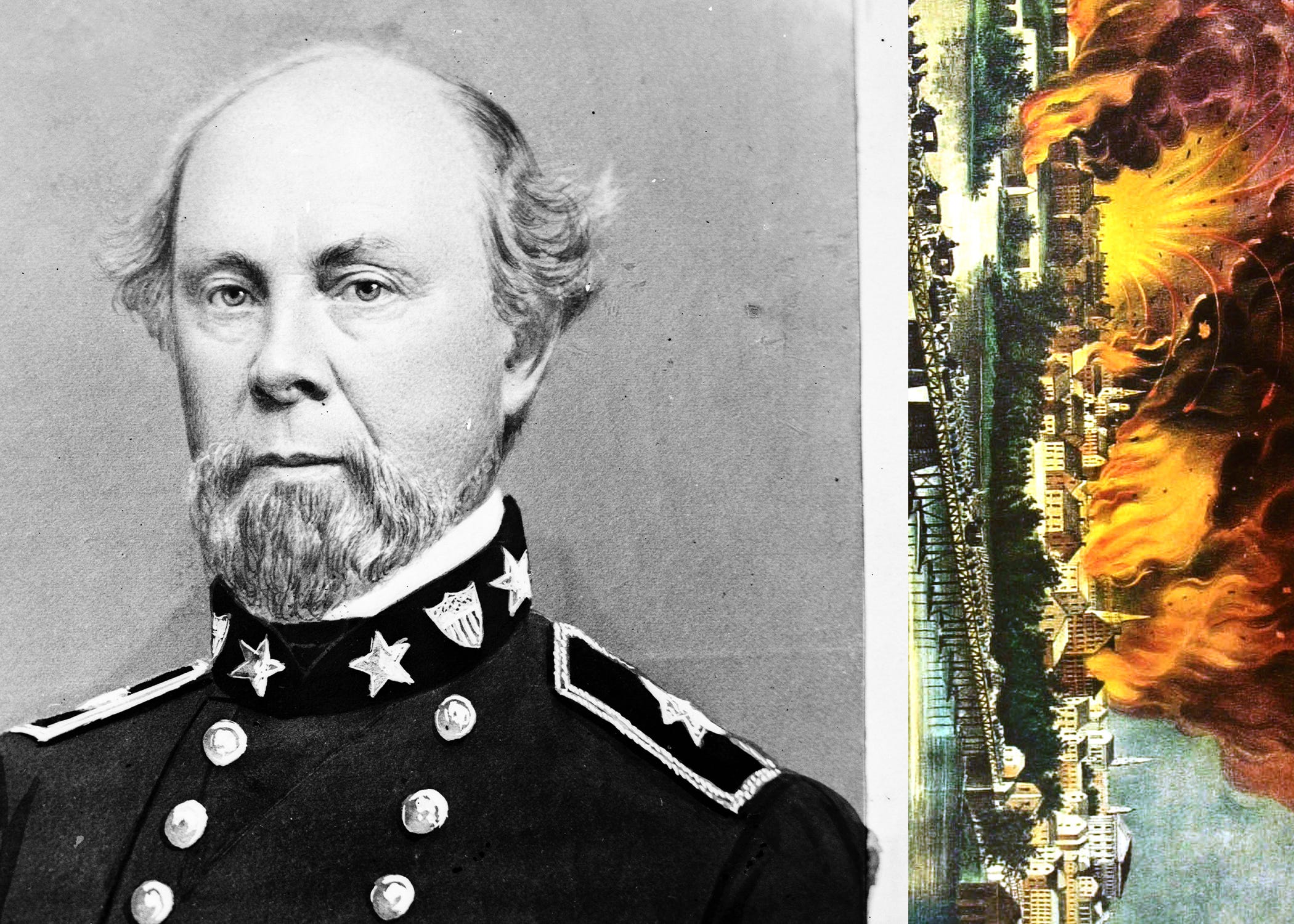
LIKE MOST SOLDIERS, I am drawn to the history of the Civil War—not just the outcomes of the key battles but the war’s political prehistory as well. To learn what led to the first shots at Fort Sumter, one first needs to read about the Missouri Compromise, the Compromise of 1850, the Dred Scott decision, and so many other political events. Far from dry legal footnotes, these historical events were sparks in a parched forest. Each one raised the temperature of sectional tension. But such developments were not by themselves sufficient to plunge the United States into war. The onset of war can be attributed, in part, to a group of political arsonists. These were the Southern “fire-eaters” who made compromise impossible, who portrayed coexistence as dishonor, and who fashioned a worldview in which violence was not a last resort but the only resort. There are lessons for our day in their story.
In the decade before 1861, these men—especially Robert Barnwell Rhett of South Carolina, William Lowndes Yancey of Alabama, Edmund Ruffin of Virginia, and their allies—moved beyond grievance into agitation and violence. They didn’t argue simply that slavery should be protected where it already existed. They demanded its expansion, insisted on the permanence of Southern dominance, and treated any dissent as an existential threat to their way of life. They cultivated a rhetoric that was designed not to persuade opponents but to radicalize their many followers.
Rhett, nicknamed the “Father of Secession,” spent years insisting that South Carolina break from the Union, even as most fellow Southerners urged patience. His family’s newspaper, the Charleston Mercury, became a megaphone for secessionist doctrine, insisting that slavery was not a necessary evil but a positive good and that the Union itself was corrupt beyond repair. An unmatched orator, Yancey carried that message across the South, turning party gatherings into showcases of defiance and bending crowds to his vision of an independent Southern nation. Ruffin, a patrician farmer and polemicist, took the logic further, celebrating violence as a necessary cleansing. When the time came, he traveled to Charleston to fire one of the first shots at Fort Sumter.
It wasn’t their opinions alone that made these figures so dangerous; plenty of politicians held extreme views. The danger lay in their rejection of basic democratic arts: compromise, negotiation, collaboration. They treated those virtues of pre-war society as vices. They argued that to compromise with the North was to betray the South; to negotiate was to surrender. These men rewrote the rules of politics so that democratic processes were illegitimate if they did not yield the desired results.
The tactics of the fire-eaters, studied closely, reveal a playbook we are beginning to recognize today. They demonized opponents, insisting that abolitionists and even moderates were not political adversaries but mortal enemies. They normalized extralegal responses, claiming secession and violence were patriotic duties when Washington failed to submit to their will. They mobilized audiences not for votes but for confrontation, turning speeches into rallies that prepared ordinary citizens to resist, with arms if necessary. They celebrated symbolic acts of violence—whether the brutal caning of Senator Charles Sumner on the Senate floor or the firing on Fort Sumter—as proof that their cause was righteous and that escalation into violence was justified.
These tactics fed upon each other. Demonization made negotiation and compromise impossible. Normalization of extralegal action made institutions irrelevant. Mobilization of armed citizens and local militias made conflict inevitable. Symbolic violence made escalation honorable. By the time Lincoln took office in 1861, the political culture of the South had been so inflamed by the fire-eaters that even those who once counseled caution were swept toward secession. The fuse was lit.
IT’S EASY TO CONSIGN all this to history, to treat the fire-eaters as relics of a slaveholding past with no bearing on our present. But that temptation is dangerous. Because the tactics they used, the contempt they showed for compromise, the way they weaponized words, and the way they mobilized supporters have direct echoes today.
Hateful or violent rhetoric from political leaders does more than raise tempers: Such rhetoric, as Daniel Byman explained in summarizing several studies for the Brookings Institution, increases polarization, undermines trust in institutions, and makes political violence more likely. Data from START/University of Maryland confirms that right-wing extremism is more likely to turn violent than left-wing extremism. Over the last several years, officials of the Department of Homeland Security, directors of national intelligence, and a director of the FBI have all testified before Congress about the threat of domestic violent extremism, especially white-supremacist and anti-government ideologies.
We have all witnessed a conspicuous string of violent incidents in recent months. In May, a gunman opened fire outside the Capital Jewish Museum in Washington, D.C., killing two while proclaiming political slogans. In June, a solidarity walk in Boulder, Colorado was attacked with Molotov cocktails and even a makeshift flamethrower, killing an elderly woman. And in September, conservative activist Charlie Kirk was gunned down at a university event in Utah. Each of these acts had its own ideological contours, but all emerged from the same poisoned soil: that politics is war by other means and that violence is an acceptable recourse when words or votes fail.
There is a connection between these contemporary tragedies and the fire-eaters of the pre-Civil War period: similar rhetoric. When leaders demonize their opponents as traitors, thieves, or existential threats, they do more than score points in debate. They degrade the very possibility of democratic politics. When some in government dismiss compromise as betrayal, they close off the only channels that prevent conflict from spilling into violence. When some politicians wink and grin at extralegal action—whether through militias, mobs, or deputized citizens—they normalize conduct that eats away at the rule of law. When symbolic violence is celebrated or excused, the leap to actual bloodshed is shortened.
In the nineteenth century, it took only a handful of such voices—loud, relentless, and uncompromising—to help steer a divided republic over a period of years into a bloody civil war. Today, in a nation much larger but armed with the technology of instant communications, a handful of voices can do the same in the blink of an eye. The lesson is not that every fiery speech or performative political gesture portends bloodshed. The lesson is that when incendiary rhetoric or action is left unchallenged, when it attacks social norms and takes over the public square or social media, violence becomes the predictable next step.
The fire-eaters of the nineteenth century remind us that politics is not just about policy. It is also about our culture—about whether words will be used to build consensus or to burn it down. When enough people come to believe that compromise is treason, the line between politics and war begins to blur. And once blurred, it is difficult to redraw.
We cannot afford to treat our modern-day “fire-eaters” as harmless showmen, or as sideshows to the “real” business of governance. They are not harmless, and they are not sideshows. They are playing with matches in a dry season.
The moral is stark: If we want to keep our politics from becoming a literal battleground, we must demand leaders who believe in the hard work of democracy rather than performative rhetoric—who see opponents as adversaries, but not as enemies; who see compromise not as weakness but as the essence of politics; who know that words can build trust as well as destroy it.
 | A guest post by
|