Lawmakers Shocked to Discover What’s in Trump Tax Bill They Passed
Republicans were caught off guard by the budget they rushed to Trump’s desk.

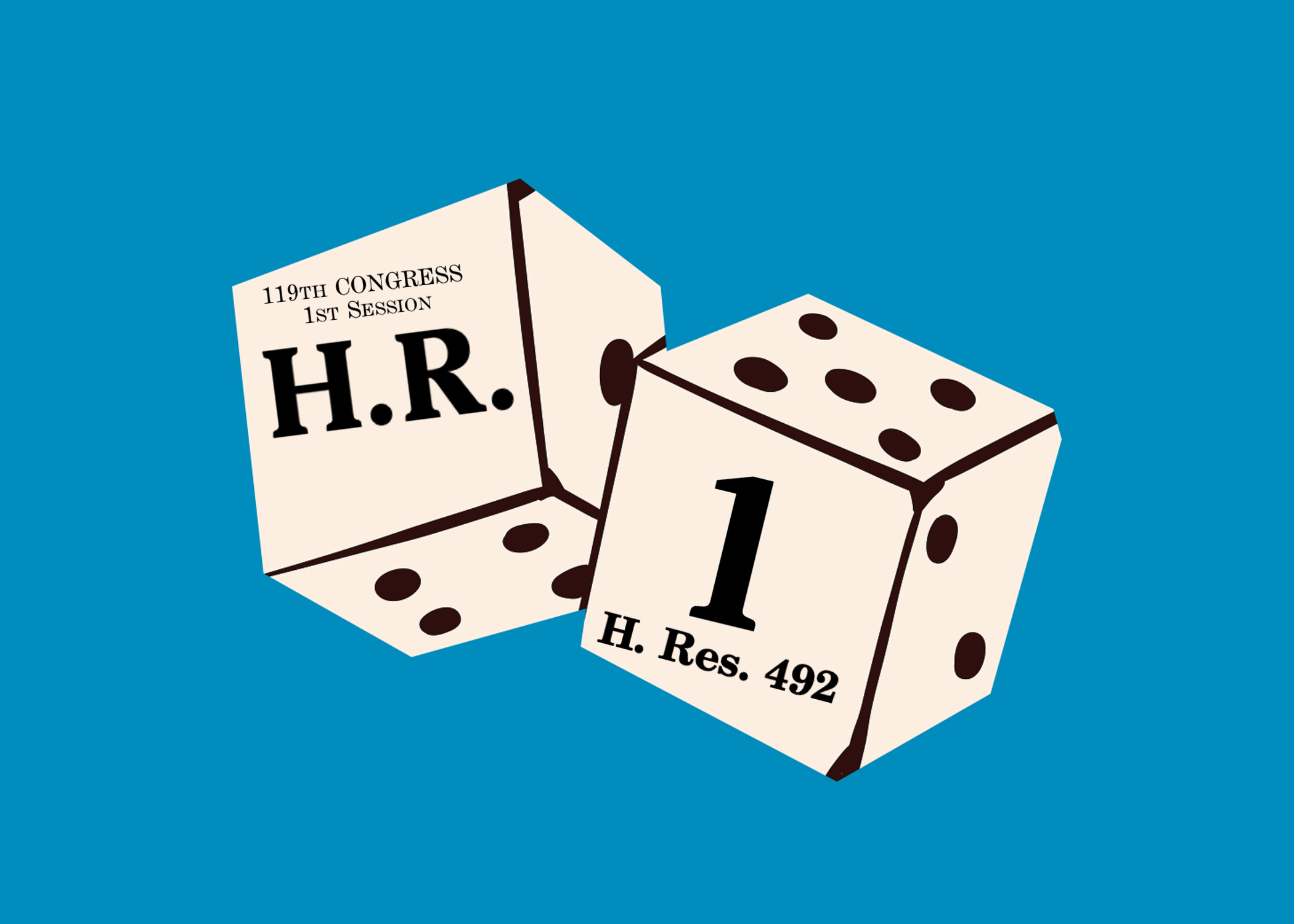
Luck be a lazy lawmaker
“We have to pass the bill so you can find out what’s in it” is an old political chestnut at this point. While the line was first uttered by Nancy Pelosi (whose words are often sarcastically cited without giving them proper context), it has since become a working mantra of the Republican-controlled Congress during the second Donald Trump presidency.
House Republicans gave us a rendition of the theme following the passage of their budget, and now their colleagues in the upper chamber are joining the chorus. Senators who voted to make the “one big, beautiful bill” law are discovering it has more items in it than they were aware of. How could that be? It’s because they didn’t read the whole thing before they passed it.
We can start with something that, for most of the country, is fairly low stakes—but for a small group of the country is deadly serious. Starting next year, professional and amateur gamblers will be allowed to deduct only 90 percent of the money they’ve lost each year from their taxes; before the bill’s passage, they could deduct unlimited losses. While this may sound confusing or unimportant, it’s actually quite a problem for high-roller gamblers, who spend a lot of their money at casinos.
“This is really bad,” said professional poker player Phil Galfond in a video prior to the budget’s passage. The way it is structured would mean gamblers are forced to pay taxes on income they didn’t even earn.
It means, if you’re a gambler—if you gamble during the year recreationally, professionally—let’s say that you broke even on the year, but you played a lot of sessions. You won $100,000 if you add up all the winning sessions and you lost $100,000 if you add up all the losing sessions.
Now, in the past, you’d pay zero tax on zero earnings, zero winnings, but now, if this passes, you would pay as if you won $100,000 in winnings minus 90 percent of $100,000 in losses, which is $90,000 in losses, for $10,000.
So you would have made zero dollars, but you’d pay taxes as if you made $10,000.
Galfond explained further how this new tax policy becomes even worse for players who operate at higher volumes. If you won $5.2 million during the year and lost $5 million for a net of $200,000, you’d be forced to pay taxes as if you earned $700,000—meaning you’d be facing a tax bill for an amount higher than you actually earned during the year.
This is clearly not a fair system, but considerations of fairness aside, think of the economic ramifications for the estimated 48 percent of men ages 18–49 who have an account with an online betting sportsbook. The well-documented societal problems associated with easy access to gambling could very well become even worse.
Several Republican senators have now admitted to not knowing that the reduced gambling deduction was even in the bill they voted to pass. And, frankly, it makes sense. The committee of jurisdiction (Finance) didn’t bother to have a markup of the bill. In fact, no Senate committee did.
Join Bulwark+ to unlock the rest
Become a paying member of The Bulwark to get access to this post and other subscriber-only content. A subscription gets you:
- Unlimited access to articles and newsletters including The Triad by JVL and Receipts by Catherine Rampell.
- Ad-free editions of our shows (with transcripts) and member-only shows like The Secret Podcast.
- Plus community chats and commenting features. Your support helps keep our work sustainable and available to those who cannot afford a membership. Cancel anytime.