

Borrowed Valor at the State of the Union
Military ceremony is no substitute for strategic leadership.

THE STATE OF THE UNION is a responsibility of the president—not to make a speech or put on a show, but, per Article II, Section 3 of the Constitution, to “from time to time give to the Congress Information of the State of the Union, and recommend to their Consideration such Measures as he shall judge necessary and expedient.” By that measure, this year’s address fell short. Americans instead heard applause lines, grievances, fear-stoking, and false statistics; they did not hear a clear assessment of America’s strategic position or a coherent vision for the future.
Oh, and they also heard—repeatedly—stories of military heroism.
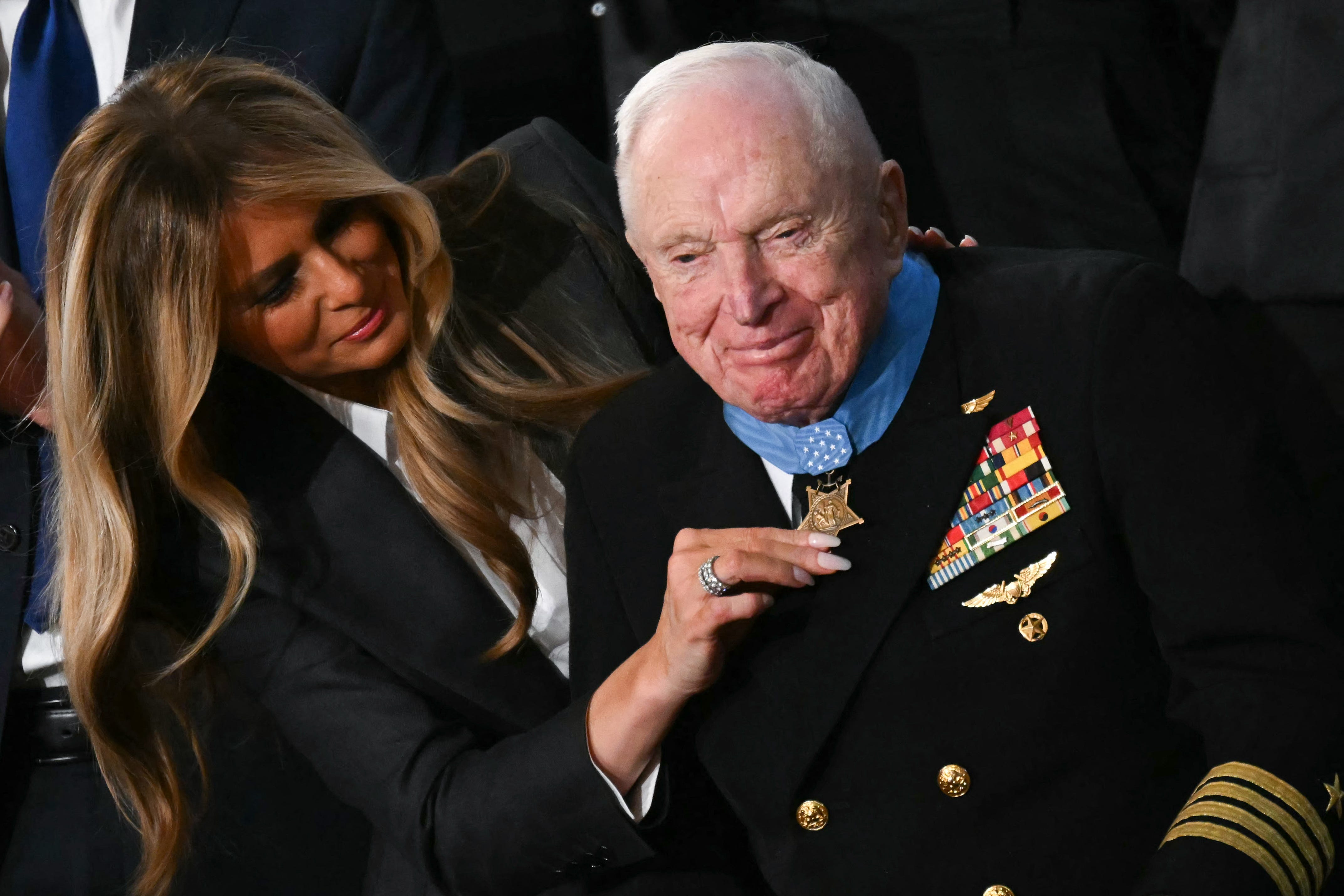
The audience rose and applauded repeatedly to honor acts of courage. Service members and veterans were spotlighted in moments that were powerful and deserved. Two Medals of Honor, a Legion of Merit, and a Purple Heart—four of our military’s highest awards—were presented in the gallery. Anyone who has worn the uniform could not help but feel pride. The four men who received those awards embody the very best of our profession.
But as the applause faded, for me an uncomfortable question lingered: Was this a national security vision, or a substitute for one?
TO BE CLEAR, PRESIDENTS HAVE LONG included individual stories of service to humanize policy and remind citizens that security rests on those who selflessly serve. It’s unusual for a president to award medals during a State of the Union address, and this was the first time in history a Medal of Honor had been awarded at one of these events.
Historically, when military matters have figured prominently in State of the Union addresses, presidents have used the rare opportunity of speaking to both houses of Congress and the American people (plus most of the Cabinet, the Supreme Court, and the Joint Chiefs of Staff) to attempt an articulation of strategy—explaining threats, alliances, missions, and costs. From Roosevelt’s wartime resolve to Reagan’s Cold War confidence to Bush’s post-9/11 clarity, these speeches have traditionally provide information to answer key questions: Where are we now? Where is the president going to take us? How are we going to get there?
But instead of outlining national strategy, force posture, alliance commitments, modernization priorities, or ongoing conflicts, last night’s speech leaned exclusively on ceremony. Heroism became the sole substance of the defense narrative. Applause lines replaced strategic vision. The speech treated combat as if it were a sport, done for the thrill and challenge and the chance at glory, rather than in service of a greater cause.
When potential policy outcomes are contested or future direction is uncertain, some leaders draw on the military’s high public trust to reinforce their own legitimacy. That may be politically effective. But it is not sufficient as strategy. The “gang of eight” huddled with administration officials immediately before the speech to discuss the possibly imminent attack on Iran, yet from Trump’s words, Americans could be excused for not knowing a major military and political decision was at hand.
AMONG THOSE WHO SERVE, there is a term—“stolen valor”—for those who falsely claim service or honors they did not earn. The president certainly did not commit that offense. But there is a related danger: co-opting the military’s credibility to compensate for the absence of strategic clarity. When leaders wrap themselves in service members’ esteem while avoiding hard discussions about missions, costs, and risks, they borrow the military’s trust without assuming the responsibility that accompanies it.
This approach—celebrating the warrior while sidestepping the wars—creates an accountability gap. It allows leaders to praise sacrifice without explaining its purpose, to attempt to invoke strength without defining strategy, and to claim patriotism without accepting its costs. For troops and their families, those who bear the consequences of policy decisions, that gap is not abstract.
Equally troubling was the speech’s framing of immigration as tantamount to an invasion. The United States has every right to secure its borders and enforce its laws. But militarizing migration discourse continues to blur the line between defense and law enforcement, risks normalizing domestic deployment expectations, and shifts the focus of national security inward—away from global leadership and toward internal fear. Presidents have historically avoided this conflation to preserve the armed forces’ nonpartisan role, but last night the president specifically combined the military and police, saying in the same phrase that both were “stacked, and respected as never before.”
The address repeatedly departed from another long-standing norm: treating national defense as a bipartisan responsibility. Sharp partisan attacks were intermingled with appeals to patriotism. Service members—who swear an oath to the Constitution, not to a party—deserve better than to see their profession used as a political backdrop.
Compounding these concerns was a reliance on sweeping claims about national security outcomes that, at best, were exaggerated and, at worst, were outright falsehoods. Assertions that global respect for the United States has been swiftly restored sit uneasily beside many of our allies’ expressed anxiety about American commitments and reliability. This kind of hyperbole may energize supporters, but in national security, credibility rests on precision and truth. Allies and adversaries alike measure words against reality.
The structure and tone of the speech suggested a strategy focused on domestic politics at the expense of the country’s interests. By highlighting heroism, the president associated his administration with valor. By leaning on emotional moments, he filled the space where policy clarity might otherwise reside. By focusing security discourse inward and repeatedly stating he had solved eight wars while ignoring the Russian invasion of Ukraine or a potential action against Iran, he redirected attention from myriad global security challenges.
These may be effective political techniques, but they do not provide a clear vision. Because applause is not a strategy. Borrowed valor is not leadership. And ceremony, however moving, cannot substitute for governing in a dangerous world.