Bruce Springsteen and What Protest Songs Sound Like to Soldiers
What the rock icon’s new song about Minneapolis asks of us.

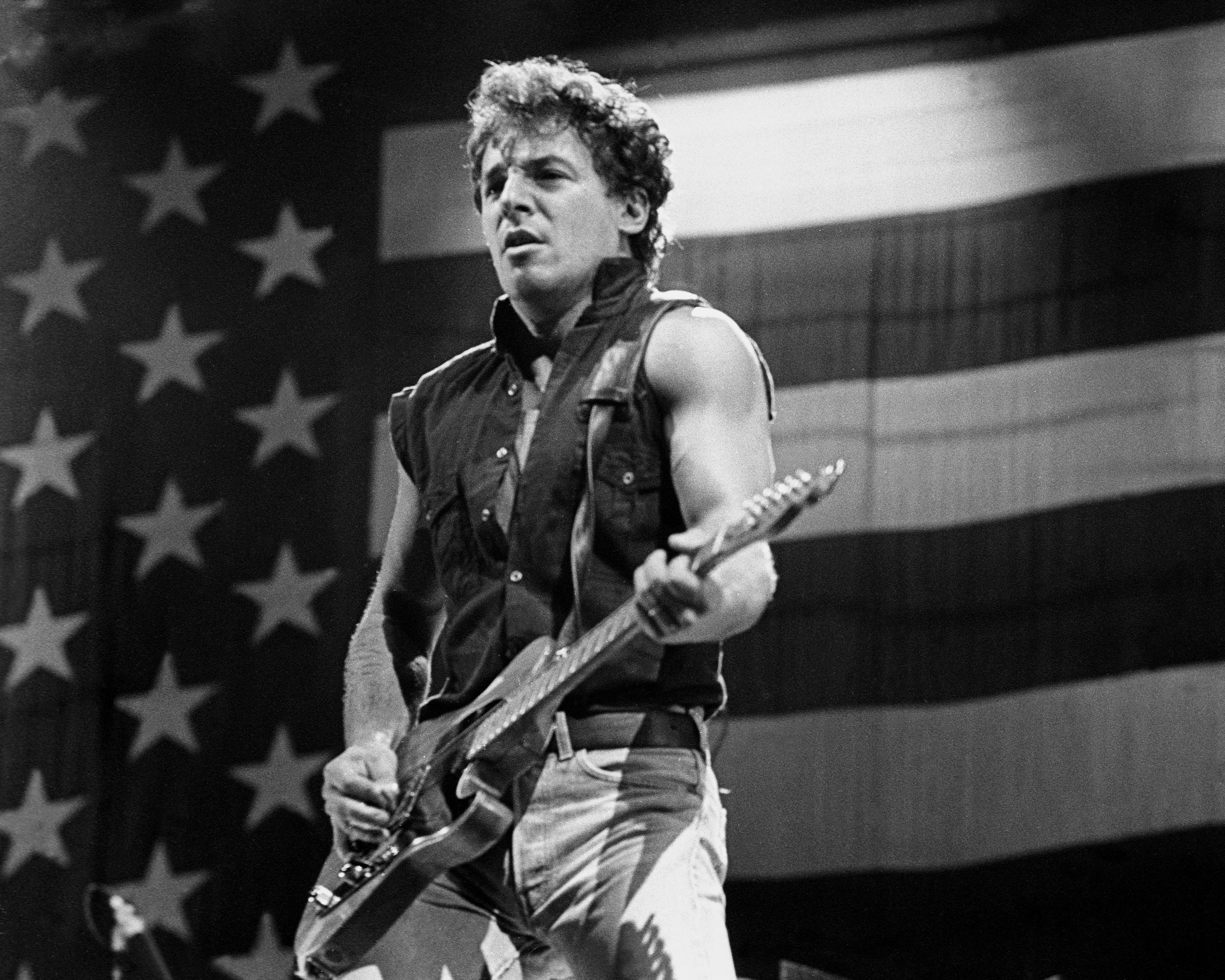
I SPENT FOUR DECADES wearing the cloth of our country. That fact alone might make people wonder why the hell I’m writing about a Bruce Springsteen protest song. But here we are.
Soldiers hear music. More than that, when songs deal with human conflict, soldiers often listen more closely than anyone else. Folk and protest music has a way of bypassing argument and going straight to the emotions. These songs tell stories—about power, sacrifice, fear, and consequence—that strike at the core of what a soldier is asked to do. And stories like that have a way of making people—especially those acting in the nation’s name—pause and reflect.
When I went to West Point in the early 1970s, the country was still locked in the trauma of Vietnam. While my class did not fight there, the music of that era reflected a central tension that shaped us nonetheless: not simply opposition to a war, but an effort to understand the distinction between the war and the warriors sent to fight it. Songs like Phil Ochs’s “I Ain’t Marching Anymore” and Creedence Clearwater Revival’s “Fortunate Son” weren’t abstract. They asked uncomfortable questions about fairness, sacrifice, and power. In nuanced ways, they forced us to confront who was paying the price—and why.
For my fellow soldiers and me, those songs didn’t weaken our sense of duty; if anything, they sharpened it. We were being asked to do what many Americans didn’t want to do. At the same time, the music made clear that service and conscience were not opposites. It revealed how deeply divided the country had become—and how that division cut straight through families, communities, and generations, including our own campus overlooking the Hudson River.
As a freshman cadet—a plebe—I saw how that division sometimes expressed itself in quieter, more human ways. During Parents Weekend, before guards ringed the campus, protesters would gather near our barracks. Some would approach us as we stood in formation and gently place flowers into our rifle barrels. It was, figuratively speaking, disarming—not because it was threatening but because it was intimate. We were reminded that we were of the same generation as the protesters. We weren’t abstractions or symbols. Neither were they. We were young Americans trying to understand our place in a moment of national upheaval. The message wasn’t You are the enemy. It was simpler than that: Remember your humanity.
That theme—humanity amid power—followed us as protest music evolved. During the Cold War, stationed in Europe, we heard “99 Luftballons” drift across AFN radio stations. The song’s name might have seemed playful—“ninety-nine air balloons,” which to English speakers sounded whimsically almost like “love balloons”—but the real meaning of the lyrics were far heavier: The song represented the voice of a German nation living with the knowledge that nuclear war would not be fought somewhere else. It would be fought on their soil. The song wasn’t about soldiers at all. It was about escalation, miscalculation, and the moral weight of living under the shadow of annihilation.
Later still, as U.S. forces deployed from Europe to Iraq and Afghanistan, the music shifted again. Protest songs were no longer primarily about whether soldiers should go to war. They asked what it meant that America seemed perpetually at war. They questioned purpose, cost, and consequence. What were we doing in the Middle East? What would remain after the fighting stopped? What did these conflicts reveal about us—not just as a military power, but as a nation repeatedly choosing how to apply force?
WHICH BRINGS US TO TODAY. Bruce Springsteen’s new song, “Streets of Minneapolis,” released on Wednesday, belongs to a different chapter entirely.
It isn’t about soldiers going overseas, or even about war in the abstract. It is about Americans confronting Americans. It is about power exercised at home, lives lost on our own streets, and the strain placed on who we say we are—and who we aspire to be.
Springsteen has always written about place, dignity, and struggle, giving a rock inflection to the kinds of concerns that older generations had taken up in folk music (and sometimes blues, bluegrass, and country). But this song feels more inward-facing than much of Springsteen’s earlier work. It is mournful rather than strident. It doesn’t ask whether a war is just; it asks whether we are. When he sings of “snow-filled streets” and names the dead, he anchors the song in lived loss, not ideology. And when he describes authority moving through a city with weapons visible and fear close at hand, he isn’t protesting a policy so much as questioning a condition.
This represents a profound shift in protest music—and arguably in the nation itself. This isn’t a song about a war we are fighting, or about economic or racial inequality. This is a song about the values we are testing. It asks what we are willing to preserve when authority, fear, and politics collide—when the lines between security and coercion, order and justice, begin to blur.
For someone who spent a lifetime wearing the cloth of his country, that distinction carries real weight. Armies exist to defend nations. But nations endure only if they retain a shared moral center. Music gives expression—and attention and contention—to that moral center. Protest songs don’t offer easy answers. They create space—to pause, to listen, and to ask hard questions we might prefer to avoid.
Such music reflects its time, but it also shapes it. At its best, protest music does not divide for division’s sake. And it does not demand we agree with it. Rather, it asks us to look honestly at ourselves—first as human beings, and then as a nation—and to judge whether we have the courage to be who we ought to be. That’s what earlier protest songs did in their own moments, and that is what Bruce Springsteen’s song does today.