

Caribbean Boat Strikes and the Use (and Misuse) of Special Forces
Our nation’s silent professionals deserve clear chains of command and a real chance at strategic success.

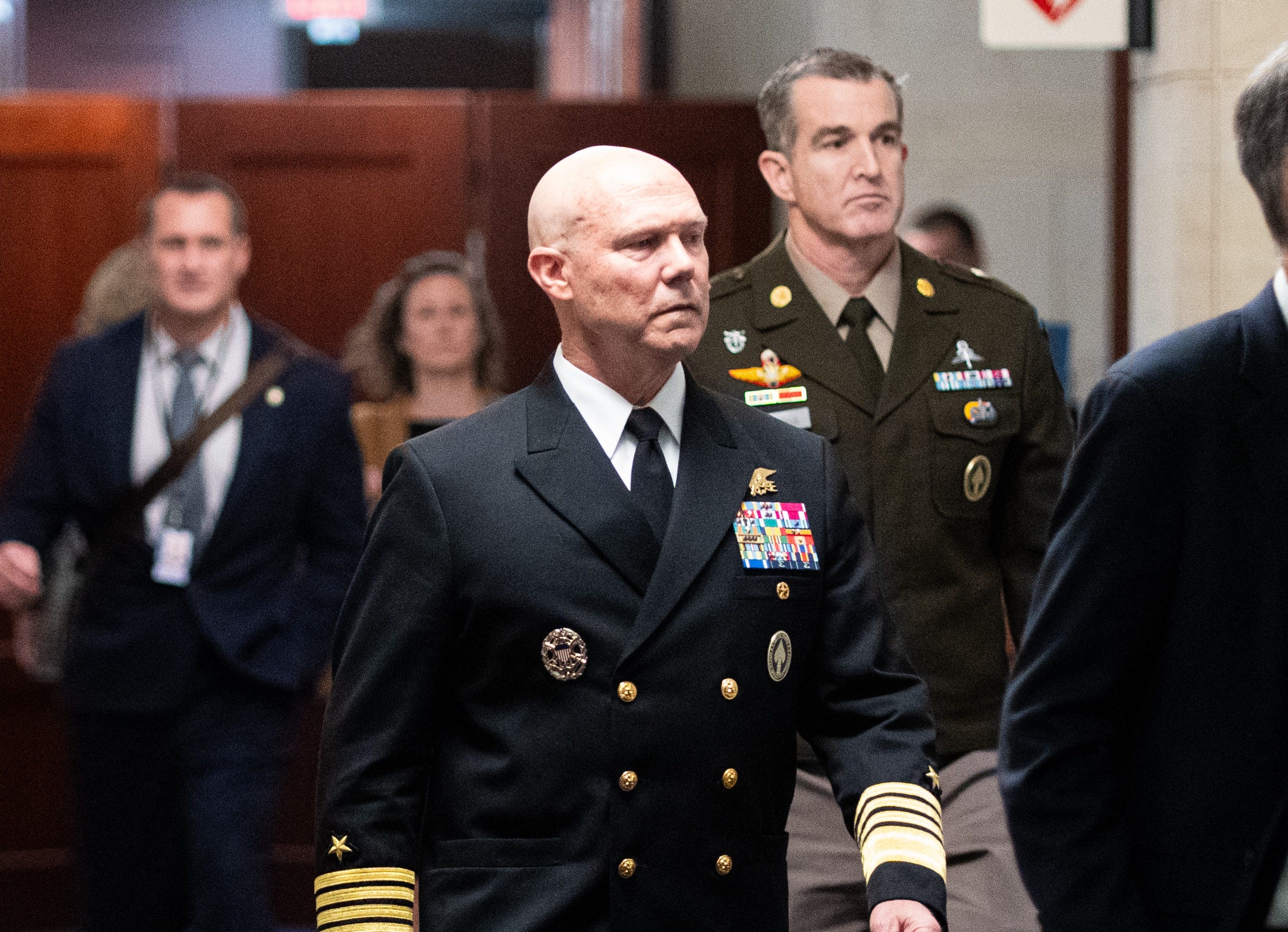
THE CONTROVERSY ABOUT AMERICAN strikes on boats around the northern coast of South America has extended from the secretary of defense to multiple four-star officers, which may surprise some Americans. Unity of command is, after all, a military principle that has extended into other aspects of American life, including the business world and all kinds of leadership training. To understand the military command dynamics underlying the boat strikes—including the notorious September 2 incident facing scrutiny in Congress—requires understanding why there were multiple overlapping commands at the time. More specifically, the September 2 boat strike was conducted by special operations forces, apparently in a chain of command that circumvented the commander responsible for the area.
In the waters around Venezuela, the Caribbean, and the Eastern Pacific, the United States faces a complex challenge: state corruption, transnational criminal networks, narcotics trafficking, and political instability. It is precisely the kind of challenge for which special operations forces are well suited—if they are properly integrated into a coherent interagency strategy with regular military forces, diplomatic efforts, economic influence, and informational tools, and employed under a unified chain of command. The commander of Southern Command, Adm. Alvin “Bull” Holsey, is the one who owns that battlespace. But Adm. Holsey also works in collaboration with foreign partner governments, with the intelligence community and other parts of the U.S. government, and with the special operations forces (as well as other combatant commands led by four-stars, like Transportation Command and Cyber Command). Whether that is happening effectively should be part of a bipartisan investigation into the September 2 incident.
The recent reports involving engagements with Venezuelan boats illustrate both the promise and the peril of special operations missions outside well-understood combat zones. Precision, professionalism, and partnership are hallmarks of American special operations forces. But as the history of those organizations has taught, they are most effective when embedded in a transparent command structure that aligns tactical actions with interagency and its national strategy. When they are siloed off from the tools of national power (diplomacy, information, economic measures, and military activity) the results can be calamitous.
THE AMERICAN MILITARY is made up of many tribes, and tribes within tribes. My tribe, for example, is tankers, who trace their history back to the long and illustrious tradition of the U.S. Cavalry. We form part of the larger Army tribe. The Navy has its own tribes—submariners, surface sailors, aviators—and the same goes for the other services.
The special forces are their own tribe, but not a monolithic one and certainly not interchangeable. In truth, Special Operations Command (SOCOM) is a constellation of highly distinct units, purpose-built for different missions, linked by culture and command structure but each with its own identity. I say this not as a former operator—I never wore their tabs, berets, or tridents—but as a conventional commander who trained beside them before 9/11, worked with them across Europe, and fought shoulder-to-shoulder with them in Iraq. The Special Operations community is both extraordinary and widely misunderstood.
The modern SOF story began not with success, but with failure—on a windswept patch of Iranian desert known to the American military as “Desert One.” On April 24, 1980, eight helicopters and a group of Delta Force operators launched a mission to rescue Americans held hostage in Tehran. Everything that could go wrong that night did. Sandstorms grounded aircraft. Communications among the different services were incompatible or failed altogether. Mechanical issues crippled several helicopters. And when the commander made the difficult decision to abort the mission, disaster struck: One helicopter collided with a C-130 cargo plane as it was lifting off. The explosion killed eight American servicemen. The survivors had to exfiltrate under harrowing conditions, leaving aircraft behind.
The tragedy was not just the loss of life; it was the exposure of systemic dysfunction—fragmented command and control, inconsistent training standards between groups, service rivalries, and an absence of a unified doctrine for the most sensitive of missions. Congress took note. So did a young Army officer named Stanley McChrystal, who would later say that Desert One demonstrated how America’s most elite warriors could be rendered ineffective not by the enemy but by the system meant to employ them.
But one of the people who did the most to turn the lessons of the mission into a national capability was Gen. James J. Lindsay, the first commander of SOCOM. Lindsay understood that rescuing hostages, countering terrorism, building partner forces, conducting sensitive reconnaissance, and strengthening allied capabilities required an integrated enterprise—shared vision, shared training, shared doctrine, shared intelligence, and a clear operational chain of command. Under his leadership, SOCOM became not just an administrative headquarters but a global hub for resourcing special operations forces, synchronizing missions, and ensuring they could act as a joint team. Within SOCOM is the subordinate Joint Special Operations Command (JSOC), responsible for the most elite counterterrorism units. The modern SOF system—its structure, authorities, and culture—was built from that crucible of failure.
MY FIRST CLOSE EXPOSURE TO THIS ECOSYSTEM came as commander of the Operations Group at the National Training Center in California. The pre-9/11 training rotations in the middle of the Mojave Desert emphasized large-scale, mechanized combat, but even by then we began realizing that the future battlefield would require integration with the kinds of teams Desert One had taught us to unify. We began inserting Green Beret detachments, SEAL reconnaissance teams, and Air Force pararescue specialists and joint tactical air controllers into our training scenarios. Those first experiments were clumsy at times—conventional units didn’t always know what to make of or do with a six-man detachment with a different mission, different radios, and a cultural approach unlike anything in their doctrine. But by the end of each rotation, armored brigade commanders almost always found themselves saying variations of the same thing: “I didn’t know how much I needed them until I saw how they operate.”
When I was a commander in Europe, I watched an element of SOF, the Army Special Forces, return to their core mission: foreign internal training and defense. The Green Berets stationed in Germany trained European conventional units preparing to deploy to Iraq and Afghanistan. They taught tactics, leadership, cultural awareness, and small-unit adaptability. Europeans, especially the Ukrainians, told me it was the best training they had ever received, and it reshaped how they operated beside U.S. forces in combat.
But nothing compared to what I experienced in Iraq when I served as a task force commander and “battlespace” owner. By 2007–08, the war had become a race to dismantle terrorist networks faster than they could regenerate. Special Forces in the Kurdish region were interacting with Peshmerga, and each night the JSOC operators under then-Lt. Gen. McChrystal and his successor, then-Vice Adm. Bill McRaven, were capturing or killing key leaders of al Qaeda in Iraq. As part of that effort, our 1st Armored Division headquarters incorporated a special operations liaison officer—our “SOLO”—who became one of the most important voices in our command post.
Every evening he would brief me on the missions they had planned, often waking me in the middle of the night for approval to strike key targets in our battlespace, and every morning, usually around dawn, he would brief me on the previous night’s operations: the targets they pursued; whether they achieved a “jackpot,” meaning the capture or confirmed elimination of a high-value target; or whether they found a “dry hole,” arriving to discover the individual had already moved or been warned. We all understood that those outcomes weren’t the end of the story, but the beginning gathering intelligence for the next operation. SOF intelligence exploitation was legendary—within hours they could extract information from laptops, phones, documents, family networks, tribal allies or rivals, social patterns, and even pocket litter found on those they had captured or killed, which all fed a cycle of intelligence that made them faster each night. Watching them work was like watching a jazz band—precise, improvisational, and deeply knowledgeable.
Sometimes, the JSOC forces would need to address the same target more than once, which we would refer to as a “repeat strike” or “re-engagement” but never a “double tap.” Recently, especially in discussions about the September 2 incident, the term “double tap” has been used to describe multiple strikes on the same target with a delay in between. It’s a bastardization of the original meaning: In SOF parlance a double tap is not a euphemism for killing the wounded. It describes a disciplined marksmanship technique used when a target presents a weapon or poses imminent threat—two well-aimed rounds directed to immediately stop a hostile act. It is rooted in the laws of war, in self-defense, and in ensuring operators quickly survive dangerous close-quarters battles. The recent casual misuse of that term to describe a possible violation of the laws of war does a disservice to those who must make split-second decisions during close engagements.
In working with my friend and teammate Gen. McChrystal, I know he recognized that SOF excellence alone was not enough. The war was fragmented: JSOC hunted individuals, conventional forces fought for control of terrain, allies provided information, and national intelligence agencies operated in their own lanes. His answer was the fusion cell. Bringing SOF operators, conventional commanders, intelligence analysts, interagency partners, and even some of our Iraqi and Kurdish allies into one room with shared data and shared purpose created a unity of effort that transformed operations in northern Iraq. It remains one of the best examples I have seen of inventive leadership on a modern battlefield, and Stan gets the credit.
But history also teaches that special operations forces can be misapplied. During the Global War on Terror, much of SOF became a global, human-focused counterterrorism machine. For JSOC units, that mission aligned with their design. For others—especially Green Berets—years of direct-action manhunts pulled them away from their foundational mission of building partner capacity, a mission that becomes more important, not less, in a volatile international environment. Over the course of the War on Terror, the tempo of special operations missions accelerated, and the size of special operations forces expanded in tandem. What were once small, closely knit teams became more like militaries in miniature. Col. Richard D. Hooker has noted that “the Navy Special Warfare Community now boasts around 4,000 SEALS, ten times as many as at the height of the Cold War,” and “in 2021, U.S. Special Operations Command (USSOCOM)’s budget request was larger than the entire defense budget of Poland, one of the North Atlantic Treaty Organization’s largest and strongest militaries.” This expansion roughly coincided with some members of the special operations community becoming celebrities, especially after the highly publicized raid, brilliantly planned and led by Adm. McRaven, that eliminated Osama bin Laden and collected huge amounts of intelligence from his compound. The imbalance away from regular forces in favor of special operations was understandable in wartime, but difficult to unwind after two decades.
Which brings us to today.
As a conventional commander who stood alongside Special Operations Forces in Iraq, at training centers, and across Europe, my respect for them only grew during my time in service. They succeed when their missions are clear, their authorities are coherent, the communication from higher command and the battlespace owner is clear, and their employment is aligned with strategy. They struggle when we romanticize them, misunderstand them, or—worst of all—use them to compensate for a lack of policy or planning.
Too often, senior leaders, unable to agree on a strategy to combine diplomatic, military, economic, and information power to address America’s most difficult problems, choose instead to throw our most highly trained and specialized warriors into harm’s way without sufficient support or guidance. That may have been what happened this fall in the Caribbean.
These quiet professionals deserve better than that. They deserve leaders who understand their capabilities and their limits, policymakers who resist the temptation to see them as a magic wand, and a national strategy that integrates their work with other branches of the military and with the instruments of power. When those conditions exist, SOF remain one of the most effective tools our nation possesses. When they do not, even the best operators cannot rescue us from our own confusion.
As Congress investigates the circumstances of the September 2 boat strike, one question it might ask is whether SOCOM and Southern Command were coordinating properly, or if, for some reason, there were parallel, overlapping chains of command from Secretary Hegseth down to the troops deploying weapons.
SOCOM should be focusing Green Berets on the mission of strengthening Latin American and Caribbean partners so they can confront smuggling, trafficking, and corruption themselves. Naval Special Warfare units and Marine special operators can support maritime interdiction. The Coast Guard, an entity of the Department of Homeland Security designed for law enforcement, can contribute a significant effort or even lead outright. Intelligence agencies should be part of the plan from the outset. And all actions—especially sensitive ones—must be coordinated and communicated up, down, and within each element of multiple chains of command.