Character Is Countercultural
On virtue, politics, and public service.

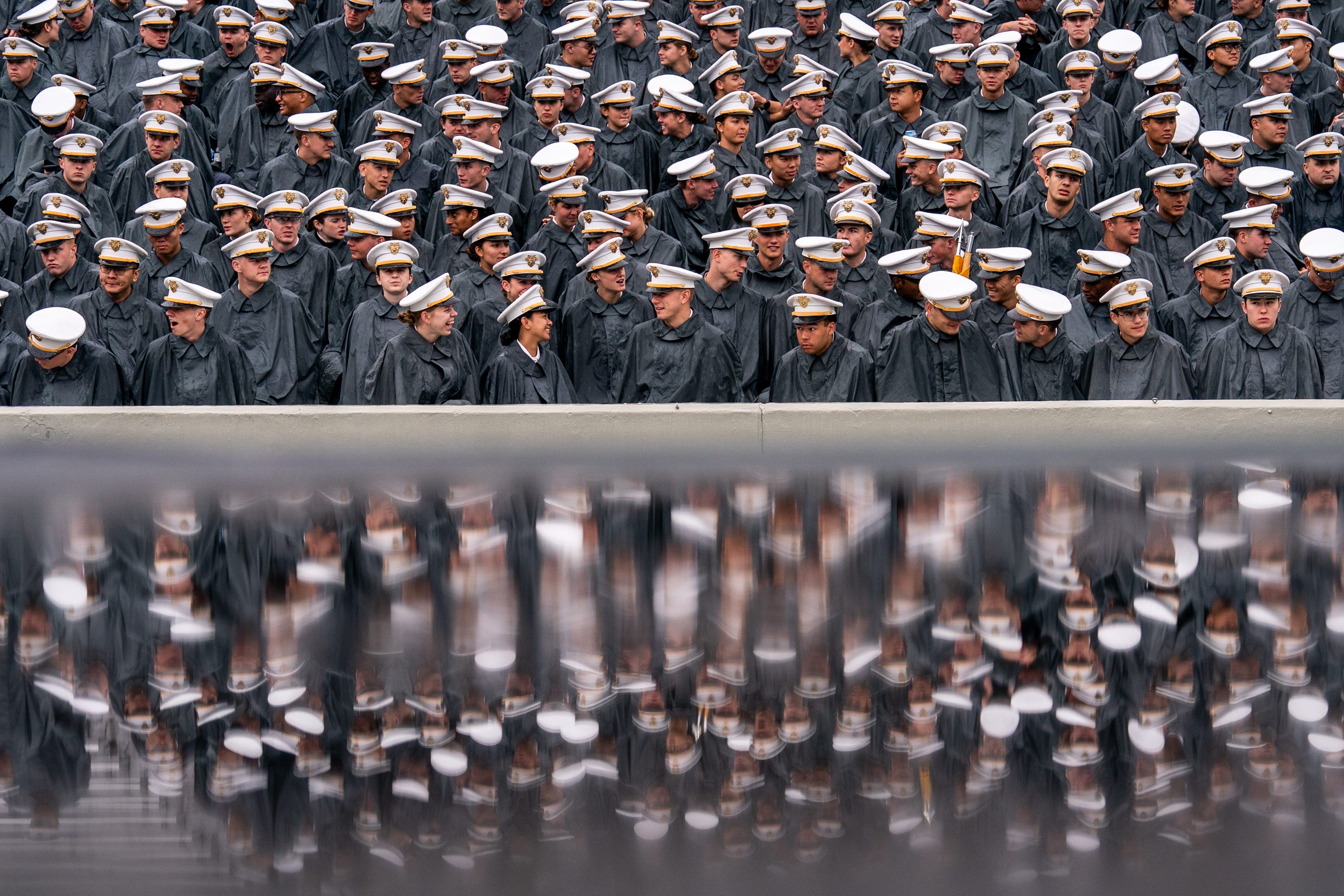
DOES CHARACTER COUNT FOR ANYTHING in public life anymore? It’s a question that’s come up, it seems, more and more frequently in the past decade, as almost every politician seems eventually to face one kind of scandal or another. Ditto celebrities, professional athletes, leading scholars and scientists, business leaders, and other prominent people. As David French recently summed it up on an episode of The Focus Group Podcast: “Do American voters really care about character? No. . . . Does character really matter? Yes.”
I’ll leave it to David and others to analyze the priorities and virtues of the American voter. But I think, when considering the role of character in our society and politics, it’s important to keep in mind that good character isn’t a finite natural resource, but something that can be—and must be—developed intentionally in every person.
Character is easy to admire when it appears and easy to condemn when it fails. But it does not suddenly emerge when an individual runs for office. It is not conferred by elections, and it should not be judged because of promotions, uniforms, titles, wealth, or fame. It is, rather, built patiently over years, long before it is ever tested. The real question may not be whether we still value character, but whether we still understand what it is and how it is formed.
For me—like, I think, for many Americans of my generation—character formation started at home and continued at school, in athletics, in church, and in other civic institutions (in my case, the Boy Scouts). By the time I entered West Point in the summer of 1971, my family and a whole series of institutions had already imprinted themselves on me. The United States Military Academy did not begin the work of building my character; it assumed that work had already started and deliberately sought to deepen it.
WEST POINT’S MISSION WAS NEVER simply to educate engineers or produce tactically proficient Army officers. Its larger purpose was to prepare young men—and, beginning soon after my graduation, young women—to bear extraordinary responsibility for the lives of others and the trust of the nation.
What distinguished West Point is not that it claimed a monopoly on character development, but that it recognized that technical competence without moral development can become dangerous. The academy could teach engineering and history, the proper employment of artillery, and how to write a clear operations order. But none of those skills matter if the person exercising them lacks integrity, humility, and an unwavering sense of duty.
Nowhere was that pedagogical philosophy clearer than in the Honor Code: “A cadet will not lie, cheat, steal, or tolerate those who do.”
Those words establish that trust is the currency of leadership. A leader who cannot be trusted with the truth can never be trusted with soldiers’ lives. Every future decision—reporting casualties honestly, assessing an enemy accurately, advising a superior candidly, accepting responsibility for failure—rests upon that foundation.
The academy reinforced that lesson through its motto: “Duty, Honor, Country.” Those three words described an order of priorities. Duty came before personal ambition. Honor governed how duty was carried out. Country reminded future officers of the purpose that was larger than themselves.
There was one more influence that has remained with me for more than five decades. When I entered West Point, chapel attendance was still mandatory. A federal court later ended that practice on the grounds that it violated the Constitution, but to me, the lasting lesson was never about compulsory worship. It was the academy’s belief that officers entrusted with the lives of others should regularly reflect upon questions larger than themselves. They should wrestle with humility, conscience, courage, and moral responsibility long before confronting those challenges in combat.
That conviction found its clearest expression in the Cadet Prayer:
Strengthen and increase our admiration for honest dealing and clean thinking and suffer not our hatred of hypocrisy and pretense ever to diminish.
Make us choose the harder right instead of the easier wrong and never be content with a half-truth when the whole truth can be won.
Endow us with courage that is born of loyalty to all that is noble and worthy . . .
Written by Chaplain Colonel Clayton Wheat in 1920, those words have stayed with me far longer than engineering equations or military history lessons. They endure because they speak not to what a leader knows, but to who a leader is.
West Point isn’t the only institution of higher education that seeks to develop the character of its students in addition to their minds, nor is it always successful—either in forming good leaders or in living up to its own standards. No institution composed of human beings ever reaches perfection. But the academy’s expectation, its aspiration, is unmistakable: Leadership begins not with authority but with trustworthiness. I now realize that West Point was not replacing the lessons I learned from parents, teachers, coaches, or scoutmasters. It was building upon the foundations others laid. The academy assumed that character formation had already begun and sought to deepen it for a greater purpose.
In the 1970s, this was somewhat countercultural. So much of that era was about self-expression and psychological authenticity—much like today. When so much of society urges, Be true to yourself, West Point demands, Improve yourself. It’s still countercultural. And it’s still, to my mind, better advice.
THE ARMY HAS LONG DESCRIBED ITSELF as a profession of arms, and rightly so. Like medicine, law, education, journalism, or the ministry, it is a profession because society entrusts it with responsibilities carrying profound consequences for others. Technical competence is indispensable, but character ultimately determines how that competence is exercised. That is why I have come to believe that service in the military does not create character, but tests it.
Sometimes those tests appear in quiet, almost invisible moments: admitting a mistake no one else noticed, giving honest advice when a superior hopes for a different answer, accepting responsibility for a failed mission instead of blaming a subordinate. Those decisions seldom attract attention, but they shape organizations and establish trust.
Occasionally the tests become far more demanding. Combat strips away pretense with remarkable efficiency. Exhaustion, fear, uncertainty, and grief have little patience for carefully constructed public personas. Soldiers quickly discover whether their leaders possess moral courage to match their physical courage. They watch to see whether leaders share risk, tell the truth when the news is bad, care for the wounded before themselves, write the letters no commander wishes to write, and remember that every casualty report represents a family whose life has changed forever. Those moments do not suddenly produce character. They reveal whether it was there all along.
Thinking back across nearly four decades in uniform, the officers and noncommissioned officers I admired most were rarely remembered for dramatic speeches or outsized personalities. They earned confidence through consistency. They treated people with dignity regardless of rank. They accepted responsibility without hesitation. They remained calm in crises because their values had already been settled long before a crisis arrived. Soldiers followed them not because regulations required it, but because experience had convinced them those leaders could be trusted.
Only after leaving active military service did I fully appreciate that those lessons extend well beyond the Army. For more than a decade after leaving active military service, I spoke about leadership to a variety of audiences, initially healthcare providers, now graduate business students. The dean of a business school invited me to join their faculty because he believed that modern MBA programs devoted enormous attention to finance, strategy, and management while spending far too little time discussing ethical leadership and character. He wanted me to help change that, and that is a worthy mission.
The private sector “uniforms” are different, the language is different, and the tasks are different. But the essential requirements of character and leadership remain unchanged. Competence is expected in every profession, in every industry. Great organizations define what competence looks like and usually train and teach it well. What separates good organizations from exceptional ones is their understanding that competence alone is insufficient. Character—one of the key attributes of any leader—determines whether knowledge is used with wisdom, whether authority is exercised with humility, and whether success is measured not only by achievement but also by service.
Looking back across that journey—from family and school to coaches and scoutmasters, from West Point to the Army and eventually the private sector—I realize that none of those institutions believed character development was someone else’s responsibility. Each accepted a share of the task. Each expected young people to become a little more than they had been the year before. Most importantly, each reinforced lessons that had begun elsewhere.
Most Americans, regardless of political affiliation, still admire leaders whose actions consistently match their words, whose integrity survives public pressure, and whose decisions reflect something larger than personal ambition. We may disagree passionately about policy or ideology, but few would argue that honesty, humility, courage, and responsibility are obsolete virtues.
FOR GENERATIONS, AMERICANS BENEFITED from an informal partnership among families, schools, faith communities, youth organizations, athletic programs, neighborhoods, professions, and military service. Together, they created countless opportunities for young people to practice responsibility, to show their character, before being entrusted with a leadership role. Some of those institutions remain vibrant today. Others struggle. Technology, social media, and cultural change have transformed the environment in which young people mature.
I’m not suggesting we can—or should—recreate the America of my youth. Every generation must prepare its citizens for the world they will inherit, not the one their parents knew. But one principle has not changed: Character development doesn’t just happen. It grows where families, schools, coaches, employers, congregations, professions, and communities intentionally cultivate it and then expect it. Parents who insist that integrity matters when no one is watching. Teachers who refuse to lower standards. Coaches who value sportsmanship as highly as championships. Mentors who teach service before recognition. Employers who reward honesty as much as performance. Professionals who understand that authority is ultimately an act of stewardship.
Am I living in a dream world to think we can somehow recreate or strengthen all of these? Not for a minute. But if we want character to matter, and I think we do, we all need to contribute to its growth in others. If we want better character in our leaders, there is only one solution: to promote better character in each other, especially young people. If each person sees teaching others, especially the next generation, wisdom, humility, respect, conscientiousness, duty, and service as part of their basic responsibility as a citizen—as a person—then we will end up with fewer individuals of low character seeking positions of power. And those who do will have smaller constituencies.
Character is rarely noticed while it is being formed. But it becomes unmistakable when it stands before us—and its presence is every bit as obvious as its absence. And that matters. Forming character has always been the quiet work of a free society. It’s necessary work if we are to remain a free society.
Beautiful, Mark. Proud to be your colleague.
Well done! Thank you