Diane Keaton, 1946–2025
The leading lady of the 1970s.

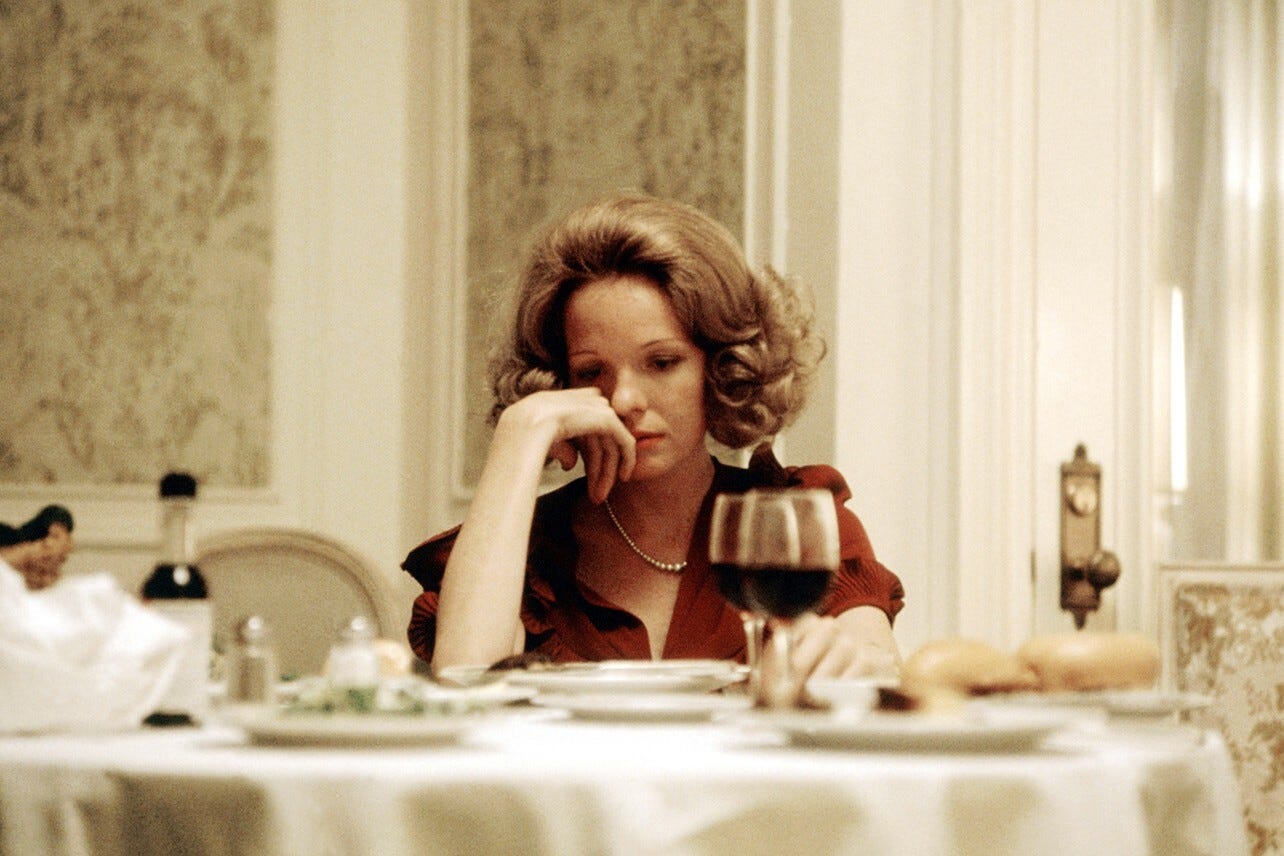
DIANE KEATON’S CAREER spanned more than five decades, with memorable roles in each of them; she was one of the few actresses allowed to age gracefully, from youthful ingénue to onscreen grandmother. And as much as I loved her as Steve Martin’s faithful rock of a partner in the Father of the Bride movies or the neurotic, self-doubting leader of the First Wives Club or the glue that holds The Family Stone together through sheer force of will or the object of Jack Nicholson’s and Keanu Reeves’s affection in Something’s Gotta Give, when I think of Keaton I inevitably think of the way she helped define cinema in the 1970s.
The Godfather and The Godfather Part II are, arguably, the two greatest American films ever made, a portrait of America told from the perspective of outsiders peering in. But that outsider view, the twisted immigrant journey that combines crime and commerce and fear and family into a nightmarish version of the American dream, works in large part because we see the Corleones through the eyes of Keaton’s Kay.
She is the WASPy ideal Michael Corleone (Al Pacino) strives for, the prize that comes with joining the upper tiers of American society. But it’s Kay’s probing questions about the guests at Michael’s sister’s wedding—and the look of confused horror she sometimes adopts when she hears about the deals Michael’s father has pursued—that gives us our real window into the life of the mafia. “Now who’s being naïve, Kay,” Michael asks at one point, and we understand the question because we, the viewer, are just as naïve. We see ourselves in Kay’s face.
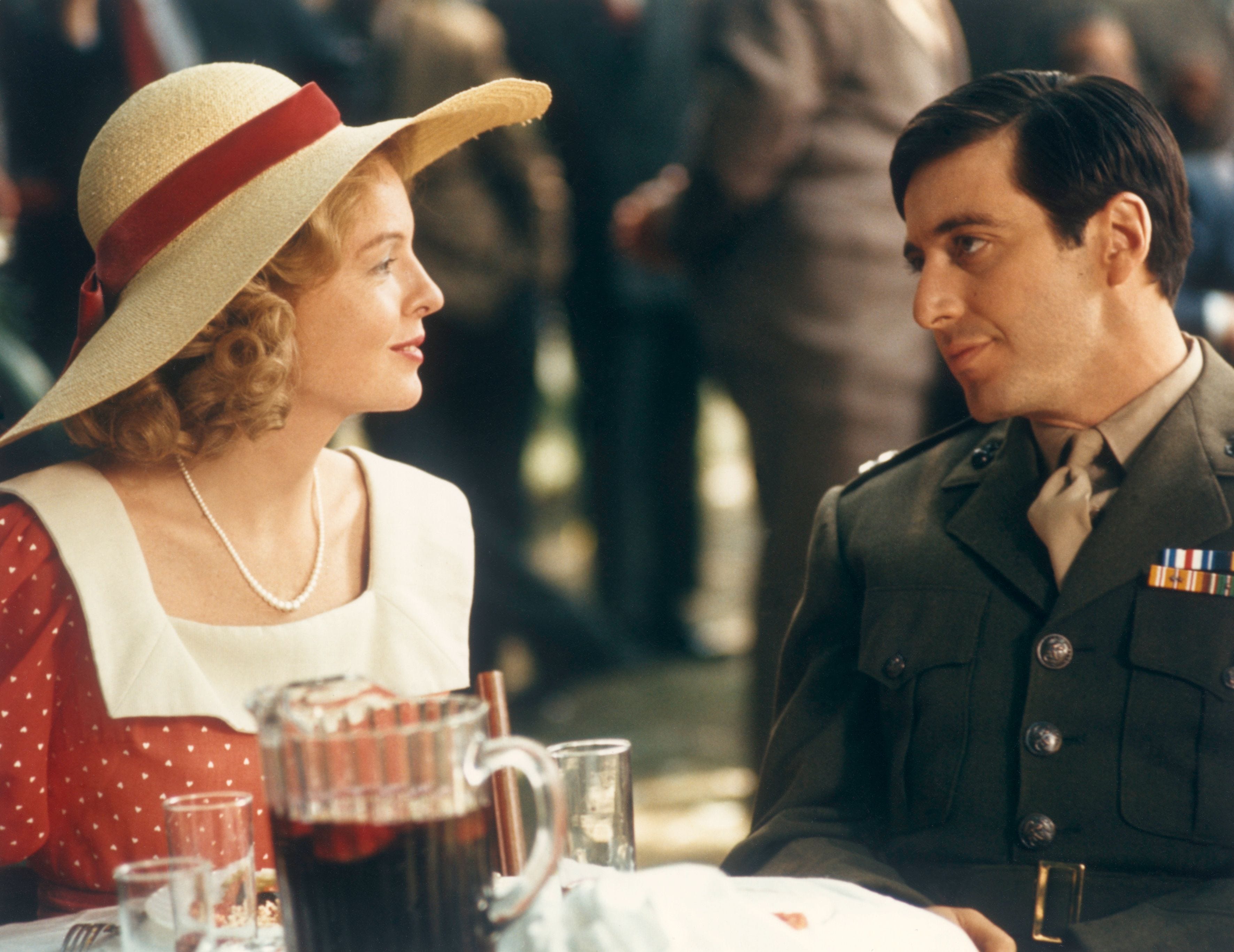
She was an audience surrogate, sure—as Pauline Kael wrote of Keaton’s appearance in the film, she “is seen casually; her attractiveness isn’t labored”—and in some ways the moral center of the series, but only because we see the mistakes she’s made, the compromises she has allowed of herself. In my mind, Keaton has come to embody a very specific sort of emotional response, the dawning horror of realizing that the deal you’ve made is corrupt, that your very soul and the souls of your children are at risk of being lost thanks to the deal that’s been made. When the door closes on her at the end of the first film, when she sees the lie that she has accepted, momentarily, revealed in full, and that smile falters just a little, dips, uncertain . . . that’s acting magic.
MANHATTAN AND ANNIE HALL ARE SLOWLY being written out of the cinematic history books thanks to critical discomfort with Woody Allen, but Keaton’s work as Allen’s muse in those two films is iconic for good reason. As the title character in Annie Hall, Keaton embodied the archetype that would much later come to be known as the Manic Pixie Dream Girl. But whereas the trope would evolve over the years to serve fully and solely as a means for the lead actor’s growth, Keaton’s Annie was a real and realized character, while Allen’s Alvy seems stuck.
And she was a fashion plate, of course: Keaton’s wardrobe in that movie, the bowler hats and slacks and vests and suspenders, was chosen by the actress herself, and I don’t think you can overstate the impact this brand of feminine-masculine quirk had on the fashion landscape. It’s a key look for a character that Allen wrote at least partly based on Keaton herself; Allen’s awkward nebbish is really only tolerable because of her self-deprecatingly confident tomboy routine, and her Academy Award for Best Actress was well deserved.
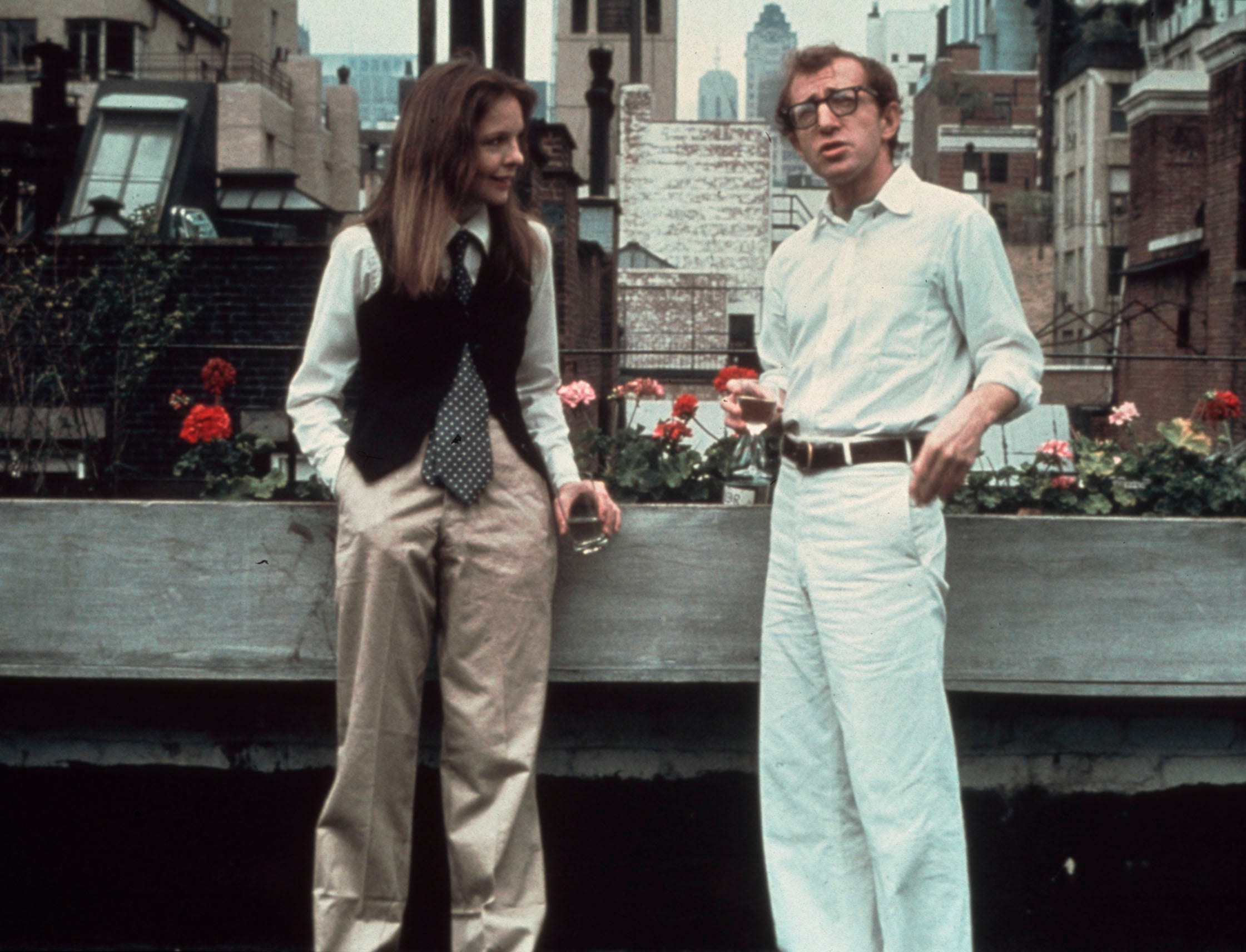
As Roger Ebert noted in a re-review of Manhattan, “Allen’s whole career is based on making the secondary characters heroic,” and that is certainly true of Keaton’s work in Annie Hall and Manhattan. Allen’s stand-in leads need someone to save them from themselves, and Keaton serves . . . well, if not quite that role, then something close to it. Less so in Manhattan, I suppose, where she again serves as an audience stand-in of sorts, though one who mostly says to be saying “Get a load of this guy, can you believe him?” The appeal is there, but she’s smart enough to know to get away, and Keaton sells it with skill.
The two greatest crime dramas of all time and two of the greatest romantic comedies of all time, in a single decade, all of which have Keaton at their center. That’s not a bad legacy, particularly when forty-five more years were to follow. Rest in peace.
I know this sounds silly for 79 years….but she’s gone too soon:(
Thank you, Sonny -- a great, very perceptive appreciation of a wonderful, magical actor and personality who had a gift for laughter.