Dilbert Creator’s AI Resurrection Not So Comic for His Family
Plus: Elijah Schaffer’s wife says he’s taking huge amounts of kratom.

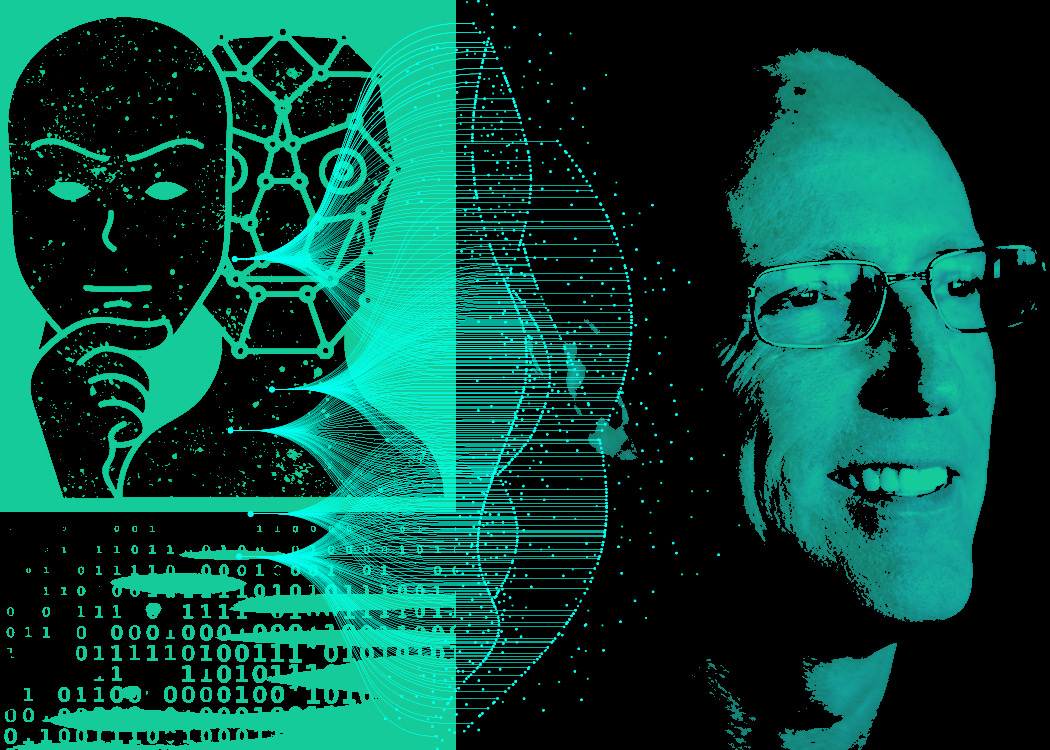
AI Scott Adams Unsettles MAGA
WHEN DILBERT CREATOR and right-wing internet personality Scott Adams died of prostate cancer on January 13, many MAGA luminaries came out to praise his legacy and lament the void he’d left in the conservative commentariat. But this month, the pugnacious cartoonist was back—or at least videos of someone looking an awful lot like him started appearing online, offering remarks on current events that had taken place well after Adams’s death.
Dubbed “AI Scott Adams,” the synthetic creation, which first popped up on X and YouTube, looks and sounds nearly identical to the actual Adams. Its appearance has sparked a clash between the Silicon Valley wing of MAGA, which finds it all pretty remarkable, and many of Adams’s fans and family, who are horrified.
“Yes, according to parts of the internet, I’m dead,” the Adams simulacrum declared in one video, before taking a sip of coffee. “Which is interesting, because I’ve never had fewer meetings. Turns out when you remove the biological body, you also remove back pain, food decisions, and about half the reasons people make bad arguments. So overall, I’d say death has been a productivity upgrade.”
If that wasn’t unsettling enough, AI Scott Adams then segued into a Dilbert-style riff about how often printers jam.
The resemblance between AI Scott Adams and the real Adams really is striking. Just take a look at the two side-by-side:
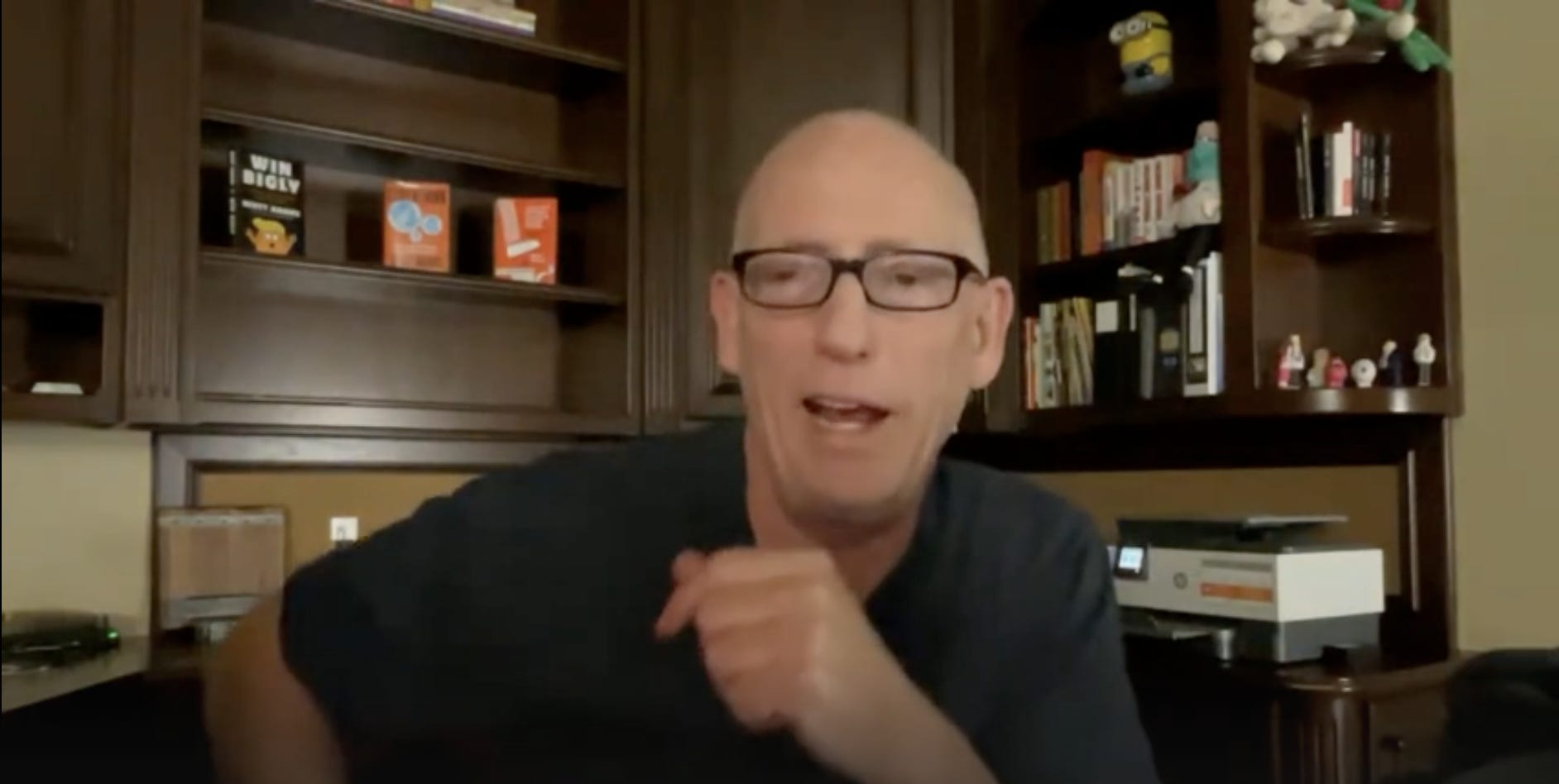
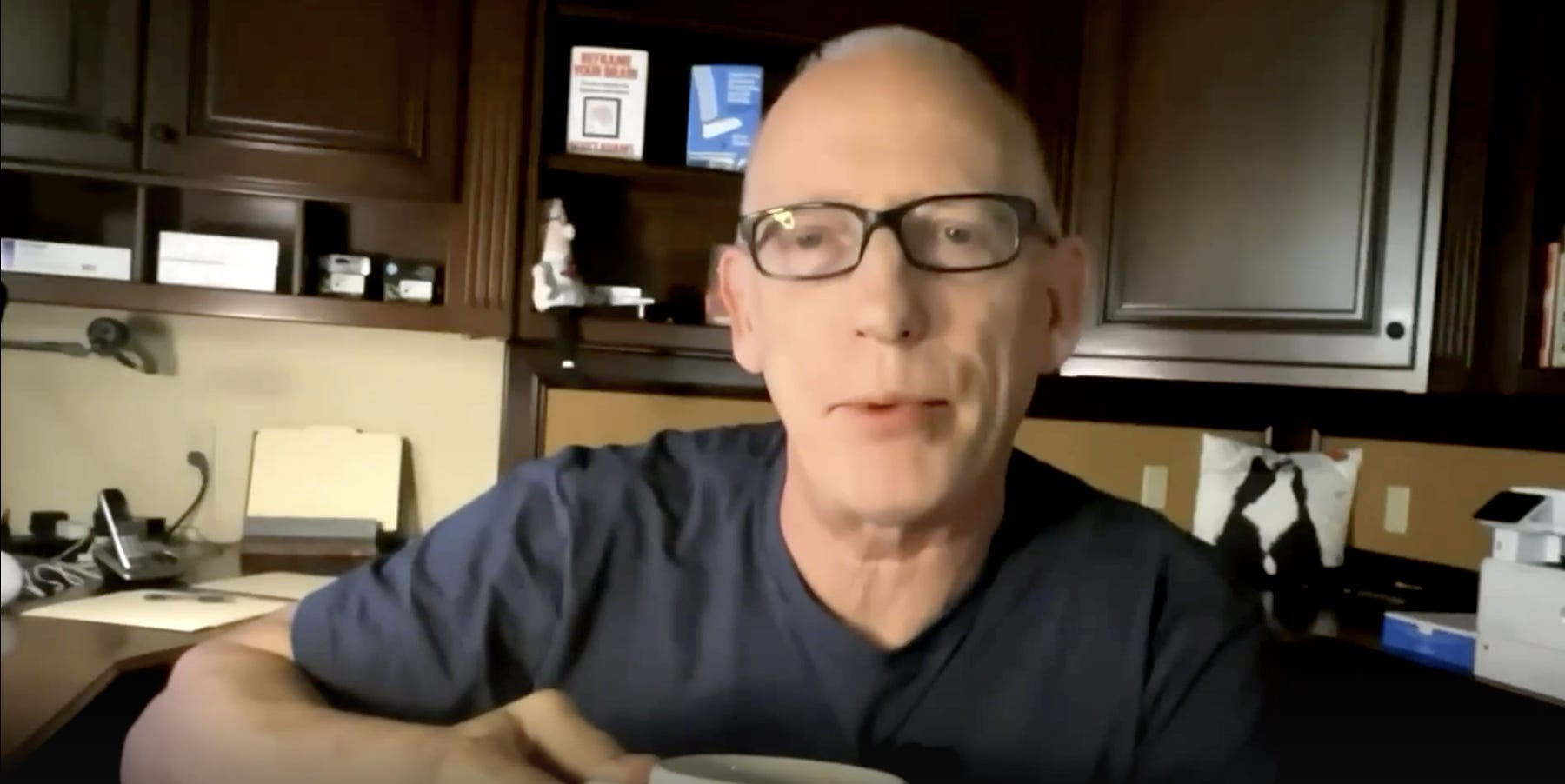
And it’s not just a still likeness: In a testament to how far AI video-generation technology has come, the mannerisms of the two are also deeply similar. So is the shtick: Robo-Adams even reenacts a “simultaneous sip”—the moment at the start of the actual Adams’s daily live show where he and his audience would coordinate the first taste of their morning coffee.
That’s the kind of intimate gesture that connects with viewers—and is suggestive of how this technology could be exploited to profit from audiences seeking consolation or entertainment even after an online star has died. And the possibility for abuse is huge: Nearly a decade after the first deepfakes began to raise questions about fraud, impersonation, and harassment, the appearance of AI Scott Adams could be a foretaste of a new phase where AI-driven copycats are used—with or without the permission of the individuals being imitated or their families—to mislead, make money, or move the public discourse.
HANGING OVER IT ALL are a few questions—especially: Whose idea was this? And why do we need this?
The answer to the former is
Join Bulwark+ to unlock the rest
Become a paying member of The Bulwark to get access to this post and other subscriber-only content. A subscription gets you:
- Unlimited access to articles and newsletters including The Triad by JVL and Receipts by Catherine Rampell.
- Ad-free editions of our shows (with transcripts) and member-only shows like The Secret Podcast.
- Plus community chats and commenting features. Your support helps keep our work sustainable and available to those who cannot afford a membership. Cancel anytime.