Donald Trump, Gen. Kruse, and the Perils of Yes Men
There are good reasons the best leaders don’t surround themselves with sycophants.

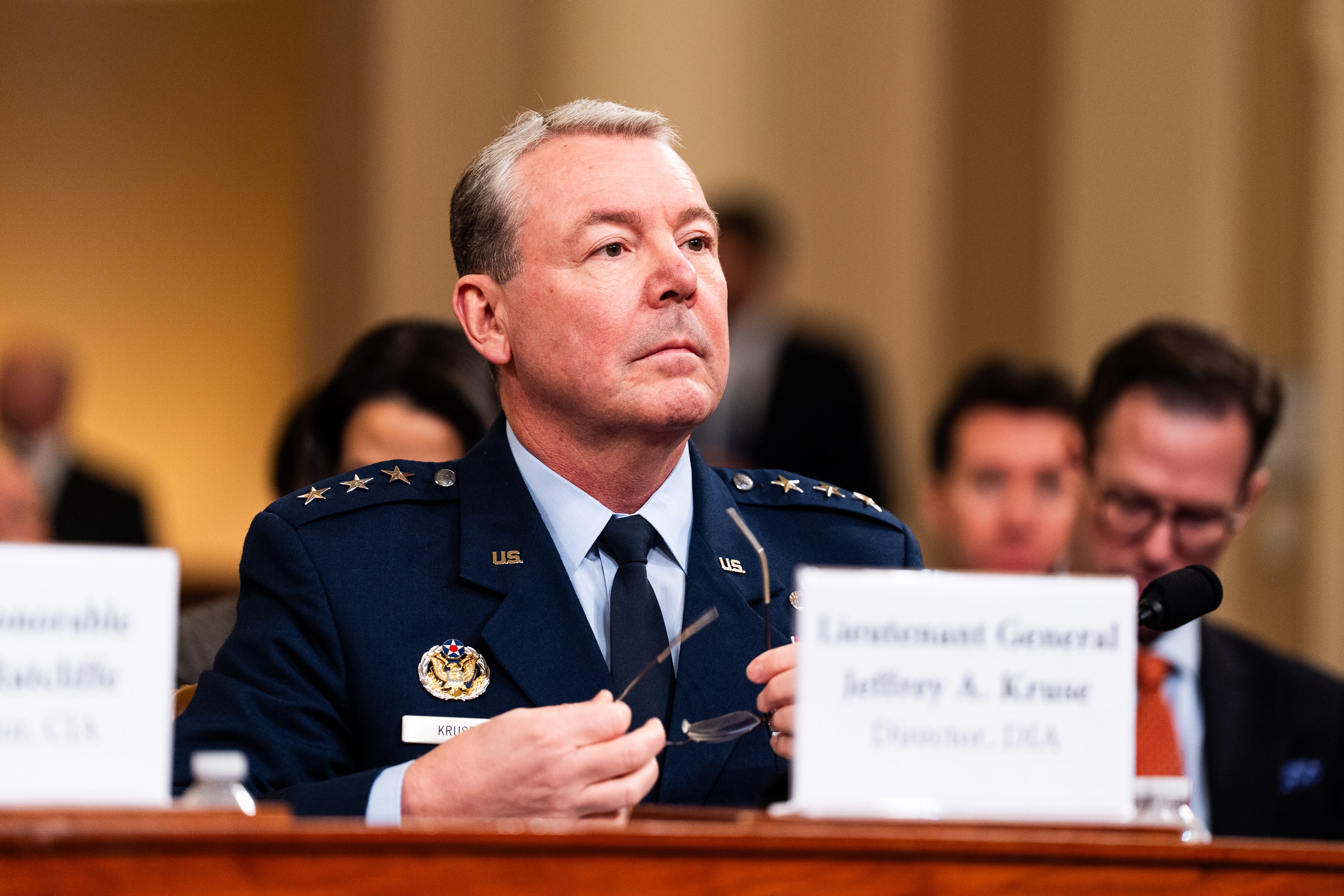
THE PERIL OF YES MEN IS NOT that they flatter leaders—it’s that they betray them. That peril was on display recently when Lt. Gen. Jeff Kruse, director of the Defense Intelligence Agency, was removed, presumably for failing to immediately echo President Trump’s “obliteration” comment about U.S. strikes on Iran in June. At about the same time, Air Force Chief of Staff Gen. David Allvin announced that he would take early retirement—almost unheard of for a service chief—and it’s hard not to suspect he was invited to retire after remarking that America’s singular focus on China risks leaving the nation vulnerable elsewhere. Their firing and forced resignation send a dangerous message: disagreement is not tolerated.
I’ve learned in my military career that disagreement, when voiced respectfully and appropriately, is not disrespect. In fact, it is a deeper form of respect, because it demonstrates that an adviser or senior officer cares enough to speak candidly about the mission, about truth, and about the lives of his or her military personnel. I tried to instill in my own commands that true disrespect is silence in the face of tough decisions, while respectful, honest, open disagreement is a mark of loyalty and devotion to the cause.
History teaches the same lesson. Abraham Lincoln famously built a “team of rivals,” filling his cabinet with men who had opposed him, because he knew hearing only affirmation would dull his judgment. Franklin Roosevelt flew all the way to Honolulu to meet with his two top commanders there, Gen. Douglas MacArthur and Adm. Chester Nimitz, so they could debate and decide the best course for the war. Today’s militaries use red teams for the same purpose: Structured dissent forces planners to think like an enemy and test their assumptions against the commander’s best laid plans, probing for weaknesses to help the team accomplish its mission. Really great leaders have always known they need contrarians close at hand.
The opposite approach—surrounding oneself with flatterers—has often led to true strategic disaster. Hitler’s coterie of sycophants echoed his delusions until his armies collapsed on the Eastern Front. Lyndon Johnson’s Vietnam war councils marginalized skeptics and allowed escalation without asking or answering the hard strategic questions. George W. Bush’s march into Iraq was marked by intelligence filtered to fit predetermined conclusions, even though there were plenty of opposing views trying to prevent disaster. Most recently, Vladimir Putin forced his top national security officials to publicly endorse his invasion of Ukraine, even though some harbored clear doubts about the soundness of the plan. Each case shows the cost of suppressing dissent.
I saw those dangers up close during the run-up to the Iraq War. Two men that I deeply admire, Gen. Eric Shinseki, then the Army chief of staff, and Lt. Gen. Greg Newbold, the Joint Staff’s director of operations, both raised alarms behind closed doors to their civilian leaders that the force size planned for the invasion of Iraq was insufficient for the troop-to-task requirements that would follow combat operations. During congressional testimony, Shinseki was put on the spot when he was asked his thoughts on the force deployment, and with courage he predicted that “several hundred thousand” soldiers would be needed to secure postwar Iraq—much higher than the Pentagon’s official estimates. He was ridiculed and ignored, and even marginalized by Secretary of Defense Donald Rumsfeld. Newbold, from inside the Pentagon, continued to voice his dissent even as the machinery of war rolled forward. Both proved correct shortly after U.S. forces entered Baghdad, and the vacuum of security and civil affairs support soon consumed the country.
From my own perch as a one-star general on the Joint Staff, I reached similar conclusions. The math simply didn’t add up. The force package we were preparing could defeat the Iraqi military quickly, but it could not provide stability for a country of 25 million people riven by domestic divisions and facing political and economic collapse. Those who voiced those concerns clashed with Secretary Rumsfeld’s conviction that a smaller, “modernized” force could achieve more with less. In the end, the war itself proved who was right. But the opportunity to listen to the voices of military contrarian advice had been squandered.
What I learned from that experience is that dissent is not a luxury; it is a strategic necessity. It is not disloyalty; it is the highest form of allegiance. Strategic leaders must cultivate a culture in which disagreement is possible without fear of reprisal. Because the surest way to endanger a mission, a military, or a nation is to demand silence when candor is needed most.
That is why the firings of Kruse and Allvin should alarm us. Whatever one thinks of their judgment, their removal is a signal to every other officer: Fall in line with the prevailing narrative or risk your career. That is how echo chambers form, how groupthink metastasizes, and how the nation stumbles into folly.
The measure of strong leadership is not how many people say “yes” without conviction, but whether a leader creates the space for people to say “no” with courage. Disagreement forces us to test ideas, to sharpen arguments, and to see risks that optimism or ego might otherwise obscure. When leaders protect dissent, they gain clarity. When they punish it, they guarantee blindness.
Great leaders understand this. But perhaps no one understands it better than the soldiers who have lived through the consequences of plans made in echo chambers.
 | A guest post by
|