Donald Trump’s Non-Protection Racket
He’s leaving his former national security officials unshielded against Iran's assassins.

WE’RE IN A DANGEROUS MOMENT. Iran and Israel are at war, with escalating threats of American involvement. Meanwhile, in Minnesota, two state lawmakers and their spouses have been shot, two of them fatally—the latest in a string of attempted or successful political assassinations in this country.
These two challenges aren’t unrelated. They’ve converged before. They might do so again.
For years, Iran has sought to kill current and former officials in the United States. More recently, Tehran’s assassins gained an additional advantage: Donald Trump, more concerned with settling personal scores against his former officials than with defending them against a foreign adversary, stripped them of their government-provided security.
Trump has a history of acting cavalier when America’s enemies target his domestic opponents. In 2016, he encouraged the Kremlin to hack Hillary Clinton’s Internet accounts: “Russia, if you’re listening, I hope you’re able to find the 30,000 emails that are missing.” Three years later, when Trump was asked about the prospect of accepting dirt from China or Russia against an American rival, he said he would welcome it.
Trump also has a history of using Secret Service protection to benefit his family and punish his opponents. In January 2021, as he was leaving office, he ordered six months of protection—well beyond what was authorized by law—for his adult children and their spouses. Joe Biden allowed that order to stand. But this year, when Trump returned to power, he revoked Secret Service protection for Biden’s adult children, mocking Hunter Biden and calling it a waste of money.
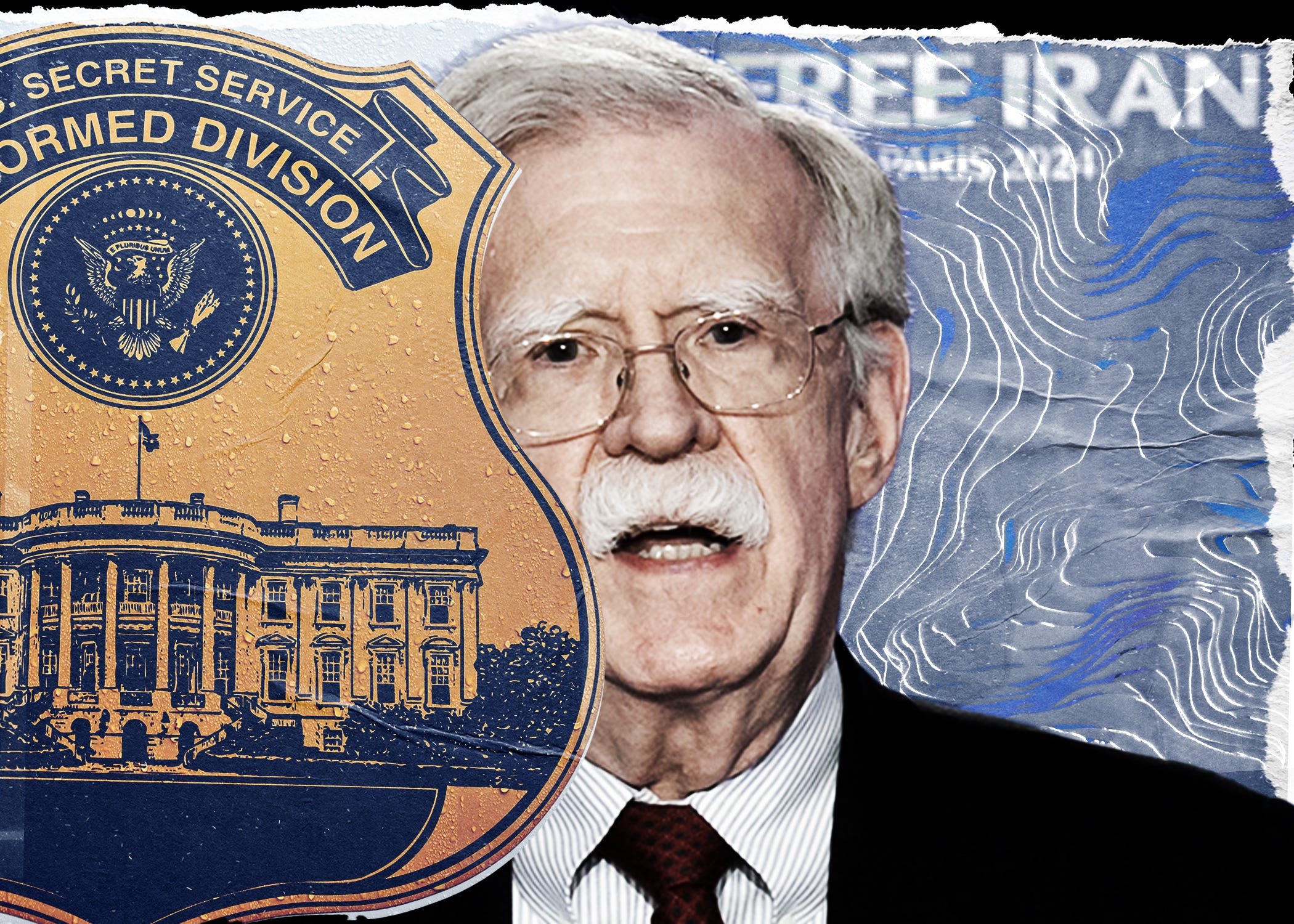
Even when the threat comes from Iran, which has a long record of plotting assassinations, Trump has selectively withheld Secret Service protection. When he left office in 2021, he ordered protection for his last national security adviser, Robert O’Brien, but not for his previous national security adviser, John Bolton, who is notorious as an enemy of the Tehran regime. Bolton’s crime: He had enraged Trump by telling the truth about the then-president’s corrupt extortion of Ukraine.
In 2021, as the FBI assembled evidence of Iranian plots against Bolton, Biden authorized Secret Service protection for him. A year later, the Justice Department publicly documented an attempt by Iran to solicit Bolton’s murder. As further intelligence underscored the continuing danger to Bolton, Biden extended his security coverage. Biden also granted protection, through a State Department security program, to Trump’s former secretary of state, Mike Pompeo—another target of the Iranian assassination scheme—and to Brian Hook, a former U.S. official who was also facing Iranian threats.
After the 2024 election, the Biden administration briefed Trump’s transition team on intelligence showing persistent risks to Bolton, Pompeo, and Hook. Trump didn’t care. Immediately after taking office on January 20, he denounced Bolton and terminated his security detail. When reporters asked Trump why he had done it, he called Bolton a “warmonger,” a “stupid guy,” and “a very dumb person.”
Trump also settled scores with Pompeo—who had flirted with running for president in 2024—and Hook. After winning the election, Trump announced that he would “not be inviting” Pompeo to join his administration. And hours after taking office, Trump posted an “Official Notice of Dismissal” expelling Hook from the board of the Wilson Center. He claimed that Hook and three others named in the dismissal were “not aligned with our vision to Make America Great Again.”
Two days after scrapping Bolton’s security detail, Trump did the same to Pompeo and Hook. When reporters asked the president why, he replied: “When you have protection, you can’t have it for the rest of your life.” As to the persistent threats against these former officials, Trump shrugged: “There’s risks to everything.”
The next day, a reporter asked Trump whether he would “feel personally responsible if something were to happen” to Bolton or Anthony Fauci, another former adviser (in this case, on COVID) whom Trump had disowned and stripped of his security detail. “No,” said Trump. “They all made a lot of money. They can hire their own security.” If anything were to happen to them, he added in a tone of indifference, “Certainly, I would not take responsibility.”
Trump’s stated excuse for these decisions—that Americans shouldn’t have to pay for “security on people for the rest of their lives”—was blatantly hypocritical. As president, he gets lifelong Secret Service protection. In fact, after leaving office in 2021, he requested and was granted extra security on the grounds that Iran and other malefactors were plotting against him—a warning that was later vindicated by the revelation of two home-grown assassination attempts and an Iranian scheme to kill him.
Now Trump is depriving others of similar protection, and he’s doing it in a particularly reckless way. When O’Brien’s Secret Service coverage ended during the Biden administration, he got two months of advance notice so he could arrange alternative security. But according to the Associated Press, when Trump’s administration told Pompeo and Hook that they were losing their security teams, the shutdown “took effect at 11 p.m. that night.”
Bolton got a similarly abrupt cutoff. “I was told at 11:30 p.m.,” he told The Bulwark, “and the detail ended at noon the next day.”
At the time, Republican senators raised alarms about Trump’s security cancellations. “As the chairman of the Intelligence Committee, I’ve reviewed the intelligence,” Sen. Tom Cotton told Fox News. The threat from Iran was “real,” he warned. On CNN, Sen. Lindsey Graham implored Trump to set aside his vendettas: “Whether you like Bolton or anybody else, we need to make sure that if you serve in our government and you take out a foreign power at the request of the administration, that we do not leave you hanging.”
Now, as the war in Iran threatens to engulf the United States, and as home-grown violence kills two more public officials in Minnesota, Cotton is repeating his unheeded counsel. On Face the Nation this past Sunday, responding to a question about the security coverage revoked by Trump, the senator advised the administration to “revisit” these decisions and “ensure that no one who worked for President Trump . . . could be the target of Iranian agents.”
If Trump understood patriotism—if, like Biden, he felt a sense of duty to protect his fellow Americans, even those he viewed as hostile or politically disloyal to him—he might listen to that advice.
He won’t.