Donald Trump’s Unfreedom of the Seas
The president is giving up on centuries of wealth and power.

TO ALFRED THAYER MAHAN, the godfather of not only the modern U.S. Navy but also much of American national security policy, the world’s oceans were a “wide common, over which men may pass in all directions.” Freedom of navigation, or “communications,” was “the most important single element in strategy, political or military.”
Mahan was as much propagandist as theorist, giving shape and form to the imperialist impulses of Theodore Roosevelt and his circle of advisors, and giving purpose to a sea service still chained at the turn of the century to coastal waters. But through his writings, particularly the epic The Influence of Sea Power on History, 1660–1783, Mahanian ideas became, and have remained, the basis of American global influence and power projection.
Today, the old salt would be rolling in his grave in Quogue, on Long Island. The news that the United States would cede the right of navigation through the Strait of Hormuz to Iran would induce a state of post-mortem apoplexy. For this narrow waterway, through which passes fully one-fifth of the world’s oil and many other products that fuel the U.S. and global economy, is nothing if not a “point of vantage”—Roosevelt’s phrase—conveying great strategic benefit.
No nation has secured the global commons—in Mahan’s day, the seas, but today also the skies, near-earth space, and cyberspace—to the degree the United States has since the end of World War II. This largely defined the United States as history’s “sole superpower.” Mahan would have immediately grasped not just the geopolitical primacy but the resultant rise in human prosperity that have marked this Pax Americana; he and generations of Americans valued the trading and commercial benefits of sea power even above its military utility. The United States was powerful because it could police and keep open the Strait of Hormuz, the Strait of Malaca, the Bab-el-Mandeb, and the Strait of Gibraltar at the same time; and it could do so because it was powerful.
No other effort by the United States has done more to persuade the rest of the world of our interest in the common international good. While we have striven to promulgate our pluralistic political principles, we have many times failed to fulfill them. By contrast, we have consistently facilitated the free flow of goods and services—and even the flow of people—throughout the world.
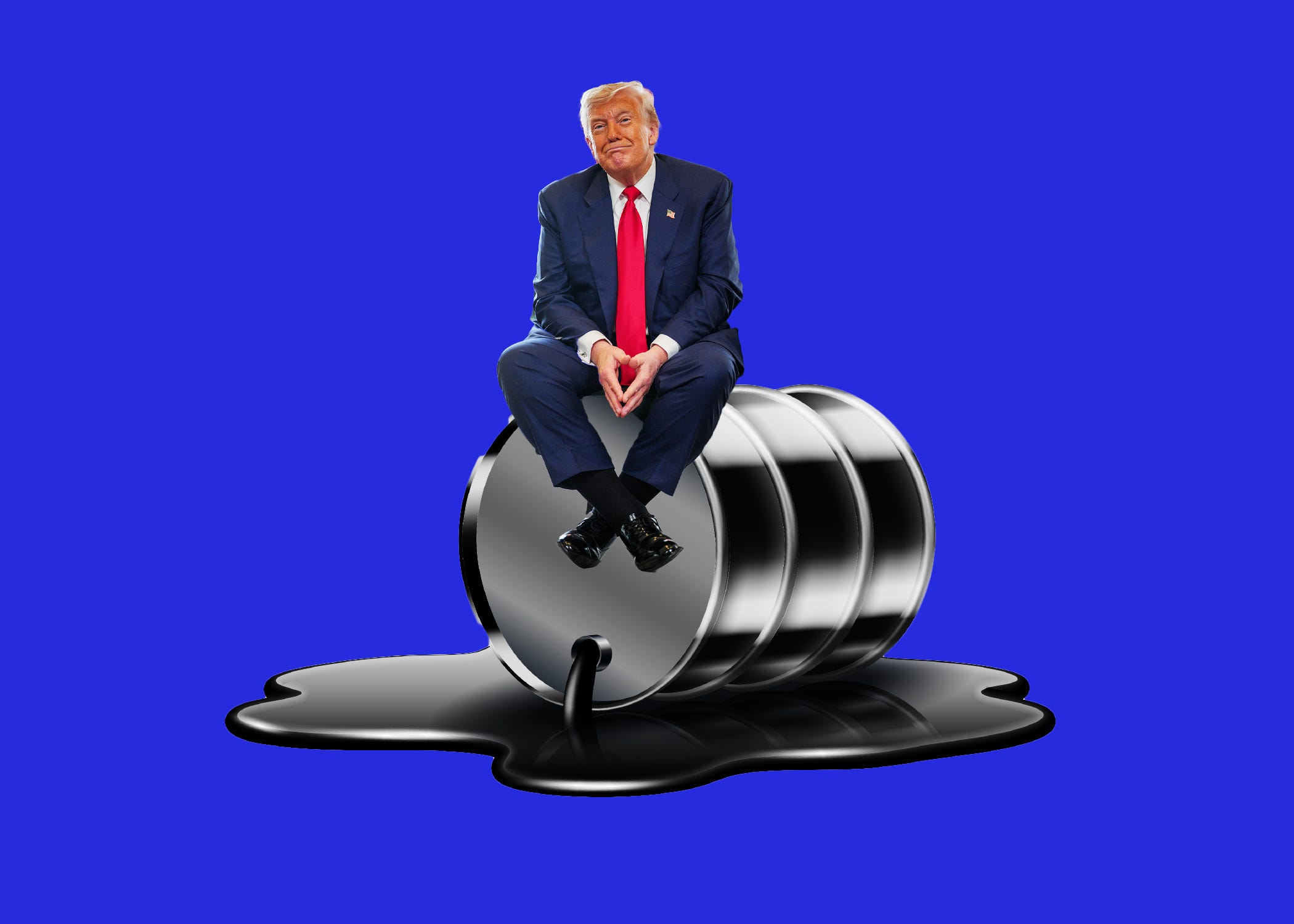
In agreeing to negotiate on Iran’s terms regarding the strait, Donald Trump has reversed the course of traditional American strategy. While it’s impossible to predict what will result from the turn to diplomacy, or if there will be any result at all beyond a temporary ceasefire (that does not seem to include Israel), Trump has repeatedly said the status of the strait is not his concern. He views the question through the narrowest of lenses: “The United States imports almost no oil through the Hormuz Strait and won’t be taking any in the future,” he says. “We don’t need it. We haven’t needed it and we don’t need it.” This is not strategic sophistication, and not even transactional cleverness; a more astute businessman would better protect the national brand.
What is predictable is that the rest of the world, friend and foe alike, will hedge against the erosion of the U.S. guarantee of freedom of navigation. This is likely to lead to geopolitical chaos, with regional powers looking for stability wherever that can find it. Energy-consuming countries from Europe to East Asia, rich and heretofore quiescent under the American umbrella, will start to compete for access, which means dominance. Rival great powers, especially and most dangerously the Chinese, will seeking to leverage advantage from the perception of American weakness.
Mahan well understood that “sea power” did not rest on naval strength alone, that conditions along littoral states could nullify blue-water supremacy. In an age of cheap, accurate ballistic missiles and widespread proliferation of both airborne and waterborne drones, the number and size of “vantage points” has metastasized. Roosevelt was as avid a treaty-maker as battleship-builder. The secret of sea power—the secret Mahan exposed to the world in 1890—was that naval power wasn’t the its real measure. The true source of sea power was peaceful commerce and trade, not in lethal strikes or daring descents and raids.
It’s hard to measure how far Trump has deviated from what political scientists would call American “strategic culture,” so much of which is rooted in the thinking of Mahan. Much has been written about Trump’s repeated blows against the post-World War II American-led global order. But the “deal” with the Iranians threatens even more than that. It threatens the basis of America’s status as a great power.
If the United States ceases to be the guarantor of free global trade, the world will revert to a system it has not seen since the Battle of Trafalgar in 1805. It was in that battle that British naval primacy was established. The Royal Navy’s commitment to freedom of navigation—the same commitment that actually backstopped the Monroe Doctrine, of which the president is such a fan—allowed the young United States to grow rich and powerful, even to the point of supplanting the United Kingdom in the twentieth century. The world has known two successive naval hegemons committed to free and open trade. There is no indication that there will be a third.
Trump may not care who controls the Strait of Hormuz. But the rest of the world does.
 | A guest post by
|