‘Evacuation Day’ and the American Character
How the British occupation of Boston—which ended 250 years ago today—shaped our political sensibility.

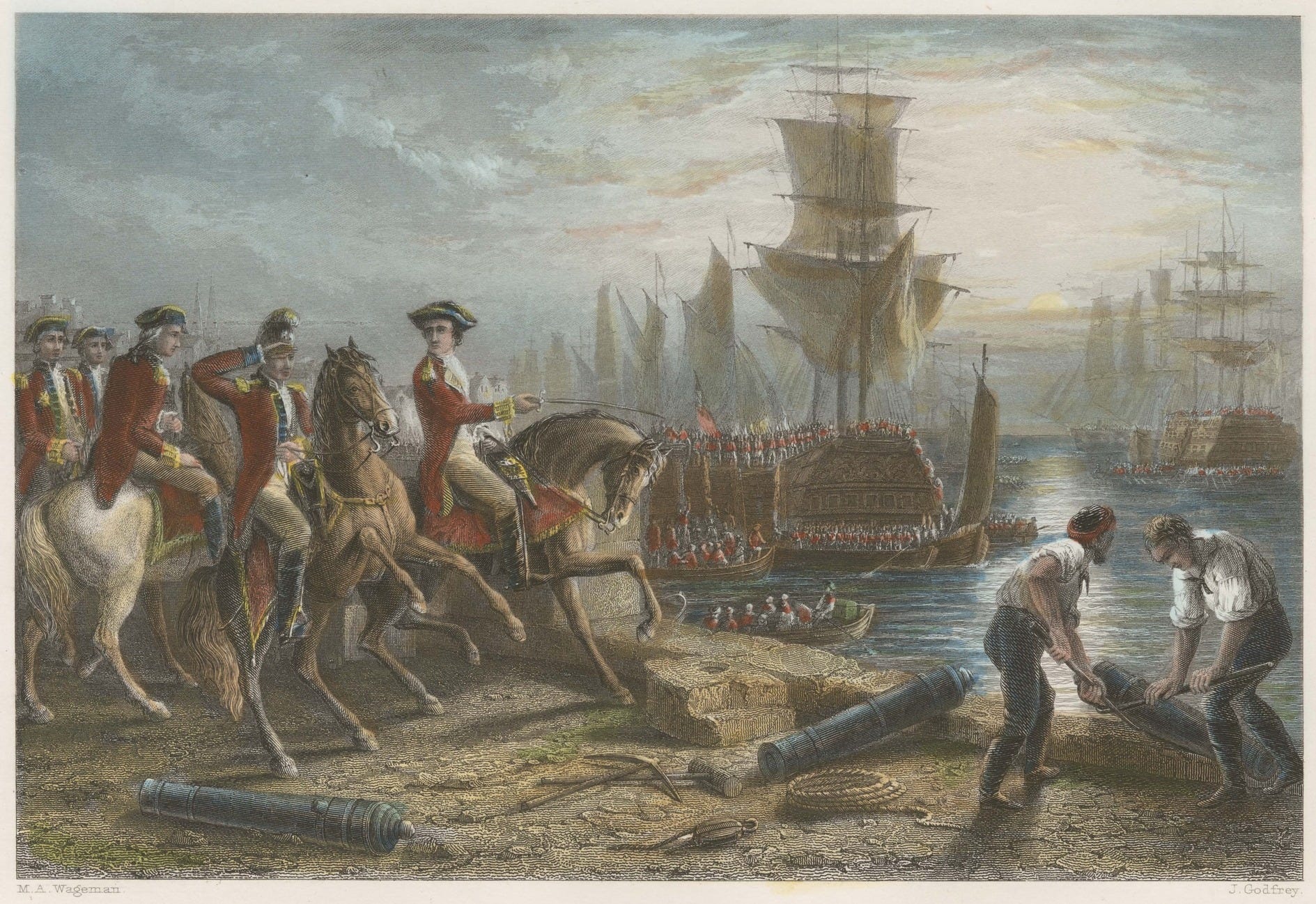
THE SUN WASN’T YET UP when the British troops began marching toward the Boston harbor. There they scrambled onto waiting ships, some 170 of various shapes and sizes. The ships pulled away from the docks at 9 a.m. and soon disappeared into the horizon on the Atlantic. It was March 17, 1776—250 years ago today—and the British had evacuated Boston. The rebel American army had won its first major season of warfare.
The city of Boston has celebrated the anniversary of “Evacuation Day” since 1901, but this year it belongs to the entire country. Boston’s eight-year struggle against the British regulars stationed in the city fueled the Revolution and the memory of it would contribute to key constitutional protections. Today, as we celebrate the country’s 250th birthday, the nation is also grappling with the proper role of border patrol, the National Guard, and regular military forces in American communities. The anniversary of Evacuation Day offers an opportunity to remember the revolutionary origins of cherished constitutional protections.
In 1768, King George III sent British troops to Boston to support royal officials as they enforced unpopular tax measures. After the Boston Tea Party in 1773, 4,000 additional troops arrived in the city to quell further unrest. The troops were initially stationed in private homes and buildings. After they moved to barracks, inns, and stables, the colonists were forced to pay for their upkeep. In effect, colonists were forced to pay for the troops that were suppressing their movement and resistance.
On April 19, 1775, after the American victory in the Battles of Lexington and Concord, the local militias took up position on the heights overlooking the city. Two months later, the Continental Congress created the Continental Army and appointed George Washington its commander-in-chief. As Washington attempted to organize the ragtag bands of militias into a coordinated fighting force, the British navy filled Boston Harbor and closed the city to local traffic.
For the next seven months, the city remained under siege. As the sun rose on the morning of March 6, 1776, British Commander Thomas Gage discovered that Washington’s forces had installed 60 tons of canons on Dorchester Heights. Admiral Molyneux Shuldham advised that the British fleet would be “shot to pieces” if the fortifications remained.
As the British prepared to evacuate the city, many “Inhabitants [were] greatly distressed thro-fear the Town would be set on fire by the Soldiers.” The city escaped the threat of widespread arson, but the British seized tons of linen and woolen goods before leaving the city. They sank heavy mortars in the harbor to thwart American vessels and erected barricades in the streets to inconvenience both residents and soldiers. Loyalists, who were evacuating with the British, destroyed whatever possessions they could not pack, leaving the street littered with discarded goods and broken furniture.
By the mid-morning of March 17, the British evacuated a total of “11,000 people including 8,906 troops, 1,100 loyalists and 553 children.” Washington described the “hurry in which they have Imbark’d.” The British left more than “30,000£s worth of his Majestys Property behind them, in Provision’s and Stores, Vessels, Rugs Blankets &ca.” They had also abandoned “near 30 pieces of fine heavy Cannon” as well as “all their Artillery Carts, Powder Waggens,” and ammunition “in abundance.”
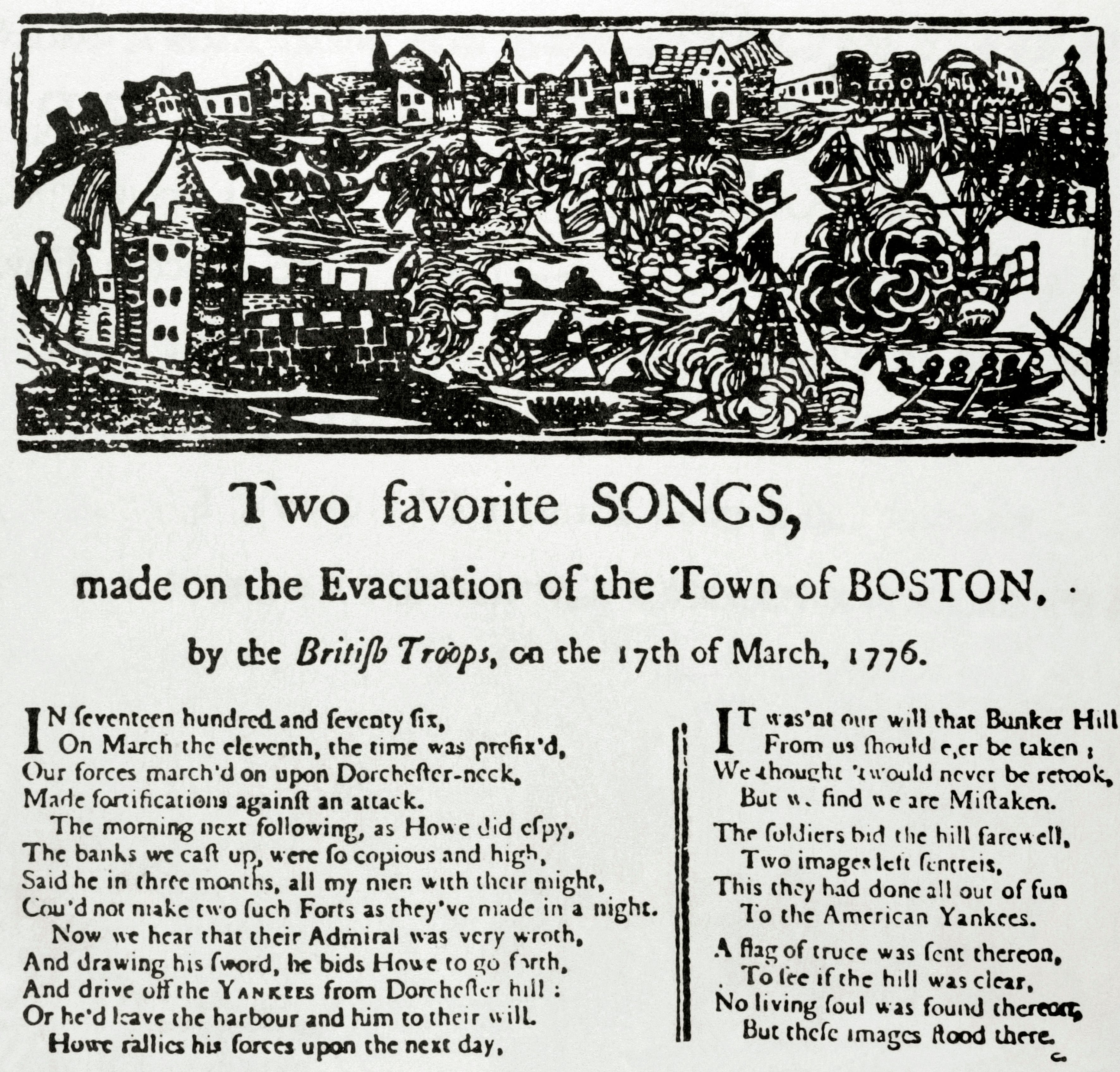
Americans might have won the battle, but they still had to win the war. Bostonians faced a long rebuilding and healing process, with many years of fighting left. Washington wrote to the Boston selectmen, the governing body for the city, applauding their commitment to the revolutionary cause. “Your virtuous efforts in the cause of freedom, and the unparalleled fortitude with which you have sustained the greatest of all human calamities, justly entitle you to the grateful remembrance of your American brethren.” Bostonians had not endured British troops marching through the streets for themselves alone, but instead had fought for all Americans. They had inflicted a serious defeat on the mighty British army and navy and secured valuable stores for the Continental Army. “I heartily pray that the hand of tyranny may never more disturb your repose,” Washington concluded.
A few months later, on July 4, 1776, the Continental Congress adopted the Declaration of Independence, which included twenty-seven grievances against George III justifying the revolution. Several grievances referred to the British soldiers in Boston, including that the king “has kept among us, in times of peace, Standing Armies without the Consent of our legislatures” and had quartered “large bodies of armed troops among us.”
A little over a decade later, the states ratified a new Constitution—but its opponents, the Anti-Federalists, complained about the lack of a bill of rights and the prohibition of quartering in the new governing charter. Congress quickly resolved the oversight when it passed the Bill of Rights in the first Federal session. The Third Amendment addressed the concern about troops in particular: “No Soldier shall, in time of peace be quartered in any house, without the consent of the Owner, nor in time of war, but in a manner to be prescribed by law.” In the centuries since, Congress has passed additional laws to restrain the use of military force in American communities, including, most famously, the Posse Comitatus Act of 1878, which limits the use of federal military forces for domestic law enforcement.
From the very beginning of the United States, Americans have rejected a standing army enforcing domestic law in their cities. This anniversary offers an opportunity to reflect on the why that right still matters to us today—and on its origins and the war fought to win these protections.
 | A guest post by
|