

Exclusive: A First Look at the Dems’ Version of Project 2025
The group dubbed Project 2029 is unveiling its first policy proposals. We got the preview.

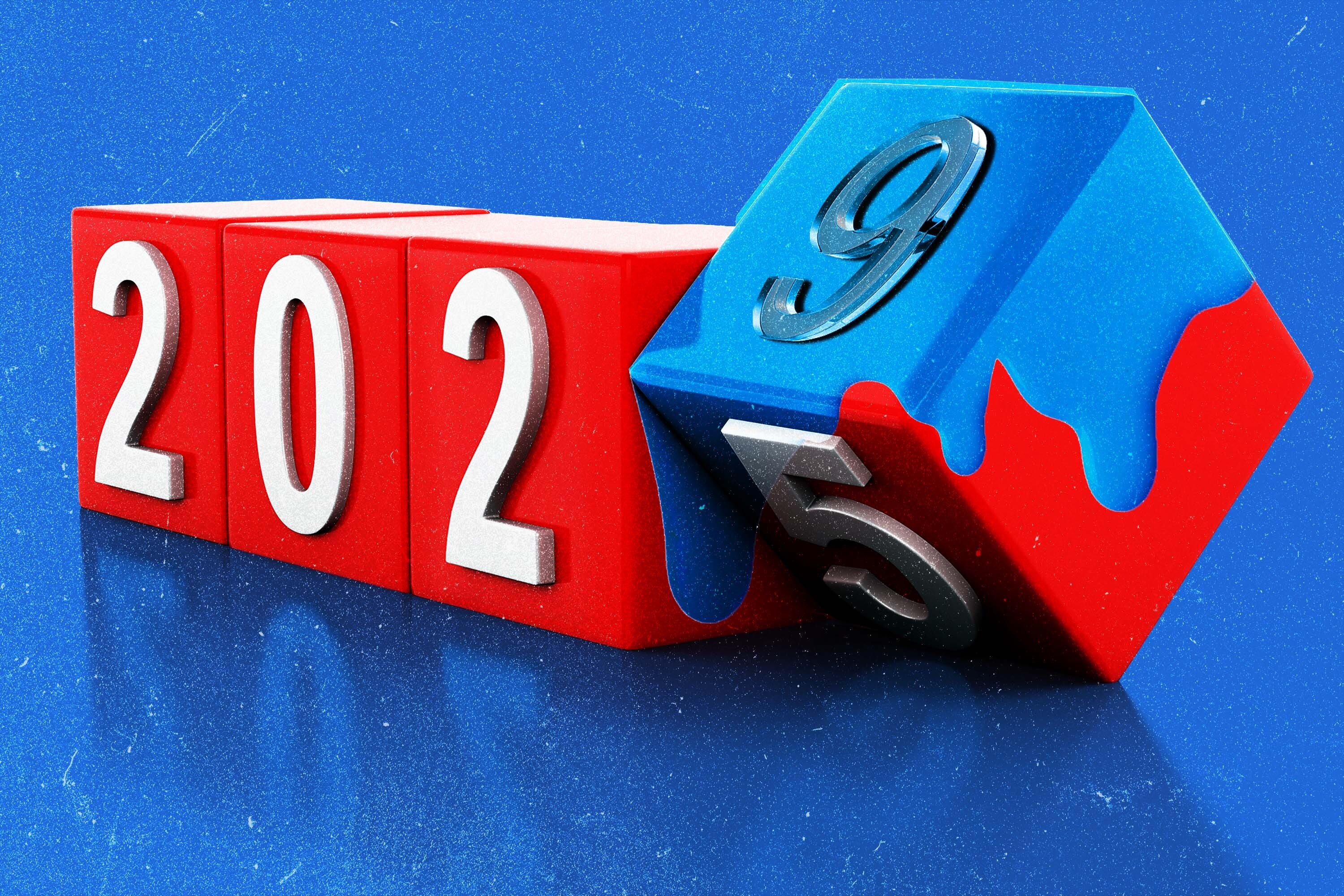
FOUR YEARS AGO, an alliance of MAGA policy groups led by the Heritage Foundation began organizing a compendium of principles and plans designed to serve as guidance for Republicans should they win back the presidency. Their publication was officially titled Mandate for Leadership1, but ever since its release in April 2023, it has been universally known by the name of the group effort: Project 2025.
Over the course of the 2024 campaign, Project 2025 morphed from a blueprint into a political albatross. But while the policy-vague Donald Trump eventually disavowed the initiative, he didn’t actually abandon it. Many of its contributors took on important roles in his administration, including one of the project’s “architects,” Russ Vought, who is now Trump’s budget director.2 Many of the project’s ideas became pursuits—and executive orders—when Trump won the White House.
Having seen the impact of having a ready-made set of policies, orders, and staffers, Democrats came to embrace the idea that their party needed a project of its own. And now, it’s nearing its public debut.
The Democratic policy group Project 2029 is releasing an initial set of proposals in hopes of shaping the fast-approaching presidential primary campaign and guiding leaders on how they might earn back voter trust. It plans to roll out dozens of more ideas on domestic and foreign policy over the next year, all of which the group eventually intends to turn into a book that will be published as a sort of governing blueprint for Democrats.
A preview of the first policy proposals being released, shared exclusively with The Bulwark, outline an anti-corporate, Big Tech–skeptical approach to the modern economy, with a particular emphasis on parenting and families.
“It’s very clear for many people what Democrats are against,” said Chad Maisel, Project 2029’s executive director. “What people are not clear on is what we are for and what we would do if and when we have our next governing moment. We see Project 2029 as answering that question of: What would we do? What would we fight for? How would we solve problems?”
The plans include the following, as taken from a preview shared by Project 2029:
Utility Monopolies: America’s electric grid still runs on a century-old monopoly model that leaves 150 million households with no choice in who provides their power and tens of billions of dollars in potential savings locked behind outdated laws. Our proposal outlines how the next President should break these monopolies open, letting competition drive down bills, speed up delivery, and unleash a new wave of cleaner, cheaper energy for families and businesses.
Child Care: Families today are caught in the “Child Care Catch-22.” With child care costs taking up nearly 10 to 20 percent of the average family’s already stretched take-home pay, families can’t afford to pay for child care while they work. And because parents with young kids are managing other costs like saving for a home or paying student debt, many can’t afford to stay home and not work. Our proposal outlines how the next President can ensure that every family has the time, financial support, and high-quality care options they want, giving parents back the power of choice on how to support their young children.
Kids Over Clicks: Parents today are raising kids in a digital environment engineered to hook them and the consequences, from a worsening youth mental health crisis to a new wave of harm from AI chatbots, are no longer in dispute. Just as America sets minimum ages for drinking and gambling, it’s time to set real guardrails around the products targeting kids online. Our proposal would protect children from the most harmful features of social media and AI, give parents stronger tools, and dismantle the surveillance advertising model that drives much of the harm.
The Annoyance Economy: Americans are losing enormous amounts of time, money, and patience to the small, daily hassles corporations deliberately design into modern life: spam calls, useless chatbots, surprise fees, impossible cancellations, endless paperwork. The hassle isn’t a bug; it’s the business model, and it costs households well over a hundred billion dollars a year. Our proposal would take on the “Annoyance Economy” directly, restoring basic fairness and common sense to the everyday transactions that shape how Americans experience the economy.
Although Democrats have sharply criticized Project 2025, some of the party’s top policymakers believe that its bevy of goals and proposals enabled Trump to rapidly implement conservative priorities. By the end of January 2025, a CNN analysis found that 36 of Trump’s first 53 executive orders could be found in Project 2025.
For Maisel and others, the tradeoff was clear: Exposing Democrats to scrutiny and criticism over a book of policy proposals was a fine price to pay for being prepared for the rigors of the campaign and the demands of actually governing.
“If there’s a really big library shelf full of a bunch of good ideas, and you just pluck the right one off the right shelf at the right moment, that can be really powerful—that can help government be more effective,” said Justin Wolfers, an economist on the advisory board for Project 2029. “Lots of people have different views, but I do know everyone agrees that on January 20 you have to do something.”
PROJECT 2029 IS JUST ONE of a number of groups churning out white papers ahead of what’s expected to be a crowded and competitive Democratic presidential primary race. The purpose of these proposals may be to shape the direction of the party. But it will also allow ambitious policy advisers to carve out footholds in the next Democratic administration.
Project 2029 hasn’t been without its critics. Some party strategists privately groan about the so-called “ideas primary.” They lament that the Democratic party’s struggles are with messaging rather than substance, and complain that the party habitually wastes time on damaging intraparty policy fights that only hamper candidates at the ballot box—as was the case with the debates over immigration and policing during the 2020 primary. Some party strategists have also argued that it’s best for candidates to customize their policies based on their backgrounds and their personal experiences with the electorate rather than taking cues from D.C.-based institutions.
Even so, those involved with Project 2029 stress that voters are desperate for Democrats to present a vision that goes beyond opposition to Trump and offer something positive. As they see it, the greater risk is not having debates about policy priorities at all.
“If you’ve had a big debate about what you’re doing in the course of a campaign, it’s much easier to move things forward than to start a public conversation about something in your early days in office,” said another Project 2029 policy adviser, Tara McGuinness, an Obama administration alum who worked on the Biden transition. “The next president needs ideas [and] needs a credible case that they’re on the side of most people in the country.”
Project 2029 plans to tackle other hot issues in the coming months, including AI, a subject about which many Americans are beginning to express serious skepticism. Maisel says he wants the group to respond to voter concerns as they arise. He thinks Democrats missed opportunities during the last few election cycles by not focusing on salient issues like social isolation and loneliness. But whatever form the project’s proposals take, he said, they are mostly meant to be an “aspirational vision.” The Project 2029 policy advisers with whom I spoke said they were less concerned with calculating how programs would be paid for or whether their plans could be realistically shepherded through Congress than with animating their base.
At this stage, it’s unclear what success would look like for Project 2029 or even if Democratic presidential candidates would be willing to associate themselves with it. The name alone, with its Heritage Foundation echoes, is a turnoff. Comparison to the right-wing policy book gives further cause for caution. Trump’s post–Election Day embrace of Project 2025 may have allowed him to move faster in office. But the cavalcade of hard-right policies he’s unleashed has also resulted in an approval rating hovering around 37 percent, and with Republicans growing nervous about getting clobbered in the midterm elections.
When I asked Maisel how he defined success, he told me: “We need more big ideas. And we think success [for us] is putting forward ideas that are adopted by candidates that help inform the debate. . . . We need to move away from tinkering. We think we need to move towards big, bold ideas that are exciting to people. And we also think we need to put forward ideas that people understand.”
🫏 Donkey Business:
— The Democratic National Committee’s Rules and Bylaws Committee is meeting this week to discuss the 2028 primary calendar, as Delaware, New Hampshire, Georgia, North Carolina, South Carolina, Tennessee, Virginia, Nevada, New Mexico, Illinois, Iowa, and Michigan are all competing for an early slot in the nominating process.
At today’s meeting, representatives from New Hampshire emphasized that their state could be relied on to count votes quickly (a not-so-subtle jab at Iowa). Illinois joked that, unlike Michigan, it could keep the roads open in a winter storm. Michigan boasted that it actually produced more agricultural crops than Iowa. And Iowa stressed that as the first nominating state for the Republican party, Democrats shouldn’t risk looking like they’re abandoning rural voters. Meanwhile, DNC members peppered the presenters with questions about their states’ diversity, voter registration, election security, cost of media markets, and how they’d use the attention to boost downballot candidates.
The DNC announced earlier this year that it would select one state from four different regions (Eastern, Midwest, Western, and Southern) to hold an early nominating contest ahead of Super Tuesday. Those vying for an early slot are desperate for the influence, attention, and resources that come with leading the calendar. As NOTUS’s Elena Schneider reported today, some Iowa officials are threatening to go rogue if they aren’t selected by the DNC and hold an early nominating contest anyway. You can add that to the long list of things giving DNC Chair Ken Martin a headache these days.
More states will make their case tomorrow as the meeting continues. DNC officials are expected to make a decision on the calendar order later this fall.
My open tabs:
— The Caitlin Clark Machine Is Turning on Caitlin
— The Antitrust Theory of Everything
— A Skeptic’s Guide to Whether Texas Democrats Can Actually Win This Year
— Canadians are folding on Vegas. Democrats see a royal flush.
Project 2025 was only the latest installment in the Heritage Foundation’s series of policy books dating back to 1980’s Mandate for Leadership, which provided a controversial impetus for Ronald Reagan’s policy agenda.
Two components of Project 2025—described in the main report as the project’s Pillar II and Pillar III—were a personnel database of potential hires for an incoming administration, prescreened by Trump loyalists, and an online “Presidential Administration Academy” to prepare potential government hires to hit the ground running.
The core problem with this is that it completely fails as a Democratic version of Project 2025. Project 2025 was a set of clear policy proposals of 'what do we do when we have power.' They were actionable. That thing is not actionable in the slightest. It's gibberish.
For example: "Just as America sets minimum ages for drinking and gambling, it’s time to set real guardrails around the products targeting kids online. Our proposal would protect children from the most harmful features of social media and AI, give parents stronger tools, and dismantle the surveillance advertising model that drives much of the harm."
Cool, how do you plan to DO that? You want to create a national database for IDs so they can be verified? You want companies to have databases of people's IDs and the like? Because that's what that means. In order to actually "protect" kids, you either need to censor the internet entirely, or impliment age verification everywhere.
Which means that places like the Bulwark would be required to have copies of everyone's IDs and verify they're legit or face legal repercussions.
We can't get a national gun registry put together. You want to give the next GOP administration access to every trans person's ID nationally? That's what that means.
This is why something like this is going to fail. It's not about ideas or whatever. It's because it's not actionable. A document that talks in platitudes is not a Democratic version of Project 2025. Project 2025 said exactly what they wanted to do.
For example: you want childcare? Okay, what taxes are going up to pay for it? Because raising taxes is something you'll have to do. We won't be able to borrow our way out of it, and in some Democratic circles no one wants to raise taxes of anyone making less than $400k.
So this document isn't worth the paper it's printed on. Either say what you intend to do or don't say anything at all. Did we learn nothing from the 'green new deal?'
This? This is what they came up with? Read any 10 random comments from any of 100 left leaning substacks and Dems would have a better plan on what they should do.
1) Real Americans want accountability for every crime perpetrated by Trump and everyone in his orbit that has illegally profited from his being in office.
2) Fix the fucking system so that this shit never happens again. Or at least make a concerted and sincere effort to do so.
3) Tax the fucking rich. Undo the big bullshit bill. Take care of the working class and right the tax code so that it actually works for all the people of this country and not just the oligarchs.
If you can't do those things as a priority all the fucking childcare in the world wont save this nation.
Goddamn it, the dems are so fucking useless.