The GOP’s Gerrymandering Gyrations
The politics of ‘proportionality for thee, power for me.’

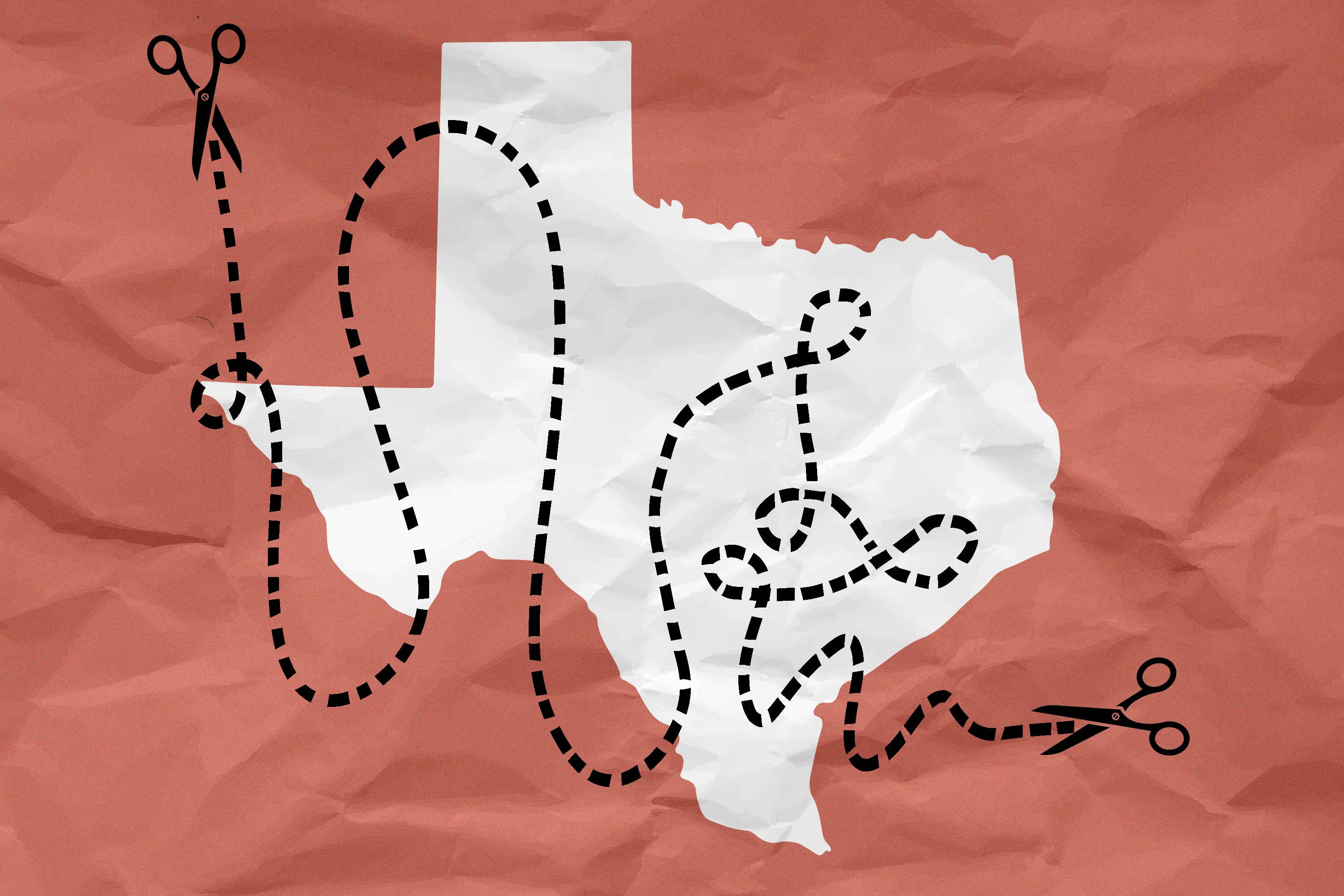
SIX MONTHS BEFORE THE MIDTERMS, seats in the House of Representatives are already, in effect, changing hands. It’s not happening in primaries or special elections. It’s happening in partisan redistricting.
Republicans started the latest round of gerrymandering last year. They grabbed five seats in Texas, one more in Missouri, and another in North Carolina. Then came the Democratic counterattacks, taking five districts in California in November and another four in Virginia last week.
This week, the GOP struck back, making a move for four more seats in Florida. And on Wednesday, in a ruling that upended the previous rules about factoring race into congressional maps, the Supreme Court opened the floodgates to redistricting in other states. Seven states could, in theory, redraw their maps in time for this year’s election. Even if only one or two seize the chance—and Louisiana’s governor announced on Wednesday that he would—Republicans will benefit.
It’s dizzying. But even more dizzying are the somersaults politicians are turning as they try to justify these maneuvers. Without apparent shame over their inconsistency, they gyrate from defending their own gerrymanders to condemning the other party’s.
GERRYMANDERING HAS ALWAYS BEEN CREATIVE. You sit down with maps and voter data and figure out how to draw lines so that the other party’s voters get packed into a few congressional districts. Meanwhile, you parcel out your party’s voters to form majorities in all the other districts. Some of the resulting shapes—Texas 35, New York 24, and Illinois 13, for example—are artistic masterpieces.
Last year, Donald Trump introduced an innovation: mid-decade redistricting. Politicians used to agree that redistricting was reserved for the beginning of each decade, after the congressional reapportionment process that follows each census. But Trump decided that this rule, like others, didn’t apply to him. He prodded Republicans in Texas and other red states to change their maps to give the GOP more seats. Eventually, through ballot measures, Democrats in blue states responded in kind.
Why did Trump launch this war? Because, thanks to Republican control of the Texas legislature and governorship, he could. “We have an opportunity in Texas to pick up five seats,” he told CNBC last August.
But the president wanted a grievance to justify his theft. So, a few seconds later, he concocted a moral argument. “I won Texas. I got the highest vote in the history of Texas,” he said. “And we are entitled to five more seats.”
This pitch—We won the state, so we earned the seats—is a standard excuse for gerrymandering. But the math doesn’t add up. In 2024, Trump won 56 percent of the vote in Texas. At that time, the state’s congressional map gave Republicans 25 of its 38 seats. That’s 66 percent. Under the new Texas gerrymander, Republicans are expected to get 30 of the state’s 38 seats. That’s 79 percent. Trump is claiming that his vote share of 56 percent entitles his party to nearly 80 percent of the seats.
When Virginia struck back last week, passing a referendum that would give Democrats 10 of its 11 seats, Trump suddenly discovered proportionality. On Truth Social, he objected that the ratio was unfair. He’s right. But the point of the Virginia referendum was to counter the unfair ratio in Texas.
Normally, Trump complains that activist judges are blocking his executive orders. But since the Virginia referendum, he has learned the wisdom of judicial intervention. “The language on the Referendum was purposefully unintelligible and deceptive,” he protested in his post. “Let’s see if the Courts will fix this travesty of ‘Justice.’”

The gang returns to California for two live shows in May. Join Sarah, Tim, and Sam in San Diego on May 20 or in L.A. on May 21 for a night of politics and laughs, and a community built on good faith. Bulwark Live: California is sure to sell out—don’t delay.
IT’S EASY TO LAUGH at Trump’s hypocrisy. But Republican leaders in the House are just as brazen. Last July on Fox News, Brian Kilmeade asked House Speaker Mike Johnson about the GOP’s redistricting scheme in Texas. “Look, we have to fight for every inch of ground in the country,” Johnson argued. “I’m convinced the red states will, and we will probably have a few more seats out of that. And of course, that’s good news for me.”
But when the news isn’t good for Johnson, he develops scruples. Last week, when Democrats retaliated in Virginia, he decided that fighting for every inch of ground was ruthless and indecent. “It’s a hyperpartisan gerrymandering boondoggle,” he fumed.
Johnson, like Trump, abandoned his usual rhetoric about judicial restraint and urged the courts to step in. “We are confident and calling upon the Virginia Supreme Court to do the obvious and right result, and that is to strike this thing down,” he said.
When red states gerrymander, House Republican leaders profess innocence. Usually, they decline to comment, or they defend the state’s authority to draw maps as it sees fit. But when blue states gerrymander, they cry foul.
In August, when House Majority Whip Tom Emmer was asked about the GOP’s move in Texas, he replied, “I’ll leave that to Gov. [Greg] Abbott and Texans to determine what they want to do.” Emmer said whatever decision the Texas leaders made was “their right.”
But when Virginia responded by letting its voters make the decision—not just the governor and his allies in the legislature, as Texas had done—Emmer denounced the Virginia ballot question as “very dishonest.” He joined Trump and Johnson in calling for “some type of court involvement that corrects a very unjust result.”
Richard Hudson, the chairman of the National Republican Congressional Committee, applies the same double standard. In August, he said of the Texas maneuver, “It’s up to the states. I mean, I have nothing to do with it.” But last week, Hudson called Virginia’s referendum an “embarrassment” and urged the Virginia Supreme Court to nullify it as “a clear violation of the Constitution.”
SOME REPUBLICAN LAWMAKERS in red states worry that by spreading GOP voters across more districts, gerrymandering might thin their margins and cost them their seats. But others are gung-ho. In August, Rep. Chip Roy (R-Tex.) applauded Trump for demanding “a better map” to increase Republican dominance in Texas. “Frankly, we could probably be even more aggressive,” said Roy.
Last week on Fox News, Roy gloated again. “We took matters in our hands to say that Texas, a very solidly Republican state, should be sending more Republican representatives to Washington,” he explained. “That’s a reasonable thing for Texas to do.”
But in his next breath, Roy accused Virginia of letting “a million Karens in Arlington and Alexandria represent two-thirds of the commonwealth.” The idea that a state’s dominant party should increase its representation in Washington—which Roy was happy to promote in Texas—suddenly seemed less vital than ensuring adequate representation for the minority party.
Rep. Byron Donalds, a Florida Republican who’s in line to become the state’s next governor, smiled in August when he was asked about the power grab in Texas. He declined to comment, claiming, “I do not engage in redistricting conversations.”
But last Thursday, Donalds decried the Virginia referendum. “Democrats have a history of doing these radical gerrymanders just to make sure that they have seats and they preserve power,” he huffed.
Then, on Friday, Donalds turned around and endorsed the GOP’s redistricting scheme in Florida. “I support the governor and what he’s going to try to accomplish,” said Donalds. “We want to make sure that the ethos of our state is being reflected in our districts.”
Speaker Johnson executed the same pirouette. Last Wednesday, even as he lambasted Virginia for its gamesmanship, he welcomed the gerrymandering in Florida. “Florida has the right and the intention to do it,” he declared. “And my view is that they should.”
REPUBLICANS AREN’T ALONE in these contortions. Democrats often do the same thing, as their GOP colleagues are quick to point out.
On Tuesday, Rep. Kat Cammack, a Florida Republican, was asked about the new proposed map in her state. “Democrats are already calling this gerrymandering,” a Newsmax anchor told Cammack. “How do you respond to those attacks, especially when you compare it to what just happened in Virginia?”
Cammack laughed. “The cognitive dissonance with that group is incredible,” she replied.
She was speaking, of course, about the other party.
Still, I wouldn’t say both parties are the same on this issue. At least democrats actually put the question of redistricting out to the voters of California and Virginia. None of the GOP states that restricted did that, they just went ahead and did it. Democrats also at least have a national law to ban partisan redistricting ready to go. Finally, the GOP gerrymanders are set to specifically disenfranchise millions of minority voters.
One of these things is not like the other. While I certainly don’t like it I will at the moment defend the democrats gerrymanders as an unfortunate but necessary option to have a shot at keeping a liberal multiracial democracy.
Democrats in Congress have voted to ban partisan gerrymandering. Republicans should do the same. Until then Democrats shouldn't unilaterally disarm.