Here’s What I Told the DNC Autopsy
The report may never see the light of day—so the Harris campaign’s head of digital offers his candid breakdown of what worked, what failed, and what Democrats have yet to learn.

YOU MAY HAVE HEARD about the Democratic National Committee “autopsy”—the post-election report commissioned by the DNC in 2025 to examine what went wrong in the 2024 campaign.
And you may have heard that it was never released to the public.
Because of that, there’s been a lot of rightful concern among Democrats about there not being an honest accounting of what went wrong and what we could learn from it. But there are a few people who have insight into what the autopsy report actually says and can share what they know of it. I’m one of them.
I was deputy campaign manager of Kamala Harris’s 2024 presidential campaign (and of Joe Biden’s campaign before that). My remit was things that touch the internet: social content, creators, rapid response, paid media, fundraising, digital organizing, and a few other odds and ends along the way. I was one of the few campaign staff the autopsy team actually spoke to, which is its own problem. (And, hey, if you appreciate the type of experience and strategic analysis that gets you an invite to speak to the autopsy, have I got a podcast for you.)
Now, to be clear, I have not seen the autopsy report. I understood that they would release the autopsy shortly after last November’s off-year elections. The team putting together the autopsy first reached out to former campaign staffers in late September 2025, and I spoke with them in mid-October. It seemed odd that they were doing this so late, but I played ball for two reasons: (1) It’s important to look backwards to learn what makes sense for the next election, and (2) the digital components of a campaign are usually misunderstood—assuming any effort is made to understand them at all.
But then . . . the autopsy never went out.
News coverage has focused on why the DNC shelved it. My understanding—based on Dem-world hearsay—is that the truth is stupider than the fiction: No autopsy was released because there is no actual autopsy. The members of the “autopsy team” were in over their heads and struggled to put the thing together. What they produced was a loose summary of a bunch of interviews that were largely done without talking to the campaign or big spenders.1
The more interesting question is what would an actual autopsy of the 2024 campaign have said?
One overarching takeaway from my time on the Biden 2020 campaign (which we won) and the Biden→Harris 2024 campaign (which we lost) is that results don’t totally define what lessons you can draw from a campaign. There were things we messed up in ’20 and things we got right in ’24. Some folks might yell at me for this, but I think that in ’24 we ran a good—not great; certainly not perfect—campaign that was stuck in a hole we just couldn’t get out of. The average shift toward Trump was significantly lower in the states where we competed than in the ones where we didn’t. But you don’t get a medal for “the average shift being significantly lower.” We lost and should learn lessons from it.
No autopsy—not the DNC’s, not any outside group’s, and not mine—is going to show a smoking gun. There are too many confounding variables, too many what-ifs. But a smart, careful autopsy would still provide practical insights that could inform what to do in the future. So, in that spirit, I want to offer here the gist of what I told the team that worked on the DNC autopsy. Some of this I said to them directly; other parts of it I would have said if we had had more time; and the rest has taken shape in the months since I spoke with them last year.
I’ll break this down into three parts:
Part 1: What Happened
Part 2: How It Happened
Part 3: What Happens Next
A caveat before we dive in: This is just one guy’s opinion. It is not the official Harris campaign’s opinion, nor maybe even the opinion of the majority of those who worked on the campaign. There are very smart people on that team whose analysis and conclusions would be different from mine, and who will tell you that I am completely full of shit. When I shared a draft of this article with other campaign folks, some told me directly they disagree with parts of what follows. I’m sure you will, too. But I was there. I have a different lens than most. So here’s my take.
Part I: What Happened
You Have to Have a Brand. We Didn’t.
My biggest lesson from the 2024 election is that tactics don’t add up to a brand, and a brand is the most important thing in politics today. Without a brand that people genuinely feel is connected to your candidate’s deeply held beliefs, your tactics will add up to nothing. You’ll reach people but won’t close the deal.
People often think of a campaign’s brand as visual—the logo, for instance—but really it’s the story of why the candidate got into the race. That “why” is critical, and we couldn’t clearly articulate it.
Our research showed that we were reaching the voters we needed to reach, and that they even liked our specific outreach—our ads tested well and we started to win on underlying issues. But something bigger wasn’t gelling. It wasn’t just us: Incumbents around the world were getting absolutely croaked. Labour’s honeymoon in the U.K. lasted about twelve seconds.
We underestimated then—and are underestimating now—just how disillusioned people are. There was and is a pervasive sense that nothing works and the institutions holding us up have failed. Media, government, business—no one trusts anyone anymore. For reasons both of Democrats’ own making and from simply being incumbents, the Democratic brand sucked.
In the face of that massive cultural shift toward skepticism and distrust, and some holes Democrats dug for ourselves, we hit the limit of what campaign tactics can do. We cut the margin everywhere we played, but the national deficit was too much to overcome. We could not break the perception that we were the status quo.
We traditionally think of “swings” as right-left or left-right—the kind of person who, say, votes for Romney one cycle and Obama the next. In reality, today’s swing voter is choosing between “change” and “burn it all down.” People just didn’t trust our ability to make a difference in their lives.
Which brings us to the elephant in the room: President Biden never should have run for re-election in the first place. Biden’s a good man; I think he woke up every day trying to do what was best and I think he genuinely believed he was the only one who could defeat Donald Trump. When he decided to run again—irrespective of the wisdom of that decision—my view was that the best thing to do was to throw everything we had at getting him re-elected. It was the only option to stop Trump. You may have even seen an email in my name making the case for Biden being the only person who could win.2
Look, I am a political professional: I believed—and still believe—that once you’re on the team, you’re on the damn team. Even after the pivotal June 27, 2024 Biden-Trump debate, the campaign owed it to downballot candidates and grassroots donors to keep up our energy. Grassroots donors were keeping the lights on, and if Biden was staying in (which I believed he was going to), they needed to see the campaign rally like they were. Our only option was to fight to the death. Turns out, well, that’s what we did.
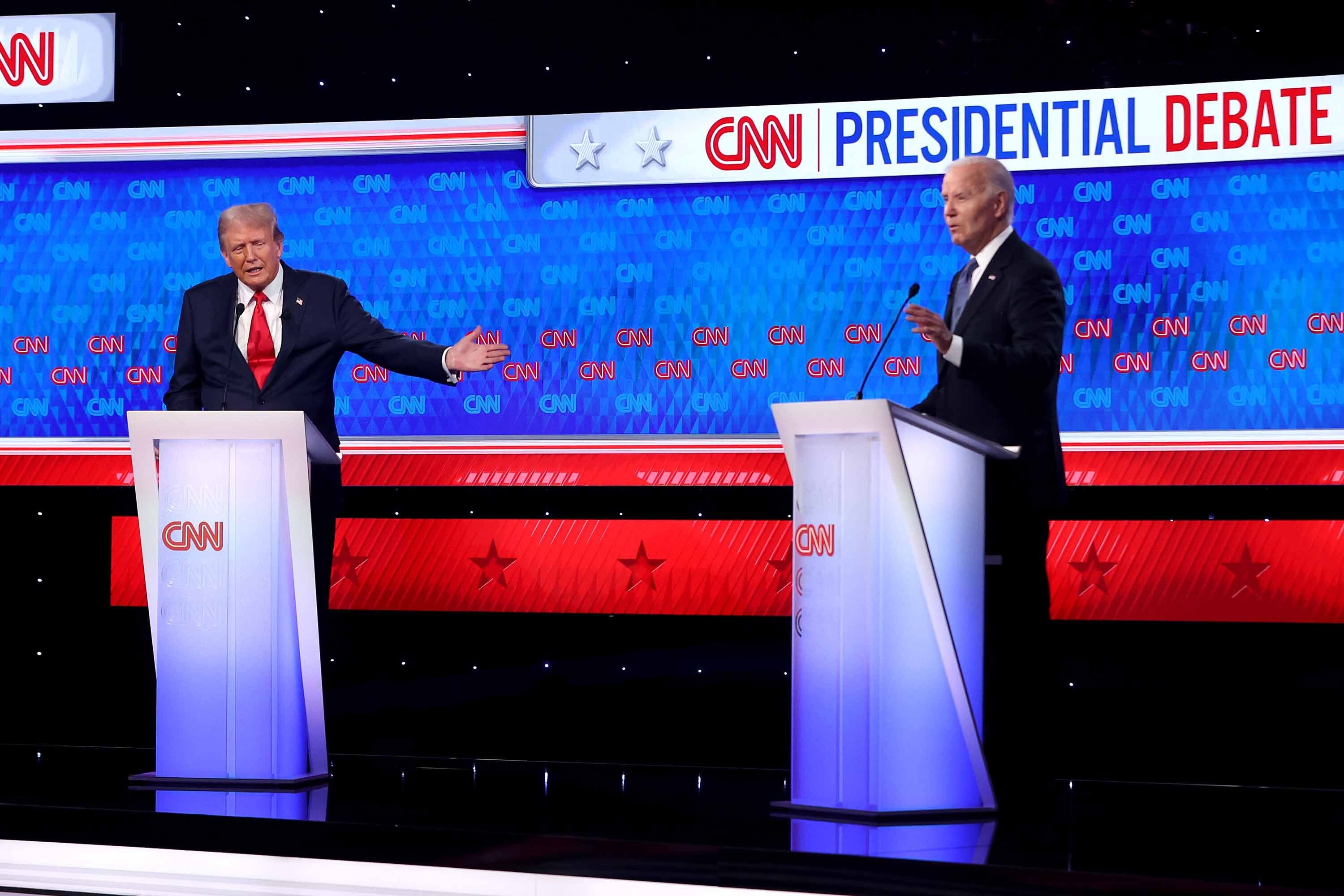
We all knew Biden’s age was his worst negative. At 81, he was the oldest sitting president. But his age was more than just a number, it mattered tactically. It was harder for him to communicate clearly, which eroded trust in his leadership. But the worst damage was to the perception that Biden could connect with people’s lives and could be trusted to deliver. Even at the beginning, focus groups showed clearly that the problem wasn’t that Biden was perceived to be senile—it was that he was perceived to be too old to understand what voters were going through. The perceptions around his age took away Biden’s reputational superpower: empathy, the thing that kept him in the Senate for thirty-six years, got him on the ticket in 2008, and made him president in 2020.
And unfortunately, the problem of Biden’s age also pre-loaded the “she’s not in it for you” perception that would dog Vice President Harris.
I saw the vice president rise to the occasion in all the obvious ways—and in ways people didn’t get to see. But in a country fervently pissed off at the status quo and with Biden’s numbers being what they were, anyone from the Biden administration would have lost.
Could Harris have rehabilitated the brand by distancing herself more from Biden? Perhaps there were ways she could have, but I doubt it would have changed the outcome. It was a quandary: If she had said ‘Joe Biden was wrong about [X] and I disagreed vehemently,’ the obvious journalistic followup would be: ‘Okay, so what did you do about it?’ Once we missed an early window on that distancing, anything late-breaking would have seemed political and phony.
It’s clear in retrospect that what Democrats needed for our damaged brand in 2024 was a primary in which a real, well-funded candidate running an economically populist campaign could have teed off against the Biden administration. Even that wouldn’t have been a sure bet. But “a primary” and “a one-week shotgun primary 107 days out from the election” are not the same. Once we were in it, we were always playing around the edges.
Paid and Organic Brands Need to Align
Throughout the campaign, there was a disconnect between what people were hearing from us and about us in earned and organic media, and what we were saying in paid media.
Online and at events, the campaign came to be “Freedom” and “brat girl summer.” Most of that happened organically—people latched on to those frames and they stuck. Personally, I liked “Freedom.” You can probably tell from this video. I thought it could effectively combine our economic and anti-authoritarian arguments—and it had its fans. Ad testing showed it was actually among our most persuasive pieces of content of the whole campaign.
But in the long run, I don’t know if I was right. Either way, my side lost the internal debate. After David Axelrod panned the spot as “base mobilization” on an episode of Hacks on Tap, we moved on from using it in paid media.
It’s hard not to look at the success of an affordability message in the time since the campaign and wonder what would have been if we had focused just on that.
Then again, would it have been convincing in 2024? Harris was the sitting vice president.
Contra conventional wisdom, when we messaged people—through paid media, mainly—on middle-class economics, it worked. Harris started to close the gap on whom voters most trusted to handle the economy. People even started to associate her with “middle-class economics.” Looking back, though, “middle-class economics” is a political buzzword that means nothing to anyone. Trump’s message was much clearer: The economy feels bad and Harris says it’s good. Those vibes were tough to argue with.
This is where having 107 days to put a plan together just really hurt us. We got pulled all over the place dealing with subplots that were hard to plan for in advance given the race’s new context. Trump’s negatives were not going down, and there were other issues on which we were advertising. Three schools of thought developed on how we should prosecute the case against Trump. Some wanted to say he was unfit for office. Others wanted to call him unstable and unhinged. And some wanted to warn that he was going to get unchecked power to do bad stuff. The compromise position was the “triple u” construction: unfit, unstable, unchecked. It will shock you to know that it didn’t work.
Given our positive message that wasn’t quite focused and negative message that was difficult to digest, it was easy for the other side to define Harris.
The digital team owns this—I own this—as much as anyone else. My colleagues and I leaned into what resonated for us, but that contributed to the campaign’s flailing “octopus in a boxing ring” problem. Yet that doesn’t mean that the answer to our problem would have been to ‘do the most persuasive thing and stop chasing what gets reach.’ We could have focused more on prescription drugs or whatever the top-polling issue was, but that would have been driving a message, when we should have been building a brand.
A brand is a story about who you are and what you believe that everything else—the ads, the organic content, the surrogates, the creator appearances, the events—levels up to. The Trump campaign understood this intuitively. Everything they did pointed at one narrative. We kept punching in different directions.
The lesson for next time—the one I told the folks putting together the autopsy report—is that there needs to be a direct pipeline between what’s working on organic and what goes up on paid, and vice versa. If your organic content and earned media are telling one story and your paid content is telling another, you don’t have a messaging problem—you have a brand problem. No amount of ad testing can fix that.
Joe Rogan and the Battle for Attention
I don’t believe we would have won with more time. The switch from Biden to Harris in July 2024 shook up the race, but things eventually reverted to the mean. In each of the first few weeks, we had big-ticket events that let us dominate the conversation and consolidate soft-Democratic voters: the switch to Harris, the announcement of Tim Walz as Harris’s running mate, the convention in Chicago, the Harris-Trump debate.
And then . . . nothing. It was two months of scrapping for attention against the single best attention-getter in the history of politics. Trump had his daily stream—McDonald’s, the Truth Socials, the dump truck, eating dogs and cats, and on and on. He dictated the terms of the conversation. The longer it went, the worse it got.
Trump had his vaunted podcast strategy, but polling pre-election actually indicated that more voters saw Harris on a podcast than Trump. It makes sense: his strategy was to talk to one audience a lot. For reasons that had mostly to do with limits on the candidate’s time, we shot for big interviews that reached a series of different audiences (e.g., All the Smoke, Call Her Daddy).
Which brings us to that whole Joe Rogan thing. I somewhat infamously was involved in the Rogan negotiations. We agonized for a long time over it. I was in favor of doing it, but it was a close call. I didn’t think it was going to be a clean interview. In fact, I thought the best-case scenario would be a draw. But we just needed an ‘attention event,’ which, in my mind, made it worth doing.
It is also true that Rogan’s team kept moving the goalposts. The whole Beyoncé concert was actually an excuse to go to Texas (to go on Rogan!). Had Trump not booked his Rogan interview that day, I believe we would have done it. I suspect that it was Rogan himself, not his team, jerking us around. The folks we spoke to on his team were professional and gave the impression of acting in good faith. Rogan, by contrast, would go on to misrepresent our discussions: Some of the topics he later claimed we didn’t want to talk about were actually topics we suggested talking about.
But the Rogan show didn’t happen. And without it, the next big media moment for us was Harris’s October 16 appearance on Fox News with Bret Baier. Doing Fox was a spectacle event for the campaign. It was also (if I recall correctly) one of our biggest fundraising spikes that month. But that was really it in terms of breaking through.
The Trans Ad Was About Our Implied Brand
Let’s talk about the trans ad.
First, I want to clear up a basic factual issue: The trans ad from October 2024 was not the Trump campaign’s most effective ad. According to our data, that was the ad from July 2024 with clips of Harris saying “Bidenomics is working.” But the brilliance of the Trump team’s ad strategy was that everything was a “proof point” that leveled up to a core narrative: She cares about liberal shit, not you. Her position on immigration? She’s focused on the wrong thing. Harris talking about trans prisoners? Focused on the wrong thing. Says Bidenomics is working? Focused on the wrong stuff. It was brands, not messages.
The trans ad worked because of what it implied, not what it said. It was devastating because it seemed to confirm what the Trump folks had been saying all along.
The ad put us in a bind. Responding to it directly meant fighting on their turf, on an issue we were losing, using paid media, without even responding to the core thing it was triggering in people: She’s focused on crazy liberal stuff, not you. We made five or six ads in response and tested them against ads about the economy. Focus groups and ad tests showed that centering on the economy was the better move; it made Harris seem like she was focused on the right stuff. So, not wanting to make the fight about an issue we were losing, we talked about the economy more.
A literal rebuttal would have been a loser.
I absolutely stand by this decision. Look at the 2025 elections in Virginia, where Republicans made trans issues the core of their advertising strategy. It failed because voters didn’t find it relevant.
The Trump camp’s trans ad “worked” at getting attention because it was shocking, not because it was effective on its own. Its real power came from its implied storyline—which, in the digital era, is more critical than ever. When noise regularly overpowers the signal, implications matter as much as anything.
The lesson: When you get hit with an attack ad like this, ask not what claim it’s making but rather what brand it’s building. The best response isn’t to relitigate the fight—it’s to fight harder on the underlying issue that voters actually care about.
The HQ Accounts: A Real Success and an Unresolved Question
The BidenHQ and KamalaHQ social media accounts were, by most measures, a big success (at least to the extent you can say anything is truly a success when you ultimately lose). They surfaced narratives that went mainstream. They consolidated the base at a moment when the campaign needed energy. They moved at the speed of the internet. But here again I want to talk about the brand question.
The HQ accounts got a reputation for being for the “girls and gays.” The moment the account switched from Biden to Harris, the campaign channeled a vibe shift that showed up in polls. We needed to consolidate the base, make the campaign cooler, and have a campaign voice that could be more flexible and nimble than the candidate’s own. KHQ was important for that.
I often hear that the account “turned off men” or that “they should have used the account to persuade.”
I’m not so sure. An organic campaign aimed at reaching young men wouldn’t look like a big TikTok account from Kamala Harris. The way TikTok works is to funnel users toward stuff they already like. So how do you persuade undecided voters via a platform that’s primarily sending your content to people who are already Kamala fans? The better use for that tool is to build your base and expand outward. Persuasion happens in paid media, in earned media, and in podcasts—the kind of longform spaces where people hear things they don’t go looking for. And in that way, KHQ was able to exploit the brackish delta between Harris supporters and the mainstream: Issues like Project 2025 emerged from libtok (and in that case became Trump’s worst negative of the campaign; more on that later).
Having said that, I can see how a rah-rah base-mobilization tone set on the most visible piece of the campaign’s organic presence makes the whole campaign look like it was for one group and not another. It’s great that your most viral content is speaking to the in-group, but that’s also the brand the out-group sees. And in a race we lost on brand, that myopia matters.3
The issue is that digital messaging can’t solve deeper problems. Having the social accounts stick just to persuasion messages would have meant they didn’t resonate with the people they needed to get fired up. And a more “man-heavy” brand (whatever that means) would have felt weird and out of place. The KamalaHQ account reflected whom the content resonated with. Our political coalition was urban whites, college-educated people, and working-class voters of color. That coalition simply isn’t big enough to win. Ultimately, that’s a campaign coalition problem, not a social account problem.
Gaza Cost Us, But Not in the Ways People Think
Given the Biden administration’s position, Gaza was an impossible issue to communicate around. Protesters drove coverage away from campaign events. Digital creators (or even supporters) were afraid to say anything nice about Biden because their comments sections would get rocked. For many voters watching the horrific, painful footage out of Gaza, it became a moral question—one we didn’t have a good answer for. In ways that may not be reflected in a poll, it meaningfully reduced enthusiasm. As one person from the campaign told me: “We spent the entire election with a giant, rotting fish around our necks.”
This was one of the places where Biden’s era—not his age, mind you, but his political era—led him to misread the politics. His frustration with Bibi Netanyahu was well covered and spilled out into the public. But Biden just misread the nation’s support for Israel as an endless, fixed object, and missed how much the ongoing visuals were seeping into the public consciousness.4
You’re seeing the politics move today. Senators who would never have considered it in years past are now signing on to the Sanders resolution to block offensive military aid to Israel. Rahm Emanuel of all people is raising doubts about funding the Iron Dome. But we were seeing this emerge on the ground during the campaign. My hot take is that the eventual Democratic nominee in 2028 will support conditions on aid to Israel in one way or another.
Wilmington Was a Killer
The people of Wilmington, Delaware were kind and very welcoming. It’s a clean, well-maintained city. It’s close to a lot of stuff. It made sense for President Biden to want to have his campaign headquarters in his hometown (as everyone does!).
But we are reaching the end of the “destination” headquarters. COVID changed the way young people work. We struggled even with getting young people to move to states to organize. Wilmington, for that reason, loomed large over some of the campaign’s problems.
People just didn’t want to move there.
Wilmington created three distinct disadvantages:
Hiring. The campaign’s two big recruiting sprees were in November/December 2023 (that is, just after the October 7th attack and the start of Israel’s invasion of Gaza) and then in June/July 2024 (that is, just before and after the Biden-Trump debate). So we needed people who were both willing to move to Wilmington and be a young person willing to work for a candidate under constant online attacks. These factors produced a pretty unflappable and flexible team (and I think is why they handled the flip from Biden to Harris so well), but the hiring process took a lot longer.
Presence. People weren’t there all the time. Heck, I left every weekend until mid-summer 2024! A lot of people did.
Infrastructure. We couldn’t support our staff. We literally couldn’t find apartments and Airbnbs in Wilmington. The same goes for office space: We actually had to split the HQ across two buildings, which led to a weird “house divided” dynamic.
Would we have won if the campaign headquarters had been in Philadelphia or in D.C.? Probably not. But the idea of picking everyone up and moving them to some remote location for a campaign is a relic of the past. For all the many difficulties of campaigning under COVID restrictions four years earlier, the 2020 Biden campaign benefited greatly from having talent from all over the country—both because it allowed us to hire different types of people and because people who lived day-to-day in Missoula had a different lens on what was happening than people who lived day-to-day in one place (specifically, one place in the Acela Corridor).
Part II: How It Happened
Someone who once held a job similar to mine told me that the list of things you’ll want to do in this role is infinite, and there will always be things you’ll want to get done but will miss out on because there just isn’t enough time. It was sage advice.
In both 2020 and 2024, we had the theory of the case about the internet close to right (with a couple of things I think we missed in both elections). In ’24 we had a harder time executing it. Part of this was the fact that we had to switch from the Biden-era campaign, where we were basically begging people to volunteer with us, to the Harris-era campaign, where we were basically getting stampeded with energy.
There’s a lot we did well. I think we were right about the media mix we took on as a campaign and the “volume of content” approach we took with the HQ accounts. We also built a grassroots fundraising program that reflected the values of both candidates and paid off handsomely.
But ultimately we struggled to scale digital coherently and in concert with traditional organizing. We had a good sense of what we wanted to do with influencers, content creators, and podcasters, but we whiffed on setting up a cohesive plan.
This list isn’t comprehensive—there were other, smaller things I think we screwed up and got right—but I’ll spare you those and focus on the big stuff.
Advertising Works—As Long As You Do It Like It’s 2026
My hottest take! You can always tell when a TV consultant has made an organic social video. It’s too slick and overproduced. There are little words on screen with little whooshes. Sure, some people will watch it because you’ve paid to put it in front of them. But they’ll watch it like that guy in A Clockwork Orange with his eyes pried open. It won’t work!
Most political ads suck. They’re not fun to watch. They’re not interesting. They don’t use the medium very well. They’re blunt instruments, and in the sea of eight hours of content people watch per day, they just blend in. We still need ads—we just need to do them better.
A lot of Democratic donors and strategists are growing increasingly skeptical of the effectiveness of ads and are shifting toward organic tactics like clippers and unbranded TikTok accounts. But the fact is that the places we advertised ended up with smaller overall political shifts than the places we didn’t, which is pretty instructive. Let’s not throw out the baby with the bathwater.
The way of the future is realizing that paid and organic are different columns but must work in tandem to build a brand. Maybe the process should flip the standard one: See what works on social media and then put it through a persuasion layer.
Contrary to what current DNC chair Ken Martin has been saying, the 2024 campaign spent just about evenly on digital and TV. (As an aside: The autopsy folks told me Martin was speaking off of different numbers than they had.) I can’t address the television part. But on the digital side, this was a substantial improvement on the traditional campaign media mix. In 2022, the typical Senate campaign spent about 70 percent of its budget on linear television and 30 percent of it . . . everywhere else. That makes absolutely no sense in today’s environment, because voters just don’t consume information that way. There are some folks who have said we lost in 2024 because we spent too much of our advertising on digital. But you could just as easily say we lost because we didn’t spend enough. In fact, the Trump team in 2026 is basically advising candidates to do away with television (which I think is probably wrong).
Consumption habits are clearly changing. Television is increasingly centered on a smaller number of higher-viewership events, like live sports, which makes ads more expensive to run. Digital can be more efficient and more targeted.
There are lots of people who make their money by selling TV ads, and most of the arguments they make for not spending on digital do not pass the Is there any normal voter who only watches television? test. The campaign spent a lot of money on social ads for this precise reason. It was the right choice.
A month after the 2024 election, the New York Times ran an article (for which I was interviewed) that included some criticism of our campaign’s media buying, suggesting it was inefficient and that Trump leveraged list-matching to target folks more efficiently. In reality, our targets were different from theirs. Many were geographically clustered, so zip-code targeting was more efficient. We used digital as a broadcast tool with some tentacles that could reach into different nooks and crannies.
Going forward, I’d recommend that digital ads be considered the purview of one integrated paid media team (which was sometimes the case in past campaigns). But that’s tricky. You need a structure where digital doesn’t get eaten alive by the incentives of TV media.
It’s Insane to Have an Independent Expenditure and a Campaign With Two Different Strategies
I am not here to litigate the war between Future Forward (the super PAC supporting Harris) and the campaign. The beef is mostly on strategy. The super PAC thought we weren’t spending enough on TV in the right places or talking about the economy enough. The campaign disagreed with the super PAC’s approach on spending, media mix, and the mix of positive and negative messaging.
As I’ve suggested, this race was about defining a candidate early. Future Forward had some data somewhere indicating that only late spending mattered. Okay. Super PACs usually handle the negative campaigning, but FF had data that said negative ads don’t work as well as contrast ads. Sure. They thought our messaging was diffuse and not focused enough on core economic issues. There’s probably a grain of truth to that. They, like us, had to change candidates when Biden dropped out. There were always going to be stutter steps along the way. I get it.
But wherever you stand on who was right or wrong on those specific questions, it is simply insane to have a campaign and a super PAC that are not aligned on the plan.5
Take just one example: We saw that Democrats writ large were greatly outspending Republicans on digital persuasion. We planned to pull back and cede it to outside groups. But given that Trump’s positive approval ratings were going up, we also thought going negative on Trump was important and knew FF wasn’t going to do it. So we kept digital spending at only marginally reduced levels to push Trump’s negatives higher. Irrespective of who you think made the right call, this is an example of us wasting money and efficiency because two organizations were punching in two directions.
Digital Ads Probably Should Mostly Live on the Outside
A moment ago I argued that digital ads should be the purview of the paid media team; let me now add a caveat. The campaign should basically do only positive digital ads that involve the candidate (and paid social content amplification). The rest probably should live on the outside. This was the crux of one of the mid-campaign scuffles between the campaign and Future Forward: They believed we were underspending in places where only we could have more efficient rates near the end. They weren’t wrong! Campaigns get preferential TV rates, so it makes sense to keep TV within the campaign; that’s not true of digital rates. But we had a lot of factors we were juggling. In 2024, we spent a lot on digital ads, mostly because we believed Future Forward was less focused on it than we would have liked and because we weren’t confident that they would be spending in the places, timeframe, and ways that we would have hoped. Assuming coordination rules stay the same, we should let outside groups handle the bulk of digital advertising. But again: This all requires a jointly held theory of the case.
The Candidate Has to Be in the Room
Digital presence is a direct reflection of a candidate’s brand. It’s how voters come to understand who a candidate is. For this to work, the candidate needs to be actively engaged in the planning and execution of their social media presence. Period. If they’re not, it won’t work. This isn’t a specific criticism of Harris or Biden—delegating social media is still standard practice in campaigns. This has to change.
When Alexandria Ocasio-Cortez endorsed Biden in 2024, she did a whole day on the trail for us. I spoke with her about her content strategy—and she led the discussion for forty-five minutes. AOC had very specific thoughts about the story she wanted to tell, the kinds of clips she wanted, the framing of the whole thing. It was a remarkable conversation. Likewise, Beto O’Rourke, whom I worked for in 2019, had deep and strong opinions about what went on his social media. You get very different results when the candidate is completely hands-off.
This isn’t just a generational thing. You can build a process for someone who is not a digital native. But you’ll never succeed if you do a long staff-level pitching process that ends with handing the candidate a briefing document thirty minutes before they do the thing.
Some changes that I think could work: standing meetings where the candidate lays out how they want to talk about the day’s news and their key messages. We’ll do weekly content planning on what they’ll be filming, posting, responding to, and amplifying. Candidates should be doing daily (yes, daily) recording without a script
If your reaction to these suggestions is ‘that sounds naïve and ridiculous’—well, that’s part of the problem. We had a brief moment with Biden where there was a Hollywood producer trailing the campaign to help with our content. That person noticed we called weekly recording time “digital time.” That’s a standard term in politics, but the producer said it sounded infantilizing, as if it were less than everything else. Picayune point, maybe, but the remark stuck with me.
Creator Strategy: ‘Hard Side’ and ‘Soft Side’ Have Different Jobs
The Biden 2020 campaign was the first with full-time creator staff, which was tasked with focusing on influencers, digital media personalities, progressive outlets, and podcasters. (I’m referring to the current sense of those roles—it’s true that there were predecessors and prototypes, like the campaign “bloggers” that started popping up in the early 2000s.) The Biden White House was the first to have dedicated staff for creators. But while creators are critically important, we need to get our heads on straight about them.
Persuasion on the internet is the art of generating a really loud set of fans who create a magnetic force for others. It’s as true for Taylor Swift as it is for Burger King as it is for the Democrats. You need (if I can mix metaphors for a moment) an enormous partisan ecosystem that’s always banging the drum. But maintaining that ecosystem cannot be the campaign’s job alone. The party writ large has to foster it and sustain it over the course of many years.
The campaign and super PAC fucked up how we handled creators in 2024—and I think I own that fuckup pretty directly myself. It was a mess. We didn’t have a robust pre-walls-up discussion about creators. I just didn’t think to set it up on the front end. It was a fiasco.
Part of the problem was the campaign was hamstrung by coordination laws and nobody was quite sure whose job it was to do what. Creator engagement across the ecosystem ended up being ad hoc rather than systematic.
Consider this: Non-campaign lawyers said that if a creator was paid by an entity outside the campaign, our engagement with their content had to be limited. But no one knew which creators were under contract outside of the campaign, so we were stabbing around in the dark. Learn from our mistakes. Build the signaling system as early as possible.
Creators Aren’t Ads—They’re Trusted Voices to an Audience
Folks thinking about 2026 and 2028 campaigns often ask me how much they should be spending on paid creators as part of their paid media budget.
Wrong question.
Creators can’t be seen as paid media. I get that it’s a useful heuristic, but if you treat creators as an ad—‘here are the talking points to relay to your audience’—you’re missing the point. Creators are just as valuable for message testing as for dissemination. More creators doing more stuff means more chances to see what content works. Giving them a tight script misses out on their value at scale.
A few things campaigns should be thinking about:
“Bags of cash” are not really the best way for a campaign to pay creators. Many creators bristle at the idea that they’re bought and paid for. A campaign’s best dollar might actually be spent on travel and hotels for that creator, as well as the things he or she needs to facilitate an interview. These folks are small businesses, not media conglomerates—they don’t have the budgets for multiple days on the trail.
Local creators matter. They’re often more influential with a tight community and less exposed to competitive pressures than national creators.
The campaign should focus on how it deploys the candidate. For creators, the candidate is the best asset a campaign has. They should be focused on using that time to reach the audiences they need. The candidate can break down the walls with tough-to-reach or very influential creators. We should treat those big creators like major endorsers who need a “touch.” This also means more time for the candidate to spend with them.
This Space Is Still the Wild Wild West: There are a number of tactics that have become standard practice on the right that are probably going to move over to the left—such as paying creators under the table through LLCs for consulting contracts or otherwise. Each campaign in a 2028 primary is going to need a plan for this sort of thing. Does the money flow? If so, where from? You will encounter (as we did in 2024) creators who say something like ‘Pay me $5,000 or I’ll endorse your opponent’—what’s your plan for that?
Progressive creators need access, but the outside groups should handle financial support. The cultivation and financial underwriting of a progressive creator ecosystem should be the work of the party and allied organizations over the course of many years. It can’t be the job of the campaign in a three-month sprint. The campaign needs to staff and activate progressive creators, and to include them in a two-way conversation about messaging and what’s working. But the campaign should be spending its dollars on reaching new voters. The other entities should focus on building a durable, healthy progressive ecosystem.
The bottom line is that paid creator work needs to be somewhere in the campaign’s coordinated ecosystem. But campaign funds themselves, to the extent they are disbursed for this, should go mostly to creators who don’t normally talk about politics—the campaign itself needs to own that relationship-building. The outside groups should handle building and supporting a progressive media ecosystem that is healthy, sustainable, and exists for the purpose of changing culture—not just winning elections. They should get busy building and underwriting the center-left creator ecosystem now so that it is ready for, and lasts well beyond, the current campaign cycle.
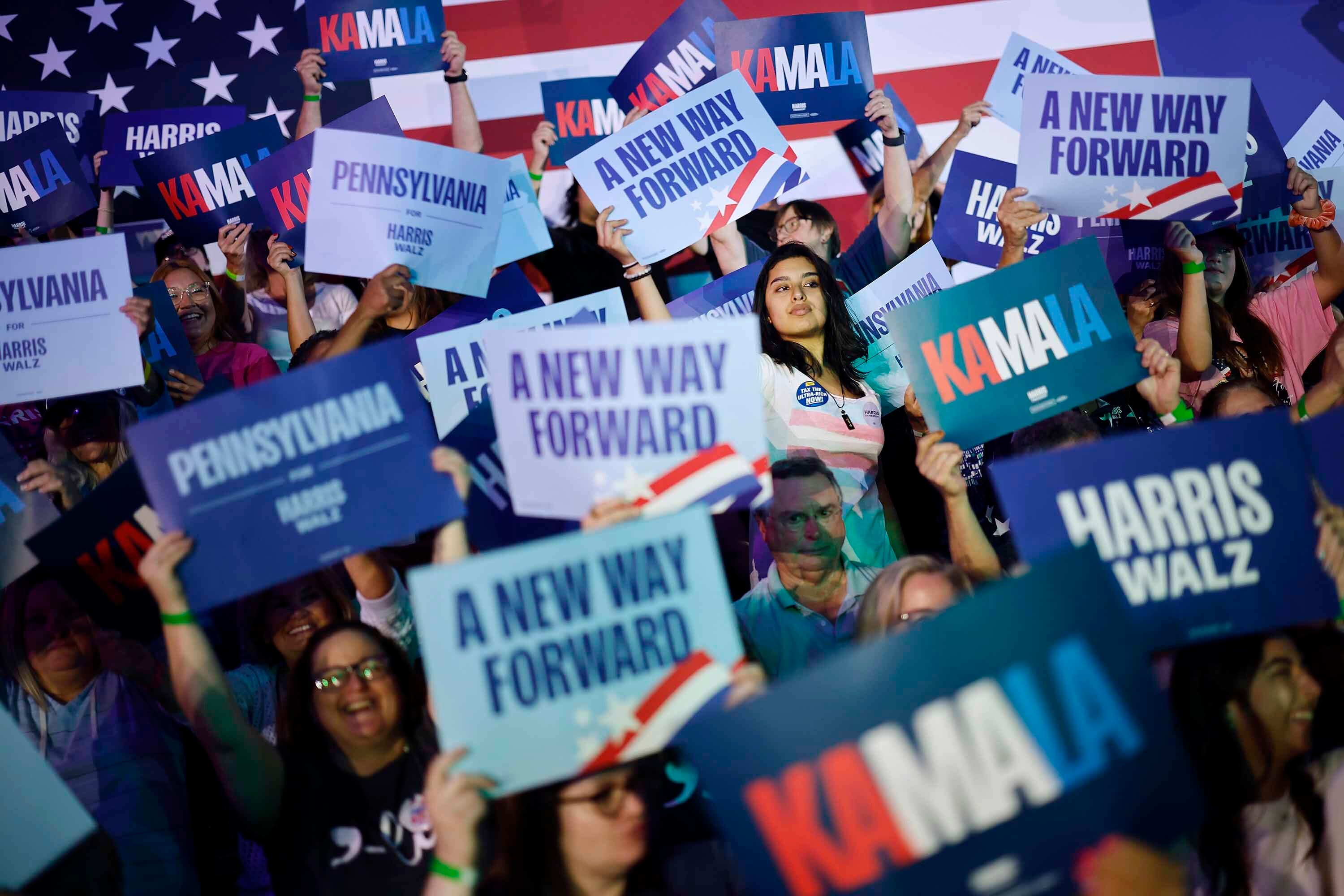
Organizing Online Is Important—and Different From Organizing Offline
Digital organizing is more than using digital tools to organize offline. Organizing needs to make sense for the ways people communicate and get information today. But our campaign had big questions about this.
How do you use digital spaces actually to organize? How do you get people to organize their local Facebook group? How do you get people to do relational organizing beyond geographic bounds?
In their most recent election, the Labour party in the United Kingdom had volunteers organize and recruit in their local Facebook groups. Our own 2024 campaign struggled to operationalize this and other forms of strictly online organizing for a bunch of reasons: scale, operational issues, and good old-fashioned campaign turfiness, of which I was certainly a participant. Some of these problems were just an unavoidable result of flipping candidates and then managing the explosion of attention. Nowhere was the flip more taxing than on the organizing team. But the questions of how traditional, relational, and online organizing should be merged remained unresolved.
We ended up with a blended (read: compromise) model that has lately received some (correctly) negative reviews. For that reason I won’t go too deep on it; just give that link above a read. I will say, though, that beyond the many logistical reasons why it didn’t work, there was a basic strategic thing we never resolved: Community is no longer solely geographic. You had geographically based organizers trying to organize people’s online lives.
The tension between geographic organizing, quasi-geographic online organizing, and interest-based organizing is what we must untangle for 2028. What does it mean to have a neighborhood organizing team with strangers talking to strangers when people are on group chats with their friends all day? How many different workstreams can a single volunteer be a part of at once? How do we make the experience great for volunteers? How do we report on it? How do you do all of those things, or one of those things, or other things?
These are hugely important questions. But they will be invisible to campaigns not thinking about the way people are actually engaging in the community themselves in 2026.
We Were on the Right Track With Clipping, But Missed Opportunities
The writer and market analyst Ed Elson had a great piece recently about how everything is clips. Streamers, podcasts, whatever—they’re creating longform content for the purpose of generating shortform videos, or clips. It’s not hard to see how political candidates’ future is clips, too.
Yes, you should have the candidate do longform interviews. Yes, you should have the candidate make bespoke content. But the distribution method of most of those things will be shortform clips. This was the initial insight of our HQ accounts—they let us post shortform clips of Republicans doing crazy stuff and a higher volume of clips of the boss.
But generating clip content is harder than it sounds. Candidates don’t like to wear microphones, and for good reason—they’re annoying and make every interaction feel forced. And candidates don’t want cameras always present in the room because they want to be able to have meetings in private. They also want a plan or memo beforehand so they don’t say anything embarrassing. All reasonable—but this means there are many frustrating obstacles to content generation. Let me tell you, the amount of time digital people spend on negotiations around microphone-wearing is truly absurd.
Set-piece videos are becoming less important than the ambient content. To that end, I’d trade 60 percent of “digital time” for having the candidate mic’d up and on camera at all times. Then you’d have a team of smart editors and social clippers who’d cut them down and distribute them from a network account.
Then there’s the question of clipping distribution.
The clipping ecosystem is huge and growing. Smart people are throwing real money at building progressive micro-creator and amplifier ecosystems. Platforms may very well tamp down on this (as both Instagram and X have indicated in the last week or so), but we could have used this strategy in ’24. The non-campaign entities did a bit of this, and a lot of the success from the HQ accounts was because of clipping. But we could have gone further in expanding the ecosystem to volunteers, staff, and commercial clipping farms.
The play for a campaign is pretty obvious: Campaigns should have content fellows, either paid or volunteers, in different geographic areas whose job is to clip and remix content for the campaign. They should be paid on performance. Geography matters in this case because TikTok’s algorithm considers it. We should use the commercial clippers too—the right certainly does. The new hot thing is hiring clippers and paying them a living wage to run social accounts. It’s a good tactic.
Of course, clip amplification is just a tactic to convey a message. We must pair their signaling power with good content and a coherent brand to reach beyond algorithmic bubbles.
Downsize the Approval Process
In our constant digital conversation, speed matters. Our HQ accounts ran on a simple system: There’s a Signal group; the team posts anything they’re going to put out; anybody in the group has five minutes to object; otherwise we’re going. No edits, just objections.
That let us move really fast. It let us experiment. It let us put up the volume of content that actually matters on social platforms. The alternative is the standard Democratic approval process where someone holds everything up with ‘Well, I don’t agree’ or ‘Change this language,’ and you finally post something hours after it was relevant.
The perfect cannot be the enemy of the good. If you’re a serious campaign, figure out how to get content out the door fast and accept that sometimes it will be imperfect.
Bottom-Up Messaging Works
The right thinks about many of these things differently than the left. They know the power of the implied brand and how to connect a “viral” narrative to a persuasive one. By contrast, we tend to poll-test our way into running a lot of mealy-mouthed ads about prescription drugs or whatever.
The right uses its vast social media ecosystem to organically “test” messages that have viral heat. There’s a tremendous conveyor belt of content. Things that go viral on X make their way to podcasts, which make their way to Fox News, which make their way to the president. By contrast, Democrats find a message that works in testing, put it on the TV, and hope it moves people.
In January ’24, we spotted a TikTok that said something like ‘If you’re supporting Joe Biden, tell me why in the comments.’ The comments were all about Project 2025. We were surprised. Project 2025 seemed academic and hard to explain. But it turns out that it appealed to the sort of paranoid style of the politics of TikTok—a conspiracy that could be discovered.
Our campaign initially branded it “Donald Trump’s Extreme Agenda.” But the HQ account team used Project 2025 anyway. It ended up being top-performing content for us at a time when the internet was particularly unfriendly to us. The candidates started using it in speeches, and eventually in paid media. Some folks from the campaign’s coalitions team worked with Taraji P. Henson to get her to speak about Project 2025 at the BET awards. The whole left-wing digital ecosystem took something that no one had heard of and turned it into Donald Trump’s worst negative.
But we pulled away from Project 2025 in advertising. We started to think the attacks defied credulity, we saw people respond to Trump distancing himself from it in focus groups and polls.6 I thought this drawdown made sense at the time. I now think that was a mistake—we should have kept pressing our advantage even as Trump ran away from it.
Part III: What Happens Next
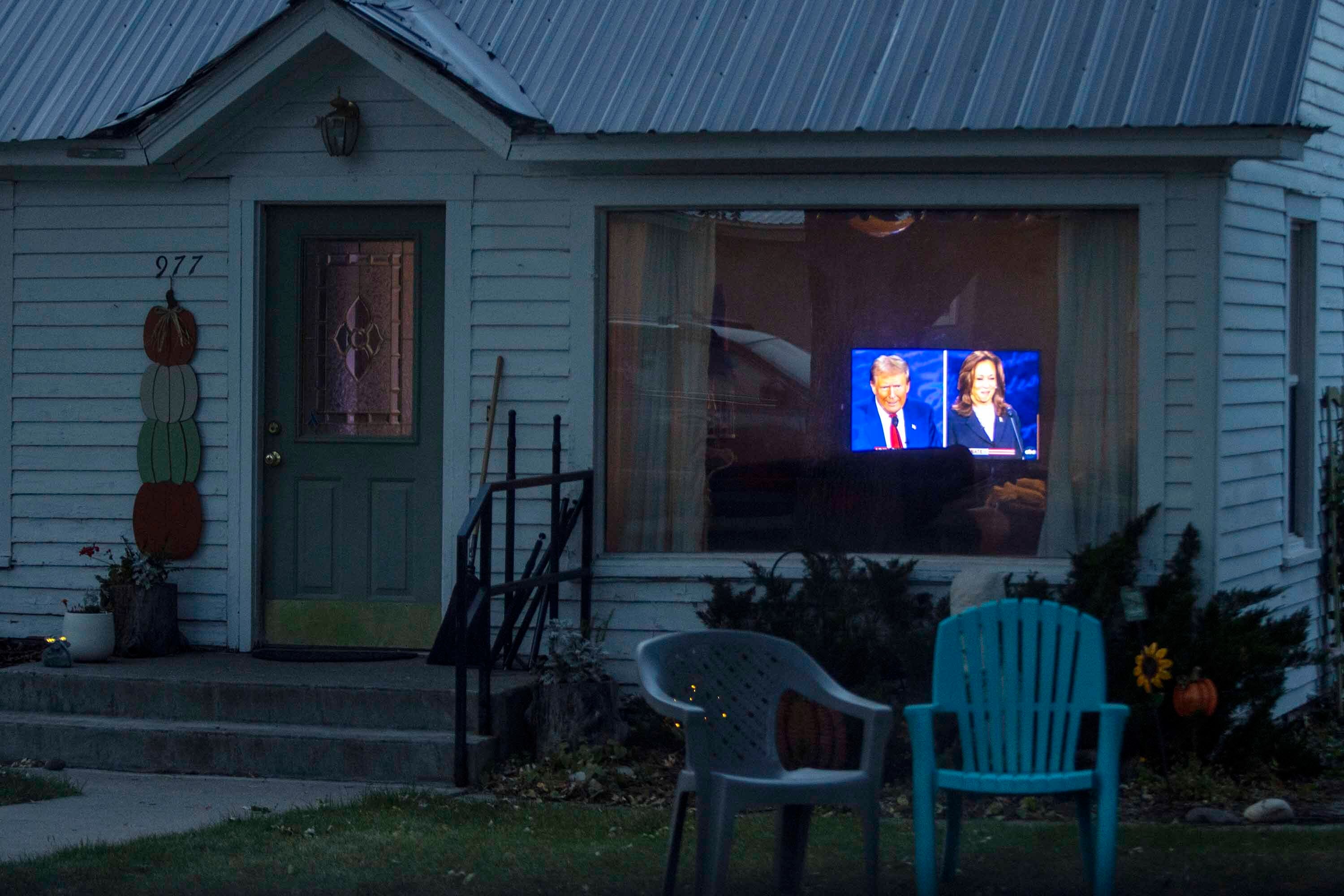
We’re running campaigns built for a world that doesn’t exist anymore. In this final part, I want to briefly walk through what I think is coming and what we have to do about it.
We Don’t Have a Coalition Big Enough to Win Yet
Over the last decade, Democrats traded downscale voters for upscale ones. The people we picked up along the way—college-educated suburbanites, wealthy urbanites, Never Trump Republicans—don’t outnumber the people we lost.7 The resulting coalition, which has involved a shrinking share of working-class voters of color, especially men, just isn’t big enough to beat a motivated MAGA base.
This was obviously true in 2024. But it was already nearly true in 2020, when Biden won the battleground states by a relatively small margin in the middle of a pandemic and an economic collapse, against an incumbent the country had soured on. If the wind had blown in a different direction just a bit, we would have lost.
Democrats will likely win the House this year, even with all the congressional redistricting going on. We may win the Senate. But those wins will paper over the structural problem: Our party still speaks the language of, and to the priorities of, people who care about our institutions and believe they basically work.
There isn’t a left-right solution here; this is an up-down problem. The voters we need to win back are the ones we already had and lost: the multiracial working-class coalition we thought we were assembling in 2020, which has frayed badly, especially among men. They are waiting for a party that sounds like it’s on their side against a system that isn’t working for them.
That requires economic populism with teeth, candidates with genuine charisma, and—hardest of all for a party staffed by institutionalists—a posture of real contempt for a status quo we are arguably part of. And we need to do it without losing the new members of our coalition who joined us over the last decade.
The Winner Will Be Broke. The DNC Needs to Be Ready for That.
The winning primary campaign is often broke by the time they’ve won.
In late 2019 and early 2020, Joe Biden was nearly out of money before South Carolina. That’s the nature of contested primaries—you spend everything you have to survive. By May 2020, the entire Biden digital team still consisted of only twelve people, who would go on working straight through until June, when we did our first round of hires. The campaign held off on hiring (rightfully, I think) because we didn’t know what effect COVID would have on donations. But the team was also burnt the fuck out. There’s a linear relationship between the number of people you have and the volume of stuff you produce. AI may change this—more on that below—but it was true then and will be true for the foreseeable future.
After the primary, the weary, winded Biden team was able not only to catch its breath but to expand rapidly thanks to the DNC’s turnkey operation. The Biden ’20 digital operation would have toppled over without the DNC’s help.
The implication for 2028 is clear. Battleground infrastructure—creator relationships, state-level digital organizing capacity, content pipelines—needs to be built before the campaign needs it. This is precisely why I am so nervous about the DNC’s current precarious financial position: A nominee who comes out of a bruising primary and has to build everything from scratch in June is going to lose months they don’t have. It is the DNC’s most critical function. That is work that needs to begin now.
We Need to Address Our Core Problems Before the Campaign Starts
To the above point about campaigns being a last-mile marker on a pre-set terrain: The funding space is way too torqued on winning the election and not enough on winning the culture. The right has invested in campus organizing, media, and pressure campaigns to scare people away from liberal values. That’s the stuff that changes the shape of the electoral terrain over the long term.
You don’t fix this with a bevy of advertising. The spending for 2028 needs to start now, not in September 2028, and it needs to focus on non-election-specific cultural messages and party infrastructure that will persist through election cycles.
The Election Is Going to Happen on YouTube
The whole country is on YouTube and uses it in ways that feel completely out of alignment with how I use it. The majority of YouTube is watched on TVs. It’s the top streaming platform—even above Netflix. More than 80 percent of the country has used YouTube—more than any other social network. It will be the main digital battleground of the election.
This has implications for both paid media and earned media (for instance, which podcasts are worth doing). On the paid side, the obvious move is spending money on YouTube ads with creative content that feels like it belongs on YouTube—fake podcast ads and the like, which I’m proud we did a lot of in 2024.
Buying attention is relatively straightforward, what’s difficult is working to get people’s attention. Outside groups need to be building out YouTube talent now.
Campaigns should prioritize YouTube with respect to their own content too. It’s resource-intensive and takes time to grow an audience. I’ve been experimenting with it myself and lemme tell you, it’s not easy. And getting twenty minutes on camera for a YouTube essay with a candidate is hard if the candidate isn’t naturally talented at that medium. Adam Schiff and Elissa Slotkin have spent serious time on it; their content accrues views over years. Bernie Sanders is doing the same with longform videos. But most candidates’ YouTube channels are repositories of TV ads or floor speeches no one is voluntarily watching. The work of optimizing thumbnails and producing seven-to-twenty-minute videos that perform on the platform is hard and slow to pay off. But it is absolutely worth experimenting on the platform because, again, that’s where people are.
Social Media’s Dead. You Need an Ecosystem, Not Just Content.
Social media is basically over; the friend-to-friend conversations have largely moved underground to texts, Snaps, and DMs. What’s left is a series of endless, personalized feeds that filter you into interest-based niches. You’re watching content or chatting with your friends.
Meanwhile, political ads are predicated on the idea of a captive audience. But there are no captive audiences anymore—even if people are forced to play an ad, they’re not forced to watch it because they often have a second screen.
The implications here are clear: You need a lot of content in a lot of places with a lot of different angles that come from a lot of different people. You just can’t command and control at the scale of a presidential campaign.
Campaigns should be thinking about how to empower staff to create content that people want to consume. But even if you have attractive content, you need an ecosystem to keep people engaged: unbranded fan accounts, clipping accounts, and teams of clippers located in states. Arby’s built out a content series with guys doing stunts at Arby’s. Bissell built a single-purpose TikTok that just shows their tools for cleaning cars. Campaigns should take note. We need to get creative.
AI Will Reshape How Campaigns Operate
Smart users of AI right now can already gain huge advantages in media planning, research, contract review, and content production. At the rate of improvement we’re seeing from frontier labs, by the time the 2027/28 primary rolls around, the entry-level layer of campaign work—the work traditionally done by young, idealistic people willing to take garbage salaries—will be partially, if not mostly, automatable.8
But should it be automated? Campaigns have always solved the disproportionate-scale problem by exploiting cheap labor. AI changes that equation. This is going to be a values question for Democratic campaigns, and I don’t think there are easy answers. Do we ignore the tech on the grounds of putting humans first? Hire the teams of the same size as normal, but they work twenty-hour weeks, letting AI do the rest? Hire the same teams and double the output, with the risks of lower quality? It’s hard to say. A lot of poorly funded primary campaigns are going to try to use AI to achieve scale. It may work.
I believe that Democrats’ lack of adoption is one of the reasons why they haven’t really begun to grapple with the vast implications of AI for our politics (which will be vast, overwhelming, and unmistakable). Luckily, primaries are often the innovation drivers. But by then it might be too late.
AI Will Reshape Social Media Behavior
Let me paint two scenarios. In one, people are fine with AI-generated slop despite their protests, the platforms shrug, and feeds become a slop war. In the other—which I think is more likely—people hit a threshold where the internet enshittifies to the point of being unusable and they retreat into private spaces with trusted voices.
If that happens, parasocial relationships with creators will hit warp speed. People will seek out the creators, influencers, and voices they really want to hear from by going to them directly. And their real conversations move further underground—into group chats, WhatsApp groups, Instagram DMs, Snapchat, Discord servers.
That’s a massive challenge for campaigns still optimizing for algorithmic reach, because the persuasive conversations will increasingly be happening in places invisible to them. It increases the importance of leveraging those parasocial relationships with creators. It doubles the importance of getting people to organize in online spaces.
It also means the parasocial relationship between the candidate and the supporters becomes doubly important. Even more than the videos, I thought the scavenger hunts and soccer tournaments were the most impressive part of Zohran Mamdani’s mayoral campaign in New York City. They drove a deep, personal connection between the candidate and his backers. IRL is going to matter more than ever. The community of the campaign will matter just as much as the campaign’s content.
AI Will Reshape How We Think About Information Itself
There’s a lot of anxiety right now about the way LLMs are surfacing information about candidates. It’s a tricky space for politics: Political topics are high-touch areas for frontier labs, and any attempt to game them means trying to outsmart some of the smartest AI researchers in the world. If Elon Musk is intentionally biasing Grok, a campaign hack can’t fix that.
Where it actually matters is upstream—how you frame narratives in the places LLMs source from. That’s Wikipedia, Ballotpedia, and Reddit. It’s also Reuters and AP. It’s Axios (which has a deal with OpenAI), as well as shortform clips with captions on YouTube Shorts that feed Gemini. It’s think tanks and data. It’s how you structure your website or write articles structured as FAQs. The way you state what is fact and what is fiction, in formats that machines can ingest, is going to become a big part of a campaign’s communications strategy.
Competing in the world of LLMs will require longterm message discipline. The campaigns that are first to figure out how to be AI-friendly will shape how an entire generation of voters connects with politics.
But there’s a much bigger thing to be concerned about: In a world of agentic AI, the 2028 information threat is really a rack-and-stack of horrors. I’m less freaked out about deepfakes than I am about hundreds of thousands of AI agents shaping the ambient texture of online discourse. Not viral misinformation in the old sense, but fabricated relationships, manufactured consensus, parasocial capture by entities that don’t exist, and a baseline sense of confusion and despair that corrodes everything else. The meager defenses we built for 2016-era problems like troll farms simply don’t map onto this complex emerging set of threats.
The Job I’ve Held for the Better Part of the Last Decade Shouldn’t Exist.
If you’ve read this far, you’ve noticed a theme. Every section of every part has, in one way or another, been about the same problem: We’re running campaigns built for a world that doesn’t exist anymore. The media environment has changed. The organizing model hasn’t. The way people consume information has changed. The approval processes haven’t. The way voters form opinions has changed. The spending patterns haven’t.
“Digital” is everything and nothing at the same time. It touches every core function of a campaign—fundraising, organizing, advertising, communications, creative, and field work. And it still gets treated as a department, a silo, a thing the internet people do ‘over there.’ The distinction between “digital advertising” and “advertising” is meaningless when half your media spend is online. The distinction between “digital organizing” and “organizing” is meaningless when the communities you need to organize exist online. The distinction between “digital communications” and “communications” is meaningless when your press releases are social media posts and the word “paper” in “newspaper” is completely vestigial.
We tried to move in the right direction in 2024—breaking up the digital team by audience rather than by channel, running a media mix close to parity between TV and digital. It wasn’t perfect, but the direction was right.
The next campaign should not have a “digital department.” It should have a campaign where every function understands how to operate in a digital environment, with specialists embedded throughout, and a senior leader whose job is strategy and integration—not running a siloed shop that makes the internet stuff. In a perfect world, my job doesn’t exist.
My theory is that the campaign should be broken up into three verticals by audience (call them what you want):
Elites and high-information people—people who actually follow politics.
Persuasion targets—voters you are trying to convince to vote for you, or to vote at all. (I’d put paid media and creators in this category.)
Mobilization targets—base voters, organized groups, the long-term ecosystem (this would be organizing, fundraising, and the like) you need to keep warm.9
You need people managing each of these verticals who not only understand their audience in both their online and IRL manifestations, but who also understand how these audiences—and the tactics for reaching them—overlap and influence each other. If the campaign doesn’t treat “digital” as a thing woven through every part of our lives, then it will just get eaten alive by its offline counterparts. And absent that, the old model holds: Digital needs to band together to amortize its cross-functional leverage. Divvied up into departments without an advocate, it gets picked apart.
I’m pretty optimistic about the next crop of digitally minded operatives. There are some insanely talented folks from the next generation running integrated paid programs and innovative field programs in Senate and gubernatorial races right now.
This is one of the points I tried to make to the autopsy team: There were things we got wrong and things we got right. But the basic issue is that we’re still treating “digital” as a thing, when it’s actually just the way the world works. The campaigns that figure that out first are going to have a massive advantage. The ones that don’t are going to keep having autopsies.
Rob Flaherty, cohost of the podcast Nobody Knows Anything, was deputy campaign manager of Kamala Harris’s presidential campaign. He is the founder of Narrowcast Media, a communications agency.
I’ve also heard that they lost the hard drive with everything on it, but that feels less plausible.
I think the 2028 primary conversation will be better for Biden than folks would expect. He’s more popular with the base than the D.C. crowd would lead you to believe—’twas ever thus. The same voters who powered Biden to victory in 2020 will be the ones who power the ’28 nominee to victory. But the decision to run again caused damage we couldn’t dig out from.
But it’s also what Trump does. He is not agonizing over engagement vs. persuasion. He’s getting attention and setting the tone.
That said, I don’t buy the argument that there were enough single-issue Gaza voters to swing the election—they exist, there just aren’t enough of them for that to be the case. But in the way “age” became a catchall for voters’ discontent with Biden, Gaza became the tip of the spear for many traditionally Dem-coalition folks who were frustrated and looking for a way to express their discontent with Biden (and Harris). That’s just a lot harder to measure.
For this item and the next few that follow, I’ll just note that my analysis and recommendations depend on the campaign-finance rules being what they were in 2024. If, say, the Supreme Court changes coordination rules, all bets are off.
Trump began to campaign against Project 2025—using it as a pivot point.
I realize that those categories likely describe many of you reading this article. Don’t misunderstand me: We’re thrilled to have you!
I posted a tweet last month that made a lot of people mad about the stuff I think AI could be used for in a campaign context.
I’ll note that this doesn’t include operations, finance, creative, and like a million other things. If you want me to make you an org chart, I’d be happy to but you get the gist.
 | A guest post by
|
SAVE THE DATE! This Sunday, May 17: Join Bill Kristol and Rob Flaherty for Bulwark on Sunday where they will discuss this article and a path forward for democrats.
Tune in however you watch The Bulwark, whether it's YouTube or Substack. Links to come.
We are enjoying reading your feedback. Keep it coming!
Mr. Flaherty, thank you for this inside baseball report on what you think went right and went wrong for the KH campaign, and double thanks for publishing here at The Bulwark.
You mentioned several times that the campaign failed to come up with a brand. But I think that you nailed the biggest problem with the campaign when you wrote this:
>"We underestimated then—and are underestimating now—just how disillusioned people are. There was and is a pervasive sense that nothing works and the institutions holding us up have failed."
Tim Miller wrote an essay on this subject 15 hours ago with the headline, "The Status Quo Needs Shaking Up" and I would recommend that essay (and the community's comments below it) to every Democratic candidate and consultant in the country.