The Hidden Risks of Trump’s Threats Against Iran’s Power Plants
It’s not just about Iran. It’s about us.

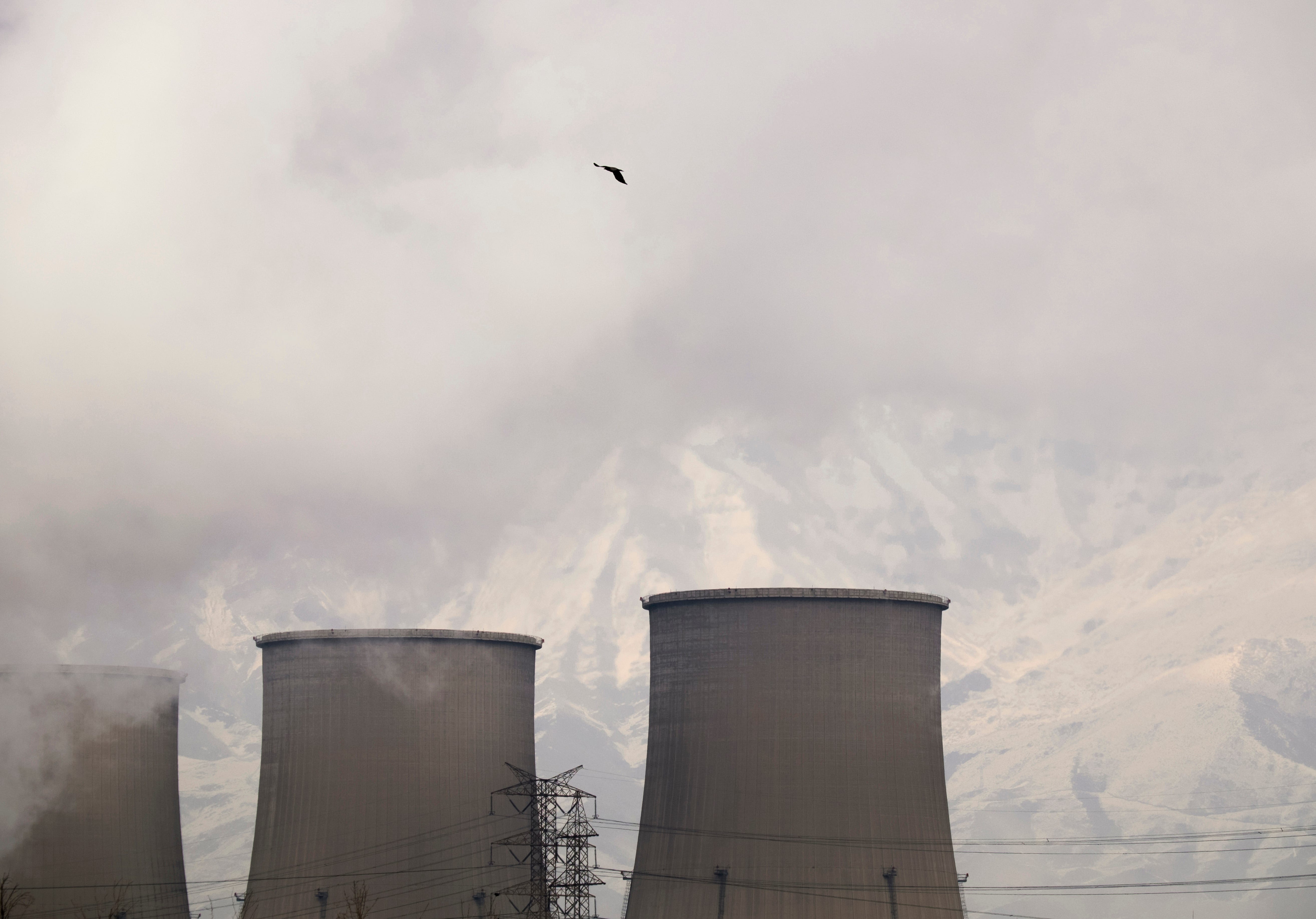
THERE ARE MOMENTS IN WAR when a single sentence—spoken offhand, delivered as a threat, or issued as an order—can set in motion forces that cannot be recalled. Moments when strategy, rhetoric, and reality break apart, when what sounds like leverage or intimidation becomes something far more dangerous: a commitment to action with consequences that echo far beyond the battlefield.
“Words are important, so be precise,” was a mantra often repeated during my time at the War College. “Words can cause chaos, or bring understanding,” the strategy professor told us.
President Trump’s threat to strike Iran’s power plants if they didn’t open the Strait of Hormuz was a violation of that dictum. His cancellation of his ultimatum twelve hours before it came due was a step back from a precipice—but only for now, as he kept alive the possibility that he might still order an attack on Iran’s power plants.
Iran’s response to an attack on its civilian power generation was predicted to be swift and damaging; its leaders warned that any attack on their energy infrastructure would be met with retaliation against critical systems across the region.
This is the logic of horizontal escalation. Iran has long invested in the capabilities required to strike systems that sustain daily life for millions—precision missiles, drones, cyber tools, and a network of proxy forces across the region. A strike on Iranian power plants would not have ended with damage inside Iran. It would have triggered a chain reaction: attacks on Gulf energy infrastructure, disruptions to maritime traffic in the Strait of Hormuz, proxy strikes on U.S. forces, and likely cyber operations targeting financial and energy systems well beyond the immediate theater. The result would not have been limited to a discrete U.S. military action, but the expansion of conflict into an infrastructure war affecting entire populations across many nations.
Too often overlooked, however, is the damage an order to attack Iran’s population would have had on the U.S. military.
Had such a strike been ordered—particularly in the broad, coercive terms in which the president announced it—it would have forced American military leaders into one of the most difficult positions they can face: determining whether a presidential order was lawful, and if not, refusing to carry it out.
From their earliest days in uniform, all soldiers, sailors, airmen, marines, and guardians are taught that they are bound not only to obey lawful orders but to disobey unlawful ones. And in classrooms and professional development sessions, those same officers address the repercussions of such actions. The distinction is not semantic or theoretical. It is part of the foundation of the training, doctrine, and ethos of the U.S. military.
THE LAW OF ARMED CONFLICT provides clear guidance on the targeting of infrastructure, such as electrical power systems. These are not obscure provisions buried in legal texts; they are core principles that every commander understands.
Foremost is the requirement of distinction. Military operations must be directed against military objectives, not civilian objects. Power plants that serve citizens, by default, are civilian infrastructure. While they can, in some cases, serve dual-use functions that support military activity, that does not render them automatically targetable. The burden remains on the attacker to demonstrate that the facility is making an effective contribution to military operations and that its destruction offers a definite military advantage. This principle is described in Protocol I of the Geneva Conventions, particularly Article 48 and Article 52, and it forms the baseline for all lawful targeting decisions.
Even when a normally civilian object like a power plant might become a legitimate military target, the principle of proportionality imposes a further constraint. An attack is unlawful if the expected civilian harm would be excessive in relation to the anticipated military gain. In modern societies, the effects of disabling electrical power are not limited or temporary. They cascade. Hospitals lose life-saving capabilities. Water systems fail. Sewage systems back up. Food supply chains break down. Communications degrade. The impact is not confined to combatants; it falls overwhelmingly on civilians. On the other side of the equation, the president’s order did not identify—indeed, no one has identified—a specific military advantage to be gained from destroying Iran’s power generation.1 This balancing requirement is codified in Protocol I of the Geneva Conventions, Article 51, and reinforced through longstanding customary international humanitarian law.
There is also the requirement to take all feasible precautions to minimize harm to civilians. Commanders must consider alternative means and methods of attack, assess the broader effects of their actions, and ensure that every reasonable step is taken to reduce civilian suffering. A sweeping strike on national power infrastructure strains that requirement, because its effects are inherently broad and difficult to contain. This obligation is laid out in Protocol I, Article 57, which governs precautions in attack and reflects standard practice in modern military operations.
And when the destruction of electrical systems foreseeably undermines access to water, sanitation, and other essentials of life, the analysis enters yet another legal domain: the prohibition against attacking objects indispensable to the survival of the civilian population. These protections are described in Protocol I, Article 54 and Article 56, which address both essential civilian infrastructure and facilities whose destruction could release dangerous forces.2
This is the framework within which every targeting decision is made. Any commander presented with an order to strike power plants for the purpose of coercing a population or forcing political compliance would immediately recognize the tension—if not outright conflict—with these principles. Such an approach would also raise concerns under the long-standing prohibition on collective punishment and acts intended to spread terror among civilian populations, reflected in Geneva Convention IV, Article 33, and Protocol I, Article 51.
Up and down the chain of command, officers would simultaneously grapple with the questionable legality of such an order. Legal advisers would be engaged. Targeting boards would scrutinize assumptions. Commanders would seek clarification, attempt to narrow the scope of action, or in the most extreme case, confront the possibility that the order could not be lawfully executed.
This is where the distinction between obedience and responsibility becomes critical.
Both enlisted service members and officers swear to support and defend the Constitution. But officers carry an enduring burden in their oath that affects their soldiers: They are entrusted with judgment. Their loyalty is not blind. It is anchored in law, in principle, and in the obligation to protect both the mission and the men and women they lead.
Officers are expected to question orders that appear unlawful. They are expected to seek clarification, consult legal counsel, and, if necessary, refuse to take actions that violate the law of armed conflict. This is not insubordination. It is the reflection of a system functioning as designed.
But it is also one of the most difficult positions an officer faces. The stakes are immense. The pressure is real. The consequences—personal and professional—can be severe. And yet the expectation remains.
Had the threat to strike Iran’s power plants manifested into a military operation, it is not difficult to imagine the strain that would have placed on the chain of command. It would have introduced friction at every level, slowed decision-making at a critical moment, and risked creating visible ruptures between civilian leadership, the population, and the military.
THERE IS ALSO THE MATTER of precedent and reputation.
For years, the United States has rightly condemned Russia’s systematic attacks on Ukraine’s energy infrastructure. Those strikes have been widely viewed as an effort to break civilian resilience by depriving millions of heat, light, and basic services. The legal and moral arguments against those actions have been clear and consistent. For the United States to move, even rhetorically, toward a similar approach risks eroding that clarity. When we draw lines in one conflict, we cannot casually step over them in another without consequence.
This is why the president’s decision to step back from the threat was crucial. It reduced the immediate risk of a wider regional conflict. It lowered the likelihood of reciprocal attacks on infrastructure that sustains civilian life. And it preserved the integrity of a professional military built on the disciplined, lawful application of force. And it prevented yet more damage to our country’s reputation. For now.
When rhetoric drifts from our principles and values, even temporarily, it introduces uncertainty—not only among adversaries but also within our own ranks. For now, at least, the questions remain hypothetical. The order was not given.
It’s not clear, given that the Iranian regime has already suffered through years of protests brought on by economic calamity and shortages of food, water, and power, that attacking Iranian energy production would meaningfully change the regime’s decision-making regarding the war.
The United States is not a party to Protocol I of the Geneva Conventions, but for reasons unrelated to the basic principles of reducing harm to civilians.