


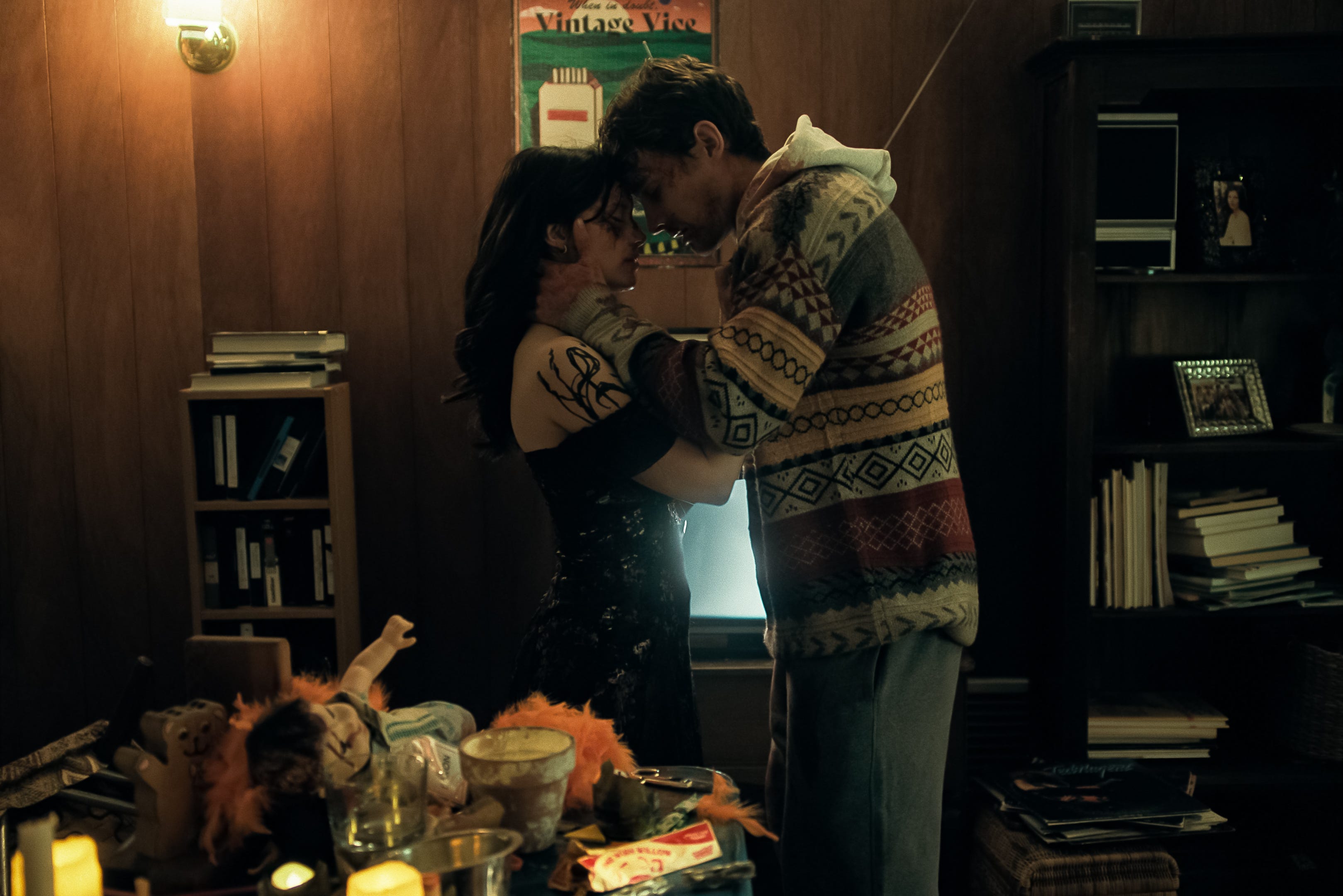
SITTING IN A DALLAS THEATER on Wednesday night for a raucous, packed showing of Obsession, the new hit from YouTube wunderkind Curry Barker, I couldn’t help but wonder if this is what the film industry felt like in 1968.
Mark Harris’s Pictures at a Revolution chronicles that key moment in Hollywood history, a hinge point that helped keep the motion picture industry relevant for a new generation of moviegoers. Five films released in 1967 representing Hollywood’s competing self-conceptions were up against each other for the best picture Oscar in 1968: The hopelessly out-of-touch Dr. Dolittle, a big-budget monstrosity that had flopped with audiences on release; contrasting social-issues movies, both starring Sidney Poitier, In the Heat of the Night and Guess Who’s Coming to Dinner; and two howls of youthful rebellion in the ennui-ensconced The Graduate and the ultraviolent Bonnie and Clyde.
That diversity of pictures and themes and budgets and audiences reflected a key split in the Hollywood psyche. “What was an American film supposed to be? The men running the movie business used to have the answer; now, it had slipped just beyond their reach, and they couldn’t understand how they had lost sight of it,” Harris wrote in his 2008 book. In the Heat of the Night would eventually win best picture, but Bonnie and Clyde and The Graduate would capture the soul of the business—at least until the blockbuster era’s emergence in the back half of the next decade.
These transition points—these shifts in taste, these periodic soul-searchings—happen every generation or two, often paired with shifts in distribution or new technologies. The Paramount Decrees in 1948, paired with the rise of television, led to the end of block booking and an overall decline in attendance. The influx of European films in the 1960s led to the movie brats of the 1970s and Hollywood’s embrace of auteurs as varied as Martin Scorsese and Francis Ford Coppola and Brian De Palma, which in turn led to the blockbuster era’s outsized profits, embodied by Steven Spielberg and George Lucas. The rise of VHS and then the explosion of DVD sales in the late 1990s subsidized the whole industry for a solid decade, at least until The Dark Knight and Iron Man revealed that the future was comic book universes and billion-dollar grosses just as the financial legs were about to be knocked out of Hollywood by streaming gutting home-video sales.
Which brings us to today. It really cannot be overstated how unusual Obsession’s performance is. In the modern era, the box office take of films declines from weekend to weekend. We literally measure a film’s popularity in its declines: The smaller the decline, the better. Even something very good and very popular, like Get Out, is measured in declines: a 15.4 percent decline from first weekend to second weekend? That was truly amazing, almost unheard of in the modern era of big openings and big drop-offs. As such, it’s truly astounding that Obsession increased by nearly 40 percent weekend over weekend, from $17 million in its opening weekend to nearly $24 million in its second.1 And it increased each weekday in its second week compared to its first. Again: I cannot think of another movie for which this is true.
Meanwhile, Backrooms is about to become the highest-grossing film in A24 history. Projections suggest it is lined up for an opening of at least $65 million and it could go much higher than that. Don’t believe me? Check your local multiplex and see how many showtimes are completely or mostly sold out for this weekend. Like Obsession, Backrooms is the brainchild of a YouTube-native filmmaker: Kane Parsons, who can’t even legally buy a drink to celebrate his success until next month. And both films are movies made by young people about the concerns of young people: In Obsession’s case, the tricky nature of consent in all matters sexual; in Backrooms, the unreal nature of manufactured reality.
Between those two films (both of which were made by Blumhouse-Atomic Monster) and YouTuber Markiplier’s self-financed shock hit, Iron Lung—which opened just $1.3 million behind Sam Raimi’s $40 million action-horror-comedy Send Help back in January—I can’t help but feel as though we’re in another hinge moment after years of suggestions that streaming was sure to kill theaters and that younger audiences simply had too much to do to bother with theatrical presentations. We’re riding a cresting wave of youthful enthusiasm of the sort that has propelled Hollywood for the last sixty-some years. As an old person, this is obviously troubling: I don’t understand YouTube and I don’t like change. But as a lover of film and a believer in the theatrical experience, it’s undeniably exciting to see Gen Z embrace the big-screen experience.
Fear and Physical Media
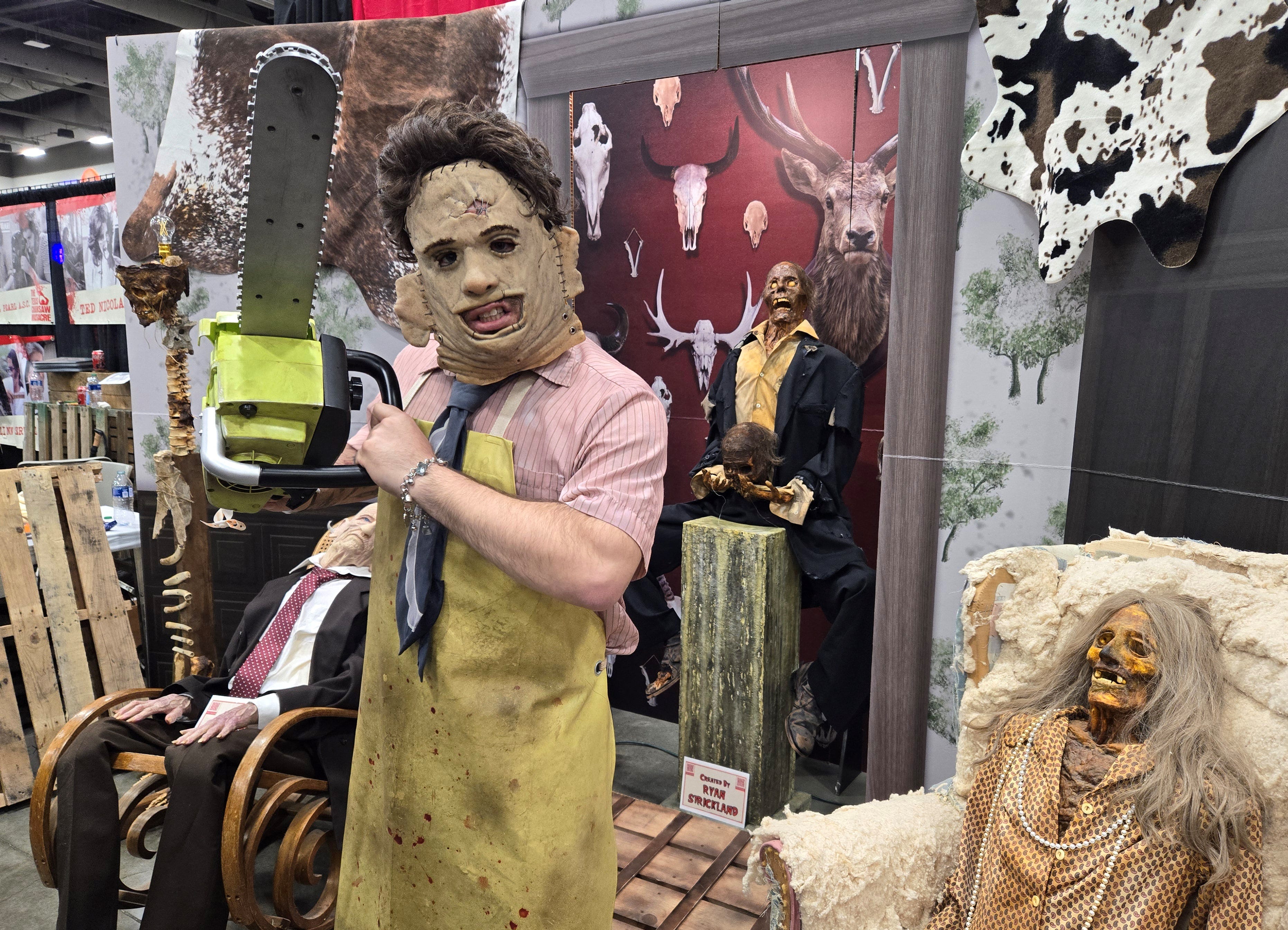
HORROR MOVIES LIKE THE TROIKA ABOVE are naturally well suited the theatrical experience, particularly those that deftly mix chills and laughs like Obsession: There’s just something to be said for laughing and screaming alongside other fans. (They’re also, interestingly, reliable underperformers on streaming services, according to the Entertainment Strategy Guy.)
I popped into the Texas Frightmare Weekend last Saturday to get the mood of the fans there, see how they were feeling about things. The vibes are good! It was crowded, the energy was high, the panels were fun. Another viral sensation was the most frequently spotted cosplay model: The Terrifier universe is always well represented at these events, and I saw more Art the Clowns than I could shake a stick at, from ages 6 to 60. (One hopes the 6-year-old simply thought he was going as a fun clown.)
But one other thing really leapt out: These conferences are one of the few places you can still find Blu-ray and 4K discs for sale in person. Yes, yes: The occasional Walmart has a good selection. But for the most part, physical disc sales are limited to increasingly rare specialty shops and the internet. I’ve bought more than my fair share of films from the websites of Arrow, Vinegar Syndrome, and Severin; it was nice to be able to sift through disc stacks like the old days, maybe discover something I’d never seen before. And despite underperforming on streaming, horror likely overperforms on physical media sales precisely because scary movies create passionate fan bases, and such collectors are increasingly overrepresented among physical media owners. Streaming is a mass medium; discs are a niche.
Anyway, the whole event was great: It’s always fun to be around fans who have gathered in celebration. James Wallace led a fantastic discussion with Warwick Davis (best known for Willow and the Leprechaun series and the Harry Potter movies) during the Saturday session as well as a really eye-opening chat with the cast and crew of the Saw series. (Tobin Bell, who plays the demented killer Jigsaw, said that he signed on for the first film—much of which sees him laying perfectly still on a tile floor—because it reminded him of Waiting for Godot.) People crave communal experiences, and Texas Frightmare Weekend has offered up twenty years of them.
Assigned Viewing: Tuner (Theaters)
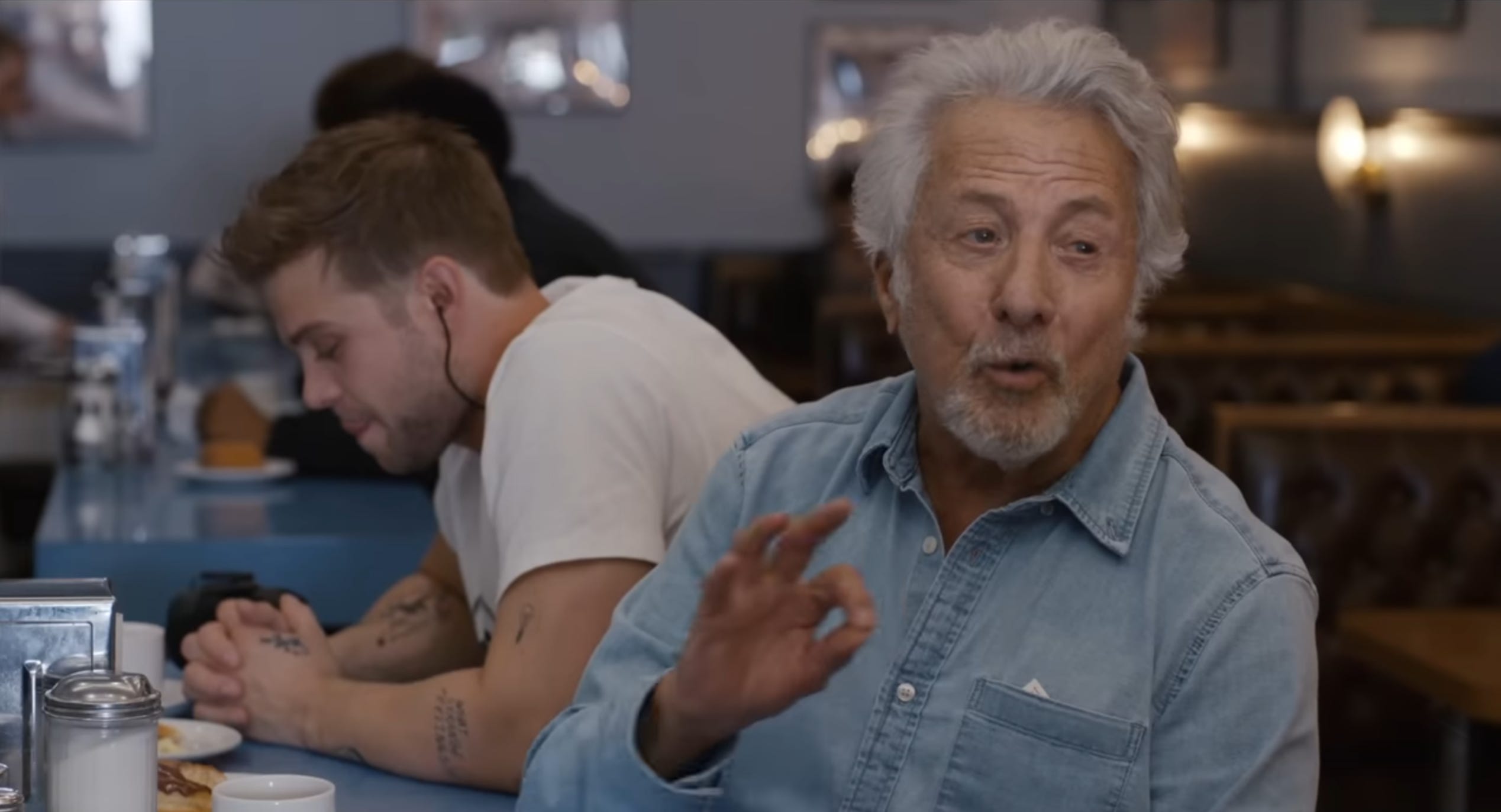
ANOTHER YOUNG FILMMAKER, Daniel Roher (33), has a film out this week, albeit one that plays like more of a throwback to years past. Here’s the elevator pitch for Tuner: A piano tuner learns how to use his perfect pitch to crack safes and embarks on a life of crime to help cover the medical debts of his mentor only to risk losing his job, girlfriend, and even life when things go sideways. Starring Leo Woodall as the tuner and Dustin Hoffman as the mentor, Roher has put together a tremendously effective and intimate indie endeavor.
This is the sort of movie we might have gotten in the 1970s, a personal story with a distinct sense of space and real emotional stakes anchored by genuinely brilliant performances from Woodall, Hoffman, and Havana Rose Liu as the tuner’s girlfriend. It’s not the sort of picture that’s going to change your life but it is the sort of picture that’s going to entertain you at a high level for a hundred or so minutes in a movie theater, and I really hope you check it out.
The only film you could highlight that is even close to this in the last few years is Sound of Freedom, but that picture’s increase was tied in part to its unusual pay-it-forward strategy of buying tickets for strangers. As such, it doesn’t make for a very good comp.
There is connection in a movie theater. We laugh together. We cry together. I usually stream films, but I do miss the theater experience. Thanks for the recommendations.
Sonny! My son & his wife were there too hamming it up with the “Saw” franchise stars & writer, among others! They have a film YouTube biz: “Foot the Bill” also on Patreon. Account name: Kitten-Arcader. They do a detailed breakdown of the costs related to the protagonist (pricing per the year being portrayed in the film). Here’s the entire “Saw” franchise “Foot the Bill” videos.
https://youtube.com/playlist?list=PL4HR_BMe7sQit5sI17k8nmW4OGwJ_hBah&si=WhNJ6eLh7HpGp9yu
Feel like doing a review? Deb