Honoring Ashli Babbitt Dishonors the Military
If there’s no difference between upholding the Constitution and attacking it, then there’s no honor in service.

ON JULY 1, 1971, I STOOD ON THE PLAIN at the United States Military Academy and raised my right hand for the first time. Along with hundreds of other new cadets, I swore an oath every service member takes: “to support and defend the Constitution of the United States against all enemies, foreign and domestic.”
I was nervous about what lay ahead of me as a cadet. But even in those circumstances, I listened closely to the oath I was asked to repeat, as it was a seminal moment in a young officer’s career. It was not an oath to a man. It was not an oath to a party. It was not an oath to a movement. It was to a document, our Constitution—the foundation of our democracy, the bedrock of our freedoms, the values of our nation, the rules by which we govern ourselves.
The place mattered. West Point was the post that Benedict Arnold once tried to sell to the British during the Revolution, nearly surrendering its defenses and betraying the American cause. And on that day in 1971, we stood in the shadow of Battle Monument, on Trophy Point, overlooking the Hudson River and beneath the granite obelisk etched with the names of Union soldiers who gave their lives in the Civil War. Their names are a reminder of service and sacrifice in defense of the Union. There are no Confederate names on that monument—for good reason. It honors those who fought to preserve the Republic, not those who sought to tear it apart.
The oath we took, the monument that towered over us, the history embedded in that place—all carried a single message: Service means loyalty to the Constitution and the rule of law. Violation of laws and betrayal of the oath means forfeiting honor.
Like all soldiers, I was honored to repeat that oath many times during my career—when I was promoted, and when I promoted others. And I saw that oath honored in ways that still break my heart. I visited American cemeteries in foreign lands, when hundreds of thousands of our war dead lay at rest. But what has stayed with me the most are my memories from Iraq, were I knew the ones who had sacrificed. I attended more than 250 memorial services for soldiers who died living up to that oath. Some were killed by snipers while securing neighborhoods. Some were killed by roadside bombs while clearing routes so Iraqi citizens—and their fellow soldiers—could move safely.
I remember all of them. But one in particular remains with me. A young soldier, standing guard at a gate, protecting the entry point to a base where his comrades lived and slept. A suicide bomber drove a car packed with explosives into that checkpoint. The soldier died at his post, saving lives by giving his own.
That is service. That is sacrifice. That is fidelity to the oath—defending others, defending principles, defending the mission, even at the cost of life itself.
Because the oath is not just about fighting the enemy—it is about upholding standards, protecting civilians, and showing the world what honorable service in defense of our Constitution looks like.
And that is why I am infuriated that the Air Force plans to grant military funeral honors to Ashli Babbitt. She did not die defending the Constitution. She died trying to overturn it. She was not protecting lives at a gate in Iraq; she was forcing her way through windows in the Capitol to stop the peaceful transfer of power, one of the most sacred traditions of our Republic.
To pretend that her death deserves the same recognition as the young soldier at the gate is obscene. It is a betrayal of the oath she once swore and a desecration of the sacrifice made by so many who kept faith with theirs.
This proposal for military honors for an individual who did not live up to her oath is not about honoring service. It is about politics. It is about assuaging a politician’s base—a politician who never served a day in uniform, who never risked anything for his country, and who has shown no understanding of true sacrifice for others. To dress up the events of January 6th in the trappings of military honor is not patriotism. It is propaganda.
The impulse behind honoring Babbitt treats service as a partisan token, not a sacred covenant. It blurs the line between lawful sacrifice and unlawful violence. It tells those who gave their lives in defense of the Constitution that their oath was no more meaningful than the motivations of the mob that attacked the Constitution.
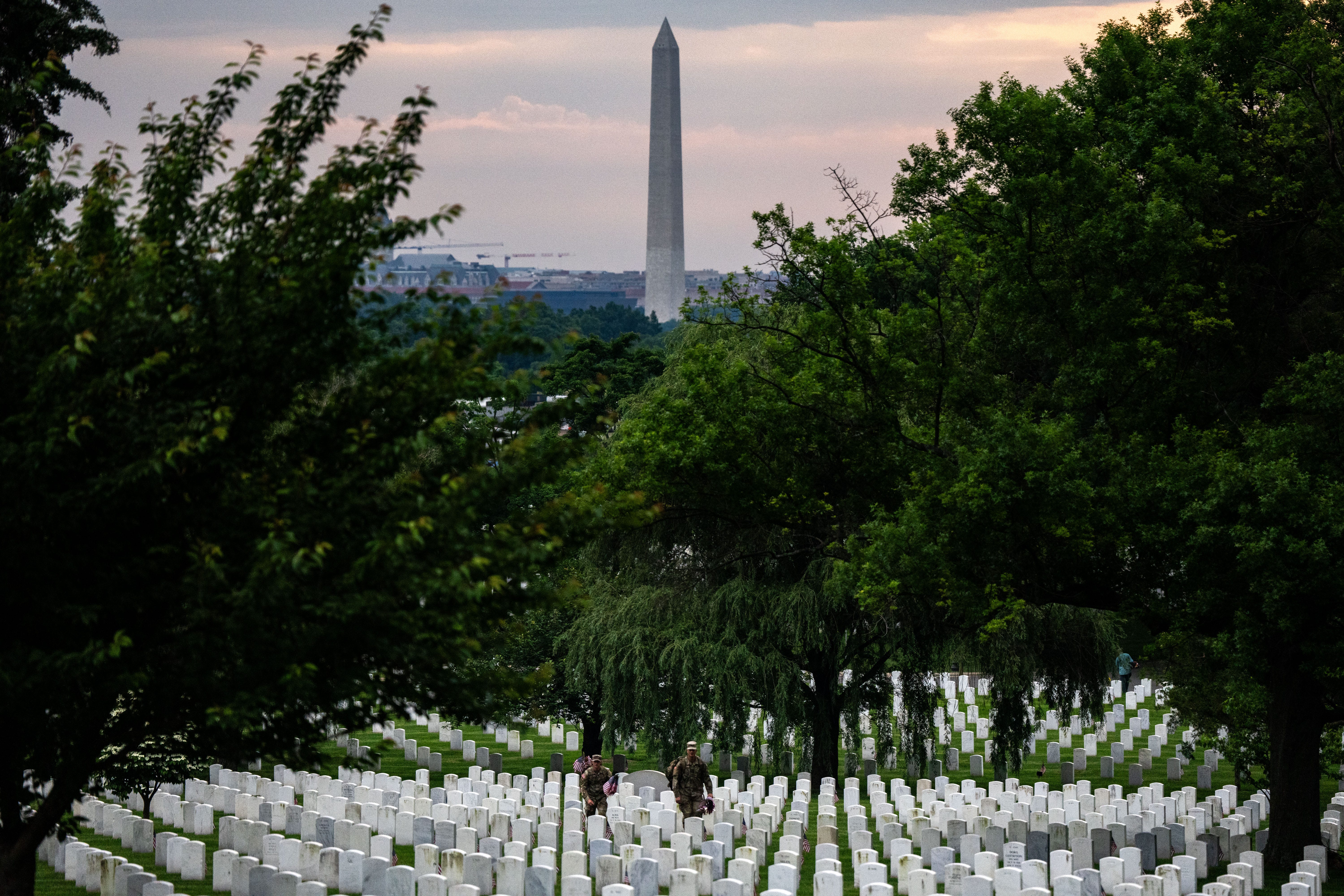
Anyone who has stood at Arlington, or at any military cemetery, while a widow or a bereaved mother clutches a folded flag knows the depth of that moment—the silence, the tears, the weight of a nation acknowledging sacrifice. These are not empty rituals. They are affirmations of truth and service to the values and ideals of our country.
To equate those sacred honors with the violence of January 6th is not only wrong. It is dangerous. It risks dividing the military against itself, eroding the trust that holds our armed forces together, and convincing the public that the honor held by those who wear the cloth of our country is no longer meaningful.
Here’s the truth we cannot escape: If Babbitt is honored, then few things are sacred. If loyalty to the Constitution and an attempt to overthrow it are treated as equal, we lose the very meaning of service—and with it, we are closer to losing the Republic the oath was meant to protect.
 | A guest post by
|