

‘Lee Cronin’s The Mummy’ Review
A potentially repugnant film!

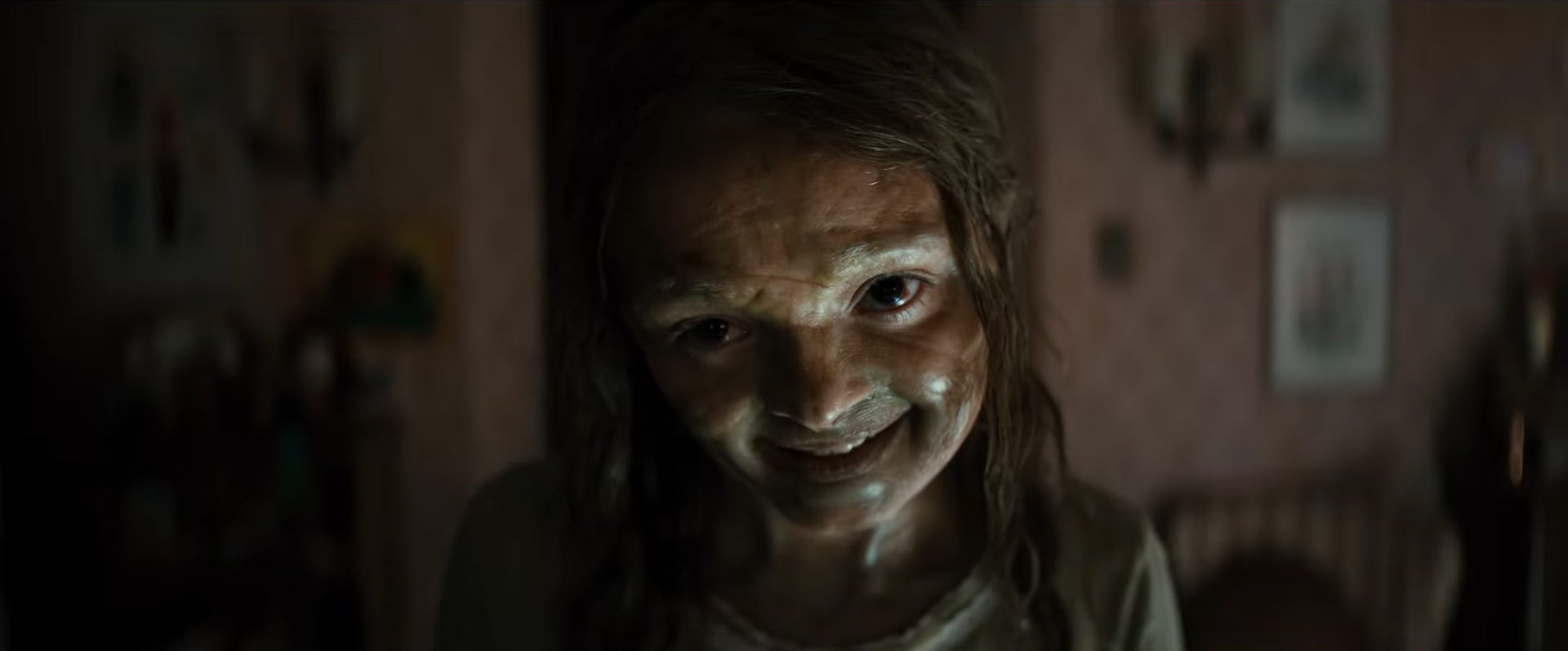
I’VE WRITTEN BEFORE ABOUT my critical hangups regarding children-in-peril films, so I won’t belabor that point here. But I feel the need to link to that piece and state, for the record, that Lee Cronin’s The Mummy is a film that is, at heart, not only about cruelty to children but kind of revels in depicting that cruelty. As a result, I must admit to not only not enjoying it, but also finding it vaguely repugnant.
The film opens eight years ago in Egypt, where we see an Egyptian family fall prey to something weird in a sarcophagus buried under their nectarine farm. Cut to an American family living in Cairo, where a strange woman abducts Katie (played as a child by Emily Mitchell) right out from under her dad, Charlie’s (Jack Reynor) nose. When he and his wife, Larissa (Laia Costa), bring the case to the Egyptian cops, they aren’t much help, though Detective Dalia Zaki (May Calamawy) promises she’ll get to the bottom of it.
She doesn’t, really; Katie eventually falls out of the sky and into her lap. Almost literally: A plane explodes and she’s found inside the creepy sarcophagus we saw before, horribly disfigured, all bent and gnarled. When Charlie and Larissa bring the girl (now played by Natalie Grace) back to their New Mexico home, weird things start happening. Weird, bad, grotesque things.
Just one small “for instance”: As mother Larissa is trimming Katie’s horrifically overgrown toenails, she hits a real tough one. Thick, black, disgusting. She gets a bigger trimmer, something you might pull from a toolbag, and really goes to town . . . only to tear off not only the nail but also a large flap of Katie’s skin, running all the way up her leg. With a wet thwap, blood flies across the room into nearby Grandma Carmen’s (Veronica Falcón) face. This is played for shock laughter, and some in my audience certainly tittered excitedly. Ha ha, look at the mutilation of this teenage girl. Teehee, she’s being flayed alright. This brand of disfigurement simply hits differently—and I would argue from my own experience in the theater, more off-puttingly—when you’re dealing with innocent children rather than adults.
The titular Cronin, who wrote and directed, really revels in this sort of nastiness; this film is, if we’re being generous, languidly paced (the official runtime is over 130 minutes, somehow), and very dedicated to showing this girl—as well as her younger sister and brother—in great distress. This is not new territory for Cronin, as his previous film, Evil Dead Rise, also spent a fair amount of time abusing the children at the heart of its story, but he had the decency to keep things moving in that picture.
Speaking of The Evil Dead, this new mummy movie owes less to Boris Karloff (despite the sarcophagus) than to Sam Raimi. The demon unleashed in Lee Cronin’s The Mummy is more an agent of chaos than anything else, infecting others in the family with bad vibes and general wickedness. We even hear a creepy old audiotape of a scientist explaining the monster’s origins. In fact, this isn’t a mummy movie, really: It’s a possession film. If not The Evil Dead, then The Exorcist—it’s certainly closer in pacing to William Friedkin’s masterpiece, and Regan’s (Linda Blair) ordeal is echoed in Katie’s—albeit a version of that film that takes faith less seriously and is thus less interesting.
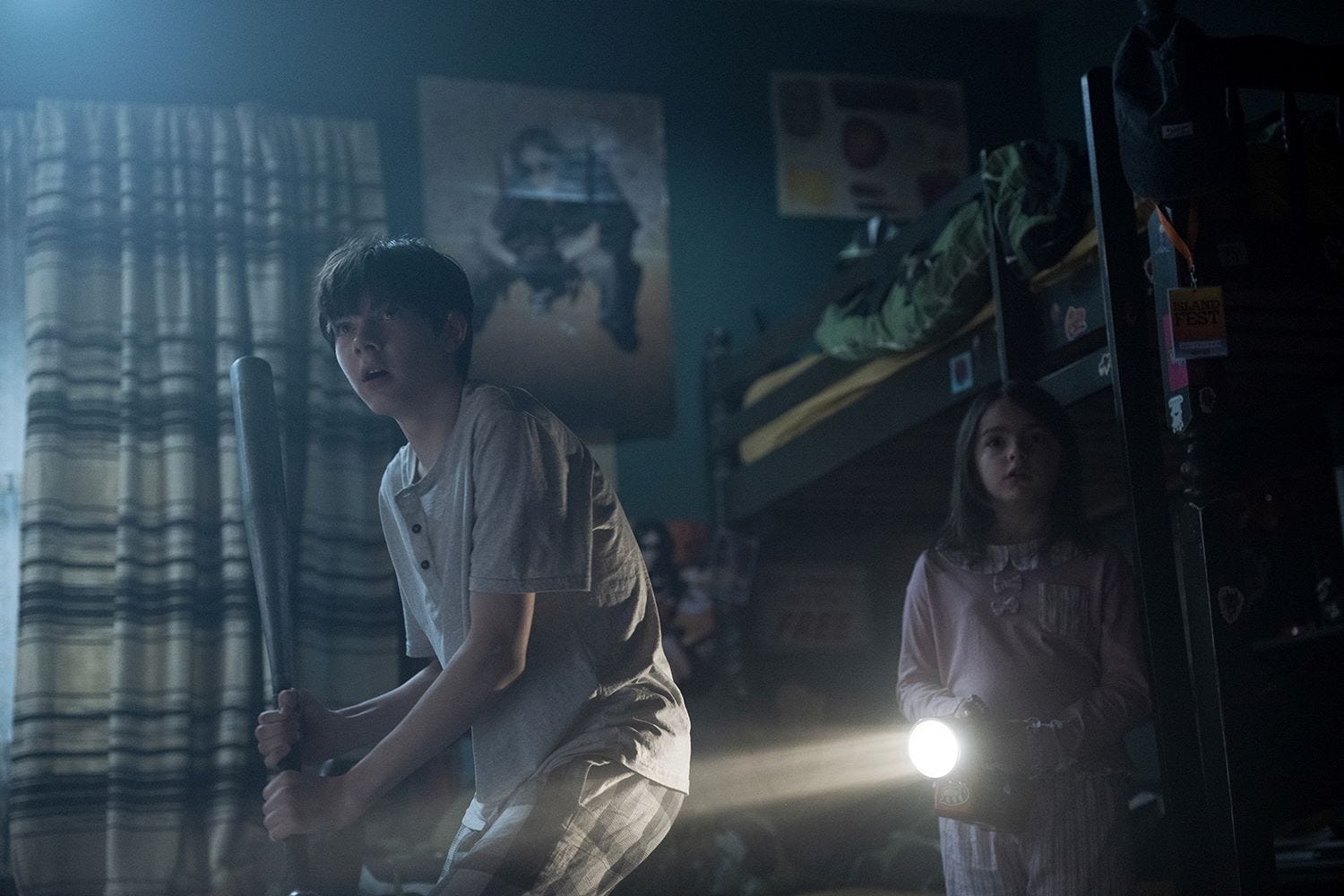
Look, I know I may just be a stick in the mud here; my audience had a good enough time with Lee Cronin’s The Mummy. They were laughing in all the spots that were meant to be laughed at as shock-horror; they seemed tense enough when Katie was scuttling through the walls of her family home, eating scorpions. But I found the whole thing rather distressing. The last time I felt this way in a theater was during last year’s Bring Her Back, the Philippou Brothers’ follow-up to Talk to Me.
Talk to Me is also a movie where children are in peril; some of them suffer quite horribly. But that film is also, in part, a sort of anti-drug parable. It’s a movie about kids partaking in risky behavior and, eventually, being punished for it. Bring Her Back, on the other hand, was a straightforward parable for child abuse, just a mean-spirited depiction of the destruction of an innocent that had the indecency to pose as a meditation on trauma. That’s the vibe Lee Cronin’s The Mummy brings to the party: mean-spirited destruction of innocence. And I simply don’t vibe with it.
Spoiler Alert: this is a contrarian's view point, and hence will probably not be to anyone's liking. But then, isn't the Bulwark a rather contrarian publication? [That's a rhetorical question.] And will anyone actually read this comment on a days-old article? Moreover, I feel compelled to represent!
Knowing that I was going to see the film on Friday night, I delayed reading Sonny's review until Saturday, and I'm glad I did!
I enjoyed the Mummy movie, except perhaps for the ending, in which [Spoiler Alert!] everyone more-or-less lives happily ever after. Not that there's anything *wrong* with living happily ever after, it's just that the ending normalized a film that otherwise seemed rather fresh - to me, anyway. [And hey, of course I have not seen all the films, so it could indeed be quite derivative of some that I have not seen!]
In particular, I enjoyed the special effects and being manipulated (*) by a sound track that definitely increased the "horror".
So here's my push back: let's face it: we all know that all these things that "happen" in the movie to our protagonist - in this case, a poor little girl - do not really happen in real life, umm-k? In fact, I'd guess that in real life the actress playing our Victim/Heroine - or at least her parents - probably made a nice chuck of change off the effort!
So I say, let's save the sympathy for real children that suffer real horrors, like Liam Conejo Ramos, the 5-yo whom ICE used to arrest his dad!
And now here's my question, for Sonny and all who agree with him: last night (Saturday 4/18) I watched Mean Girls for the first time. People still talk about it 20+ years later, so I figured it was time to learn what those who have seen it were assuming that "everyone" knows. It was ok; I gave it 7 stars on imdb.
Hey, I'm 71 yo now but I still remember the "horror" of High School and "Opinion Books" - what my fellow students in Huguenot High's class of '72 called books like the "Burn Book" in the movie. Yes, we had more than one of these and they circulated - they did not stay tucked away in one person's bedroom! Oh the horror, the horror!!
Do people who disdain mistreatment of child characters in movies look back at Mean Girls with similar distaste? [I'm genuinely curious, and open to nuance, but do not guarantee that I'll agree with you.]
Fwiw, asking for a comparison to Mean Girls is the real reason I wrote this looooooong comment.
(*) In the commentary track to an episode of Deadwood I learned that David Milch refused to use the soundtrack to "manipulate" emotions. I can dig that! But it made me more conscious of how soundtracks do this, and I dig that too!! To each their own, right? Fwiw David M. did not care for camera movements, either. Perhaps we can all agree that the things one learns by listening to commentary tracks - and reading reviews - can make life a lot more interesting, amirite?!?
Thanks for the warning.