

Children in Peril Are Powering Awards Season
Reacting to ‘Hamnet,’ ‘If I Had Legs I’d Kick You,’ and ‘Train Dreams.’

ONE OF MY QUIRKIER BELIEFS is that Rotten Tomatoes would be well served by adding a parental filter to its rating results. No, not of the sort that guides audiences toward “clean” films—I’m not worried about cursing and nudity sullying my ears and eyes—but one that gives viewers a sense of how parents will react to a movie like, say, Arrival.
If you haven’t seen Arrival, I won’t spoil it for you except to describe the opening five minutes, in which we see a mother birth, raise, and lose a daughter to disease, all to the emotional strains of Max Richter’s “On the Nature of Daylight.” This reverberates throughout the movie in interesting and surprising ways, but director Denis Villeneuve’s gut punch lands early and the ache lingers throughout. As the father of an, at the time, 1-year-old daughter, it was devastating, so much so that I simply could not trust my reaction to the movie as a whole. It’s either brilliant or manipulative or maybe both, but I don’t really know which or in what proportions. All I can do is react to it. As such, it’s probably best to consider the discussions below of the movies Hamnet, If I Had Legs I’d Kick You, and Train Dreams as not quite reviews but reactions.
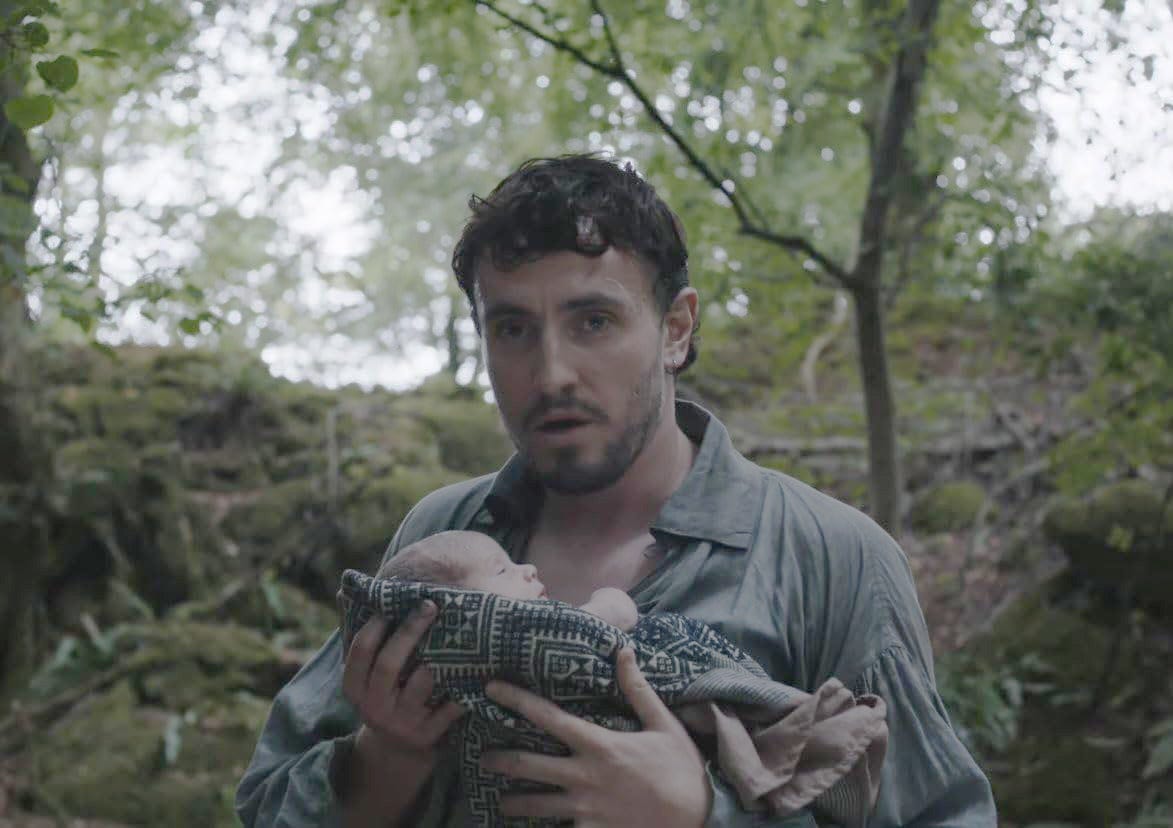
Max Richter rears his head again in Hamnet, Chloé Zhao’s story of the tragedy that resulted in William Shakespeare’s Hamlet. Will (Paul Mescal), as he is credited in this film, is a bit player on the stage here; this is a story about his wife, Agnes (Jessie Buckley), and their children, the eldest Susanna (Bodhi Rae Breathnach) and twins Hamnet (Jacobi Jupe) and Judith (Olivia Lynes). Agnes, who as a child learned the ways of forest witchcraft from her mother, is a falconer and a wiz with herbal medicines; her dreams have led her to believe that one of her children will die young, and she will do whatever she can to stop it.
I feel as though I am not spoiling anything here not revealed by the film’s trailer, but it must be said: This premonition is correct, and you might be able to guess which kid goes from the title of this movie or the plot of Shakespeare’s play, the greatest work of fiction in the English language, or even just its full title (The Tragedy of Hamlet, Prince of Denmark). Hamnet is about processing that grief, about how art can both help deal with that and transcend it, bringing the feeling of loss and loneliness to the world writ large. In this way, the story’s sadness is muted, if only slightly.
The film looks great. Zhao uses natural lighting, for the most part, from Will’s candle-lit scrawlings as he tries to bring the world of his mind onto the page to Agnes’s jaunts through the cloudy British countryside. The acting is superb. Mescal, who appears to be constantly on the verge of tears at the best of times, was horribly miscast as the Maximus replacement in Gladiator II but works perfectly here as the tortured artist with a playful side. Buckley, who tops most Oscar-watchers’ lists for best actress, delivers an impassioned and pained performance, one that conveys the joy and the sadness of parenthood. She swings between rage and resentment and remorse with ease, while never shrinking from the pricklier side of her forest-witch heritage. It’s commanding material; if you go to the movies to see real people experiencing real emotions, Hamnet is the movie for you.
But it’s a harrowing watch for parents with young children, a movie about the unthinking and uncaring world ripping babes from their mother’s bosom. Hearing a child plaintively scream “mama” in the throes of agony . . . it’s rough, bordering on emotionally unscrupulous. To be profound or merely profoundly distressing: that is the question. I’m not sure what Hamnet’s answer is.
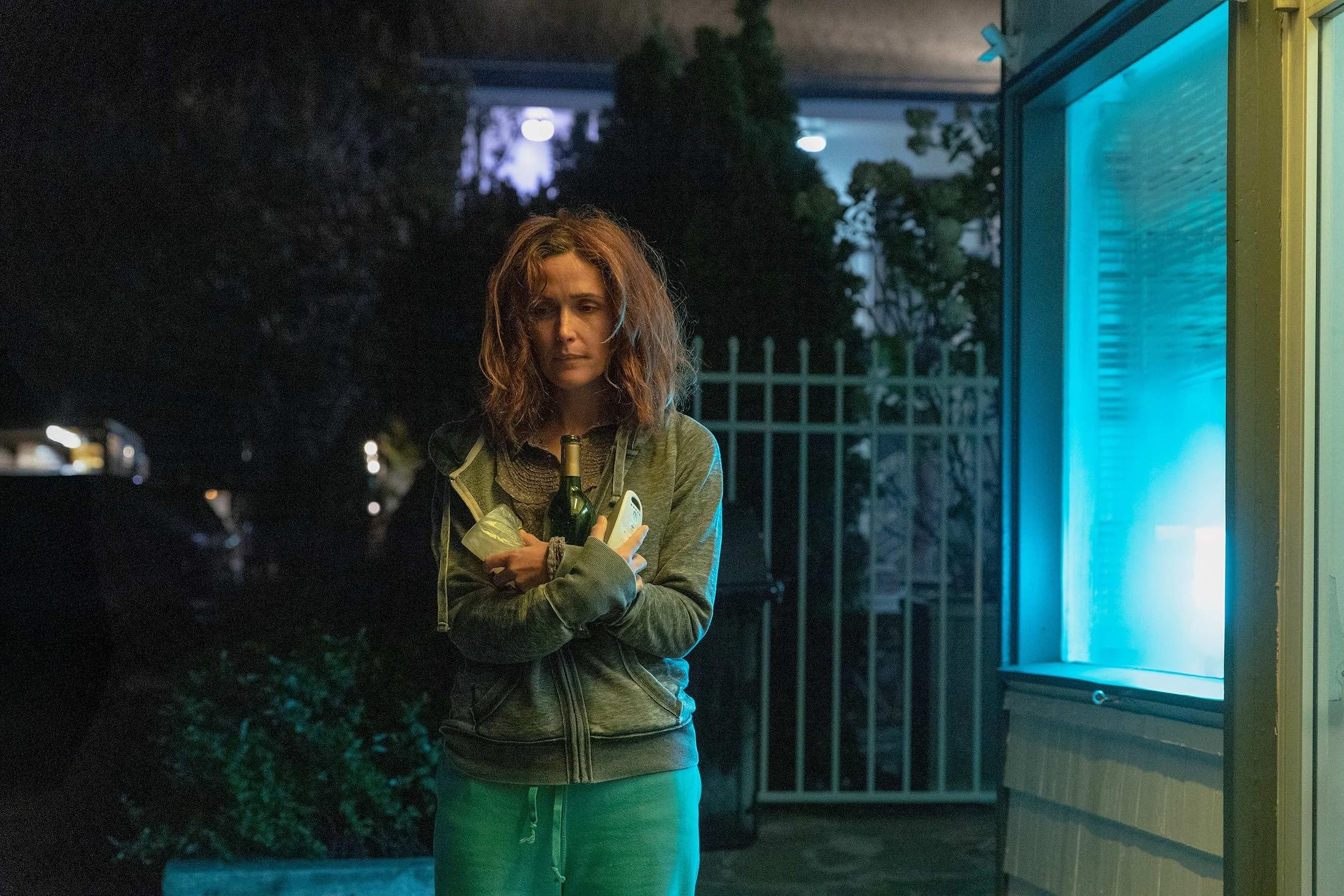
If I Had Legs I’d Kick You is also profoundly distressing, albeit for different reasons. As the film begins, Linda (Rose Byrne) and her daughter are rushing home through the streets of Montauk, trying not to drop their pizza. Cheese on the roof of the box is the least of their problems; it’s a different roof they need to worry about, as the ceiling of their apartment collapses, a flood of water pouring down on them.
Linda and her daughter have to move to a seedy motel while the ceiling is being repaired, which would be hard enough for a fully functioning family unit. But this family unit is not fully functioning. Dad (Christian Slater) is absent, captaining a ship on the coast. And daughter is sick, suffering from an eating disorder that requires her to be fed by tube at night lest she waste away. The tube needs to be reset at night, leading to Linda not getting sleep, leading to her drinking and smoking, leading to her getting less sleep, leading to her being dysfunctional at home with her daughter, at her job as a psychiatrist, and at the family therapy sessions she is supposed to be attending at the hospital.
Writer/director Mary Bronstein frequently shoots the film in closeup, the camera jittery and shaking, a more subdued Uncut Gems with a dash of magical realism. But the mood is the same, the tension is the same, and Linda’s attitude veers away from sympathy for her and toward something closer to horror: She resents her inability to help her child as well as her husband’s frequent absences; she believes she was not meant to be a parent, she doesn’t want this responsibility, and she is overwhelmed by all she needs to do. (This is also an idea running through the first third of One Battle After Another, and it’s a reason why that film’s coda, which is intended to give Perfidia Beverly Hills (Teyana Taylor) absolution for abandoning her daughter, undercuts the power of the preceding two and a half hours.)
This is not to say that parents cannot empathize with an overwhelmed adult; we’ve all been there at one point or another. But I do think it’s hard to watch Linda’s suffering onscreen because the parental instinct naturally veers toward protectiveness toward the child. Bronstein does something in this film that is, I think, designed to smother that instinct: She never shows us the face of the little girl, not until right at the end. She wants us to see her like Linda sees her: an attachment, something on the periphery. She wants us to hear the girl like Linda hears her: a hectoring voice, wheedling, clamoring for, e.g., a hamster that she immediately wants to get rid of.
Byrne deserves every plaudit she’s earned for her work in this movie; she is crushing in her overwhelmed sadness, a devastating portrait of barely functioning depression. But the formal trick simply didn’t work as I think it was intended: This is still, fundamentally, a child-in-peril movie, a film about a little girl who is frequently abandoned by her mother in ways that feel dangerous.
And that sort of thing is, in a way, almost harder to watch than the tragedy that befalls Hamnet. The world can be uncaring. A parent must not.
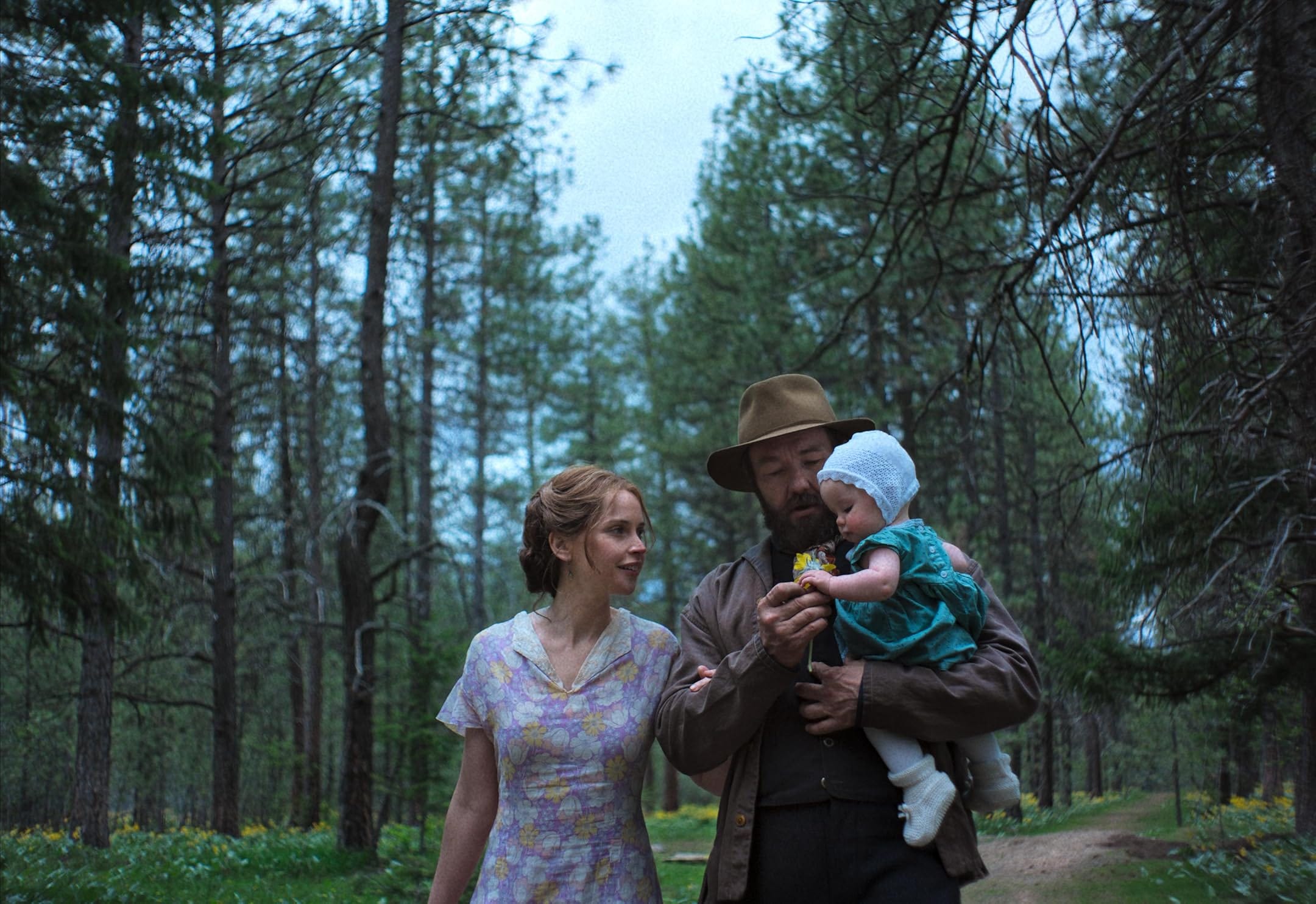
The world of Train Dreams is uncaring about the suffering of its protagonist, Robert Grainier (Joel Edgerton), and that’s kind of the point: History, the nation, rolls along, dragging people like Robert along.
Grainier, an orphan, was sent west as a boy, his name pinned to a shirt; in a cabin in the forest near where he disembarked he would die some eighty years later. Over that lifetime, he saw train tracks spread and cars come and rockets go to space; he himself was one of the men helping to build this progress, felling the forests that provided the timber for the tracks and trestles. Train Dreams is elegiac and impressionistic; not quite episodic, in the sense of a man telling stories, more like a man remembering sketches of memories as he shuffles off this mortal coil. This is another actor’s movie, and Edgerton anchors it with a sort of aggressive humility, allowing others (like Clifton Collins and William H. Macy in very brief roles) to bounce off him like rain splashing against a rock.
Clint Bentley, who directed and shares a screenplay credit with Greg Kwedar, has put together a film that is haunting in its simplicity, one of a man who is both adrift and transient, yet also rooted to a spot. The easy reference point for the tone and the style is Terrence Malick, at least in the sense that Grainier is immersed in, if not quite one with, nature: as a logger, he both respects and fears the forest, while the cabin he lives in with his wife, Gladys (Felicity Jones), and then their daughter, Kate, is rustic but homey.
Homey, yet often not home. Grainier spends long stretches on the road, cutting down trees and building train tracks. It is on one of these train-company endeavors that he witnesses a Chinese man lynched by a group of white railroad workers; unable to stop the laborer from being tossed over the side of a bridge, Grainier finds himself plagued by visions of the man as the years go along. Silently watching by a fireside, or near his bed. He feels haunted—by his inaction; by the sins of the nation he is literally helping to build—and unsure of himself.
Unsure and ultimately lost, particularly after his wife and child are taken by tragedy while he is on one of his logging trips, Grainier is simply unable to move on. Move on to what? one might ask. He has no other family; his friends were all transient loggers. And so he hunkers down—telling himself that he is waiting for his family to return, even though he knows that’s not likely in the cards—and the world passes him by. This is the ultimate, final form of the lost-child movie, the recognition and the realization that, on a certain level, life is over when a child goes. It severs a thread to the future; in a very real way, it leaves you, the bereaved, futureless. It is existential dread that I don’t know how I’d face.
Train Dreams is not a horror movie, to be clear, despite its ghosts and its anguish. Will Patton’s voiceover narration gives the thing a sense of homey comfort, a ‘that’s just how it is’ quality that keeps despair from settling into the picture’s bones. A nation rolling along, with one man’s life and tragedies both background noise and an entire universe all at once. It is a cinematic depiction of history. No more, no less. And it’s one of the best movies of the year.
Since these are times to be thankful, Sonny you're the best movie critic I've ever read, and you should get more likes from Bulwark subscribers.
Train Dreams was not on my list but is now.
The protagonist is the child in peril - he himself an orphan separated from family and carrying that trauma. I am interested in how the film deals with that compounded by loss of his child. Too often our society is uncaring about the suffering of adults who have experienced childhood trauma (orphans, adoptees…) and the generational trauma that follows. Thanks for bringing this film to my attention.