Let’s Re-Do the Math on Ukraine
The deadly arithmetic of Russian casualties may add up to Putin’s defeat.

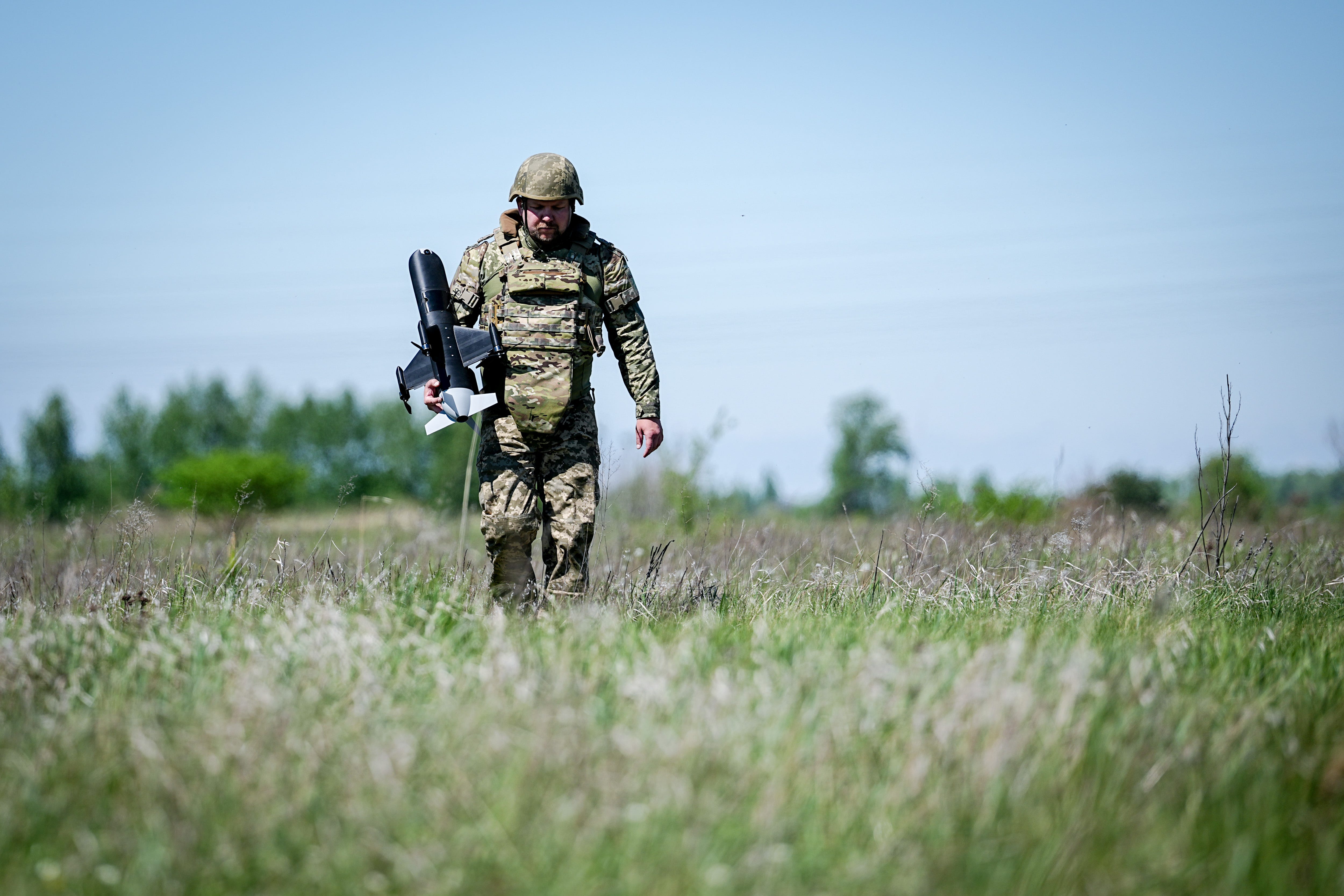
IN 2024, REPUBLICANS WHO WERE SOURING on Ukraine came up with lots of arguments for why the United States should cut off its support for the besieged democracy. They ranged from allegations that most of the aid was gobbled up by waste and corruption to warnings that helping Ukraine would lead to World War III to “we’re ignoring our own people’s problems.” Each of these arguments was flawed, but perhaps none exploded quite so spectacularly as the one championed by JD Vance and adopted by President Trump: that Ukraine is doomed to lose anyway, so American aid is a waste.
Vance became the chief proponent of this argument when he published an op-ed in the New York Times under the title “The Math on Ukraine Doesn’t Add Up.” His argument was simple: “Ukraine needs more soldiers than it can field, even with draconian conscription policies. And it needs more materiel than the United States can provide.” In other words, defeat was certain and “This reality must inform any future Ukraine policy, from further congressional aid to the diplomatic course set by the president.”
President Trump, in his less articulate fashion, repeated this same argument to Ukrainian President Volodymyr Zelensky during the infamous February 28, 2025 Oval Office ambush: “You’re, right now, not in a very good position. You’ve allowed yourself to be in a very bad position,” Trump told Zelensky. “You don’t have the cards right now.”
This argument is worth reexamining not only because it proved so demonstrably false, but because the Russian government has dedicated such effort into ensuring that Trump still believes it. “Russian President Vladimir Putin has worked hard to convince the world that Ukraine’s defeat is inevitable when it is not,” reports the Institute for the Study of War. “His biggest success has come not on the front line but in the battle of narratives.”
As recently as December, Trump said that Russia had the “upper hand” in Ukraine, adding, “At some point, size will win.” If that was true then, it certainly isn’t now.
Last weekend, at Russia’s annual Victory Day celebrations commemorating the end of World War II in Europe, Putin suggested that the war in Ukraine “may be coming to an end.” What he meant is open to varying interpretations, but whatever his intent, that “end” is clearly not the inevitable Russian victory Vance, Trump, and others have clearly had in mind.
WHEN VANCE PUBLISHED THAT New York Times article in 2024, he was thinking in terms of expensive and/or outdated U.S. weapons systems. He focused on surplus military equipment sent to Ukraine billed at the sticker price, such as 155-millimeter artillery shells. But, even as far back as May 2023 it was clear that the war was increasingly using drones, and that high-end systems and artillery would matter less over time.
Ukraine still needs a few high-value American systems, like PATRIOT missile interceptors used for defense against Russian Kinzhal and Iskander missiles. But almost all of the military items that Vance argued the United States would have to provide turned out to be largely irrelevant. Other particularly expensive U.S. systems, like Abrams tanks, Switchblade drones, and guided artillery have largely underperformed on the battlefield.
At the start of the war, Ukraine had to make do with whatever they could get their hands on. This was mostly “exquisite” Western weapons systems, but older and surplus model. By definition, Ukraine was getting the things the United States and other countries were most willing to part with. Since then, Ukraine has built up its own, far more cost-effective capabilities. As the effectiveness of PATRIOT has dropped over time, Ukraine has increasingly been using electronic warfare to severely degrade Russian Shahed drones, Kinzhal missiles, and thousands of precision glide bombs. They have also developed numerous low-cost methods for shooting down the swarms of Shaheds that Russia sends by the thousands every month.
Ukraine’s most serious disadvantage is in manpower. Vance portrayed this problem as insurmountable, but Ukraine has at least mitigated it to the point that Russia struggles to advance. They’ve done so by making leaps ahead in FPV drone technology and manufacturing. Ukraine’s use of drones in the air and on the ground means that, in the brutal and bloody arithmetic of war, Ukrainians now kill several Russians for every loss of their own. Russia, for the first time, is losing more troops than it is recruiting, while the quality of recruits fall—so Russia faces a manpower shortage. “Russia has nearly four times the population of Ukraine,” Vance declared in 2024. It doesn’t seem to have done them much good since then. At the same time, Ukraine’s reliance on drones has drastically reduced its demands for infantry, with multiple soldiers echoing the sentiment that the ubiquity of drones “means we don’t have infantry.”
Ukraine’s goal is to produce 7 million short-range drones this year, and 10 million thereafter. This number is crucial: The Ukrainians estimate that with that many drones, they can reach their goal of causing 50,000 Russian casualties per month—at which point they predict the Russian Army will lose overall combat effectiveness.
HERE IS WHERE THE MATH GETS INTERESTING.
Anywhere between 70 and 96 percent of Russian casualties are now caused by drones. In March, Zelensky said that among Russian forces, “out of 100 percent of losses, 62 percent are killed and 38 percent wounded.” This ratio is astounding; in modern warfare there is usually a killed-to-wounded ratio of between 1-to-3 and 1-to-5. Russian losses nearly invert this ratio due to their unsupported infiltration tactics, the lethality of drones, lack of transportation, poor battlefield medicine, and enormous “gray zone” on either side of the front lines where movement is all but impossible because of the profusion of drones.
The current rate of about 1000 total Russian casualties per day (based on Ukrainian estimates) translates to 620 dead per day, 18,600 per month, and 226,300 per year. If Ukraine can achieve their goal of 50,000 Russian casualties per month, that translates to 372,000 Russians killed in action per year. Reaching that goal is predicated on boosting drone production to 10 million FPVs per year.
Ukraine has successfully expanded its military production infrastructure to the point that they have significantly more capacity than money to build munitions. This is why Ukraine is offering to export weapons during the middle of the war—to raise money for their own needs. According to Zelensky, “A surplus of production capacity in Ukraine for certain types of weapons reaches 50 percent, and this is a direct result of our state investment in Ukraine’s defense industry and our cooperation with partners.”
The big takeaway for the United States should be that financial military aid could go directly to producing drones that are far cheaper than those made here, and also far better. Ukrainian drones cost between $400 and $700, if they’re equipped with thermal vision. Splitting the difference gives an average of about $550 dollars per drone. The total cost of 10 million drones comes to about $5.5 billion. Subtract the 5 million drones Ukraine is already able to produce on its own, and the price tag for reaching the 10 million–drone goal falls to $2.25 billion. That’s not a lot, considering the military and economic damage they could do to the Russians.
Russian military signing bonuses are very high—estimated to be about $28,850 on average—and they’re rising. Death benefits are even higher: One Russian economist put it at $150,000 in salary and death compensation, excluding other bonuses and insurance payouts. Thirty-eight percent of Russia’s $70 billion dollar budget for military pay, and 14 percent of the overall defense budget, goes to death benefits already. As a back-of-the-envelope estimate: Each dead Russian soldier costs Russia $178,850—the total salary and death compensation plus the cost of recruiting a replacement (not counting training and equipping costs). Multiply that by 372,000 dead soldiers per year, and Russia has a whopping $66 billion allocated to death benefits and recruitment bonuses, with only $4 billion of their military budget left for everything else—and that’s just to keep their army at its current size, before factoring in desertions, injuries, defections, and any other forms of attrition.
Bottom line: a $2.25 billion investment in Ukraine’s drone production by America could, in a year’s time, result in a $66 billion drain on Russia’s budget. Add to this the crippling damage to Russia’s economy as they struggle to replace the huge loss in their work force, and the benefit is even greater. This is a twelve-to-one return on investment in the first year alone.
For further context, Russia’s 2026 military budget is projected at 14.9 trillion rubles, or about $190 billion, representing approximately 6.3 percent to 7.5 percent of its GDP (depending on what the GDP ends up being). This wartime budget prioritizes sustained, long-term conflict, focusing on weapons procurement, personnel costs, and defense industry support. For reference, the Soviet Union was spending 7.7 to 11.5 percent of GDP on the military in 1988, right before it collapsed. (Soviet defense spending and GDP ratios are still difficult to estimate because both the numerator and denominator are so difficult to specify.)
It’s also been noted by numerous Western outlets that the state of the Russian economy is, in the words of one Russian official, “not easy.”. There are some indicators, like the rate of non-payments, suggesting that their economy is already breaking down. As the military situation and economy deteriorate, a leaked European intelligence dossier suggests that Putin is growing increasingly anxious and paranoid. It seems possible that a nudge of only $1.65 billion in aid to cover 3 million more FPV drones (compared with 90 billion Euros being offered in loans by the EU) could put even more significant strain on the Russian economy. Putin probably isn’t wrong to be worried: Dictators who lose wars and collapse their national economies generally come to very bad ends.
PUTIN CLEARLY DIDN’T—AND DOESN’T—do the math when it comes to his Ukraine policy. He thought he could conquer a country of 40 million people with fewer than 200,000 troops. Now he ignores dire economic news as just some details for his central bank chair to handle. His policy is motivated not by rational calculation, but by interpretations of history, lust for power, and chauvinism.
Vance claimed to have done the math, but clearly he started with his preferred policy and fished around for numbers to support it without developing any real understanding of modern warfare. The moral, political strategic, and economic cases for supporting Ukraine remain as strong as ever. It’s Vance’s math that hasn’t held up.
 | A guest post by
|