
1. Power
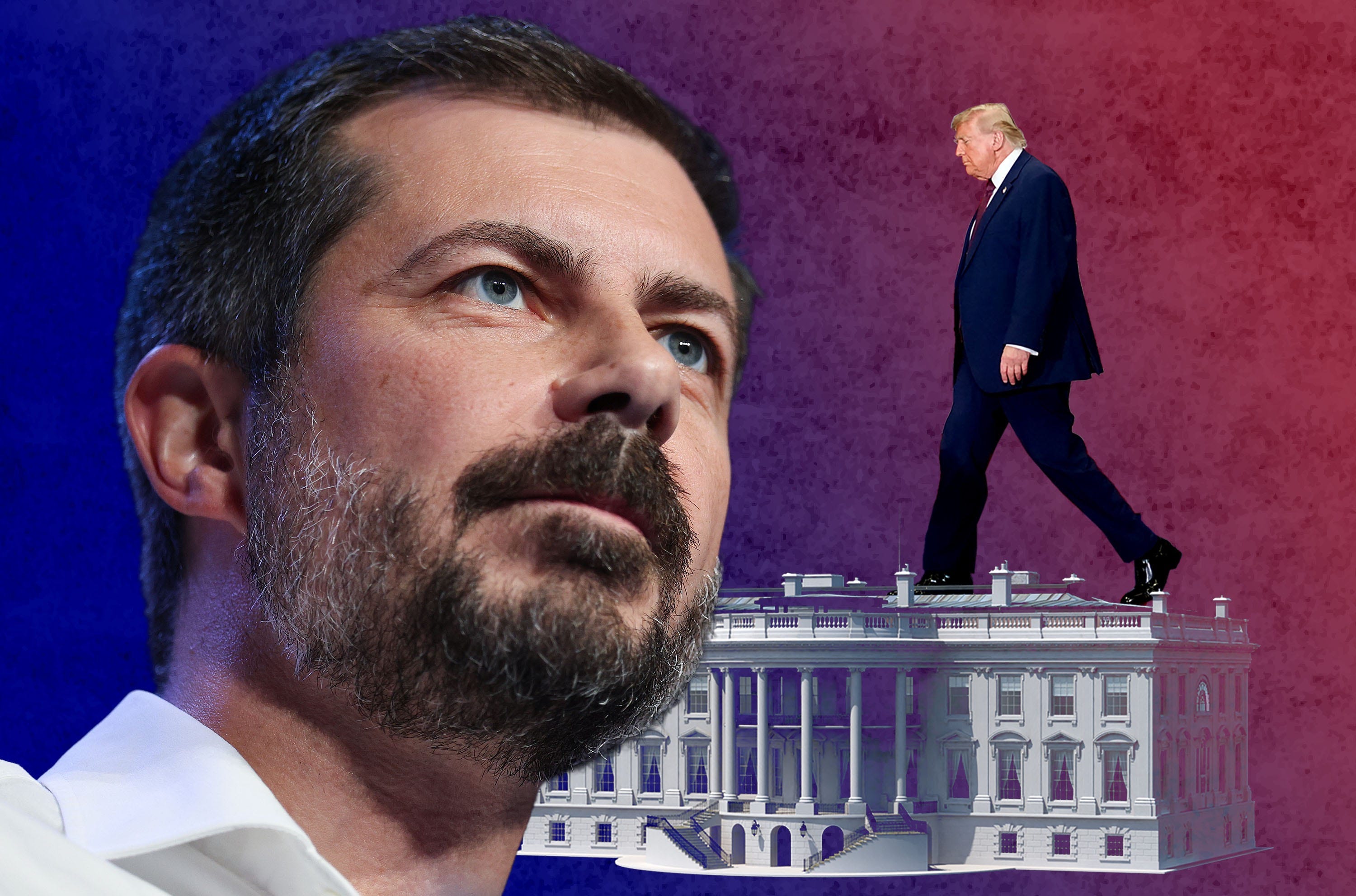
Tonight the president of the United States will give a big speech kicking off the Great American State Fair. It will be an imperial performance. Donald Trump does not view himself as an elected representative or head of state. He sees himself as the embodiment of the state. “America,” in his mind, is interchangeable with his person. L’État, c’est moi.
This is not just Trump’s private understanding. Over the last decade he has willed the proposition into a rough-hewn reality.1
Today I want to talk about Pete Buttigieg and the difficulty in climbing down from this spot.
Secretary Mayor Pete did a long interview with NOTUS and it’s worth your time. The main thrust of it is that he says his experience in the Biden administration “radicalized” him.
Here’s his case, in brief:
I believe very strongly that there’s no going back. It is not possible, or even desirable, to try to restore a previous status quo. . . . I worry that there’s going to be a strong temptation in my party to adopt a kind of return-to-normalcy agenda. . . .
I think that if a return to normalcy was possible or workable, then the last administration would have achieved it.
What he means is that there is a need not just for specific policy action, but structural, institutional reform.
We talked about this a little on yesterday’s Next Level, and I’m hoping to dive deep into this with Sarah in the Secret Pod on Friday, because here we have Sarah’s favorite guy in the world sounding like me. What will she do!
But I want to focus on a contradiction Secretary Mayor Pete surfaces later in the conversation:
Yes, I believe that there needs to be a more restrained executive branch, but I think we’re asking the wrong question if we’re just saying, “Should the executive branch do more or do less?”
To me, the executive branch needs to become both more and less powerful. It needs to become more capable when it comes to things like confronting inequality and standing up for the little guy and addressing fraud and misbehavior by powerful organizations and corporations. And it needs to become less powerful when it comes to things like surveillance and intimidation and monitoring and restricting speech.
This sounds nice as a piece of rhetoric. How is it viable as a blueprint for reform?
I only see two pathways. The first
Join Bulwark+ to unlock the rest
Become a paying member of The Bulwark to get access to this post and other subscriber-only content. A subscription gets you:
- Unlimited access to articles and newsletters including The Triad by JVL and Receipts by Catherine Rampell.
- Ad-free editions of our shows (with transcripts) and member-only shows like The Secret Podcast.
- Plus community chats and commenting features. Your support helps keep our work sustainable and available to those who cannot afford a membership. Cancel anytime.