“Military” and “Foreign Policy” Are Not Magic Words to Give the Government Unrestrained Power
And the courts should make that clear.

UNDER THE U.S. CONSTITUTION, courts serve as a vital check on executive power. The Supreme Court may soon consider whether that check should be removed each time the president utters the magic words “military” and “foreign policy.” It should reject this authoritarian power grab.
To start to understand why, let’s imagine two scenarios.
Scenario one: You are a U.S. citizen. And one day, the U.S. Army busts down your door, claims you are an enemy combatant, and ships you off to Guantanamo Bay. Your lawyer then goes to court to try and free you.
Scenario two: You are a general in the Russian military. You do not like some American military deployments supporting NATO in Eastern Europe and think they were not properly authorized by Congress. You file suit in the United States, seeking an order for those troops to be sent home.
Both these cases involve issues of the military and foreign policy. Traditionally, courts are wary of involving themselves in these areas, reasoning that the Constitution primarily leaves these delicate matters to Congress and the president. Indeed, the example of the Russian general is one where U.S. courts would never get involved. But that makes it a bit of an outlier. The other imagined example, that of the U.S. citizen in Guantanamo Bay, is similar to a real 2004 case where the Supreme Court ruled that a U.S. citizen “enemy combatant” had a right to challenge his detention, even when he was connected to the 9/11 attacks.
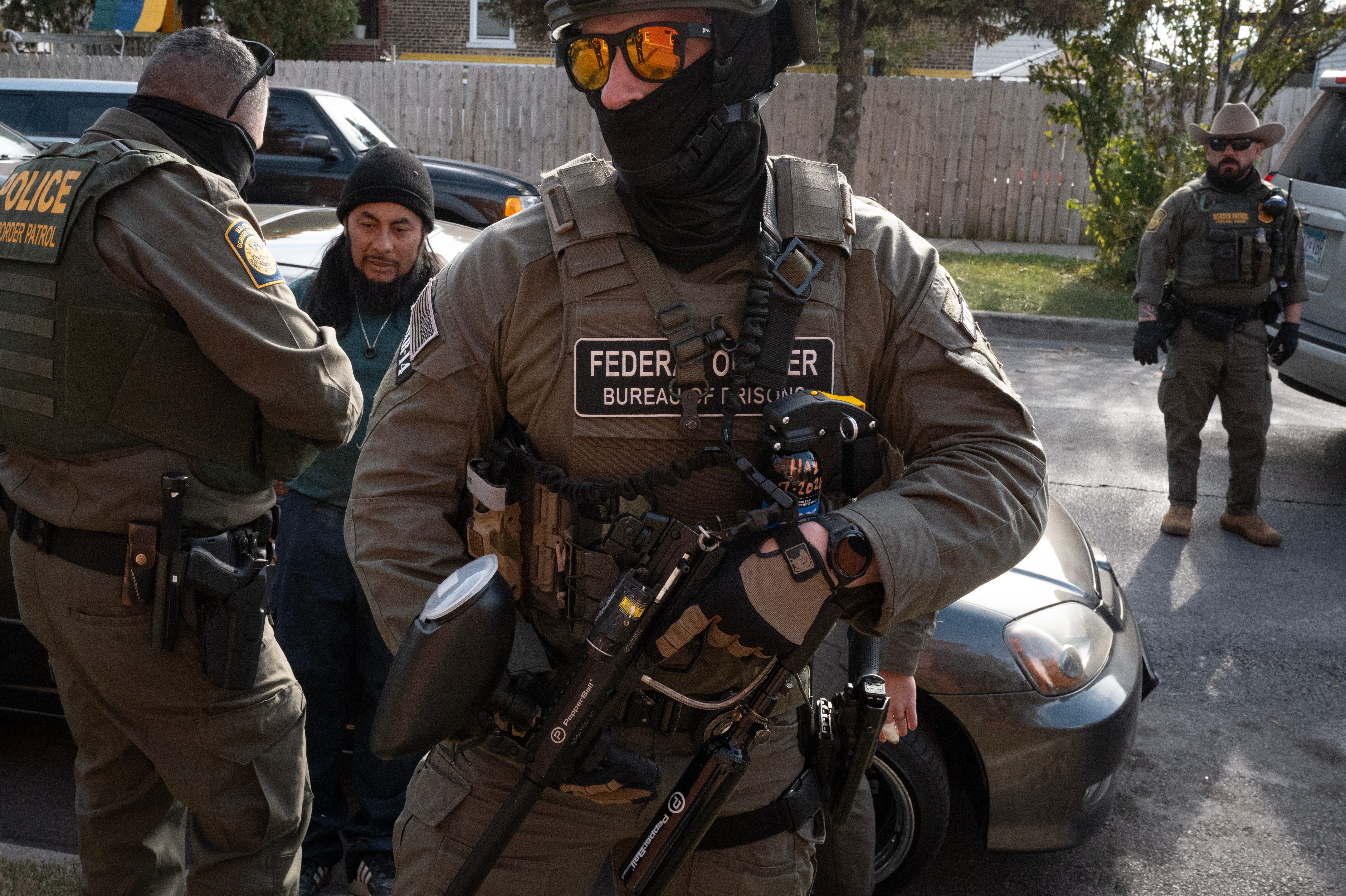
“Military” and “foreign policy” are not magic words that automatically get the government out of court. However, similarly to what the Bush administration claimed during the War on Terror, the Trump administration is advancing that argument in various contexts, from deportations to sending the National Guard into cities that have not requested them. And some judges want to submit to this “magic.” The Supreme Court should shut this hocus-pocus down before it unleashes unrestrained power in the name of “judicial restraint.”
You can understand why courts are hesitant to wade into some military and foreign policy issues. If soldiers are actively fighting on a foreign battlefield, it hardly seems practical for a judge to order them to stop. The courts have said this kind of thing is a “political question”—that is, one that must be left to the two elected branches of government, the legislative and executive. That said, even in this area, judges haven’t been monolithic.
An ongoing battle in a foreign land is an extreme example of what has customarily been framed as a “political question.” But when you pull away from the edge, you quickly see that the courts are frequently involved in foreign policy and military questions. For good reason. Here are just a few examples: The Constitution itself explicitly gives the Supreme Court jurisdiction in cases involving ambassadors, one of the most politically fraught positions in international affairs. The military can prosecute its own members via courts martial, but those cases are appealable, ultimately to the Supreme Court. And in one of the most important cases involving the president’s powers as commander-in-chief, the Court told President Truman that he could not seize steel factories to help with the Korean War effort. The rule of law and separation of powers require courts to keep their noses in the other branches’ business, even when it comes to soldiers and foreigners.
Some current judges seem to disagree. Take the current rollercoaster ride of attempts to deport immigrants. One tactic is invoking the rarely used Alien Enemies Act to allow the deportation of Venezuelan gang members without the usual (already minimal) process. An appellate judge in Texas said the president’s invocation of the act was categorically unreviewable. The issue is now before the judge’s full federal appellate court.
Or take the sending of out-of-state National Guardsmen to Portland, Oregon. An appellate judge said not only were some violent actions of ICE protesters a sufficient excuse for the president to send the guard in, but the whole question shouldn’t be addressed by courts in the first place even if an order is made in bad faith.
This is essentially the power to impose martial law—unreviewable discretion to use the threat of foreign invasion or the fear of domestic disruption to imprison without trial and send soldiers into peaceful streets in the homeland. Again, the arguments are not so different from those used by the Bush administration during the War on Terror. At least then, though, there truly had been a foreign attack, and we were later fighting multiple real wars. Even so, through several rulings, the Supreme Court defeated that administration’s attempts to opt-out of the courts.
Back in the present, the question of National Guard deployments is now at the Supreme Court, through a challenge to the Guard’s use in Chicago. The Court just asked for additional briefing in that case. That is a hopeful sign that it won’t just roll over to presidential decree. Related issues will follow.
In these cases, the courts should serve as a check on executive overreach—even when presidents wave their hands while pronouncing the “magic words”—and not treat everyone like a Russian general whose legal claims are not justiciable.
 | A guest post by
|