Mixed Signals from Washington Cost Lives in Ukraine
Dithering, delaying, and doubting only invite Russian attacks.

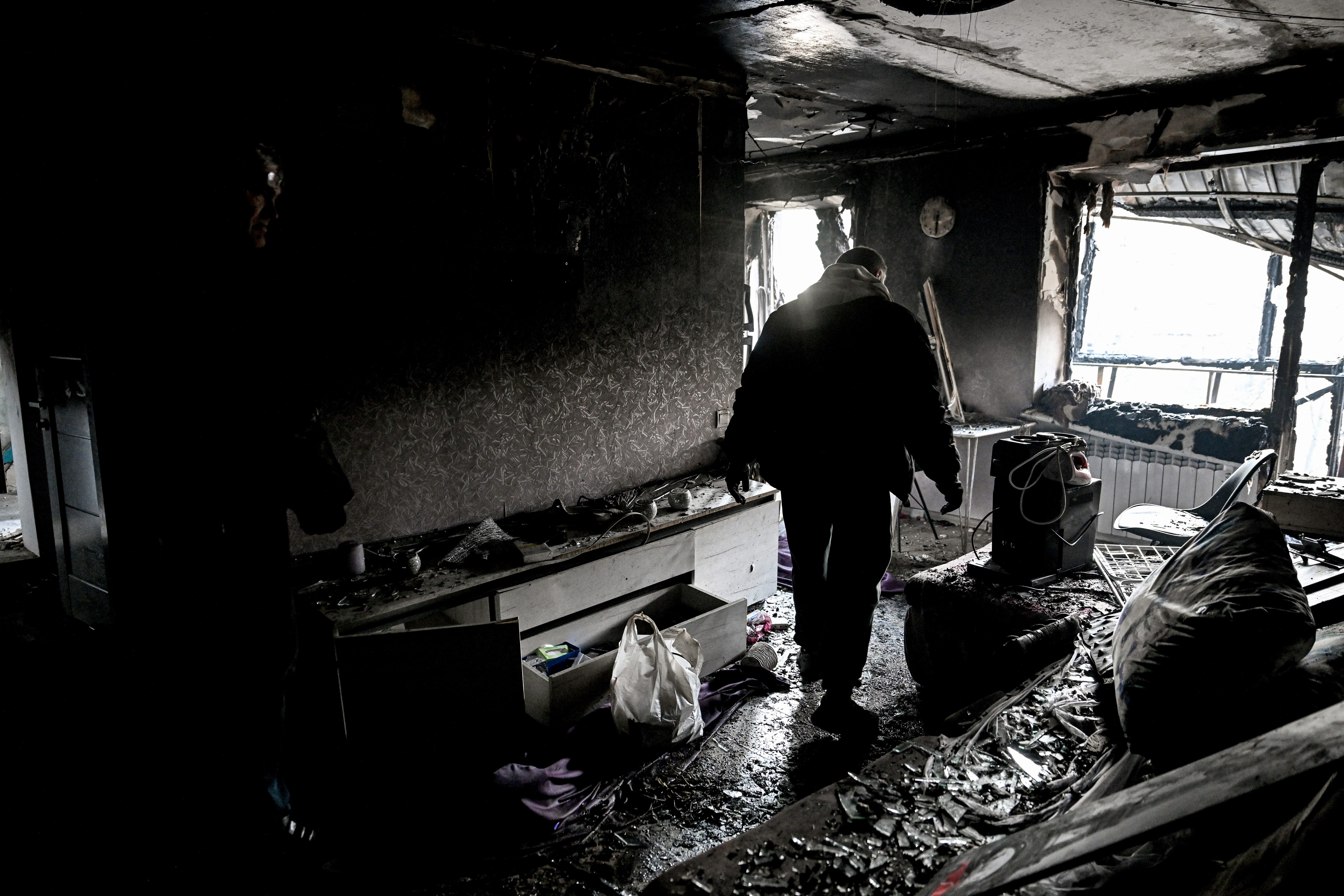
IN THE EARLY MONTHS of Russia’s brutal invasion of Ukraine, I wrote and commented on the status of the war almost constantly. The lines moved, the images were raw, operational goals on both sides changed, and the moral calculus seemed obvious: an unprovoked war, a people resisting, the West scrambling to help. Recently I’ve written less—not because the fighting has paused or because I’ve lost interest, but because the story has become harder to tell: The battlefield is still a slugfest, but the politics around it change week to week, forcing Kyiv and Europe to improvise constantly.
Analytical outfits like the Institute for the Study of War continue to deliver indispensable, granular maps and strike-pattern analysis. Their work is the very best barometer most have for how units are moving, the gains and struggles of each side. But the ISW maps and narratives, excellent though they are, don’t fully capture what I’ve seen during war: the moral complexity, the fatigue, the human calculus of commanders moving civilians, burying neighbors, or deciding whether to hold a ruined apartment block or trade it for a safer posture elsewhere. The human element—endurance, trust, despair, courage, will—shapes outcomes in ways charts and sterile reports do not show.
To make sense of the fighting, it helps to be explicit about what each side wants. The Russian objectives, I concluded early in the war from Moscow’s moves and targeting patterns, are all geared toward destroying a democratic Ukraine. Per the Ends-Ways-Means model used by the U.S. military, that means Russia wants to remove Ukraine’s government in Kyiv and replace it with a puppet regime, destroy the Ukrainian armed forces as a credible fighting institution, subjugate the population through terror and occupation, and secure control of the Black and Azov Sea ports to establish a continuous land corridor to Crimea. Beyond the map, those Russian actions also have the effect of fracturing Western cohesion, resulting in a weaker, divided NATO and a less engaged United States.
While Putin has not clearly stated Russia’s war aims (what I’ve listed above is my assessment), Ukraine’s strategic aims, as President Zelensky has stated repeatedly, are clear. Kyiv seeks to sustain a democratic government that is accountable to its people; to maintain sovereign borders and retake occupied territory; to hold and defend decisive points that protect the population and preserve military options; to shield civilians from the war’s worst abuses; and to strengthen and institutionalize alliance support so that partnership with the West is more durable, not transactional. A year into the war, Zelensky added that Ukraine also insists on accountability: returning kidnapped children, prosecuting war crimes, and ensuring that aggression has consequences.
When you put those goals side by side, the conflict becomes more intelligible. Russia’s moves are not random; they fit a campaign to dismantle Ukraine’s ability to remain a sovereign democracy and to rewrite the regional security order. Ukraine’s actions are defensive and aspirational—holding ground, preserving institutions, and making sure that any negotiation would occur from a position of strength rather than surrender.
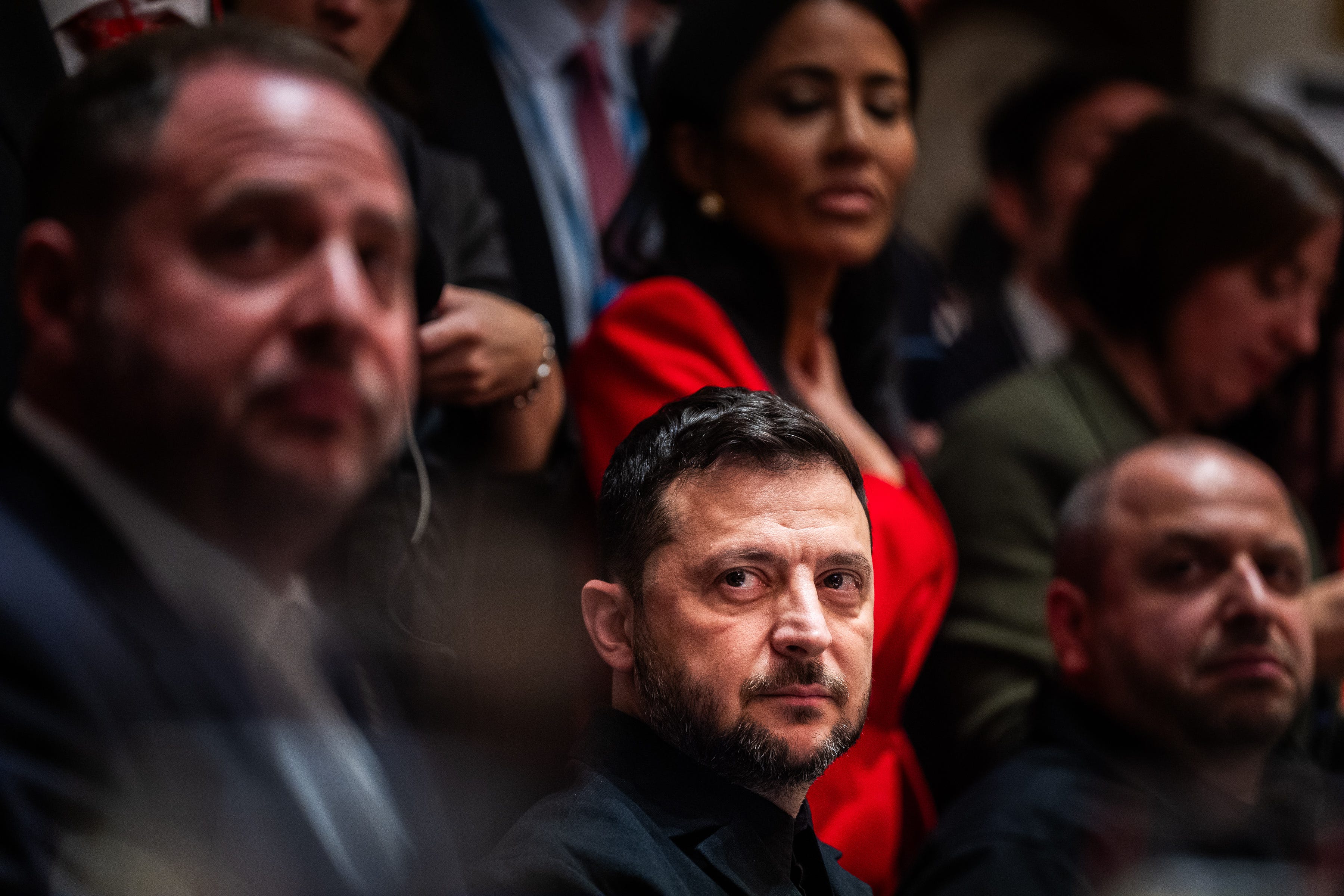
That’s why the recent discussion over additional long-range capabilities and timing of their delivery matters so much: It’s not just the issue of the use of one type of weapon or the prestige of a government in Washington. It’s whether Kyiv can keep its state functioning while diplomacy or negotiations are considered.
The recent conversation has centered on the delivery of Tomahawks. Call them what you like—a missile or a lever—what matters is how the promise or prospect of precision deep-strike capability changes strategic calculations, much like the delivery of HIMARs or ATACMs early in the war changed the tactical battlefield.
The Tomahawk is, in layman’s terms, a pilotless jet that travels low and quiet, reading the ground with GPS like a careful driver reads a road, slipping beneath radar, avoiding air defense, and arriving precisely where it was aimed. Launched far behind the front, it can hit hubs that feed a frontline—fuel depots, ammunition stacks, drone-manufacturing facilities, command nodes. For Ukraine, that reach would mean Moscow could no longer assume any rear area is untouchable. That raises the price Moscow pays for massing forces and keeps lines of supply and repair in jeopardy.
While the HIMARS was a tactical tool, the Tomahawk is a strategic signal. President Zelensky said this week that every time Washington “pauses or waffles” on providing Tomahawks or other long-range precision weapons, the Russians “mount more attacks.” He’s not speaking figuratively. Over the past eight months—coinciding with the Trump administration’s inconsistent messaging on support—Russia has conducted more strikes on Ukrainian civilians and infrastructure than during any comparable period of the war. Those attacks spike or fade depending on the tone coming out of Washington. When the United States hints that it might hold back or reconsider, bombardments increase almost immediately, as if the Kremlin is testing how far it can push before it meets resistance. When the United States sends clearer signals—approving air defense packages, for example—those same strikes temporarily dip. It’s a grim but revealing pattern: Putin reads political hesitation as military opportunity. Anyone who has dealt with Russia and Putin over the past quarter century has seen this pattern before.
In practical terms, this means American rhetoric doesn’t just shape diplomacy; it shapes the rhythm of the war itself. Russian planners watch press briefings and tweets as intently as they monitor radar returns. They calibrate escalation to the tempo of U.S. ambiguity. That’s why the debate about Tomahawks carries consequences far beyond their range or explosive yield. If Kyiv had that capability—or even a guaranteed commitment to it—Russia’s commanders would have to disperse, delay, and defend their rear areas, slowing the tempo of attacks and reducing their capacity to hit cities like Kharkiv, Odesa, or Zaporizhzhia. In the absence of that clarity, they continue to act with impunity, committing more war crimes by killing more civilians.
DURING MY YEARS COMMANDING U.S. Army Europe, I trained Ukrainian forces and saw who they were as a military and as a people. They understand deterrence not as theory but as survival. When they know a technological system is coming, they adapt their operations to use it effectively; when they’re left guessing, they go on the defensive.
The stakes of American indecision, therefore, are measured not in diplomatic subtlety but in lives lost and towns erased.
For the West, this is the moment to match declared ends with means and ways. If our stated purpose is to ensure Ukraine’s democratic survival and hold aggressors accountable, then the tools—long-range fires, air defense, intelligence sharing—must align with that purpose. To do less is to tacitly concede part of Russia’s aim: to normalize aggression by exhausting attention spans. And timing matters. Russia is again targeting Ukraine’s energy grid ahead of winter, seeking to freeze civilians into submission. The difference between pre-positioned support and delayed delivery could decide whether millions of Ukrainians face darkness and cold or endurance and hope.
ISW’s latest reports describe renewed Russian brutality in Pokrovsk, where civilians were executed by a Russian reconnaissance group. Those of us who’ve seen war’s aftermath know that these aren’t isolated atrocities—they’re part of a doctrine of terror designed to break will. Each time the United States blinks or sends mixed messages, it grants that doctrine another day to work.
This is where we must speak out. In 1944, Dwight Eisenhower faced his own kind of coalition anxiety before D-Day—different in nature, but familiar in its challenge. He knew that Britain, the Free French, and the Americans didn’t just need coordination; they needed shared confidence. Every signal mattered. Eisenhower’s words were deliberate, his demeanor steady, because he understood that alliance cohesion wasn’t built in moments of victory, but in the uncertainty before it. Two decades later, during the Berlin Crisis, John F. Kennedy learned a similar lesson: that the clarity of America’s commitment—spoken firmly, without bravado—could prevent escalation. His phrase “firm and friendly” captured what deterrence really means: resolve communicated with restraint.
The same principle applies today. The West’s credibility depends on consistency—clear intent, sustained support, and visible alignment between what we say and what we do. Ukraine’s soldiers already embody that discipline on the battlefield. What they need now is for their partners to mirror it in policy and shared strategy. Eisenhower and Kennedy both showed that steady leadership doesn’t require volume; it requires coherence. And coherence, in turn, gives allies confidence and adversaries pause.
This war isn’t frozen . . . yet. It remains a contest of wills where weapons, diplomacy, economics, and endurance all interact. Russia seeks to remake a country; Ukraine seeks to remain itself. If the West wants to see a negotiated end that honors Ukraine’s sovereignty rather than one that enshrines occupation, it must line up strategy, capability, and moral clarity. The question before leaders in Washington, Brussels, and Kyiv is whether they will provide the kind of sustained commitment and coherence that matches the stakes. If they do, the map may yet change in favor of Ukraine’s objectives. If they do not, the human cost that President Trump so often speaks of will only increase—and with it, the likelihood that what began on the battlefield becomes a darker long-term political reality.
 | A guest post by
|