NATO’s New Strategic Conscience
America and its allies could learn a lot from the Baltic states.

THE SHAPE OF NATO IS CHANGING. As the United States withdraws from the leadership position it has held since the foundation of the alliance, other countries are stepping up. Uncertain of the American nuclear umbrella, France and the United Kingdom are hinting at extending their own. Policy toward the alliance’s most important zones—the east and the far north—is being driven by the Nordic-Baltic Eight. And after visiting Estonia, Latvia, and Lithuania last week, it’s become clear to me that not only the Baltic governments but the Baltic peoples are emerging as new political leaders of the world’s most successful military alliance.
Last month, the governments of Estonia, Latvia, and Lithuania issued a joint declaration: In the event of an emergency—the implication being a Russian attack—all three nations will protect and relocate civilians, including across the three countries’ shared borders. “It was jointly agreed that national security is determined not only by military capabilities but also by the readiness of internal security systems, and their ability to maintain stability, anticipate, respond to, and withstand various crises,” said the Latvian Interior Ministry in a press release. The Baltics’ announcement signals a dramatic evolution from individual national planning to collective, synchronized action—a recognition that survival in today’s Europe requires more than independence. It requires interdependence.
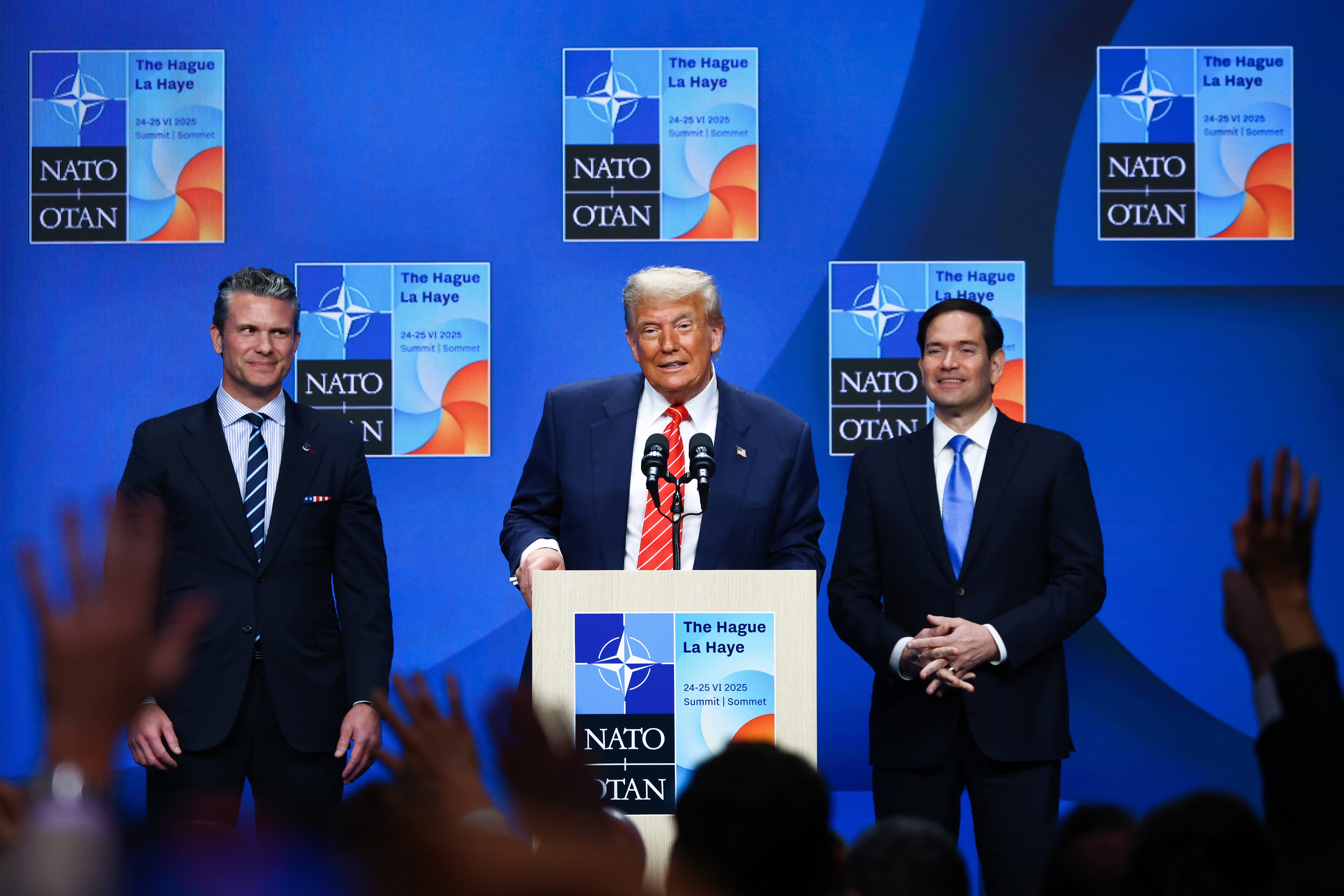
While the 2025 NATO Summit was consumed by political theater—especially the effort to accommodate President Trump’s skepticism of NATO obligations—just a few miles away, the International Criminal Court issued arrest warrants for former Russian Defense Minister Sergei Shoigu and Chief of the General Staff Gen. Valeriy Gerasimov for deliberately attacking civilian targets in Ukraine. For the Baltic states, the implications are unmistakable: If Russia could commit those crimes against the citizens of Ukraine, it could do the same to them. And if NATO’s unity wavers, and deterrence fails, then they’re prepared to fight.
But the Baltics aren’t acting alone. Not only are they cooperating more deeply and more actively in their common defense, but they are supported by other NATO allies who are committed to defending them even if the alliance as a whole comes up short. In Estonia, the United Kingdom leads a battlegroup supported by French, Danish, and Icelandic forces. In Latvia, a Canadian-led force trains alongside personnel from Italy, Spain, Slovakia, Slovenia, and the Czech Republic. In Lithuania, Dutch, Norwegian, and Belgian forces reinforce a full German brigade which, in a long-awaited move, Berlin has now committed to permanently forward-stationing there.
These NATO forces are likely not enough to defeat the kind of invasion Ukraine faced in 2022, but for now, they don’t have to be. And it would be a mistake to dismiss them as purely symbolic. They live, train, and integrate with their host nation forces. They develop terrain familiarity and rehearse mobilization timelines. As European NATO members—especially the Nordic-Baltic Eight and Poland—ramp up their defense establishments, combined deployments like these help forces prepare to fight in the future.
BUT WHAT IMPRESSED ME MOST while visiting each Baltic state wasn’t that their governments are clear-eyed and proactive, but that the ordinary citizens were, too. In a variety of ways, but with uniform clarity and consistency, I was assured that the Balts will defend their independence; that they harbor no illusions about the threats to their country in the short term and the long term; and that they are not merely reacting to danger, but preparing for it—together.
In Estonia, the Kaitseliit (Defense League) volunteer paramilitary force stands as a backbone of national readiness. In Latvia, the Zemessardze (National Guard) blends civilian life with military responsibility. And in Lithuania, the Šaulių Sąjunga (Riflemen’s Union) includes 16,000 volunteers ready to respond in defense of their homeland. These organizations are not ceremonial. They are integral to the nation’s defense, just like the Territorial Defense Forces in Ukraine. They train regularly. They mobilize quickly. And they exist as living reminders that, in the Baltics, defense starts in every backyard.
When I served as commander of U.S. Army Europe, Estonia, Latvia, and Lithuania were still early in their transformation from Soviet-structured defense systems to Western-style professional militaries. As we trained, exercised, and built trust together, their seriousness about defense was clear.
Before this month, I hadn’t visited the Baltics in more than a decade. What I saw and heard on my recent trip confirmed a shift that, like an earthquake, had been building for years: The Baltic states are no longer on the periphery of NATO. They are part of its new core. They are now NATO’s strategic conscience—small democracies preparing for the worst. With Russian oppression still a living memory, the Baltic governments are leading because the Baltic people are serious about their defense.
As I left my last stop in the Baltics, I reflected not just on the terrain and strategy, but on the people. These are nations that remember tyranny because their fathers and grandfathers lived it and fought against it. Their citizens have no illusions and are not divided about Russia’s intentions. And yet, their response is not panic—it is preparation. Quiet, determined, and unified.
We in the United States—and across the broader alliance—would do well to study the Baltics. If American leadership in NATO is waning (and it shouldn’t), I hope we reconsider and instead emulate the strategic vision and courage of those in the Baltics.
 | A guest post by
|