The Never-Ending Chase for the Mythical Non-Voter Bloc
Some Democrats insist their path back to power will come through higher turnout. The facts say otherwise.

TO HEAR SOUTHERN DEMOCRATS TELL IT, the path to salvation is simple: If the party gets more people to show up to vote, it can win.
During his 2018 campaign for Senate, Beto O’Rourke would often say: “Texas isn’t red or blue; it’s a non-voting state,” pointing to restrictive voting measures and racial gerrymandering to explain why Texas has one of the lowest voter-turnout rates. He lost.
Democratic nominee Lupe Valdez argued that she would defeat Republican Gov. Greg Abbott in the 2018 gubernatorial election because Texas “is not a red state, it’s a non-voting state.” She lost.
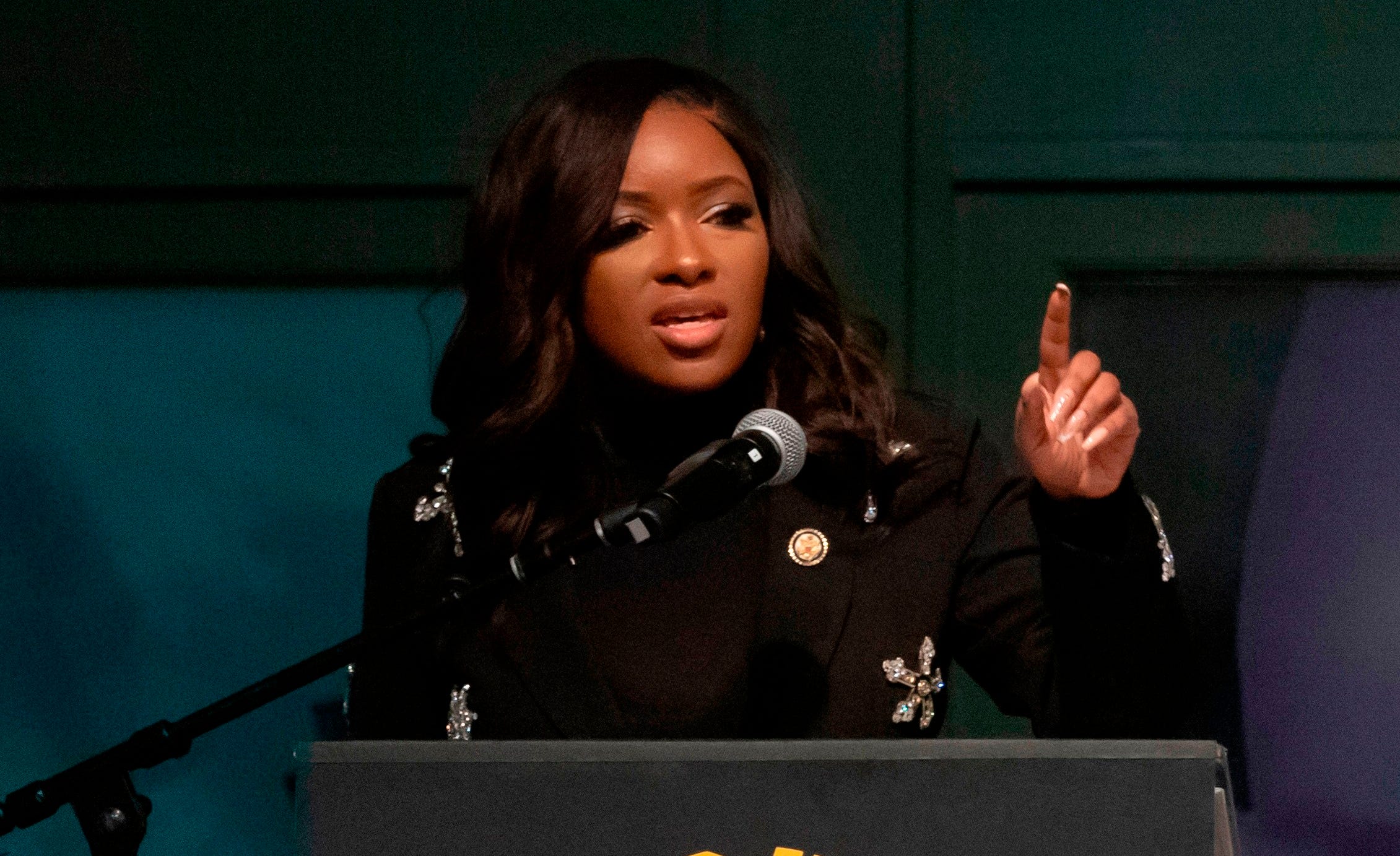
And in a speech launching her 2026 Senate campaign, Rep. Jasmine Crockett stated: “They tell us that Texas is red. They are lying. We’re not. The reality is that most Texans don’t get out to vote.” Crockett’s results are TBD.
This mindset exists far beyond the Lone Star State. I’ve heard versions of it from Democratic leaders in Arkansas, Alabama, Tennessee, and South Carolina.
“Tennessee is not a red state, but it’s a state that ranks fiftieth in voter turnout,” Justin Jones, the Tennessee state lawmaker who was expelled for leading a gun-control protest on the floor of the state House of Representatives, told me in an interview last year.
This slogan—[X] is not truly a red state; it’s *really* a nonvoting state—is plastered all over the Instagram and Facebook pages of local chapters of the Democratic party down in the South. It’s repeated like gospel among the party’s dedicated base voters. And it’s often used to justify why candidates running in these states don’t need to move to the center but instead spend their time trying to activate base voters depressed by years of Democratic moderation.
But is it true?
“There’s always this kind of progressive belief that there are hidden millions of people who are dormant and are waiting to be awakened by the trumpet of true progressivism,” veteran Democratic strategist James Carville told me over the phone from his home in Louisiana. “That’s almost a doctrinaire belief of the American left—and it’s also a singularly stupid argument. There’s no evidence that it has ever worked. And it also says we don’t need to persuade anybody other than our lethargic voters.”
Younger, more progressive Democrats find it easy to dismiss Carville as a creature of the past—a disgruntled elder party member who thinks that kids don’t appreciate that politics is a game of tough choices and tradeoffs. But he is not wrong about some basic facts. Democrats have become the party of educated elites. And increasingly they’re harmed, not helped, by high-turnout elections.
Indeed, there’s been ample evidence that the more voters show up, the worse it is for the party. Democratic data guru David Shor found in his post-2024 election analysis that, had everyone in the country voted, Donald Trump would have won by an even wider margin. In their own analysis of the 2024 electorate, Nate Cohn and colleagues at the New York Times wrote that “the least frequent voters are the most Republican.” The elections analyst David Wasserman likewise argued that the “defining data point of the 2020s” was that Trump performed “the best with the most peripherally-engaged voters” while Democrats made gains with “the most civic-minded voters who not only show up in presidential years, but reliably vote in midterms, primaries and special elections as well.”
Yet many operatives and politicians still believe higher turnout means Democrats will win. They’re resistant to the fact that low-propensity voters are now more likely to be Trump supporters and still holding on to a belief that they’re just one well-funded voter-registration drive away from flipping states across South.
The party’s commitment to this idea has even perplexed Republicans. In a 2022 interview, former Texas GOP chair Steve Munisteri told Texas Monthly that Democrats were misunderstanding the partisan allegiance of unregistered voters and argued that they were investing too heavily in voter registration. “They just don’t understand the numbers or haven’t done the research,” he said.
Reporting that matters. Commentary that clarifies. And a growing pro-democracy community. Become a Bulwark+ member today for 20 percent off the usual price.
DEMOCRATS MIGHT BE ABLE to get through this year without facing these facts head on. Voter frustration with the current administration could be enough to deliver the party wins in a handful of congressional districts that went for Trump in 2024 and even to flip some Senate seats. But Carville isn’t the only Democratic operative warning that a Trump backlash is not good enough to sustain long-term relevance. They fear that candidates like Crockett are using the “nonvoting state” theory to avoid thorny debates about whether the party is out of step with average voters in their states.
“Base voters love that idea—they love the theory that ‘Actually, we don’t need to change anything about what we’re doing. Everyone else is just not paying attention. And if we get them to pay enough attention, then we’ll be okay,’” said Lakshya Jain, political analyst at Split Ticket, an election-modeling and data-analysis group. “Election after election proves that this idea of high turnout being the key to Democratic wins is completely wrongheaded. The lean of low-propensity voters in states like Texas, etc.—they are all pretty Republican.”
“It’s an insult to voters to believe that they have no [policy] preferences of their own and that they’re simply ignorant sheep waiting to be shown the light,” Jain added.
Crockett’s campaign did not respond to my request for comment. But when I asked Jaime Harrison, who ran for Senate in South Carolina in 2020 against Lindsey Graham and then chaired the Democratic National Committee from 2021 to 2025, whether he agreed with Crockett’s “nonvoters” diagnosis, he told me that she was “spot on.” He said that those who disagreed were, in particular, undervaluing the importance of the black vote. Although black voters shifted toward Trump in 2024, they still overwhelmingly favored Kamala Harris. Harrison argued that if the party were to have a strong voter registration push in states like South Carolina, where black people make up 25.7 percent of the population, then they could be more competitive.
“I’d much rather put energy into that,” Harrison said, instead of trying to win the “mythological, moderate Republican that we think we are going to sway over. . . . That just does not work.”
Harrison lost to Graham by 10 percentage points in that 2020 race, despite record-high turnout at the time. Could he have done better by focusing less on turning out reluctant voters and more on converting Republicans and independents? Possibly. But in a better political climate for Democrats in 2018, former Democratic Tennessee Gov. Phil Bredesen took that type of approach and lost his Senate race to Rep. Marsha Blackburn by a similar margin.
Still, Jain, Carville, and others say the math is clear as to which strategy to take. Turning out a Democratic voter who otherwise wasn’t going to vote nets one additional vote. Convincing a Republican voter to switch sides nets that same vote and deprives the Republican candidate of one as well.
But there are other numbers to consider. There are relatively few states where there’s a large enough pool of low-propensity black voters to flip the state. Mississippi may be the most promising for Democrats, with black people accounting for 37.7 percent of the population. But in Texas, just 13.7 percent of the population is black. And it is far from clear that low-propensity black voters will vote for Democratic candidates at the same rate as black voters generally. That’s because, no matter their race, low-propensity voters have tuned out of politics for a reason. If Democrats want to build lasting majorities, they need to more seriously engage with why.
In Tennessee, Corbin Trent—former communications director for Rep. Alexandria Ocasio-Cortez and a cofounder of Justice Democrats who lives in the northeast part of the state—told me that the lack of curiosity around that question could ultimately doom the party.
“I don’t think Democratic leadership or the consultants or even the donors that I deal with understand people. I think they’re in these very isolated bubbles,” Trent said. “Too few people get Donald Trump’s appeal. They just look at him and they see a lying, sexual-assaulting piece of shit, and they don’t understand what connected with [voters].”
🫏 Donkey Business:
— Nathan Sage announced on Sunday that he was ending his campaign for the Democratic nomination in Iowa’s U.S. Senate race, leaving just two candidates to battle it out in the June 2 primary: Joshua Turek, a Paralympic gold medalist and state representative, and Zach Wahls, a state senator. In a video, Sage said that “as a true grassroots campaign, we simply were unable to raise the financial resources necessary to keep this campaign viable.”
Sage, an Army and Marine Corps veteran who previously ran the chamber of commerce in Knoxville, pitched himself as the working-class populist and political newcomer in the race. He fashioned a campaign brand similar to that of fellow veterans Graham Platner in Maine and Dan Osborn in Nebraska, often referring to himself as a “child of a trailer park.” But unlike Platner, Sage struggled to break through in a more crowded field.
Although Turek is viewed as the Democratic Senatorial Campaign Committee’s preferred candidate in the race, he was outraised by Wahls in the most recent fundraising quarter.
My open tabs:
— America Isn’t Ready for What AI Will Do to Jobs
— The Quad God’s Olympic Mortality
— Why changes in a Florida ocean current could wreak havoc worldwide
There are two, equal and opposite, wrongheaded views about voters in politics right now. The first is that Democrats do better when more people vote, the second is that Republicans do better when less people vote.
This might have been true thirty years ago. But the data shows one specific thing: that voters are by and large divided into their various camps, geographically and politically, and this means that basically every election comes down to where non-interested voters fall on the scale.
The reality is that if there were a lot of Democratic voters that just needed to be turned out, they would have already been turned out. If they didn't turn out for Obama, Biden, or Harris, then they don't exist, at least not for a congressional campaign.
Twenty years ago the average low propensity, low information voter was a democrat and the median voter was a suburbs white female republican. Today, that's reversed. The average low propensity and low information voter is a republican, and the median voter is now a college educated white woman in the suburbs who's a democrat.
The reality is that we've moved to an era similar to the 1960s; an era where it wasn't economics but social issues that determined how you voted. That was the entire ballgame of the Southern Strategy. That ebbed by the 1980s, when voters were most likely to vote based not on social issues but on economics, something so alarming that the Evangelical vote spent the next thirty years attempting to wed themselves to the GOP to prevent that.
The fact is, we're now three elections in since Trump took the escalator. And in all three, low propensity voters went for him. Of course, this is the same thing I heard from Sanders supporters back in 2016, that if more low voting people voted he'd have gotten the nomination. But if your plan is 'we have to hope people who don't vote end up voting' you might as well be trying to tell them to cut back on eating fast food. You're wasting your time.
Now, do I think low effort voters might swing back against Trump? Maybe. But I wouldn't bet that there's some kind of 'silent majority' that is super into liberals that just never bothers to vote for them.
Of course, this isn't something unique to America. In Britain the wisdom is that actually there are millions of secret labor voters who really loved Corbyn, even though he lost every time and now his opposite road into power on the opposite message. At the same time, the Tories claim that Britain is a naturally conservative country despite the fact that they're almost extinct at this point.
What I am saying is that they're not going to change their stripes, even if that means the tigers go extinct because the environment changed.
Jasmine Crockett is doing an attack campaign against the only candidate who might actually win a Senate seat James Tallarico. It’s shameful.