No, the Maduro Operation Wasn’t a Blow Against China
Beijing’s actions suggest it really didn’t care about Maduro at all.

IN HIS DEFENSE OF OPERATION ABSOLUTE RESOLVE, the Trump administration’s capture of Nicolás Maduro, Secretary of State Marco Rubio asserted, “you can’t turn Venezuela into the operation hub” for China and other adversaries. But while the United States strives to transform Venezuela into a country friendly to America, China may not see much of a loss.
The modern Chinese–Venezuelan relationship has its origins in Beijing’s thirst for oil and Caracas’s desire to diversify its export destinations. For much of the past quarter-century, the relationship was mutually beneficial. Venezuela gained access to foreign capital and China secured the energy it needed to sustain economic growth.
There were secondary benefits for China as well. Chinese investment helped Hugo Chavez’s anti-Americanism, which was useful purely because Venezuela was a thorn in America’s side. Just a few years after the United States had sailed two aircraft carrier strike groups uncontested in waters off China’s coast during the 1995/1996 Taiwan Strait Crisis, Beijing surely welcomed the emergence of a nuisance in America’s backyard.
Beijing may have also hoped to keep alive the possibility of establishing a naval base in Venezuela, or at least securing access to Venezuela’s own facilities, which would put the Chinese navy within striking distance of the Panama Canal. But that was always a possibility for some indeterminate point in the future rather than an actual plan. Bilateral security cooperation has remained relatively rudimentary. The “all-weather strategic partnership,” established to great fanfare in 2023, lacked any security component whatsoever.
China was not blind to the Chavistas’ economic incompetence. Despite having the world’s largest oil reserves, Venezuela’s 2024 gross domestic product was smaller than that of the Dominican Republic—a country with less than half the population. Caracas has struggled mightily to repay its sovereign loans over the past decade. And Venezuelan oil now accounts for a replaceable 4 percent of China’s seaborne imports at a time when Chinese oil consumption is peaking.
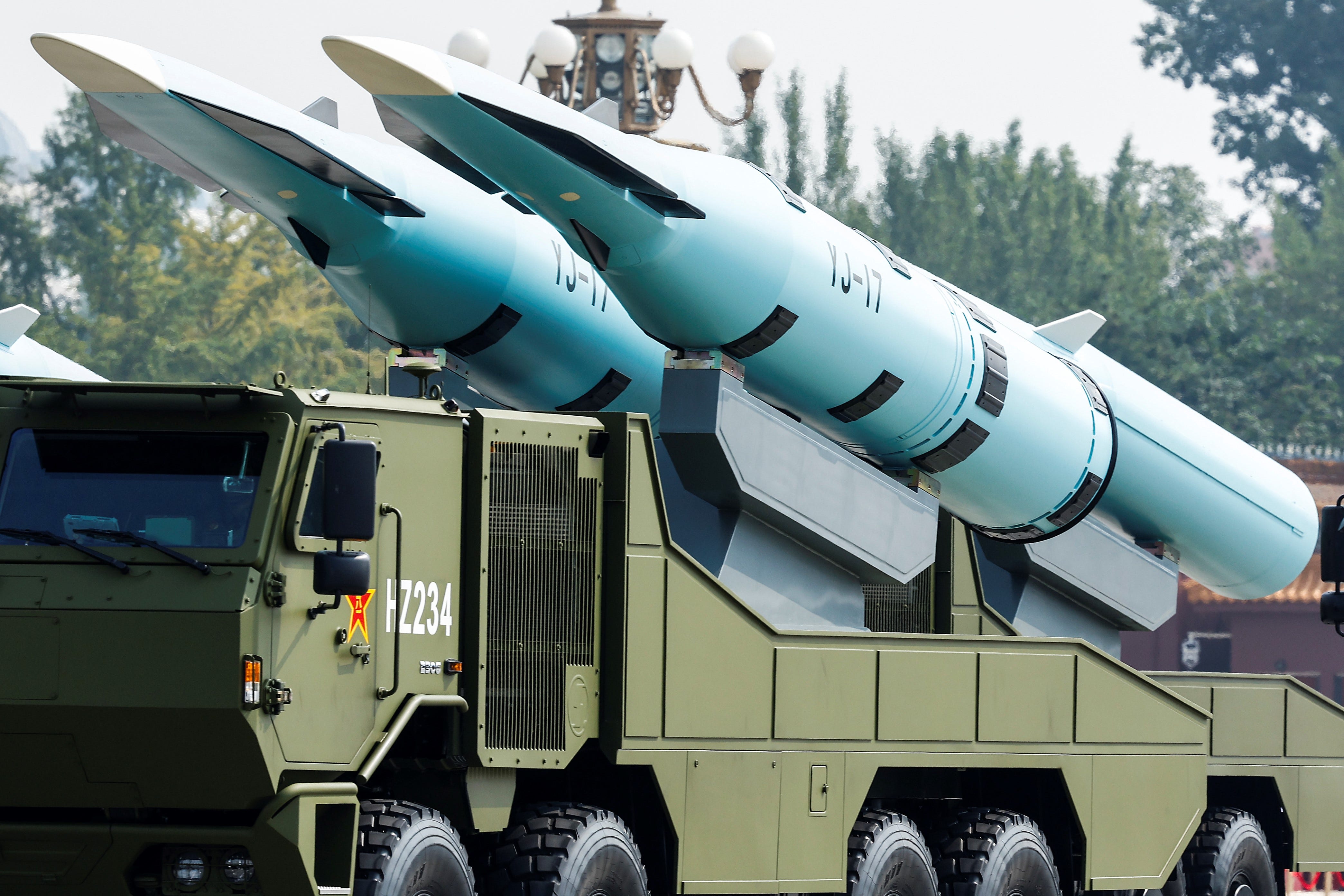
So it wasn’t surprising that as the United States built up its military presence in the Caribbean Sea over the last few months, Chinese support for Venezuela was limited to some sharp words. Presumably the People’s Liberation Army learned some lessons about territorial defense from the 2025 Israeli and American strikes on Iran that could have been applied in Venezuela. But China, which has sold Venezuela counter-stealth air defense radars in the past, did not speed additional radars Maduro’s way nor add to Venezuela’s cache of Chinese-made anti-ship cruise missiles. Xi Jinping saw the threat building and decided to do nothing.
Chinese inaction might undermine its reliability as a partner with Russia, Iran, and North Korea , the other members of the axis of disorder opposed to the U.S.-led postwar order. But they know well, as does Venezuela, that China has not committed itself to defend them.
In general, China’s approach suggests that it didn’t care much about “losing” Venezuela. Beijing had gotten what it needed from Caracas for years; it always knew a thorn in the side can be removed.
And China may not consider Venezuela lost—at least not yet. Maduro is gone, but the regime China partnered with and propped up remains in place. Beijing will maintain ties, often corruptly secured, with Venezuelan political and business elites, shaping their decision-making even as they face new pressures from the United States. The PRC may find ways to complicate American efforts in Venezuela even as Beijing adopts a lower diplomatic profile in the country. And it will be ready to swoop back in if Donald Trump loses interest in “running” Venezuela.
If the capture of Maduro reduces Chinese influence in Venezuela, and ultimately in South America, that’s all to the good. But it’s notable that the Chinese concluded that their influence wasn’t worth fighting for. It’s possible Xi Jinping is playing the long game in Venezuela, biding his time while he awaits a renewed opportunity to reassert Chinese clout. He may also be demonstrating strategic flexibility, and a penchant for strategic prioritization, that will serve him well in the U.S.-China strategic competition for years to come.
 | A guest post by
|