

No, Trump Can’t Just Impose the Death Penalty for All Murders in D.C.
Most crimes in the capital, including most killings, are not federal crimes.

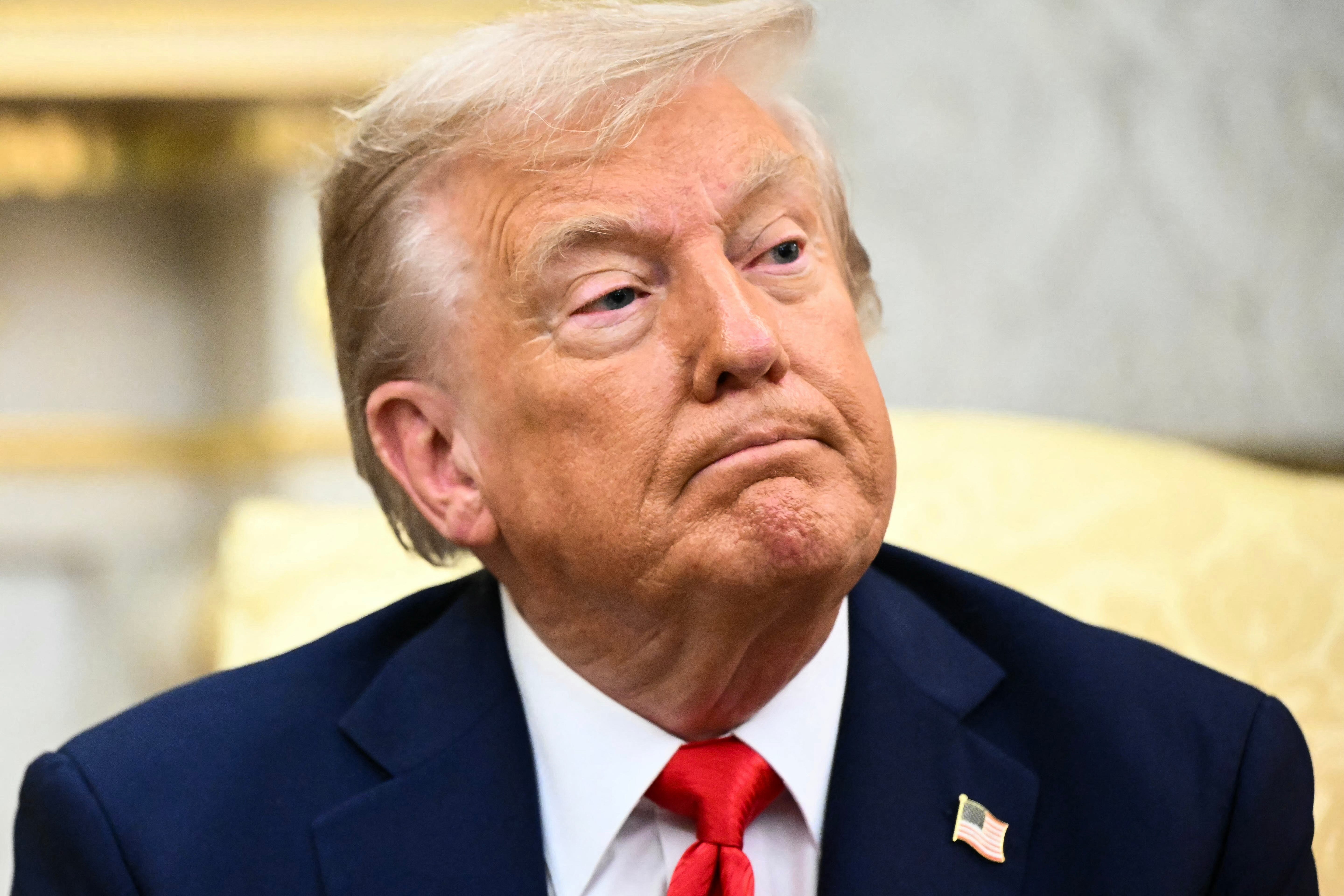
DONALD TRUMP LODGED ANOTHER MENACING THREAT on Tuesday in his escalation of the federal law enforcement presence in Washington, D.C.: more federal executions. At a cabinet meeting, he announced, “Anybody murders something in the capital, capital punishment. . . . If somebody kills somebody in the capital, Washington, D.C., we’re going to be seeking the death penalty. And that’s a very strong preventative.”
“It’s such a beautiful place,” he added of the nation’s capital. “But if you have crime, nothing looks beautiful.”
But even a quick perusal of the law makes clear that Trump’s talk of the “death penalty” is an empty threat intended, like so much of his rhetoric and policies, to incite fear. Even King Trump lacks the power to start executing people for (local) homicides in Washington, D.C.
Some background: Although D.C. is not a state, the D.C. Council passes its own laws governing local crime, including homicide. (This wasn’t always the case: Article I, Section 8, Clause 17 of the Constitution grants Congress authority “To exercise exclusive Legislation in all Cases whatsoever” over the federal district, which it did until 1871, when Congress established a government with an appointed governor and elected local assembly; a few years later, that arrangement was replaced by a small board of commissioners; eventually, in 1973, Congress created the modern mayoralty and D.C. Council with the Home Rule Act.) In 1983, the D.C. Council repealed capital punishment for crimes committed under D.C.’s local criminal code. D.C. does not have a local prosecutor, so all criminal cases are instead brought by the U.S. attorney for the District—currently the former Fox News personality Jeanine Pirro—who must bring local charges under D.C.’s criminal code, which makes no provision for capital punishment.
In theory, and provided a case presented the right facts, Pirro could also bring charges for capital offenses occurring in D.C. under the federal criminal code, which Congress substantially amended with the Federal Death Penalty Act of 1994 to list approximately sixty federal crimes that carry a possible death sentence. But that list does not include regular homicide in the District of Columbia.
Bear in mind that, in general, federal (meaning nationwide) laws enacted by Congress must have something about them that transcends local matters that impact only the individual states. Murders of diplomats, or at international airports, or on the high seas, or in connection with interstate drug trafficking, or at a federal facility would all qualify for a possible death sentence under federal law. But local crimes in a big city that happens to also be the capital of the nation do not. Just like the long line of earlier U.S. attorneys for D.C. under both Republican and Democratic presidents, Pirro would have to charge a homicide under one of these offenses (with Attorney General Pam Bondi’s approval) to carry out Trump’s death-penalty threat. D.C. is home to a lot of federal facilities—building, parks, museums, monuments, etc. But that’s not where the city’s murders tend to happen.
Bottom line: Although Trump is getting away with a lot of things nowadays that would have been treated as blatantly illegal and even unconstitutional just a few months ago, unless Congress passes a new capital murder law to govern local crimes in D.C., he and Pirro have no room to maneuver here.
PIRRO IS ALREADY STRUGGLING to force the legal system to comply with Trump’s wishes and threats—with embarrassing results. She couldn’t get a grand jury to issue a felony indictment against the virally famous “sandwich guy,” a former Department of Justice paralegal who was arrested for throwing a sub at an ICE agent while shouting, “Fuck you! You fucking fascists! Why are you here? I don’t want you in my city!” Pirro also tried three times to persuade three different grand juries that D.C. resident Sydney Reid should be charged with felony assault for allegedly pushing an FBI agent’s hand against a wall while filming two officers who were transferring a man into federal immigration custody. After that amazing string of failures, Pirro feebly followed up with misdemeanor charges that don’t need grand jury approval.
On Monday, U.S. Magistrate Judge Zia M. Faruqui dismissed a weapons charge brought by DOJ against a black man ensnared at a grocery store, noting that the man was likely singled out by Trump’s goon squad because his crossbody bag looked heavy. “It is without a doubt the most illegal search I’ve ever seen in my life,” Faruqui said. “I’m absolutely flabbergasted at what has happened. A high school student would know this was an illegal search.”
This is not to say that Trump won’t manage to get more death penalty cases going in D.C. and elsewhere, as promised in an executive order (“Restoring the Death Penalty and Protecting Public Safety”) he signed on the day of his inauguration. But for now, there aren’t that many immediate options for legal executions: Under former Attorney General Bill Barr’s direction, the first Trump administration upped federal executions in July 2019, carrying out an unprecedented thirteen while Trump was in office. Then President Biden, in his administration’s waning days, commuted the death sentences of thirty-seven of the forty federal death row inmates; the three for whom Biden didn’t commute the sentences remain the only inmates currently on federal death row.
Trump’s reign of terror is real, and it’s not posturing. But at least for now, Trump’s fascination with firing squads, hangings, and group executions is not something the country needs to worry about. Let’s take whatever good news we can get.
 | A guest post by
|