No, Trump Hasn’t ‘Settled Seven Wars’
And he should be called out on that claim every time he makes it.

ANY SOLDIER WHO HAS SEEN COMBAT, and any politician who has sent soldiers to war, knows how difficult it is to bring a conflict to completion. Even as a tactical commander, I could never assume that a single battle or campaign success—or even a string of triumphs—had neutralized the enemy. When taking a division into combat, a smart mentor told me, always ask for updates on what you think has calmed down and always ask the question What’s going to happen next? That was good advice, as the answer to that question drives awareness, more assessments, future plans, and contingency thinking. It’s what’s needed—because adversaries adapt, conflicts evolve, and peace is rarely declared by one side alone.
For months, President Trump has repeated his claim that he has “solved” or “settled” seven wars—most recently in a September 18 press conference alongside Keir Starmer, prime minister of the United Kingdom, and in an interview with Fox News the same day. [Update: A few hours after this article was published, Trump repeated the claim before the United Nations General Assembly.] This claim has no basis in reality. None of the wars the president cites have truly ended, and the two most consequential conflicts he doesn’t name but which he claimed he would solve before taking office—Ukraine against Russia and Israel against Hamas—are still raging.
The ongoing conflict between Ukraine and Russia remains the most consequential war in Europe since World War II. This month, the under secretary of defense finalized two $500 million transfers of arms to Ukraine from American stockpiles, funded through NATO’s Prioritized Ukraine Requirements List; more arms packages are under consideration. Additionally, U.S. envoy Keith Kellogg visited Kyiv on September 11, prompting President Volodymyr Zelensky to quip, “When the U.S. president’s envoy is in Kyiv, there are no massive attacks. Killers refrain from killing. With representatives from other countries, this doesn’t work.” The remark underscored the sense of deterrence provided by the U.S. presence, but outside of Kellogg’s visit, Russian missiles and drones continued to strike Kharkiv, Zaporizhzhia, and Dnipro. While President Trump repeatedly voices frustration about Putin and Zelensky not coming together for talks, he hasn’t done much to force Moscow to negotiate. Washington’s assistance has been piecemeal, the Alaska summit was a bust, and no framework exists for a ceasefire or long-term settlement.
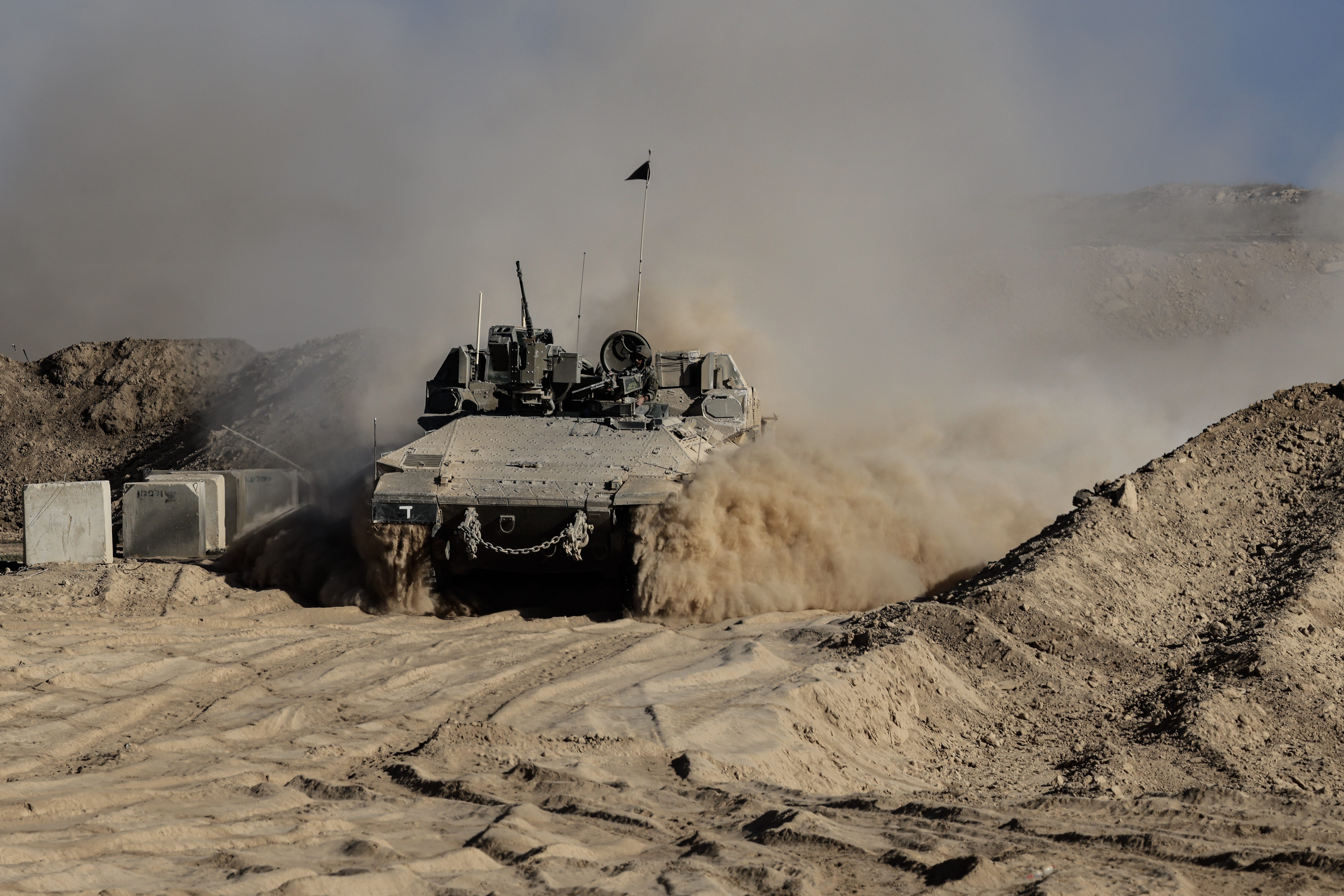
Trump also has not wanted to discuss or even mention Gaza, where the brutal conflict has reached new depths. Israel recently launched the “main phase” of its ground assault into Gaza City, unleashing armor and demolitions across densely populated neighborhoods. Airstrikes destroyed residential towers and killed dozens, including children. Humanitarian corridors remain closed, with the Zikim crossing shut on September 12—cutting off food and medicine to areas already in famine. The most stunning escalation came just days ago when Israel struck Hamas’s political headquarters in Doha, Qatar, a U.S. ally and the place where mediators were working on ceasefire talks. The strike killed Hamas operatives and a Qatari security officer, enraging Doha and undercutting fragile diplomatic channels. This is certainly not a war that has ended—it is a war that has been expanding. Indeed, this violence is part of one of the wars Trump claims to have ended: the long shadow conflict between Israel and Iran. Yet in the past week, Israel carried out strikes against Iranian-backed militias in Syria, targeting command hubs and leadership figures, and there are warnings of potential similar attacks against militias in Iraq. Iran meanwhile continues to advance its nuclear program and funnel arms to proxies like Hezbollah. Far from being resolved, the struggle is alive on multiple fronts, with each strike sparking new threats and countermoves.
The conflict between India and Pakistan, which the president said he stopped, is also still percolating. Last week Prime Minister Narendra Modi publicly declared that India “not afraid of nuclear threats,” underscoring his willingness to respond to Pakistani provocations with force. Reports of cross-border firing along the Line of Control have also persisted, and Pakistan has lodged repeated diplomatic protests. The antagonism that has defined Kashmir since 1947 continues unabated, with no mediation process in sight.
There are also renewed border clashes between Thailand and Cambodia. Last week, Thai security forces opened fire with rubber bullets and launched tear gas on Cambodian civilians protesting barrier construction near Prey Chan village. Twenty-eight people, including monks, were injured. Cambodia condemned the act as a sovereignty violation. That such violence continues only weeks after a supposed ceasefire shows how fragile Trump’s supposed “solutions” really are.
The president seems to be most proud of his purported peacemaking in eastern Congo, but in the past week attacks by the Allied Democratic Forces once again terrorized villages in Ituri province. Civilians were killed, and families displaced. The so-called Doha declaration of peace remains worthless on the ground, where the Congolese government has little reach. Rwanda’s ties to the M23 rebel group complicate enforcement, and mineral exploitation still fuels the fire.
President Trump has confused Armenia with Albania more than once, but he did bring the presidents of Armenia and Azerbaijan together in the Oval Office, where they proclaimed they would “work” toward peace. But the signed treaty Trump once heralded hasn’t materialized—a major obstacle continues to block the way forward—and mistrust between Baku and Yerevan remains deep.
Even the dispute over the Nile dam between Egypt and Ethiopia continues. Ethiopia just began operations at the Grand Ethiopian Renaissance Dam, despite Egypt’s and Sudan’s objections. Cairo has lodged new protests, arguing once again that Ethiopia’s move threatens its water security and violates past understandings. There is no binding framework for sharing water flows, no adjudication process, and no peace.
President Trump also claims to have ended the long-running tensions between Serbia and Kosovo. But earlier this month, the United States suspended high-level normalization talks, blaming provocative actions by Kosovo’s caretaker government. Serbian-aligned factions still operate parallel institutions in the north, and NATO peacekeepers remain on the ground as part of KFOR. Once again, the region is drifting toward confrontation.
WHAT DOES THIS SITUATION REPORT MEAN? Taken together, the president’s claims that he has “ended” or “solved” seven wars are as inaccurate as George W. Bush’s “Mission Accomplished” banner in May 2003, when the president declared the end of major combat operations in Iraq. If anything, Trump’s pronouncements are even less justified, since the conflicts he claims to have ended were never under U.S. control to begin with.
And while the president plays the peacemaker at his press gaggles, he may be starting a new conflict with Venezuela. The targeting by the U.S. military of go-fast boats in international waters with the intent to deter alleged cartel activities, and the threats of further military action, provide a reminder that Trump’s instinct is not peacebuilding but posturing. It’s never good to proclaim victories where there are none, especially while gesturing toward fresh confrontations.
When I was in combat, the lesson was simple: You never assume the enemy is finished. You plan for what comes next and lock down the steps toward completion. Boasts and slogans may capture headlines, but they cannot substitute for the hard, unglamorous work of building durable peace. Until that work is done, the wars that were “ended” will remain very much alive.
 | A guest post by
|