Pentagon Firings Have Nothing to Do With ‘Culture’
The U.S. military’s culture doesn’t need radical change—and if it did, this wouldn’t be the way to go about it.

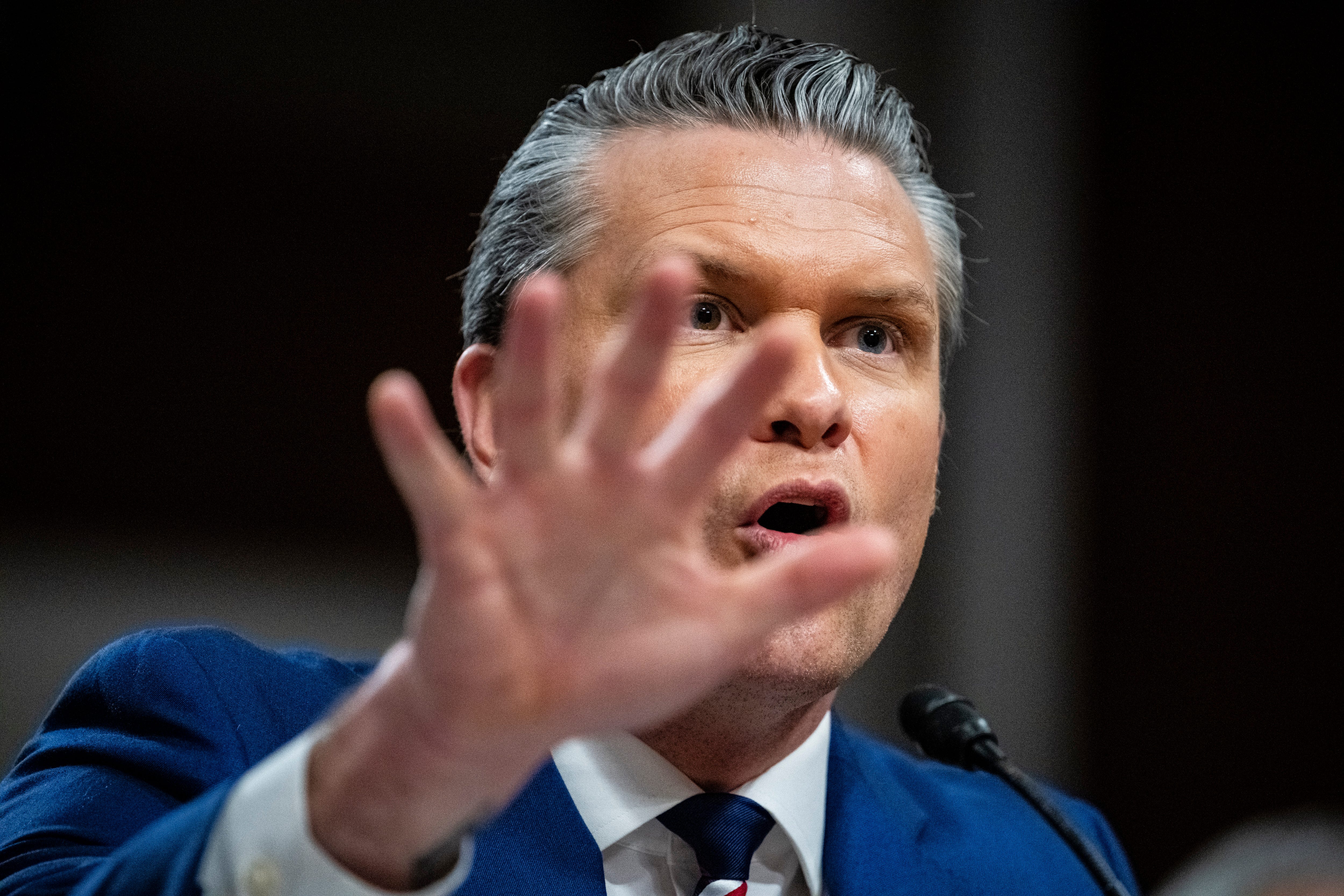
DURING RECENT BUDGET TESTIMONY before both the House and Senate Armed Services Committees, Secretary of Defense Pete Hegseth was repeatedly pressed—by Republicans and Democrats alike—on several specific and unrelated topics. One of those was his dismissal of senior leaders, including the well-respected Army chief of staff, Gen. Randy George. To his credit, Hegseth declined to discuss the reasons for specific personnel decisions. But in explaining his broader intent, he repeatedly returned to familiar phrases: He wants to “change the culture of the Department.” When pressed, he suggested the military had drifted into “social engineering race and gender” at the expense of “merit.” His remedy? A change of the culture to create an “unleashed” force that prioritizes “lethality.”
I find that explanation not just unconvincing but dangerously imprecise. One thing I learned during my four decades in the military, leading soldiers in both combat and in peace—and then learned again during my time studying business research, teaching MBA students who are inquisitive about establishing good culture and seeing culture in public-sector and private-sector organizations—is that culture is not a slogan.
The U.S. military has long had one of the strongest, most effective organizational cultures anywhere in the world. It is not perfect—no human institution is—but it is grounded in trust, standards, discipline, and respect for every member of the team.
What Secretary Hegseth praises about the force—its ability to train, deploy, synchronize combat power, fight as a joint team, sustain itself through complex logistics, and care for its people and families—did not suddenly emerge since he took office. The military is what it is today because those capabilities were built over decades of hard experience, institutional learning, and constant training and adaptation.
Militaries always need to transform. The character of war is constantly changing—faster today than at any time in my career. But transformation is not the same as cultural reinvention. And it certainly isn’t accomplished by dismissing leaders in pursuit of “culture change.”
IT WAS ONLY AFTER I RETIRED—when I entered the private sector and later began teaching MBA students and researching how culture contributes to various organizations—that I fully understood how elusive and misunderstood the term “culture” can be. Senior executives, even successful ones, routinely struggle to define it, measure it, and shape it. Students at top business schools around the country study cases examining which companies have great cultures and which ones get culture wrong—and why.
That’s why hearing “we need to change the culture” without any clear definition sets off alarms. Because in both business and the military, vague calls for culture change are often a sign not of clarity but of its absence.
One of the most widely cited definitions of organizational culture comes from a 2013 article in the Harvard Business Review. The author, management consultant Michael Mankins, describes the various elements that come together as part of a winning culture. Culture is not what’s written in policy memos, proclaimed in meetings, or stated for members of a board. It’s what people actually do and how teams interact—especially under pressure.
Organizational psychologist Edgar H. Schein went even deeper in Organizational Culture and Leadership. In that classic 1985 book, Schein describes culture as the pattern of basic assumptions that a given group has invented, discovered, or developed in learning to cope with the problems of external adaptation and internal integration. That description should resonate with anyone who has worn the uniform—or really led any size of organization. Culture in the military is forged in training for war, maintaining discipline, adapting in combat, and caring for soldiers and families. It’s learned behavior, reinforced over time. It’s certainly not declared from the top. And it certainly isn’t changed overnight.
Across decades of research—from Harvard, MIT, McKinsey, and others—it appears that effective organizational cultures share several common traits.
First, they are built on trust. High-performing teams, as Google found in its “Project Aristotle” study, depend on psychological safety—the ability to speak up without fear. In military terms, this translates to a young sergeant questioning a plan described by his or her lieutenant, a pilot calling off a mission for safety, or a staff officer raising concerns about flawed intelligence. It also means that senior leaders can and should question the legality or the viability of missions their troops are asked to execute.
Strong cultures are aligned to purpose, and they reinforce the mission or organizational task. In the military, that’s the “ends” in “ends, ways, and means”—the three factors that must be aligned in any strategy. Everything—from training to evaluation to daily behavior—supports the objective and the purpose of the organization and its mission.
Strong cultures are certainly merit-based—but not myopic. Meritocracy doesn’t mean ignoring or insulting differences; it means applying standards fairly and consistently. The U.S. military has evolved over decades to become more inclusive, not as a social experiment, as Secretary Hegseth often states, but as a way of availing itself of the talent and capability that exist across the force. That merit-based inclusivity of diverse individuals from all over America strengthens, rather than weakens, the military institution.
Effective cultures are modeled by strong and caring leaders. As Jim Whitehurst noted in the Harvard Business Review in 2016, culture change begins with behavior, not messaging. Leaders set the tone in what they reward, what they tolerate, and especially in how they treat others. In the military, we say leaders live in glass houses, because everyone is watching what you do, the decisions you make, and how you care for your troops. Those actions better reflect the values of the organization.
Those who build strong cultures enforce standards consistently. Discipline, accountability, and predictability are the backbone of any effective culture. Without them, organizations drift. And leaders in those strong cultures build cohesion through respect. The military doesn’t succeed because everyone is the same. It succeeds because everyone is held to the same standard and treated as part of the team.
In both business and the military, culture doesn’t change because someone says it should. Culture shifts through consistent, systemic actions over the long haul: how leaders behave, who gets promoted, what gets rewarded, how people are trained, how they communicate with candor, and the stories organizations tell about themselves.
What doesn’t change culture? Catchphrases. Political framing. Isolated personnel decisions without clear explanation. If anything, those actions risk doing the opposite—introducing uncertainty into a system that depends on clarity.
SECRETARY HEGSETH’S DESCRIPTION of the culture he wants—“warriors unleashed,” less attention paid to gender and racial diversity, focused on “maximum lethality, not tepid legality”—may sound compelling as a set of political soundbites. But it reflects a misunderstanding of both military culture and the profession of arms.
The U.S. military has always prioritized lethality. Protecting the Constitution, securing the American people, and defeating the enemy when called has always been its core function. But lethality without discipline, restraint, and adherence to law is not strength—it’s liability. It undermines legitimacy, erodes alliances, and ultimately weakens combat effectiveness. Leaders in the military are trained not to “unleash” chaos but to control violence.
The phrase “not legality” is particularly troubling. The U.S. military operates under the rule of law for a reason. Legal frameworks—the U.S. Constitution and the laws under it, the law of armed conflict, rules of engagement, and professional standards—are integral to how we fight and win while maintaining the moral high ground. There is no room—and it is against the law and regulations—to order soldiers to break those rules. Effective leaders build disciplined, trained, cohesive teams that can operate under extreme pressure with precision and judgment.
In the private sector, getting culture wrong can cost money, reputation, or market share. In the military, it can cost lives. The profession of arms depends on trust—between leaders and led, between units, and between the military and the nation it serves. That trust is built through consistent behavior, clear standards, and shared values—all parts of culture.
It is precisely that culture—built over decades—that has allowed the U.S. military to fight as a joint force, integrate allies, sustain global operations, and adapt to changing threats. Those strengths did not appear overnight, and they cannot be casually redefined.
When multiple senior leaders are let go under the pretext of “culture change” without a clear articulation of what that means, it raises questions across the force about predictability, fairness, and competence. And those questions, if left unanswered, erode the very culture Secretary Hegseth claims he wants to strengthen.
The U.S. military’s strength has always been its ability to set high standards and apply them broadly across a diverse force. That combination—standards plus dignity—is what creates cohesion, trust, and effectiveness. Anything less weakens the institutional culture.
After decades in uniform and years studying, applying, and teaching leadership in the private sector, I’ve come to a simple conclusion: Culture is not something you announce. It’s something you build.
It’s built in how leaders behave, how they treat others, how they make decisions, and how they uphold standards—day after day, under pressure, when it matters most. The U.S. military has spent generations building that kind of culture. It continues to refine it as warfare evolves. But it doesn’t need to be reinvented by slogan.
When I hear calls to “change the culture” of one of the most disciplined and effective organizations in the world—without a clear definition, without a coherent framework, and with rhetoric that misunderstands the very nature of military leadership—I don’t see a plan. I see an excuse.
Strong culture wins wars. Excuses do not.